中国空间站 On currently on 4th August 2022, the Belt and Road InitiativeCNSA –China National Space Administration CSS China Space Station in which the Crew of the Shenzhou 14 Celebrated the one of many Chinese Valentines days in which this one is about The Qixi Festival, also known as the Qiqiao Festival, is a Chinese festival celebrating the annual meeting of Zhinü and Niulang in Chinese mythology. The festival is celebrated on the seventh day of the seventh lunisolar month on the lunar calendar. The festival was derived from worship of the natural astrology.
The festival originated from the romantic legend of two lovers, Zhinü and Niulang,who were the weaver girl and the cowherd, respectively. The tale of The Cowherd and the Weaver Girl has been celebrated in the Qixi Festival since the Han dynasty.The earliest-known reference to this famous myth dates back to over 2600 years ago…..
The general tale is a love story between Zhinü (the weaver girl, symbolizing Vega) and Niulang (the cowherd, symbolizing Altair).Their love was not allowed, thus they were banished to opposite sides of the Silver River (symbolizing the Milky Way).Once a year, on the 7th day of the 7th lunar month, a flock of magpies would form a bridge to reunite the lovers for one day…. now they’re together nowadays onwardly….
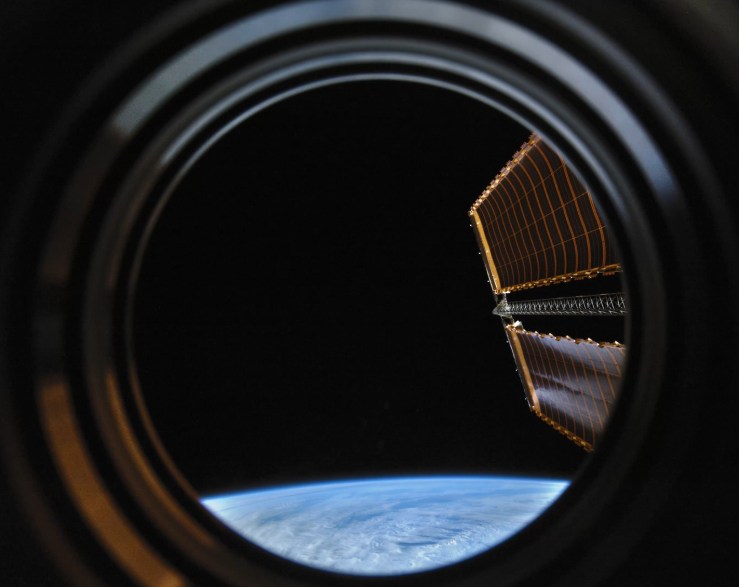
On 4th August 2022 the Shenzhou 14 crew sharing their stunning Earth photography of七西 in which the Stars are Brilliant, which Today spaceflight will give you cosmos level romance , a large wave of beautiful pictures of the earth from a space perspective…. – Thousands of miles across the galaxy, fortunate to meet you ….
At 1108 Hours Hong Kong Beijing Time on a very Clear 4th August 2022 , China- People’s Republic of China- CNSA –China National Space Administration Successfully launched the New Next Generation Long March – Chang Zheng 2C carrier rocket at the Taiyuan Satellite Launch Center Shanxi Province ……the Chang Zheng-Long March 4B carrier rocket was ignited at the Taiyuan Satellite Launch Center, and then successfully sent the terrestrial ecosystem carbon monitoring satellite and two small satellites into the predetermined orbit. The launch mission was a complete success.
China successfully launched the terrestrial ecosystem carbon monitoring satellite the world’s first active and passive joint observation remote sensing satellite for forest carbon sinks was successfully launched! China’s Chang Zheng Long March rocket has won a hundred consecutive victories
Since the successful maiden flight of the Long March 5B carrier rocket on May 5, 2020, the China Long March series of carrier rockets developed by China Aerospace Science and Technology Corporation have successfully performed 100 space launch missions in more than 800 days. As the world’s first forest carbon sink, the successful launch of the active-passive combined observation remote sensing satellite terrestrial ecosystem carbon monitoring satellite marks that’s China – People’s Republic of China’s carbon sink monitoring has entered the era of remote sensing.
The terrestrial ecosystem carbon monitoring satellite was developed by the Fifth Academy of Aerospace Science and Technology Group. It detects the vegetation biomass of terrestrial ecosystems through a combination of active and passive measurement methods, and solves the problems of terrestrial ecosystem carbon monitoring, terrestrial ecology and resource survey and monitoring, and national major ecological projects monitoring and evaluation. It serves the national goal of “carbon peaking and carbon neutrality”, and provides business support and research services for forestry and grassland, ecological environment, surveying and mapping, meteorology, agriculture, and emergency disaster reduction.
The terrestrial ecosystem carbon monitoring satellite is equipped with four kinds of payloads, including multi-beam lidar, multi-angle multi-spectral camera, hyperspectral detector, and multi-angle polarization imager. The comprehensive remote sensing method of spectrum + multi-angle + hyperspectral + polarization” can obtain multi-element remote sensing information of forest carbon sinks, improve the accuracy of carbon sink inversion, and will significantly improve the quantitative level of my country’s land remote sensing.
The Long March 4B carrier rocket for this launch mission was developed by the Eighth Academy of Aerospace Science and Technology Group. It is a normal temperature liquid three-stage carrier rocket. It has the ability to launch various types of satellites with different orbit requirements. The multi-satellite launch, its sun-synchronous orbit carrying capacity can reach 2.5 tons. The rocket of this invention launched two small satellites by means of sidewall loading, namely the Hede-2G satellite and the Minhang Juvenile satellite.
In this mission, the Chang Zheng-Long March 4B Carrier rocket is equipped with a flight diagnostic control unit. This is the first flight verification of the power diagnosis and reconstruction platform in China. After the verification is fully mature, it will be promoted to engineering applications to improve the active recovery of the power system failure of the launch vehicle. ability to improve rocket flight reliability.
This launch is the 430th launch of the Long March series of launch vehicles.
On Hainan Province –China –People’s Republic of China…. in the district area of the Wenchang – Wenchang Spacecraft launch center in which the awesome team at one of many CNSA –China National Space Administration that China National Space Administration…………… On 24th July 2022
After Wentian experimental module entered orbit, the status setting was successfully completed. At 3:13 on July 25, 2022, Beijing time, it was successfully connected to the forward port of 天和 Tianhe Core Module. The entire rendezvous and docking process lasted about 13 hours. . This is the first time that two 20-ton spacecraft in my country- China- People’s Republic of China have achieved rendezvous and docking in orbit. …According to the mission plan, the Shenzhou 14 Takionaut crew will then enter the Wentian experimental module….. in which finally docked in early morning time of the 25th July 2022 in with CNSA –Beijing Aerospace City in which co-ordinated the docking maneuverers have achieved rendezvous and docking in orbit.…
On that day of the launch of the Chang Zheng –Long March 5B Y3文天Experimental Module Launch Successful Yesterday -July 24th 2022 on the eve of the Long March 5B launch of the Wentian Experimental Module (about 10 minutes before launch), the Tianhe core module transited over Hainan Island- Hainan Province- Hong Kong SAR, Macau SAR , Guangzhou also of Guangdong province of China- People’s Republic of China , and the Shenzhou 14 aerospace The crew took pictures of the beautiful Hainan Island. At this moment, on the Wenchang space launch site under the lens of the Takionauts, the Wentian experimental module is ready to go and is about to embark on the “Wentian” journey.
On the 3rd August 2022 China Space Station’s little robotic arm is officially launched and the newest cutest worker, The small robotic arm installed outside the Wentian experimental cabin shoulders the heavy responsibility of independently completing the installation and replacement of external loads and other care operations. Recently, the small robotic arm successfully completed the on-orbit test with the support of the ground personnel. Let us look forward to its wonderful performance in the future…
Wentian experimental cabin small manipulator completed the on-orbit test – Wentian experimental cabin small manipulator arm is more sophisticated, adopts a 7-DOF symmetrical configuration, and has an end effector at each end; its arm is nearly 6 meters long and can be operated effectively The space is about 5 meters, and the maximum load is 3 tons; it can be used alone or form a combined robotic arm with a large robotic arm; it supports Takionauts’ out-of-vehicle activities, extravehicular status inspection, extravehicular cargo transfer and installation, extravehicular maintenance and repair, and load 6 application tasks including care and maintenance of optical facilities….
The Wentian experimental module is equipped with the same Taikonauts’ living facilities as the core module, including 3 sleeping areas, 1 sanitary area, kitchen and other facilities, which can guarantee the astronauts’ life. It can also work with the core module to support the life of 6 astronauts during the rotation of the two manned spacecraft; in addition, a small robotic arm is also configured, which can be used alone or in combination with the large robotic arm of the core module. , to jointly complete the tasks of Taikonauts leaving the cabin, caring for extravehicular facilities, and patrolling. In addition, the Wentian experimental cabin is also equipped with an astronaut exit airlock. After the space station is completed, the airlock of the Wentian experimental cabin will be As the main airlock cabin for Takionauts to leave the cabin, the node cabin of the core cabin is used for other functions at this time, just as a backup; the Wentian experimental cabin also has a backup section for the core cabin to manage and control the assembly. That is to say, when the function of the core module platform fails, it can be switched to the Wentian experimental module to exercise the combined control and management functions, which can improve the reliability of the space station as a whole.
Currently at Tianjin –China –People’s Republic of China…. Heading towards district area of the Wenchang – Wenchang Spacecraft launch centerCNSA –China National Space AdministrationOn the 30th July 2022 Beijing Time the second component of the Experimental module in which is is delivered to the Wenchang Spacecraft Launch Center, Hainan Province – China – People’s Republic of China…. The Mengtian Experiment Module, departed from Tianjin by sea to China in Wenchang, Hainan launch site. The Mengtian experimental module will be launched by the Chang Zheng – Long March 5B Yao-4 rocket in October this year 2022, thus completing the construction of the T-shaped structure of China’s space station known as Tiangong Space Station…
The Mengtian experimental cabin is equipped with a cargo airlock and an outboard deployment test platform. In the future, the scientific test equipment that needs to be installed outside the cabin can be transported to the space station through a cargo spacecraft, and then the load will be sent to the outside of the cabin through the cargo airlock, and the robotic arm or Takionauts will install it on the platform outside the cabin. Realize the continuous update of the extravehicular test project….
中国空间站 On currently on 29th July 2022 2022, the Belt and Road Initiative CNSA –China National Space Administration on the currently developments of the latest progress of China’s Chang Zheng – LongMarch manned lunar landing carrier rockets Science and Technology Daily reporters learned from the First Academy of China Aerospace Science and Technology Corporationon July 28 2022 that the 702 Institute of the Academy recently successfully completed the multi-machine parallel static-motion joint test of my country’s new generation of manned launch vehicles. It strongly supported the smooth transition of the development of this type of rocket to the initial stage.
China- People’s Republic of China’s moon landing rocket has completed the multi-engine parallel static and dynamic test and began to manufacture, and the first flight may not be far away
China’s new generation of manned rockets has made important progress! According to news from the First Academy of China Aerospace Science and Technology Corporation published by the “Science and Technology Daily” and other media on July 28th 2022, the 702 institutes affiliated to the academy have recently successfully completed the multi-machine parallel static-motion joint test of my country’s new generation of manned launch vehicles. The first step of this type of rocket will be transferred to the initial sample development stage.
At present, my country’s only manned rocket is the Long March 2F rocket, which is especially responsible for transporting China- People’s Republic of China’s Shenzhou spacecraft and Takionauts to the sky. My country’s new generation of manned rockets is a rocket with larger and more advanced capacity. It is also the “921 rocket” that netizens have often said over the years. In fact, its real code name is “CZ-5DF”, which means Chang Zheng- Long March 5. The series of lunar rockets are exactly the rockets prepared for my country’s manned lunar landing.
According to the published data, this rocket is about 100 meters high. After successful development, it will be the highest rocket before the appearance of the Long March 9. It is about the height of a 33-story building, which should be higher than the building you live in. Well, isn’t it shocking?
And it will also be the largest rocket before the appearance of the Long March 9 carrier rocket, with a diameter of 5 meters, the same as the Long March 5, but its shape is very different from the Long March 5, because it adopts the CBC configuration, but It is not a “triple version of Chang 5”, it is not the configuration of the three core-stage rockets of the current Long March 5, because it is not composed of three core-stage rockets of the Long March 5. There are only two YF-77 liquid hydrogen-oxygen engines with a thrust of only 100 tons. The thrust of the Fat Five mainly relies on four bundled boosters. Each booster is equipped with two YF-100 engines with a thrust of 240 tons. , the thrust of the four boosters reached 960 tons, which together contributed to the 1060-ton thrust of the Long March-5 first-stage rocket.
The new generation of manned rockets with This type of rocket weighs about 2,200 tons and is a three-stage and a half configuration. The capacity of the Earth-Moon transfer orbit will not be less than 27 tons, which can meet the capacity requirements for launching China’s new generation of manned spacecraft (within 25 tons in weight). It can also meet the upward mission of large spacecraft in low-Earth orbit, because the orbital carrying capacity of low-Earth orbit will reach more than 70 tons.
Take China’s space station as an example. After the Wentian experimental module was docked, the total weight of China’s space station assembly has now reached 66 tons, and China’s new generation of manned rockets can be sent into orbit with one launch mission. Zhu Xiquan, deputy chief designer of the 702 Institute, said: The successful completion of the parallel static-dynamic joint test of my country’s new generation of manned rockets marks the first time that my country has broken through the large-load static-dynamic joint test technology of launch vehicles. The test with the largest scale, the most technical difficulty and the most complex test process has laid a solid foundation for the new generation of manned launch vehicles to adopt the parallel technology of multiple high-thrust engines.
According to the plan, this rocket will be the main launch vehicle for manned moon landing missions in China in the next 20 to 30 years, so it can also be called China’s first-generation “moon landing rocket”. It is significant, marking that China’s manned lunar landing rocket has entered a substantial manufacturing moment. After the manufacturing is completed, it will be a test flight. It was previously reported that the first flight will be completed before 2025. It can be seen that the first flight is not far away! Moreover, this type of rocket will also expand the recovery and reuse capabilities of the take-off stage in the future, that is, to create a reusable rocket like Musk’s Falcon rocket, which can also greatly reduce the launch cost.
References :”Science and Technology Daily” July 28 article “China’s new generation of manned rockets has made important progress “