中国空间站 Previously On December 2021, the Belt and Road InitiativeCNSA –China National Space Administration CSS China Space Station in which on a three to six months setting up a new home of the first three Shenzhou 13 in which spending up to on for the further construction and verifications of the systems of the CSS –China Space Station 2021 launch calendar in which currently the three Takionauts current Shenzhou 13 …… Preparations for the six months of extension of the China Space Station In which the currently it remains awaiting for the crew of setting up home in conducting fun scientifically onboard中国空间站.. China Space station …..
On the 24th February 2022 the CNSA –CSS China Space Station vlogging the incredible views as its orbit the Planet Earth with stunning Earth Photography with Blockbuster The combination of the Chinese Space Station has crossed the mainland of the motherland China – People’s Republic of China as the China Space Station orbits over China Showing The glittering rivers and mountains are very good….. The friends come to find out if your home is in the mirror
The first perspective of the newly released China space station combination is beautiful in which the first perspective of the freshly released space station assembly….. Viewing the Earth’s morning and evening line from space …
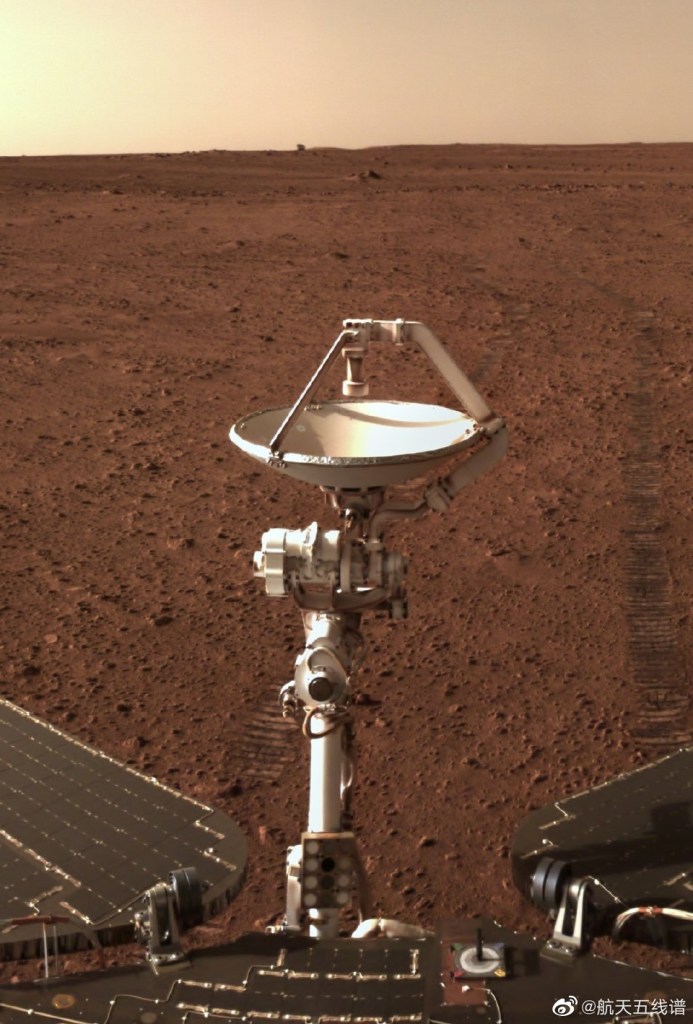
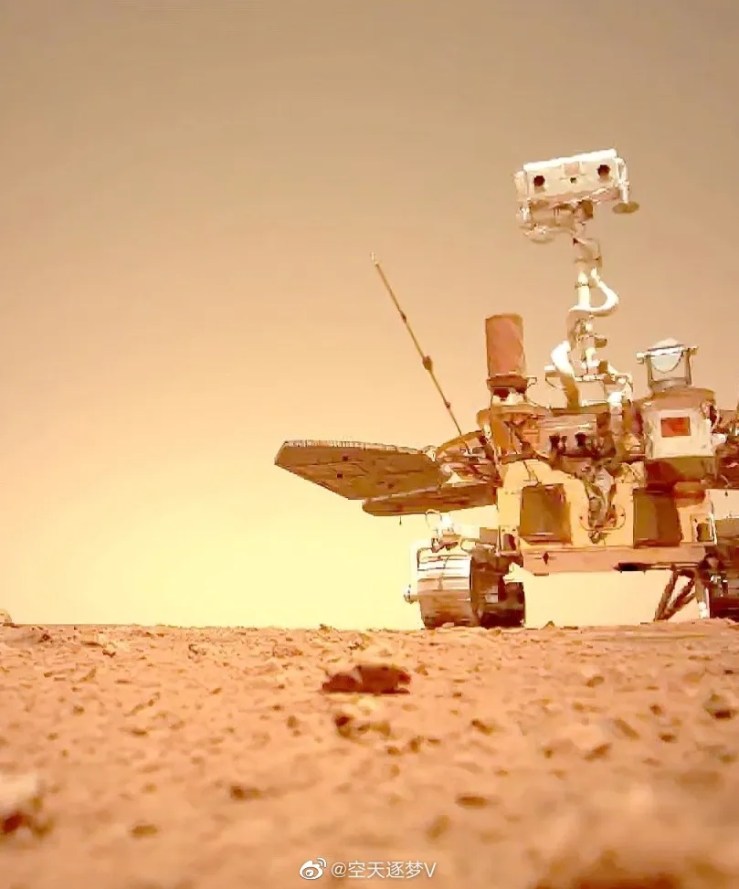
On the 22nd October 2021 Friday 天问一号飞運騎遊達达3亿CNSA – China National Space Administration – ESA – European Space agency Belt and road initiative mars mission…first Mars exploration mission, Tianwen- Martian Probe One …….”祝融号Zhu Rong” previously on 30th August 2021 Mars Lander – Mars rover successfully exploring more than 1064 meters from its base lander camp.. Roamingly on the Rustic half diameter planet size Red planet Mars on Hong Kong SAR- Beijing Earth Wednesday time… In which new mileage: “Zhu Rong” Mars Rover ….Sailing in the galaxy, strolling through the glamorous rustic environment in talking it’s adventure with Tianwen 1 Martian communications probe orbiting the Red Planet… in which “Zhurong” Mars rover completes scheduled exploration mission…
In late September 2021, the Earth, Mars and the three sides to the sun almost in a straight line, a phenomenon known as Ling day. During this period, the communication between the Mars rover and the earth was disturbed by the sun’s electromagnetic radiation, which was unstable or even interrupted. During the transit period, the “Tianwen-1” orbiter and the “Zhurong” Mars rover entered autonomous operation mode and suspended scientific exploration work. In order to find out the actual impact of Riling, the engineering development team continued to carry out measurement and control link tracking tests, and for the first time obtained measured data on the interference of deep-space measurement and control communications under Riling, and accumulated first-hand data and engineering experience for subsequent tasks to deal with Riling.
The astronomical phenomenon of occultation during the solar transit provides scientists with a rare opportunity to observe the solar transit occultation. The Shanghai Astronomical Observatory, the National Space Science Center and other units, together with the European VLBI Institute, the University of Tasmania in Australia and other institutions, used Wettzell and Yebes located in Shanghai, Kunming, Urumqi, and Europe. ), Medicina, Svetloe, Zelenchukskaya, Badary, Hobart, Keith, Russia The radio telescopes in Kath, Yarra, and Hartebeesthoek in South Africa carried out the same beam day for the “Tianwen-1” orbiter and the “Mars Express” orbiter (MEX). Ling observation. A total of about 5 terabytes of data have been obtained in this observation. At present, the parties are conducting joint research. By analyzing the influence of the electromagnetic wave signals transmitted by the two detectors back to the earth through the solar wind, the fluctuations in the interplanetary electron density caused by the intrinsic turbulence of the solar wind are studied. Scientific issues such as the relationship between solar wind micro-turbulence and macro-wind speed.
A few days ago, the solar transit phenomenon has ended, and the measurement and control communication between the probe and the earth has returned to normal. Judging from the telemetry data, the “Tianwen No. 1” was in normal condition during the solar transit and passed the first solar transit safely. The orbiter will enter the remote sensing mission orbit in early November to carry out global remote sensing exploration of Mars to obtain scientific data such as Mars morphology and geological structure, surface material composition and soil type distribution, atmospheric ionosphere, and Martian space environment, while taking into account the development of the rover mission Phase of relay communication.
At 1851 Hours Morning Hong Kong Beijing Time on a very clear 14th October 2021 Thursday 2021, China- People’s Republic of China- CNSA –China National Space Administration Successfully launched the Long March-Chang Zheng 2D carrier rocket at the Taiyuan Satellite Launch Center Shanxi Province China successfully launched Long March – Chang Zheng 2D carrier rocket at the Taiyuan Satellite Launch Center to successfully launched the Xihe Solar Probe also other satellites into orbit…. Making this launch into this mission is the 391th flight of the International Iconic Chang Zheng- Long March series of carrier rockets…..
Successfully launching At 18:51 on October 14, 2021, Beijing time, China used the Long March 2D carrier rocket at the Taiyuan Satellite Launch Center to successfully combine solar Hα spectrum detection with dual super platform science and technology the test satellite was launched into space… .
The satellite successfully entered the scheduled orbit and the launch mission was a complete success. The mission carried and launched an orbital atmospheric density detection test satellite, a commercial weather detection constellation test satellite, a low-orbit navigation enhancement test satellite, a Hede-2 E/F satellite, a traffic test satellite, a Tianyuan-1 satellite, and a Golden Bauhinia satellite-2. , 10 small satellites such as University Student Little Satellite-1 and University Student Little Satellite-2A. This mission is the 391st flight of the Long March series of carrier rocket Exploring the science and technology test satellite “Xihe”. The satellite will realize the world’s first space exploration of solar Hα band spectral imaging, fill the gap in high-quality observation data in the source area of solar bursts, and improve China’s research capabilities in the field of heliophysics. It is of great significance to China’s space scientific exploration and satellite technology development
Southern Polytechnic Tianyuan-1 6U cubic satellite is equipped with a new solid thruster and high specific impulse air-conditioning micro-thrusters] The “Tianyuan-1” launched by Chang Zheng –Long March 2D was launched by the Micro-Nano Satellite Research Center of the School of Mechanical Engineering, Nanjing University of Science and Technology The self-developed six-unit technology experiment and popular science education cube star weighs 10 kilograms and is also the 12th micro-nano satellite developed by the school.
The satellite will conduct on-orbit verification of domestically-made components to enhance the autonomous controllability of China’s space components. The satellite is equipped with a new type of solid thruster and high specific impulse air-conditioning micro-thruster independently developed by Southern Institute of Technology (Figure 3), and China’s first micro-nano satellite solid propulsion application test and orbit maintenance technology test will be carried out in space. The overall structure of the air-conditioning micro-thruster is manufactured by 3D printing technology, and it is integrally formed at one time, which effectively reduces the weight by more than 30%.
In addition, the “Tianyuan-1” satellite will also carry out formation missions with another commercial satellite.
In addition, Southern University of Technology and Nanjing University of Science and Technology have been conducting in-depth cooperation since 2019. This time, primary school students will participate in the development process of the “Tianyuan-1” satellite. As an entry point, the creation of satellite Sunac classes, the formation of a core satellite development team, and the establishment of a new model of aerospace science education that integrates “Cube Star + Courses” with learning and doing, effectively integrates aerospace technology, spirit, culture and other resources with elementary and middle school students’ scientific quality education Effective docking.
Details of the Chang Zheng – Long March 2D Carrier Rocket launch vehicle has a special livery in which is first anniversary of the 46th World Skills Competition in Shanghai, at the Ministry of Human Resources and Social Security, China National Space Administration, Shanghai Municipal People’s Government, and China Aerospace Science and Technology Corporation Under the guidance of the company, the Executive Bureau of the 46th WorldSkills Competition and Shanghai Aerospace Technology Research Institute jointly held the launch of the Long March 2D rocket named for the Shanghai WorldSkills Competition.
Images and visuals are from Weibo also their respectives..
looking from Earth in a wintery Winterfell Auckland in the constellation Libra is the planet Jupiter with one of it’s moon Io transiting..
During the month of late June 2018, Auckland, New Zealand in which is so wintery is like being in the very north of Westros at the wall with Wildlings to hug for warmth… In the Auckland Night Skies, The wintery constellation of Libra in which…. In which nearby the one of the promenade stars in the Constellation Libra is the largest Gaseous planet in the Sol System-Solar System in which looking so crispy in a frozen light, where in wintery conditions there’s least diffraction of the path of light in a frozen medium in which gives you the best sharper image where the summery time in where the image is softer with the more diffraction..
During the month of wintery June 2018, Jupiter has been very generous with the observations of Jupiter red spot; in as it rotated from transiting then behind during the weeks… along with other treats such as the transiting and occultation’s of Jupiter’s Galilean Moons, Io, Europa, Castillo also Ganymede….. Among that throughout the night watching every now and then, Jupiter’s Moon path transiting….. Among that time the Planet Mars was approaching to apogee in which is closest position towards the Planet Earth in which Mars during this time have been experiencing a massive planetary Martian sand storm… in which most of the Martian rovers sent by JPL.. Have been in hibernation since in conserving their power reserves while some with isotopic generators somehow continue their work with curiosity….
…… in which through a modest Telescope you can see the outlines of the Cassini divisions of Saturn’s Rings…. Looking averagely one billion Kilometers, Averagely One hours back in time from Earth- Photographer @KevinJamesNg
On a very Antarctica frosty Winterfell cold wintery Auckland New Zealand Night early June 2018 skies, in which as looking towards eastern section of the night sky is the Constellation Libra in which the largest Gaseous Planet Jupiter is in… Nearby is the Wintery indicator is the Constellation Scorpio where it’s the opposition as to the Summery Constellation Orion…..
Currently at the moment situated is the Secondary largest gaseous ring Planet is Saturn -土星 – located currently at nearby the constellation Sagittarius…… in which through a modest Telescope you can see the outlines of the Cassini divisions of Saturn’s Rings…. Looking averagely one billion Kilometers, Averagely One hours back in time from Earth… You can see the Galilean Moons of Saturn, Titan, and Hyperion the two commonly seen… the two seen repeating ever so Occultation then Transiting seen from Earth’s perspective…… the Planet Saturn share the same characteristics in with the millions of Hurricanes at its timeless extremities with its bands showing but softer in caramel fudge pastel hues colours with violent wind velocities greater than the velocities of Sound..