#CNSA #ChinaNationalSpaceAdministration #国家航天局 |#WenchangSpacecraftLaunchCenter #文昌航天發射場 #BRI #April2024 | #ChangZheng5  #LongMarch5 Yao 8 launch readiness for #嫦娥六号#Change6 #LunarLander #LunarProbe South Pole-Aitken Basin  #LunarSampleReturnMission #DarksideOfTheMoon …. #ASummary

On the 15 March 2024 Hour Hong- Kong SAR – Beijing time CNSA –China National Space Administration   ….. the “Chang Zheng -Long March 5” Yao-8 carrier rocket which will carry out the Chang’e-6 mission of the fourth phase of the lunar exploration project, safely arrived at the Wenchang Space Launch Site in China. Subsequently, the rocket will be assembled and tested at the launch site together with the Chang’e-6 probe that arrived in advance. Currently, all participating systems in the launch site area are preparing for the Chang’e-6 mission as planned…..

“Chang Zheng -Long March 5” Yao-8 carrier rocket which will carry out the fourth phase of the lunar exploration project嫦娥六号was safely transported to the Wenchang Space Launch Site in China. Subsequently, the rocket will be assembled and tested at the launch site together with the Chang’e-6 probe that arrived in advance. Currently, all participating systems in the launch site area….

【Complete vertical transfer! Choose the right moment to launch! 】

On April 27th 2024, after the Chang’e-6 probe and the Long March-5 Yao-8 carrier rocket completed relevant work in the technical area at the Wenchang Space Launch Site in China, the vehicle-rocket assembly was transported vertically to the launch area. It is planned to select an opportunity for launch in early May.


After the Chang’e-6 probe and the Long March-5 Yao-8 carrier rocket arrived at the launch site in January and March respectively, they successively completed various preparations such as final assembly and testing. On April 27, the movable launch platform carrying the Long March 5 Yao-8 carrier rocket slowly and safely transferred the rocket assembly from the vertical test factory to the launch area. Subsequent functional inspections, joint tests, propellant filling and other work will be carried out as planned

Mission planning

嫦娥六号 Chang’e-6 plans to conduct systematic and long-term research on samples from the far side of the moon, analyze the structure, physical properties, and material composition of the lunar soil, and strive to obtain updated lunar scientific data [42].

The first scientific goal of Chang’e-6 is to carry out mapping detection and geological background survey of the landing site area, obtain on-site analysis data related to lunar samples , and establish a relationship between on-site detection data and laboratory analysis data. Mainly includes: topography detection of the landing area : description and structural characteristics around the sampling point ; description, size and distribution of impact craters , etc. Material composition detection: material composition characteristics at sampling points; physical characteristics and structure of lunar soil ; temperature gradient detection in the shallow layers of the lunar crust , etc. The second scientific goal is to conduct systematic and long-term laboratory research on the lunar samples returned to high altitudes, to analyze the physical characteristics and structural structure of lunar soil and lunar rocks , mineral and chemical composition, trace elements and isotope composition, and lunar rock formation and evolution. Through the isotope age determination of the process, the interaction between cosmic radiation and solar wind ions and the moon, the space weathering process and environmental evolution process, etc., we will conduct in-depth research on the formation and evolution history of the moon.

The second scientific goal is to conduct systematic and long-term laboratory research on the lunar samples returned to the ground , and analyze the physical properties and structural structure of the lunar soil and lunar rocks, mineral and chemical composition, trace elements and isotope composition , and the formation and evolution of lunar rocks. Isotopes of the process, the interaction between cosmic radiation and solar wind ions and the moon, space weathering processes and environmental evolution processes, etc., to deepen the study of the formation and evolution history of the moon.

To achieve lunar sample return, many technological breakthroughs are needed, such as sample collection technology, lunar surface ascent and takeoff technology, lunar orbit rendezvous and docking technology, etc. Because it is a high-speed return, breakthroughs in re-entry technology are also needed. In terms of sampling, it is not only necessary to collect lunar soil from the lunar surface , but also to drill holes to remove materials of different depths from the lunar soil layer 2 meters below and bring them back to the earth. Therefore, Chang’e 6 will also carry a drilling rig …


Images and visuals are from their Respectives CMS China Manned SpaceCNSA-China National Space Administration

#CNSA #ChinaNationalSpaceAdministration #国家航天局 |#BeltAndRoadinitiative #July2022 | #嫦娥五号#CLEP The #Moon #Change5 #LunarMission #MonsRumker #LunaExploration the Magical Chang’e 5″ #PopularScienceDocumentary Officially Released in #Beijing…

More than One year ago on 24th November 2020, the Chang Zheng – Long March Five Carrier Rocket Launched away  in CNSA – China National Space Administration China Wenchang spaceport launch, Change Five  Lunar probe into orbit, opened up towards China – People’s Republic of China’s first celestial bodies sample return trip from Mons Rumker on the Lunar Surface of the moon in which now on the week of 12th July a new series Popular Science Documentary named the “The Magical Chang’e 5” Popular Science Documentary Officially Released in Beijing- China – People’s Republic of China…  

 .……  

On July 12th 2022, the popular science documentary “The Magical Chang’e 5” jointly produced by the National Space Administration and the China Association for Science and Technology was officially released in Beijing. Shu Wei, secretary of the Secretariat of the China Association for Science and Technology, and Dong Baotong, deputy director of the National Space Administration, attended the press conference and delivered speeches. Hu Hao, the chief designer of the third phase of the lunar exploration project, and relevant comrades from the China Association for Science and Technology, the National Space Administration, the Space Foundation, and the engineering research and development units attended the conference- press conference.

On December 17, 2020, the Chang’e 5 mission, the third phase of the lunar exploration project, obtained 1,731 grams of lunar samples and returned to Earth, realizing the millennium dream of the Chinese nation “to embrace the moon in nine days”, and promoting human lunar sample research into the “Chang’e Era”. Chang’e 5 is not only a historical achievement of scientific and technological innovation, but also has a very high value for popular science. Show the lunar exploration journey of Chang’e 5 in the way of popular science, and tell the technological breakthrough of Chang’e 5 in the language of popular science, give full play to the social efficiency of major projects, and promote the process of popularization of scientific and technological resources.

Scientific and technological innovation and scientific popularization are the two wings to realize innovation and development. The popular science documentary “The Magical Chang’e 5” focuses on the key links of the Chang’e 5 mission from launch to home. It reproduces the magical journey of Chang’e’s lunar exploration in the form of records + popular science, and uses the form of documentary + animation It describes the scientific principles of Chang’e’s lunar exploration, which is a beneficial exploration of the combination of scientific and technological innovation and scientific popularization.
 

At the press conference, three senior consultants of the lunar exploration project sent messages via video. Academician Luan Enjie, the first commander-in-chief of the lunar exploration project, said that our lunar exploration project has embarked on a lunar exploration road with Chinese characteristics. Academician Ouyang Ziyuan, chief scientist of the Chang’e-1 lunar application system, said that “The Magical Chang’e-5” is China’s first all-round, multi-dimensional and three-dimensional science popularization work based on the lunar exploration project. Academician Ye Peijian, chief designer and commander of the Chang’e-1 probe, said that the core technology can only rely on self-reliance. They believe that “The Magical Chang’e 5” will surely plant spiritual seeds in the hearts of young people and take our exploration to a deeper space.

Via CNSA China Space Administration –CLEP China Lunar Exploration project management office

#CNSA #ChinaNationalSpaceAdministration #國家航天局 |#BeltAndRoadinitiative #May2022 | #火星 # 天問 #天问一号#TianwenOne #MarsMission #Tianwen1 probe  #祝融号 #ZhuRong #Tianwen1 #CCTV #HelloMars Episode Two-  Going to Mars, there is no map and no road signs. What kind of road will #TianwenOne follow…..?

“Hello Mars…!” Episode 2 Going to Mars, there is no map and no road signs. What kind of road will Tianwen-1 follow?

On the months week of  19th May 2022   天问一号飞運騎遊達达3亿CNSA – China National Space Administration – ESA – European Space agency Belt and road initiative mars mission…first Mars exploration mission, Tianwen- Martian Probe One  sent back stunning images of the Half Earth Mass size of the Rustic Planet Mars in which show stunning Martian landscape with its iconic polar caps of either southern or northern … With its timeless Stunning Mars Photography. Tianwen-1″ returned high-resolution images of the Mars inspection area The “Zhurong” rover is preparing for winter, and the orbiter continues to carry out orbital exploration….. in which one year ago it was it’s first landing on Utopia Planitia region on the planet Mars .. in celebrating a CCTV five part Episode was produced..

《你好!火星》Hello Mars Episode Two The content of this issue: At 13:17 on July 23, 2020, the Long March 5 rocket completed its mission and sent the Tianwen-1 probe to the entrance of the ground fire transfer orbit with the result of hitting the bulls eye, and gave it more than one second per second At a flight speed of 11.2 kilometers, Tianwen-1 separated from Fat Five and flew towards the dark deep space. The total weight of the probe is 5 tons. This is the largest probe to Mars in human history. The entry cabin at the front is like a steamed bun, with the landing platform and the rover inside, and the orbiter at the back. On this long journey, it has to fly alone for nearly 7 months, with a distance of nearly 500 million kilometers.

本期内容:2020年7月23日13点17分,长征五号火箭完成了使命,以正中靶心的成绩将天问一号探测器送到地火转移轨道的入口,并赋予它超过每秒11.2公里的飞行速度,天问一号与胖五分离,向着漆黑的深空飞去。探测器总重有5吨,这是人类历史上飞往火星吨位最大的探测器,前部的进入舱如同一个馒头,里面是着陆平台和火星车,后边是环绕器,在这条漫漫征途上,它要孤独地飞行近7个月,路程近5亿公里。

Hello everyone, I would like to tell you some good news about the documentary “Hello!” about China’s first Mars exploration mission. “Mars” is finally on the air, friends who want to know more about Mars can stay in front of the TV tonight

“Hello! “Mars” is a large-scale scientific documentary jointly produced by the National Space Administration and China Central Radio and Television to commemorate the first anniversary of the Tianwen-1 Mars probe’s successful landing on Mars. It took three years to complete the filming and is divided into “Departure” and “Journey” “Surrounding”, “Landing” and “Patrol” have 5 episodes, each of which is 30 minutes long. They focus on the important stages of the Tianwen-1 mission, and describe a large number of astronomy, astrophysics, space applications, aerospace engineering and other disciplines in a simple way. Knowledge, in-depth analysis of Chinese wisdom and Chinese solutions in Mars exploration. Since May 2020, the co-production team has continued to track the key nodes of the Tianwen-1 mission, filmed many wonderful moments, and obtained a large number of first-hand precious materials. Many of the contents of the documentary were made public for the first time and were released authoritatively.


Broadcasting plan CCTV-1 CCTV integrated channel every night at 22:36, five days of continuous broadcast from May 18th to 22nd; CCTV-10 CCTV science and education channel every night at 20:10, from May 19th to 23rd five days of continuous broadcast

大家好,告诉大家一个好消息,讲述中国首次火星探测任务的纪录片《你好!火星》终于要开播啦,想更多了解火星的朋友们今晚可以守在电视机前哟《你好!火星》是为纪念天问一号火星探测器成功着陆火星一周年,由国家航天局和中央广播电视总台联合出品的大型科学纪录片,共历时3年摄制完成,分为《出发》《征途》《环绕》《着陆》《巡视》5集,每集30分钟,分别聚焦天问一号任务的重要阶段,以深入浅出的形式讲述了大量天文学、天体物理学、空间应用学、航天工程学等学科知识,深度解析了火星探索中的中国智慧、中国方案。联合摄制团队自2020年5月起,持续跟踪天问一号任务关键节点,拍摄众多精彩瞬间,获得大量一手珍贵素材,纪录片中很多内容是首次公开,并权威发布。


播出计划CCTV-1央视综合频道 每晚22:36,5月18日至22日五天连播;CCTV-10央视科教频道 每晚20:10,5月️19日至23日五天连播

Images and visuals are from CNSA- China National Space Administration also from there respectives- CLEP –China Lunar Exploration Project..

#CNSA #ChinaNationalSpaceAdministration #國家航天局 |#BeltAndRoadinitiative #May2022 | #火星 # 天問 #天问一号#TianwenOne #MarsMission #Marslander #MarsRover probe  #祝融号 #ZhuRong finds signs of recent water activity on the planet Mars……

On the months of March 2022  the week of 13th May 2022   天问一号飞運騎遊達达3亿CNSA – China National Space Administration – ESA – European Space agency Belt and road initiative mars mission…first Mars exploration mission, Tianwen- Martian Probe One  and the cute Mars Rover have reportingly to everyone, have a new discovery acquired recently : According to the obtained short-wave infrared spectrum and navigation and terrain camera data, a rocky plate-shaped hard shell was found in the landing area. By analysing the spectral data, it was found that these plate-like crusts similar to sedimentary rocks are rich in minerals such as hydrous sulfate. The research team of scientists deduced that these sulfate-rich crusts may have been formed by lithification after groundwater overflow or capillary evaporation and crystallization of salt minerals cemented the Martian soil. For the first time, water-bearing minerals were detected in situ on Mars using the short-wave infrared spectrometer on the rover…..

The findings suggest that water activity on Mars may have been more active during the Amazonian period than previously thought. My landing zone utopia Planitia and the broad area of ​​the northern plains of Mars may contain large amounts of available water in the form of hydrous minerals for in situ resource utilization for future manned Mars exploration.


As of now, I have been in Utopia in the northern lowlands of Mars. After driving in the plain area for one year, the accumulated driving distance is nearly 2 kilometers, and a large amount of valuable scientific detection data has been obtained. Existing crater dating work shows that the landing zone is located in the Amazonian strata that have undergone late remodelling events, at the end of several major stages of Martian geological age (Pre-Noah, Noah, Occidental, and Amazonian), The climate has changed from warm and humid to cold and dry. Analysis of orbital remote sensing data shows that various geomorphological features distributed around the landing site (Fig. 1) indicate that there may have been a large amount of volatiles in the Utopian Plain. However, limited by the spatial resolution and coverage, orbital remote sensing data did not find water-bearing minerals near the landing area, which raised many questions about the formation mechanism of such landforms and the nature of water activity in the area.


Using short-wave infrared spectroscopy, the researchers detected water-bearing minerals in these bright-colored plate-like rocks that were not identified in the region by previous orbital data, presumed to be water-containing silica or water-containing sulfates (Figure 2). The research team believes that these bright-colored rocks are related to pirates. The broken rock observed in situ by the Mars 1 lander is similar in morphology, and is a layer of locally developed duricrust. However, the hard crust of the Viking 1 landing area is relatively brittle and thin, which may be formed by the long-term interaction of water vapor in the atmosphere and the soil on the surface of Mars. The hard crust of Zhurong’s landing site appears to be more resistant to erosion and forms a thick layer in the surrounding loose soil (Figure 3), which requires large amounts of liquid water, which cannot be formed by atmospheric water vapor alone. At the same time, the study found that there was no obvious surface runoff or traces left by the river in the landing area, and no fluffy surface and salt residues formed by the

(The above research results were published in the international authoritative academic journal Science Advances. The first author and corresponding author of the paper is Liu Yang, a researcher at the National Space Science Center, Chinese Academy of Sciences. Link to the paper

#CNSA #ChinaNationalSpaceAdministration #國家航天局 |#BeltAndRoadinitiative #March2022 | #火星 # 天問 #天问一号#TianwenOne #MarsMission #Marslander #MarsRover #Tianwen1 probe  #祝融号 #ZhuRong #Tianwen1 returned high-resolution images of the Mars inspection area…..

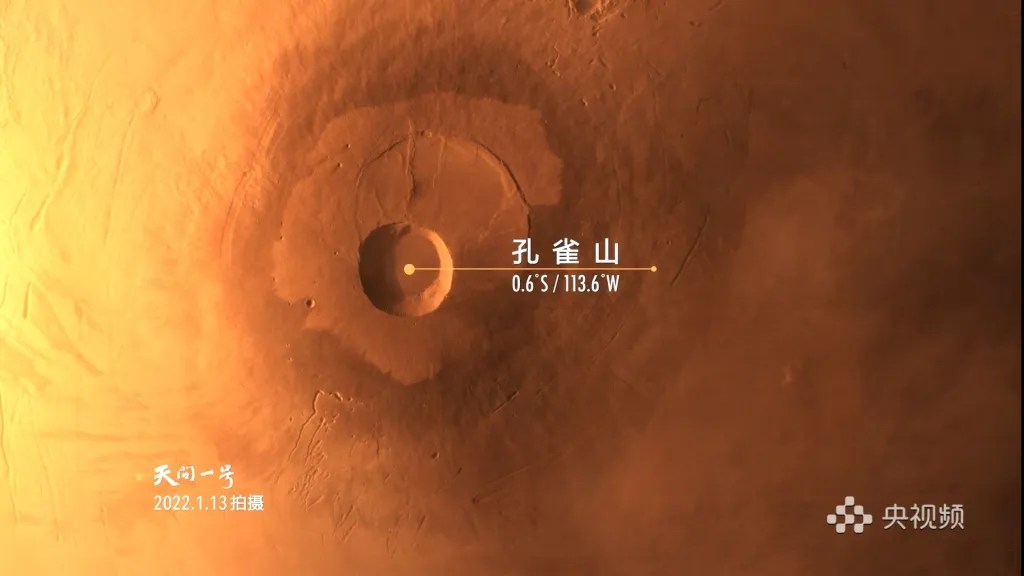
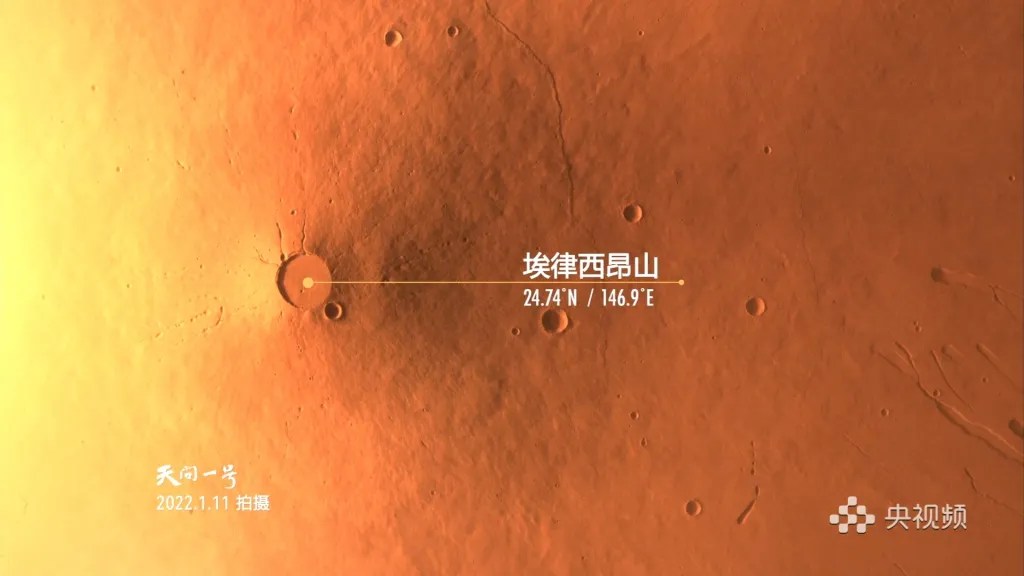
On the months of March 2022  the week of 20th March 2022   天问一号飞運騎遊達达3亿CNSA – China National Space Administration – ESA – European Space agency Belt and road initiative mars mission…first Mars exploration mission, Tianwen- Martian Probe One  sent back stunning images of the Half Earth Mass size of the Rustic Planet Mars in which show stunning Martian landscape with its iconic polar caps of either southern or northern .. With its timeless Stunning Mars Photography. Tianwen-1″ returned high-resolution images of the Mars inspection area

Figure 1 The image of the inspection area of ​​”Zhurong” taken by a high-resolution camera

 A few days ago, the “Tianwen No. 1” orbiter passed over the inspection area of ​​the Mars rover again, and took a 0.5-meter resolution image of the “Zhurong” inspection area. As of March 24, 2022, the “Zhurong” rover has been working on the surface of Mars for 306 Martian days and has traveled 1,784 meters in total. The “Tianwen-1” orbiter has been in orbit for 609 days and is 277 million kilometers away from the earth. Both are operating normally.

(a) Taken on May 19 , 
2021 ( the 
5th

 Martian day after landing ), the surface of the rover is not covered by sand and dust
(b) Taken on 
January 
22 , 
2022 (the 247th

 Martian day 

after landing ), there is obvious dust coverage on the surface of the 
rover
Figure 2 Comparison of images of the rover taken by the Navigation Terrain Camera in different periods

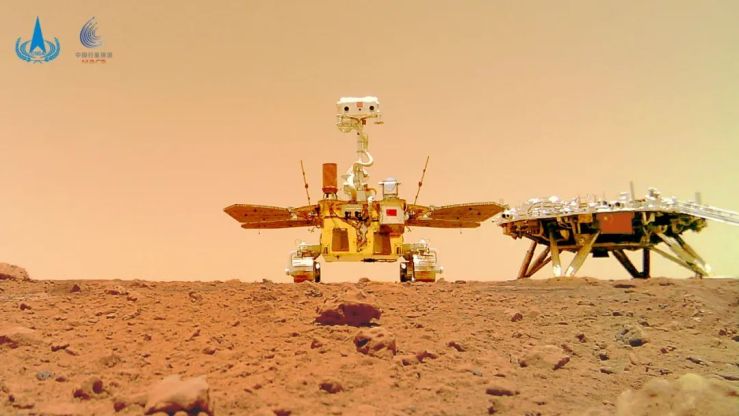
The “Zhurong” rover also sent back selfies from the surface of Mars. Compared with the photos taken just after landing, it can be seen that a thin layer of dust has accumulated on the surface of the rover. At the same time, according to the telemetry information of the rover, the power generation efficiency of the solar wing is affected to a certain extent, but the energy is still sufficient. In order to cope with the dust coverage, the solar wing of the Mars rover has been specially designed, and various measures can be taken to deal with the problem of the reduction of power generation efficiency caused by the sand and dust.

(a) 
Taken at the 
center of the 

 image on January 22 , 2022 ( 30.7 °E, 74.0 ° N )
(b) 
Taken at the center of the image on February 10 , 2022 ( 37.8 ° east longitude , 7 2.9 ° north latitude), a local sandstorm occurred, and the ground objects were difficult to distinguish

 
Fig. 3 Comparison of wind and sand activities in high latitude regions of the Northern Hemisphere captured by medium-resolution cameras

The Martian dust storm will directly affect the energy acquisition of the Mars rover, which has always attracted much attention. The engineering team continued to monitor the Martian sand and dust weather through images obtained by the medium-resolution camera of the “Tianwen-1” orbiter, and found that from late January this year, obvious wind and sand activities began to appear in the area north of 60 ° N latitude on Mars. It can be seen from the figure below that a local sandstorm occurred in this area in February this year, and typical features were covered by a large amount of sand and dust, making it difficult to distinguish.

At present, the northern hemisphere of Mars has begun to enter autumn. According to the analysis of previous detection data, autumn is the season of frequent occurrence of dusty weather on Mars, but no obvious dusty weather has been observed in the inspection area of ​​”Zhurong”.

(a) Taken on March 24 , 2021 , at the center of the image ( 110.2 ° E, 24.6 °N)
(b) Taken on January 30 , 2022 , at the center of the image ( 107.4 ° E longitude , 24.4 ° N latitude )
Figure 4. Medium resolution image of “Zhurong” landing inspection area

The “Tianwen-1” orbiter continues to carry out global remote sensing exploration of Mars, and focuses on typical landforms and geological units such as craters, volcanoes, canyons, and dry riverbeds, and obtains high-resolution images. On March 7 this year, the American “Perseverance” rover was photographed while imaging the “Jezero” crater, which is currently located about 200 meters southeast of its landing site.

Figure 5 The American “Perseverance” rover photographed by “Tianwen-1”

Source Cartography: National Astronomical Observatory -Author: Geng Yan Chen Gang

Images and visuals are from CNSA- China National Space Administration also from there respectives- CLEP –China Lunar Exploration Project..