CNSA #ChinaNationalSpaceAdministration #國家航天局 |#BRI  #July2023 | #火星 # 天問 #天问一号#TianwenOne #MarsMission #Tianwen1 probe  #祝融号 #ZhuRong stunning Martian landscape new stunning photography during the year 2022  before Hibernation  #AGallery

天问一号飞運騎遊達达3亿CNSA – China National Space Administration – ESA – European Space agency Belt and road initiative mars mission…first Mars exploration mission, Tianwen- Martian Probe OneAs of September 15, 2022, the Tianwen-1 orbiter has been in orbit for more than 780 days, and the rover has travelled a total of 1,921 meters, completed the established scientific exploration tasks, and obtained 1,480 GB of original scientific exploration data. The scientific research team has obtained rich scientific results through the research on the first-hand scientific data obtained independently by my country. Through a comprehensive study of typical landforms such as concave cones, barrier craters, and trenches distributed in the landing area, the important connection between the formation of the above-mentioned landforms and water activities has been revealed.

朱融号  Zhurong Mars Rover The photos taken by the Mars rover before hibernation for one month (April 22), maybe this is the posthumous work…..The mosaic pictures of other scenes taken by Zhurong are all 50% of the original picture, and they were taken on January 29, March 3, March 14 and April 12, 2022.

It is worth mentioning that Figure 4 is the last batch of pictures from the navigation terrain camera of the Zhurong Mars rover currently released, and it may also be the last batch of photos from the Zhurong rover that we can see in the days to come Original..

Data source: The fourth batch of scientific exploration data of Tianwen-1 released by China Planetary Exploration Engineering Ground

On February 17, 2022, the Zhu Rong discovered an interesting-looking bunker (Figure 1). The ground around it is full of gravel, and most of it is sand here. On February 19th, the Zhurong sailed close to it to investigate it. Figure 2 is a collage of photos of the bunker taken on the side.


Source of original data: The fourth batch of scientific exploration data of Tianwen-1 released by China Planetary Exploration Engineering Ground Application System on July 3, 2023​​​​….

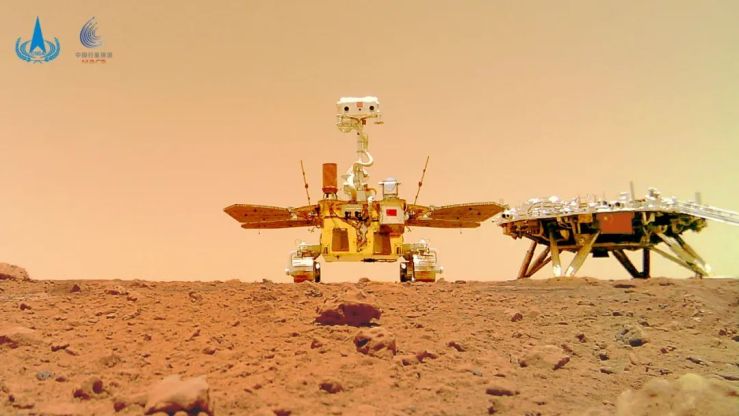
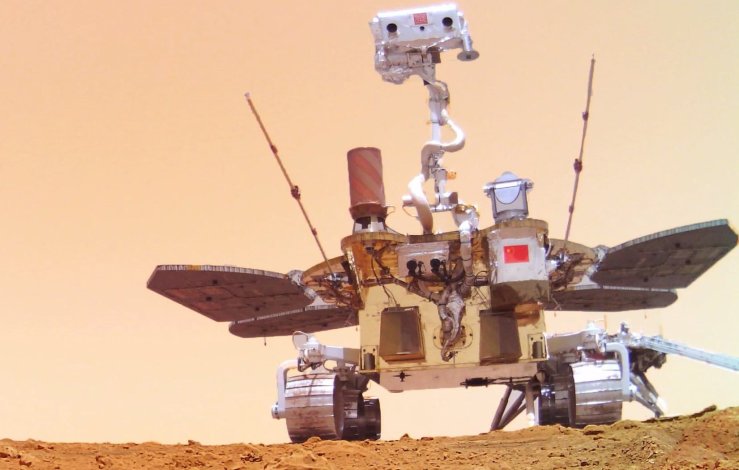
A selfie taken by the Zhu Rong rover on January 12, 2022, showing the back cover of the lander on the distant horizon.

Source of original data: The fourth batch of scientific exploration data of Tianwen-1 released by China Planetary Exploration Engineering Ground Application System on July 3, 2023​​​​….

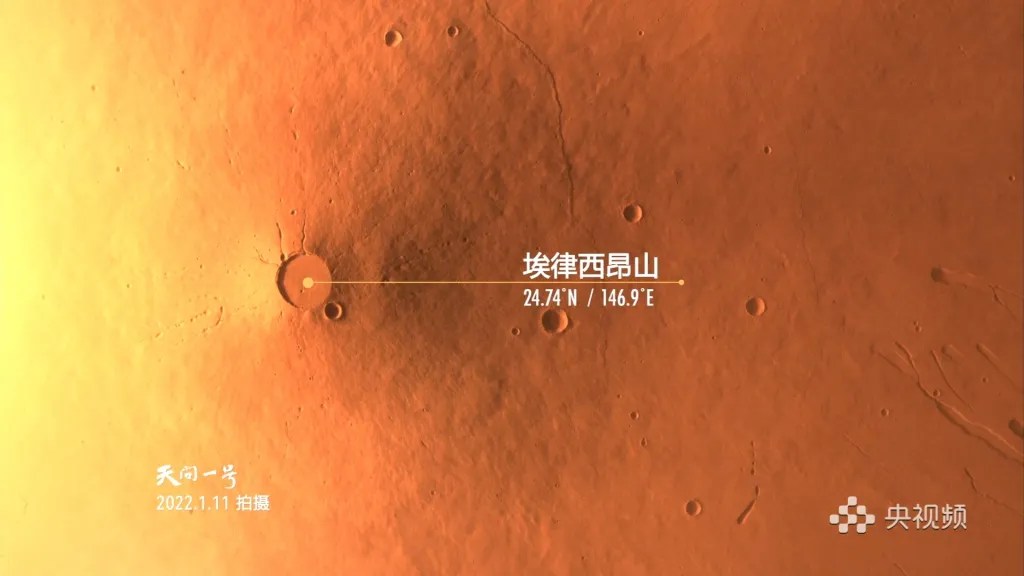
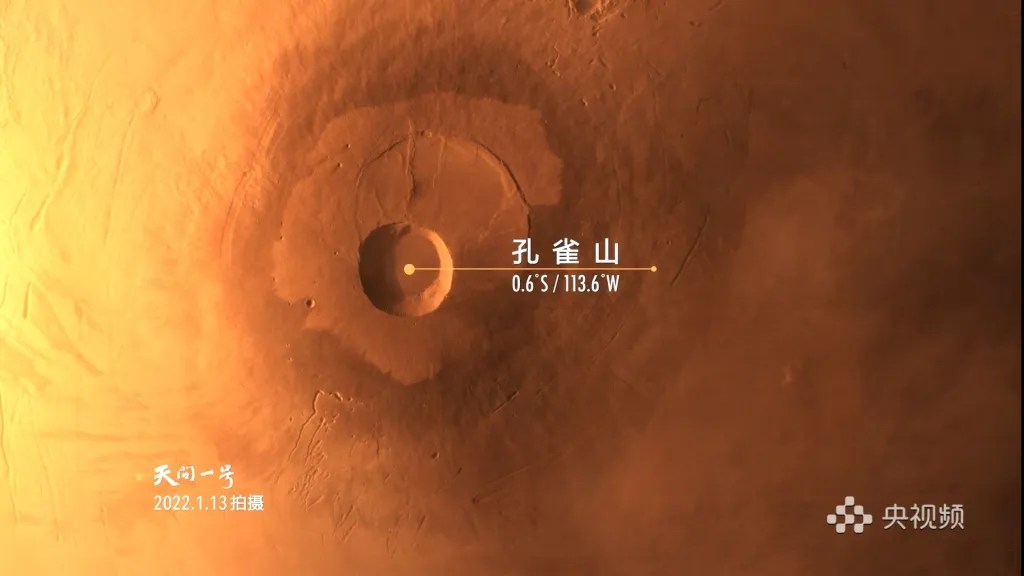
Four images of the surface of Mars acquired by the Tianwen-1 orbiter’s medium-resolution camera between January and February 2022. Do these four pictures look familiar to you? A little hint: the main scenery in the four photos are Peacock Mountain (Pavonis Mons), Arsia Mountain (Arsia Mons), Matt crater (Marth crater) on the Arabian Highlands (Arabia Terra) and Mount Elysium ( Elysium Mons).

That’s right, this is the documentary “Hello! Original images of the four photos of Mars in the opening credits of each episode of Mars. With the advancement of the Mars global image mapping work in 2022, the medium-resolution camera imaging area gradually moves southward to the middle and low latitudes. We have seen more and more shocking Mars photos, and we will slowly share them with you.

Original data source: The fourth batch of scientific exploration data of Tianwen-1 released by the China Planetary Exploration Engineering Ground Application System on July 3…

Tharsis Tholus, taken by the medium-resolution camera of Tianwen-1 on January 26, 2022, is a small shield volcano at 90.69° west longitude and 13.25° north latitude on Mars. Source of original data: The fourth batch of scientific exploration data of Tianwen-1 released by China Planetary Exploration Engineering Ground Application System on July 3, 2023

Tractus Catena, long and narrow in the Arcadia region of the northern hemisphere A group of pits located between the Alba Mountains and the Asklaw Mountains, with a total length of nearly 900 kilometers.
This picture is made by mosaicing 21 orbiter medium-resolution camera (MoRIC) images, taken from February to March 2022-detection cycle 845,998, and processed using OpenCV, SKImage, and Lr. [CAS/GRAS, CNSA/PEC; export production

Noctis Labyrinthus (Noctis Labyrinthus), taken by the medium-resolution camera of the Tianwen-1 orbiter on February 21, 2022, is a complex canyon in the western section of the Grand Canyon Mariners on the surface of Mars, shaped like a maze. In fact, the Latin name Labyrinthus of this type of landform means “maze at night”, and the Chinese translation of some places is directly called “maze”. Data source: The fourth batch

of scientific exploration data of Tianwen-1, the ground application system of China Planetary Exploration Engineering

The Tianwen-1 medium-resolution camera took the wind-eroded landform on the surface of Mars at 65.4° east longitude and 5.1° north latitude on February 17, 2022 (40% original resolution). Each impact crater bears traces of wind erosion, as if meteors flew over the surface of Mars. The reason for this landform is the accumulation of wind and sand formed under the action of the prevailing wind direction. The fourth batch of scientific exploration data of Tianwen-1 released by China Planetary Exploration Engineering Ground Application System on July 3, 2023.

Images and visuals are from their respectives  CNSA China National Space AdministrationCLEP China Lunar Exploration Program.

CNSA #ChinaNationalSpaceAdministration #國家航天局 |#BeltAndRoadinitiative #May2022 | #火星 # 天問 #天问一号#TianwenOne #MarsMission #Tianwen1 probe  #祝融号 #ZhuRong #Tianwen1 #CCTV #HelloMars Episode Five What skills does it take to drive on Mars? See how the Zhurong rover visits Mars Hello Mars

“Hello! Mars” Episode 5 What skills do you need to learn to drive on Mars? See how the Zhurong rover visits Mars Hello Mars…….!

On the months week of 19th May 2022   天问一号飞運騎遊達达3亿CNSA – China National Space Administration – ESA – European Space agency Belt and road initiative mars mission…first Mars exploration mission, Tianwen- Martian Probe One sent back stunning images of the Half Earth Mass size of the Rustic Planet Mars in which show stunning Martian landscape with its iconic polar caps of either southern or northern … With its timeless Stunning Mars Photography. Tianwen-1″ returned high-resolution images of the Mars inspection area The “Zhurong” rover is preparing for winter, and the orbiter continues to carry out orbital exploration….. in which one year ago it was it’s first landing on Utopia Planitia region on the planet Mars .. in celebrating a CCTV five part Episode was produced..

《你好!火星》Hello Mars Episode five  Two Driving on Earth pays attention to “there are thousands of roads, and safety is the first”, but on Mars, it becomes “there is no road, and safety is more important”. This place in the southern part of the Utopia Plain, although it is flat and open as far as the eye can see, is full of small pits and sand dunes. Driving in this place requires not only superb driving skills, but more importantly, a good car with eighteen martial arts skills. The rover’s design team finally designed this good car with experience and bold innovation.

本期内容:在地球上开车讲究“大路万千条,安全第一条”,在火星上就变成了“大路没一条,安全更重要”。乌托邦平原南部这块地方,虽然一望无际平坦开阔,但石块小坑沙丘比比皆是,在这种地方行车不仅需要车技高超,更重要的是需要一辆具有十八般武艺的好车。火星车的设计团队凭着经验和大胆创新最终设计出了这辆好车。

Hello everyone, I would like to tell you some good news about the documentary “Hello!” about China’s first Mars exploration mission. “Mars” is finally on the air, friends who want to know more about Mars can stay in front of the TV tonight

“Hello! “Mars” is a large-scale scientific documentary jointly produced by the National Space Administration and China Central Radio and Television to commemorate the first anniversary of the Tianwen-1 Mars probe’s successful landing on Mars. It took three years to complete the filming and is divided into “Departure” and “Journey” “Surrounding”, “Landing” and “Patrol” have 5 episodes, each of which is 30 minutes long. They focus on the important stages of the Tianwen-1 mission, and describe a large number of astronomy, astrophysics, space applications, aerospace engineering and other disciplines in a simple way. Knowledge, in-depth analysis of Chinese wisdom and Chinese solutions in Mars exploration. Since May 2020, the co-production team has continued to track the key nodes of the Tianwen-1 mission, filmed many wonderful moments, and obtained a large number of first-hand precious materials. Many of the contents of the documentary were made public for the first time and were released authoritatively.


Broadcasting plan CCTV-1 CCTV integrated channel every night at 22:36, five days of continuous broadcast from May 18th to 22nd; CCTV-10 CCTV science and education channel every night at 20:10, from May 19th to 23rd five days of continuous broadcast

大家好,告诉大家一个好消息,讲述中国首次火星探测任务的纪录片《你好!火星》终于要开播啦,想更多了解火星的朋友们今晚可以守在电视机前哟《你好!火星》是为纪念天问一号火星探测器成功着陆火星一周年,由国家航天局和中央广播电视总台联合出品的大型科学纪录片,共历时3年摄制完成,分为《出发》《征途》《环绕》《着陆》《巡视》5集,每集30分钟,分别聚焦天问一号任务的重要阶段,以深入浅出的形式讲述了大量天文学、天体物理学、空间应用学、航天工程学等学科知识,深度解析了火星探索中的中国智慧、中国方案。联合摄制团队自2020年5月起,持续跟踪天问一号任务关键节点,拍摄众多精彩瞬间,获得大量一手珍贵素材,纪录片中很多内容是首次公开,并权威发布。


播出计划CCTV-1央视综合频道 每晚22:36,5月18日至22日五天连播;CCTV-10央视科教频道 每晚20:10,5月️19日至23日五天连播

Images and visuals are from CNSA- China National Space Administration also from there respectives- CLEP –China Lunar Exploration Project..

#CNSA #ChinaNationalSpaceAdministration #國家航天局 |#BeltAndRoadinitiative #May2022 | #火星 # 天問 #天问一号#TianwenOne #MarsMission #Tianwen1 probe  #祝融号 #ZhuRong #Tianwen1 #CCTV #HelloMars Episode Three-  What’s the Difference between Mars and Earth? What new discoveries have Tianwen-1 “Orbiting” Mars?

“Hello! Mars Episode 3 What’s the Difference between Mars and Earth? What new discoveries have Tianwen-1 “circled” Mars? Hello Mars……!

On the months week of  19th May 2022   天问一号飞運騎遊達达3亿CNSA – China National Space Administration – ESA – European Space agency Belt and road initiative mars mission…first Mars exploration mission, Tianwen- Martian Probe One  sent back stunning images of the Half Earth Mass size of the Rustic Planet Mars in which show stunning Martian landscape with its iconic polar caps of either southern or northern … With its timeless Stunning Mars Photography. Tianwen-1″ returned high-resolution images of the Mars inspection area The “Zhurong” rover is preparing for winter, and the orbiter continues to carry out orbital exploration….. in which one year ago it was it’s first landing on Utopia Planitia region on the planet Mars .. in celebrating a CCTV five part Episode was produced..

《你好!火星》Hello Mars Episode Three The content of this issue: On February 10, 2021, 202 days have passed since the launch of Tianwen-1. After a trek of 475 million kilometers, Mars is close at hand. At this time, the earth has circled the sun and has walked half a circle. Mars Falling behind, it is nearly 200 million kilometers away from the earth, and it takes 11 minutes for light to travel this distance. The main engine nozzle of the orbiter is facing forward, and it is about to ignite and brake. After a series of operation controls, Tianwen-1 has become an artificial Mars satellite.

本期内容:2021年2月10日,距离天问一号发射已经过去了202天,经过4.75亿公里的跋涉,火星近在眼前,此时地球已经绕着太阳,走过了大半圈,火星落在了后面,距离地球将近两亿公里,光线飞越这段距离也需要11分钟。环绕器主发动机喷口朝前,即将点火制动刹车,经过一系列的操作控制,天问一号成为了人造火星卫星。

Hello everyone, I would like to tell you some good news about the documentary “Hello!” about China’s first Mars exploration mission. “Mars” is finally on the air, friends who want to know more about Mars can stay in front of the TV tonight

“Hello! “Mars” is a large-scale scientific documentary jointly produced by the National Space Administration and China Central Radio and Television to commemorate the first anniversary of the Tianwen-1 Mars probe’s successful landing on Mars. It took three years to complete the filming and is divided into “Departure” and “Journey” “Surrounding”, “Landing” and “Patrol” have 5 episodes, each of which is 30 minutes long. They focus on the important stages of the Tianwen-1 mission, and describe a large number of astronomy, astrophysics, space applications, aerospace engineering and other disciplines in a simple way. Knowledge, in-depth analysis of Chinese wisdom and Chinese solutions in Mars exploration. Since May 2020, the co-production team has continued to track the key nodes of the Tianwen-1 mission, filmed many wonderful moments, and obtained a large number of first-hand precious materials. Many of the contents of the documentary were made public for the first time and were released authoritatively.


Broadcasting plan CCTV-1 CCTV integrated channel every night at 22:36, five days of continuous broadcast from May 18th to 22nd; CCTV-10 CCTV science and education channel every night at 20:10, from May 19th to 23rd five days of continuous broadcast

大家好,告诉大家一个好消息,讲述中国首次火星探测任务的纪录片《你好!火星》终于要开播啦,想更多了解火星的朋友们今晚可以守在电视机前哟《你好!火星》是为纪念天问一号火星探测器成功着陆火星一周年,由国家航天局和中央广播电视总台联合出品的大型科学纪录片,共历时3年摄制完成,分为《出发》《征途》《环绕》《着陆》《巡视》5集,每集30分钟,分别聚焦天问一号任务的重要阶段,以深入浅出的形式讲述了大量天文学、天体物理学、空间应用学、航天工程学等学科知识,深度解析了火星探索中的中国智慧、中国方案。联合摄制团队自2020年5月起,持续跟踪天问一号任务关键节点,拍摄众多精彩瞬间,获得大量一手珍贵素材,纪录片中很多内容是首次公开,并权威发布。


播出计划CCTV-1央视综合频道 每晚22:36,5月18日至22日五天连播;CCTV-10央视科教频道 每晚20:10,5月️19日至23日五天连播

Images and visuals are from CNSA- China National Space Administration also from there respectives- CLEP –China Lunar Exploration Project..

#CNSA #ChinaNationalSpaceAdministration #國家航天局 |#BeltAndRoadinitiative #May2022 | #火星 # 天問 #天问一号#TianwenOne #MarsMission #Marslander #MarsRover probe  #祝融号 #ZhuRong The first anniversary of Tianwen-1 landing on Mars…..

On today is of 15TH  May 2022   天问一号飞運騎遊達达3亿CNSA – China National Space Administration – ESA – European Space agency Belt and road initiative mars mission…first Mars exploration mission, Tianwen- Martian Probe One year anniversary…The first anniversary of Tianwen-1 landing on Mars….. Tianwen-1 successfully landed in the southern part of the Martian Utopia Plain, leaving China’s mark on Mars for the first time. So far, it has worked on the surface of Mars for 356 Martian days and has travelled a total of mileage1921 meters. The orbiter has flown for 661 days since its launch, and has continued to carry out remote sensing detection since it entered the orbit around the fire red planet Mars of least haft diameter of Earth.

The first anniversary of Tianwen-1 landing on Mars On May 15, 2021, from since then At present, the two devices are in good condition, and about 940GB of original scientific data has been acquired and returned. Teams of scientists are conducting data analysis, interpretation and research…. .

​​​

​Now we describe the one-year work process of Tianwen-1 through a long picture.

At present, the “Zhurong” Mars rover inspection area has entered winter, the highest temperature during the day has dropped to below minus 20 ℃, and the minimum temperature at night has dropped to minus 100 ℃, and sand and dust weather is frequent. Affected by the gradual reduction of the sun irradiation angle and the local sand and dust weather, the energy acquisition capacity of the “Zhurong” Mars rover has gradually decreased, and the thermal insulation consumption has gradually increased. To cope with this harsh environment, according to the design, the rover will switch to winter mode. The orbiter continues to carry out remote sensing exploration, and will soon achieve global coverage of Mars, while providing relay communication support for the rover.

Video review of Tianwen-1 – CNSA China National Space Administration Beijing Flight Control Center at the moment when Zhurong successfully landed on Mars, the achievement was hard-won, but the achievement was difficult, thank you for every effort and perseverance!

Commemorating the first anniversary of the Tianwen-1 Mars probe’s successful landing on Mars!
2021.05.15-2022.05.15 At 7:18 Hong Kong SAR-Beijing Time.

on May 15, 2021, the scientific research team confirmed according to the telemetry signal sent by the “Zhurong” Mars rover that the Tianwen-1 landing rover successfully landed in the pre-selected landing area in the southern Utopia Plain of Mars , China’s first Mars exploration mission to land on Mars was a complete success…..

As the first mission of China – People’s Republic of China’s planetary exploration project, Tianwen-1 has realized the leap of my country’s space exploration from the Earth-Moon system to the interplanetary system. It is the first time in the world to complete the orbiting, landing, and inspection of Mars through a single mission. It is China- People’s Republic of China’s aerospace industry. Another milestone in development.


作者:耿言 戚铁磊
海报:顾天莹 赛凡科幻空间​​​​

Images and visuals are from CNSA- China National Space Administration also from there respectives- CLEP –China Lunar Exploration Project..

#CNSA #ChinaNationalSpaceAdministration #國家航天局 |#BeltAndRoadinitiative #May2022 | #火星 # 天問 #天问一号#TianwenOne #MarsMission #Marslander #MarsRover #Tianwen1 probe  #祝融号 #ZhuRong #Tianwen1 is preparing for winter, and the orbiter continues to carry out orbital exploration….

On the months of 5th May 2022   天问一号飞運騎遊達达3亿CNSA – China National Space Administration – ESA – European Space agency Belt and road initiative mars mission…first Mars exploration mission, Tianwen- Martian Probe One  sent back stunning images of the Half Earth Mass size of the Rustic Planet Mars in which show stunning Martian landscape with its iconic polar caps of either southern or northern … With its timeless Stunning Mars Photography. Tianwen-1″ returned high-resolution images of the Mars inspection area The “Zhurong” rover is preparing for winter, and the orbiter continues to carry out orbital exploration…..

As of May 5, 2022, the “Tianwen-1” orbiter has been in orbit for 651 days and is 240 million kilometers away from the earth. The “Zhurong” rover has worked on the surface of Mars for 347 Martian days, with a cumulative travel of 1921 meters, the two devices have accumulated about 940GB of original scientific data, and the operation is normal.

During the ring fire, all seven payloads carried by the “Tianwen-1” orbiter were powered on, and continued to carry out global remote sensing exploration of Mars. Figure 1 is a 0.8 m/pixel image taken by a high-resolution camera on April 17, 2022, of the Triolle crater on Mars, showing the “seasonal slope pattern” on the crater wall. Figure 2 is a local landform image of the Martian Sailor Valley captured by a medium-resolution camera on April 1, 2022, with a resolution of about 65 meters per pixel. 

Figure 1. “Seasonal slope pattern” of the crater wall of the Triolet crater on Mars, captured by a high-resolution camera 
Fig. 2 Local landform of Martian Sailor Valley captured by medium-resolution camera

After the “Zhurong” Mars rover completed the 90-Mars day inspection mission on August 15, 2021, it will continue to carry out the expansion inspection and exploration mission. Figure 3 is an image of rocks distributed near impact craters on the Martian surface taken by the Navigation Terrain Camera on April 10, 2022 (the 323rd Martian day after landing). At present, the area where the “Zhurong” rover is located has entered winter. Similar to our earth, after entering winter, the altitude angle of solar illumination in the northern hemisphere area decreases and the duration of illumination shortens. According to the measurements, the local maximum temperature at noon on the rover has dropped to -20°C, and the ambient temperature at night is as low as -100°C. In addition, due to the presence of sand and dust weather, the light intensity is further weakened, which affects the power generation capacity of the solar wing battery array of the Mars rover. Recently, the engineering team adopted the rotation of the solar wing to adjust the light angle, reduce the daily work items and time, and achieve energy balance. 

Figure 3. Images of rocks distributed near impact craters on the Martian surface captured by the Navigation Terrain Camera

The rotation period of Mars is close to that of Earth. A Martian day is only about 40 minutes longer than that of Earth. The inclination of Mars’ rotation axis is 25.19°, which is also very close to Earth. Therefore, Mars also has day and night alternations and seasonal changes like Earth. The orbital period of Mars is about 687 days, that is, 1 Martian year is equivalent to 1.9 Earth years, which means that the average duration of each season on Mars is about twice as long as on Earth.

When the “Zhurong” first landed last year, when Mars moved to the vicinity of the aphelion, the direct sunlight point was in the northern hemisphere. At that time, the northern hemisphere had just entered summer and the southern hemisphere had entered winter. Now, nearly a year after landing on Mars, Mars is running near the perihelion, and the direct sun is in the southern hemisphere. The northern hemisphere where “Zhurong” is located is entering winter and the southern hemisphere is entering summer.

In the next two months, the direct sun point will continue to move to the south of Mars, reaching around the Tropic of Cancer around mid-to-late July, when Mars’ northern hemisphere will enter the coldest season of the year. In order to safely survive extreme weather such as Martian winter and sandstorms, the “Zhurong” rover has designed working modes such as autonomous sleep. When the energy is reduced to a certain level, it will automatically enter the sleep mode. After the environmental conditions gradually improve, it will return to normal Operating mode. 

作者:耿言 李佳威

Images and visuals are from CNSA- China National Space Administration also from there respectives- CLEP –China Lunar Exploration Project..