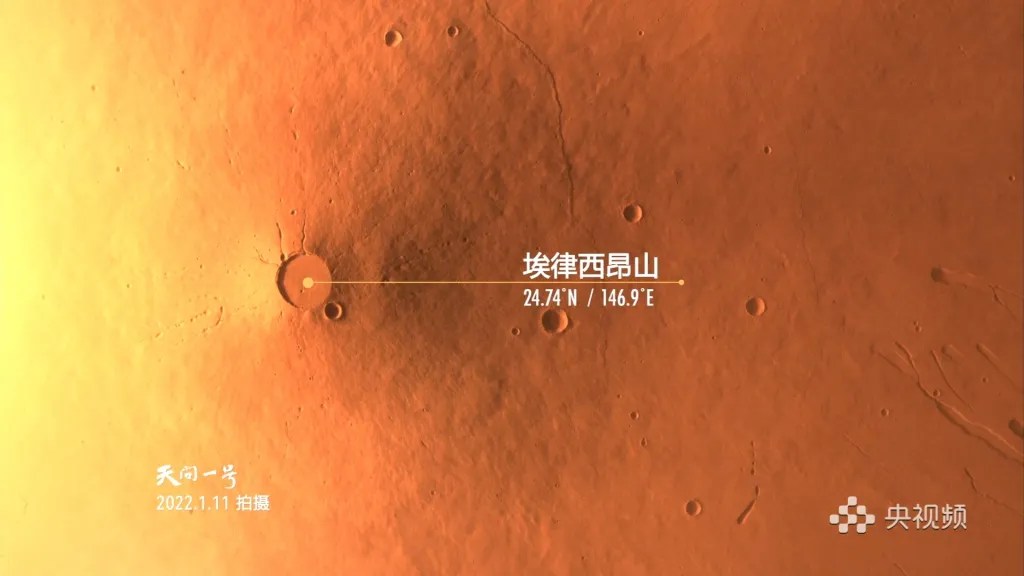
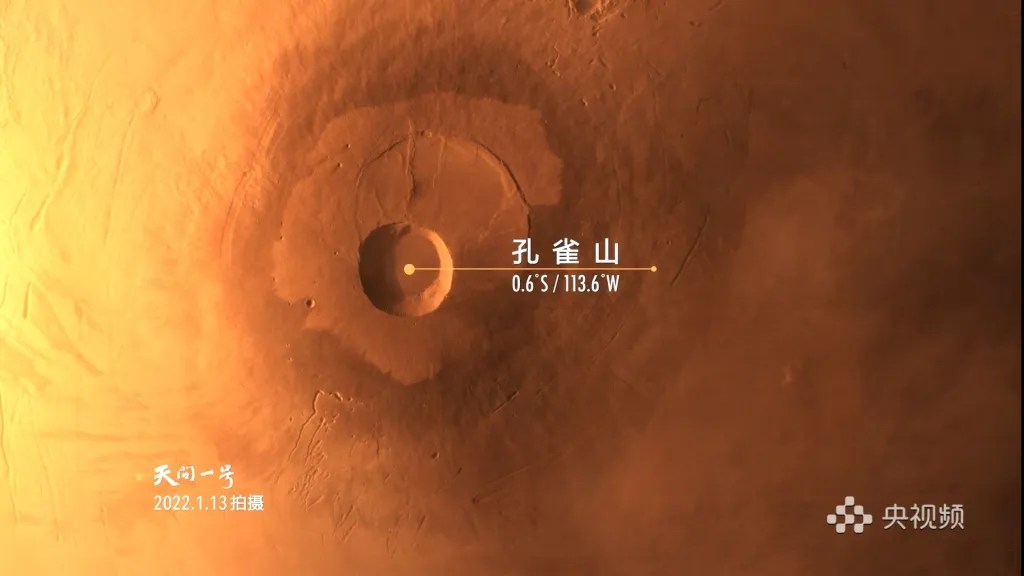
CNSA #ChinaNationalSpaceAdministration #國家航天局 |#BRI  #August2023 | #火星 # 天問 #天问一号#TianwenOne #MarsMission #Tianwen1 probe  #祝融号 #ZhuRong stunning Martian landscape new stunning photography during the year 2022  before Hibernation  #AGallery

天问一号飞運騎遊達达3亿CNSA – China National Space Administration – ESA – European Space agency Belt and road initiative mars mission…first Mars exploration mission, Tianwen- Martian Probe OneAs of September 15, 2022, the Tianwen-1 orbiter has been in orbit for more than 780 days, and the rover has travelled a total of 1,921 meters, completed the established scientific exploration tasks, and obtained 1,480 GB of original scientific exploration data. The scientific research team has obtained rich scientific results through the research on the first-hand scientific data obtained independently by my country. Through a comprehensive study of typical landforms such as concave cones, barrier craters, and trenches distributed in the landing area, the important connection between the formation of the above-mentioned landforms and water activities has been revealed.

朱融号 The photos taken by the Mars rover before hibernation for one month (April 2022), maybe this is the posthumous work….

Currently as to date of the Zhurong Mars Rover is currently at sleep safe mode due to the Martian Sandstorms….. The location of Zhurong taken by the Tianwen-1 orbiter after it hibernated in Zhurong last year. The rut marks left by Zhurong after traveling 1921 meters are clearly visible….. The local dust on Mars captured by the Tianwen-1 orbiter is much layered. This photo was taken by the medium-resolution camera of the Tianwen-1 orbiter on January 6, 2022, and Zhurong went into a dormant state more than three months after this time point. 

Last year, he appeared in the documentary “Hello! The photo of Arsia Mons in the opening title of “Mars” was synthesized from multiple photos taken by the medium-resolution camera of the Tianwen-1 orbiter on February 7, 2022.

On the basis of the previously released version, a post- processing….

The south pole of Mars taken by the medium-resolution camera of the Tianwen-1 orbiter is stitched together from three images.
Image processing: SegerYu/CAS/NAOC/GRAS​​​​

A photo of the northwest corner of the Tempe Terra in the northern hemisphere of Mars. The coordinates are about 82° west longitude and 45° north latitude. It was taken by the Tianwen-1 medium-resolution camera on February 14, 2022, at 50% of the original size.

Original data source: China Planetary Exploration Engineering Ground Application System​​​​

The medium-resolution camera of Tianwen-1 were basically unprocessed. However, after trying to do post-production recently, it is still really fragrant, and I can get a lot of good pictures that feel completely different. For example, after processing the wind-eroded landform photos on the surface of Mars at 65.4° east longitude and 5.1° north latitude previously posted, Figure 1 is obtained . After comparing with the previous version (text of Weibo) (Figure 2), we can see that the overall effect is very high . A level of original data source: China Planetary Exploration Engineering Ground Application System….

Orson Welles crater (Orson Welles) near the equator, located in the Western Hemisphere Coprates quadrangle (MC-18), on the north side of the east end of Sailors Valley. The researchers believe that the pit was covered by sediment long ago, and that the collapse of an underground aquifer created a complex chaotic topography in the pit, releasing flash floods that formed vast lakes in the pit. The northeast side of the crater was damaged by multiple current events, and the flood water overflowed the rim of the crater, forming the downstream Shalbatana Vallis (Shalbatana Vallis).
This is a key to the turbulent past of Mars…
This picture is made by mosaicing 4 of the 26 Orbiter Medium Resolution Camera (MoRIC) images obtained by searching for the Sharbatana Canyon as the area of ​​interest. Taken on February 22, 2022-detection cycle 914, using OpenCV, SKImage, Lr for processing. [CAS/GRAS, CNSA/PEC; export production:

Aram Chaos (left side) and Ares Canyon part (Ares Vallis, center right), in the Oxia Palus, MC-11, on the northeast side of Valles Mariners. The former is a circular chaotic terrain with a width of about 280 km, which is considered to be an impact crater highly eroded by water flow; the latter is an obvious overflow channel, which was landed by the Mars Pathfinder mission MESUR Pathfinder in 1997 The Sojourner rover landed here.
This picture is made by searching a medium-resolution camera (MoRIC) image in an area with (2.6N, 21.5W) as the center and a search radius of 160 km. It was taken on February 9, 2022- Detection period 872, processed by OpenCV, SKImage, Lr. [CAS/GRAS, CNSA/PEC; export production

Gale Crater (the largest one in the picture above) and its surroundings taken by the medium-resolution camera of the Tianwen-1 Mars orbiter on March 3, 2022. Gale Crater is the place where the Curiosity rover landed on August 6, 2012. It has been nearly ten years since Curiosity landed when this photo was taken, and the Curiosity rover is still working tirelessly in Gale Crater Exploring, climbing Aeolis Mons (also known as Mount Sharp) located in the center of the pit from the northwest.

Several unnamed impact craters and some wind-eroded landforms near 7°N, 138.7°W of Mars were taken by the medium-resolution camera of the Tianwen-1 Mars orbiter on March 11, 2022, at 50% of the original size. Original data source: China Planetary Exploration Engineering Ground Application System

“Part of the Sacra Sulci at 18°N, 74.53°W on Mars, taken on March 6, 2022 by the Tianwen-1 Mars orbiter medium resolution camera, 50% of the original size. The several drop-shaped sand dunes in the picture look very interesting. Source of original data: China Planetary Exploration Engineering Ground Application System”

The mid-section of the Valles Marineris at around 70°W, taken by the medium-resolution camera of the Tianwen-1 Mars orbiter on February 8, 2022, is 50% of the original size and processed with contrast enhancement.

The area in the picture is mainly composed of four canyons: the smaller one in the upper left is Ophir Chasma, the one in the middle of the picture to the south is Candor Chasma, and the larger one in the lower left. The area is Melas Chasma (Melas Chasma), and the bottom right stretches all the way to the southeast is Coprates Chasma (Coprates Chasma).

Source of original data: China Planetary Exploration Engineering Ground Application System

The Martian dust storm taken by the medium-resolution camera of the Tianwen-1 Mars orbiter on February 3, 2022, 50% of the original size, processed with contrast enhancement. The center of the picture is about 3°W, 56°N, about 360 kilometers wide from east to west, and about 560 kilometers long from north to south, with a total area of ​​about 200,000 square kilometers, which is larger than the area of ​​most provincial-level administrative regions in eastern China. Original data source: China Planetary Exploration Engineering Ground Application System

The Phlegethon Catena (the one in the northeast-southwest direction) is located in the east of Alba Mons on Mars, at about 38°N, 103.5°W, as determined by the Tianwen-1 Mars Orbiter Rate camera taken on February 1, 2022.

Original data source: China Planetary Exploration Engineering Ground Application System​​​​

天文一号Curie Crater (the larger one in the middle and lower part) located at 28.78°N, 4.6°W on Mars and several unnamed craters around it were captured by the medium-resolution camera of the Tianwen-1 Mars Orbiter in 2022 Filmed on February 3.

Original data source: China Planetary Exploration Engineering Ground Application System

The Barabashov Crater (the largest one in the middle) is located at 47.3°N, 68.8°W on Mars. The upper right corner is the Perepelkin Crater, as shown by the Tianwen-1 spacecraft. Image taken by the Mars Orbiter Medium Resolution Camera on February 8, 2022, 50% original size.

Original data source: China Planetary Exploration Engineering Ground Application System

The Claritas Fossae group (Claritas Fossae) near 28.5°S and 103°W on Mars is full of rugged landforms and impact craters of different sizes. A long cliff extending from the upper left to the lower right is Claritas Fossae. Claritas Rupes. The photo was taken by the Tianwen-1 Mars Orbiter Medium Resolution Camera on March 18, 2022, 50% of the original size.

Original data source: China Planetary Exploration Engineering Ground Application System

The picture shows several impact craters in the Coracis Fossae group (Coracis Fossae) in the southern hemisphere of Mars, located at 33°S 78°W. The photo was taken by the Tianwen-1 Mars Orbiter Medium Resolution Camera on June 30, 2022, 50% of the original size.

Mount Askra, the second highest mountain on Mars, captured by the medium-resolution camera of the Tianwen-1 orbiter on February 1, 2022.

Data: CAS/NAOC/GRAS

Original data source: China Planetary Exploration Engineering Ground Application System​​​

Valles Marineris taken by the Tianwen-1 Mars probe. This is the largest canyon in the solar system, 4,000 kilometers long, 200 kilometers wide at its widest point, and 7 kilometers deep. This photo was taken on February 8, 2022, when Tianwen-1 was at an altitude of 762 kilometers. Image source: CNSA/CLEP/PEC/MoRIC/

The Tianwen-1 Mars photo taken two years ago today shows the scene of a sandstorm approaching Olympus Mons. Image source: CNSA/CLEP/PEC/MoRIC/

Images and visuals are from their respectives  CNSA China National Space AdministrationCLEP China Lunar Exploration Program.

CNSA #ChinaNationalSpaceAdministration #國家航天局 |#BRI  #July2023 | #火星 # 天問 #天问一号#TianwenOne #MarsMission #Tianwen1 probe  #祝融号 #ZhuRong stunning Martian landscape new stunning photography during the year 2022  before Hibernation  #AGallery

天问一号飞運騎遊達达3亿CNSA – China National Space Administration – ESA – European Space agency Belt and road initiative mars mission…first Mars exploration mission, Tianwen- Martian Probe OneAs of September 15, 2022, the Tianwen-1 orbiter has been in orbit for more than 780 days, and the rover has travelled a total of 1,921 meters, completed the established scientific exploration tasks, and obtained 1,480 GB of original scientific exploration data. The scientific research team has obtained rich scientific results through the research on the first-hand scientific data obtained independently by my country. Through a comprehensive study of typical landforms such as concave cones, barrier craters, and trenches distributed in the landing area, the important connection between the formation of the above-mentioned landforms and water activities has been revealed.

朱融号  Zhurong Mars Rover The photos taken by the Mars rover before hibernation for one month (April 22), maybe this is the posthumous work…..The mosaic pictures of other scenes taken by Zhurong are all 50% of the original picture, and they were taken on January 29, March 3, March 14 and April 12, 2022.

It is worth mentioning that Figure 4 is the last batch of pictures from the navigation terrain camera of the Zhurong Mars rover currently released, and it may also be the last batch of photos from the Zhurong rover that we can see in the days to come Original..

Data source: The fourth batch of scientific exploration data of Tianwen-1 released by China Planetary Exploration Engineering Ground

On February 17, 2022, the Zhu Rong discovered an interesting-looking bunker (Figure 1). The ground around it is full of gravel, and most of it is sand here. On February 19th, the Zhurong sailed close to it to investigate it. Figure 2 is a collage of photos of the bunker taken on the side.


Source of original data: The fourth batch of scientific exploration data of Tianwen-1 released by China Planetary Exploration Engineering Ground Application System on July 3, 2023​​​​….

A selfie taken by the Zhu Rong rover on January 12, 2022, showing the back cover of the lander on the distant horizon.

Source of original data: The fourth batch of scientific exploration data of Tianwen-1 released by China Planetary Exploration Engineering Ground Application System on July 3, 2023​​​​….

Four images of the surface of Mars acquired by the Tianwen-1 orbiter’s medium-resolution camera between January and February 2022. Do these four pictures look familiar to you? A little hint: the main scenery in the four photos are Peacock Mountain (Pavonis Mons), Arsia Mountain (Arsia Mons), Matt crater (Marth crater) on the Arabian Highlands (Arabia Terra) and Mount Elysium ( Elysium Mons).

That’s right, this is the documentary “Hello! Original images of the four photos of Mars in the opening credits of each episode of Mars. With the advancement of the Mars global image mapping work in 2022, the medium-resolution camera imaging area gradually moves southward to the middle and low latitudes. We have seen more and more shocking Mars photos, and we will slowly share them with you.

Original data source: The fourth batch of scientific exploration data of Tianwen-1 released by the China Planetary Exploration Engineering Ground Application System on July 3…

Tharsis Tholus, taken by the medium-resolution camera of Tianwen-1 on January 26, 2022, is a small shield volcano at 90.69° west longitude and 13.25° north latitude on Mars. Source of original data: The fourth batch of scientific exploration data of Tianwen-1 released by China Planetary Exploration Engineering Ground Application System on July 3, 2023

Tractus Catena, long and narrow in the Arcadia region of the northern hemisphere A group of pits located between the Alba Mountains and the Asklaw Mountains, with a total length of nearly 900 kilometers.
This picture is made by mosaicing 21 orbiter medium-resolution camera (MoRIC) images, taken from February to March 2022-detection cycle 845,998, and processed using OpenCV, SKImage, and Lr. [CAS/GRAS, CNSA/PEC; export production

Noctis Labyrinthus (Noctis Labyrinthus), taken by the medium-resolution camera of the Tianwen-1 orbiter on February 21, 2022, is a complex canyon in the western section of the Grand Canyon Mariners on the surface of Mars, shaped like a maze. In fact, the Latin name Labyrinthus of this type of landform means “maze at night”, and the Chinese translation of some places is directly called “maze”. Data source: The fourth batch

of scientific exploration data of Tianwen-1, the ground application system of China Planetary Exploration Engineering

The Tianwen-1 medium-resolution camera took the wind-eroded landform on the surface of Mars at 65.4° east longitude and 5.1° north latitude on February 17, 2022 (40% original resolution). Each impact crater bears traces of wind erosion, as if meteors flew over the surface of Mars. The reason for this landform is the accumulation of wind and sand formed under the action of the prevailing wind direction. The fourth batch of scientific exploration data of Tianwen-1 released by China Planetary Exploration Engineering Ground Application System on July 3, 2023.

Images and visuals are from their respectives  CNSA China National Space AdministrationCLEP China Lunar Exploration Program.

CNSA #ChinaNationalSpaceAdministration #國家航天局 |#BRI  #June2023 | #火星 # 天問 #天问一号#TianwenOne #MarsMission #Tianwen1 probe  #祝融号stunning First Mars Global Remote Sensing and Regional Patrol Exploration Mission photography #December2021 #AGallery Briefly


天问一号飞運騎遊達达3亿CNSA – China National Space Administration – ESA – European Space agency Belt and road initiative mars mission…first Mars exploration mission, Tianwen- Martian Probe One As of September 15, 2022, the Tianwen-1 orbiter has been in orbit for more than 780 days, and the rover has travelled a total of 1,921 meters, completed the established scientific exploration tasks, and obtained 1,480 GB of original scientific exploration data. The scientific research team has obtained rich scientific results through the research on the first-hand scientific data obtained independently by my country. Through a comprehensive study of typical landforms such as concave cones, barrier craters, and trenches distributed in the landing area, the important connection between the formation of the above-mentioned landforms and water activities has been revealed.

Currently as to date of the Zhurong Mars Rover is currently at sleep safe mode due to the Martian Sandstorms….. the location of Zhurong taken by the Tianwen-1 orbiter after it hibernated in Zhurong last year. The rut marks left by Zhurong after traveling 1921 meters are clearly visible….. The local dust on Mars captured by the Tianwen-1 orbiter is very layered. This photo was taken by the medium-resolution camera of the Tianwen-1 orbiter on January 6, 2022, and Zhurong went into a dormant state more than three months after this time point. 

On the week of 6th June 2023 there have been new images release of the CNSA –CLEP Mars The Lunar and Planetary Data Publishing System released a new batch of Tianwen-1 data today, including a large number of Martian surface photos taken by the obiter’s medium-resolution camera! The total number is estimated to be hundreds to thousands!  But here are some stunning incredible randomly selected a few pictures is beautiful in which has been process during the Month of December 2021 at the time when before the Martian Sandstorm!

Some of the images taken by the Zhurong rover in December 2021 come from the latest data released by the China Planetary Exploration Engineering Ground Application System

中国planet detection…. First Mars Global Remote Sensing and Regional Patrol Exploration Mission


The second batch of publicly released data is the Korolev crater (Korolev). This picture is made by mosaicing 8 orbiter medium resolution camera (MoRIC) images obtained by searching in an area with (72.77N, 164.58E) as the center and a search radius of 300 km. It was taken at detection periods 656 and 677 and 698, using OpenCV, SKImage, Lr for processing. [CAS/GRAS, CNSA/PEC; export production…..


Northeast of the Utopia Plain, west of Mie (Mie), the pirate who landed here in 1976 The impact craters in the area around the No. 2 lander are mostly named after the launch sites, measurement and control stations and other aerospace facilities in various countries in the 1970s. Among them, Xuancheng Meteor Crater (Hsūanch’eng) is named after Xuancheng City, Anhui Province. my country’s early suborbital sounding rocket launch site – Guangde Rocket Launch Site (603 Base) is located in Shijie Town, Guangde City, Xuancheng City. This is the main site for the T-7 series of sounding rockets to conduct meteorological, biological, and new technology flight tests in the 1960s. It is also the place where the brave flying pathfinding dogs “Little Leopard” and “Shanshan” set off in July 1966.


(Figure 5 shows the first flight of the T-7A rocket, and Figure 6 shows the puppy carrying out the vibration test before the flight.) 3 MoRIC images were mosaiced, taken on December 3, 2021-detection cycle 641, and processed using OpenCV, SKImage, Lr and Ps. [CAS/GRAS, CNSA/PEC; export production:

Images and visuals are from their respectives also CNSA China National Space AdministrationCLEP China Lunar Exploration Program.

#CNSA #ChinaNationalSpaceAdministration #國家航天局 |#BeltAndRoadinitiative #July2022 | #火星 # 天問 #天问一号#TianwenOne #MarsMission #Tianwen1 probe  On the second anniversary of the launch of Tianwen-1, high-definition images of #Planet #Mars #MartianMoon #Phobos were sent back ….

天问一号飞運騎遊達达3亿CNSA – China National Space Administration – ESA – European Space agency Belt and road initiative mars mission…first Mars exploration mission, Tianwen- Martian Probe One on 23rd July 2022 On the second anniversary of the launch of Tianwen-1, high-definition images of Phobos were sent back

23 July 2022 Today is the second anniversary of the launch of the Tianwen-1 mission, and the orbiter returned Phobos images. Recently, the Tianwen-1 operation team seized the opportunity when the orbiter was relatively close to Phobos, used a high-resolution camera to image Phobos, and obtained a clear image of the “full moon” state.


Phobos (Forbes) is one of the two natural satellites of Mars, with a size of about 27 kilometers × 22 kilometers × 18 kilometers. It runs in a near circular orbit at an altitude of about 6,000 kilometers from the surface of Mars, and orbits Mars every day. about 3 turns. The orbiter runs on a polar elliptical orbit with an altitude of about 220 kilometers near the fire point and an altitude of about 10,800 kilometers at the far fire point with a period of about 7 hours. Due to the orbital relationship between Phobos and the orbiter, as well as the lighting requirements during imaging, the operation team made precise calculations and precise control, and obtained a clear image with a resolution of about 50 meters when the two were about 5,100 kilometers apart.

The image shows that Phobos is a small celestial body with irregular shape, in the shape of a potato. The stripes on the surface can be seen in the upper left of the picture, which may be formed by the impact of the impact process. There is an obvious impact crater in the upper right of the picture, with a diameter of about 2 kilometer, named Öpik crater (Upik was an Estonian astronomer, known for his research on asteroids and meteorites).

Another satellite of Mars is Deimos (Deimos), with an average radius of only about 6.2 kilometers. The two satellites are named after the two sons of Ares, the god of war in ancient Greek mythology. The Greeks used to call Mars by Ares. Both moons are small irregular objects that many scientists believe were captured by Mars’ gravity into Mars’ orbit, but their origins remain controversial.

 Image: National Astronomical Observatory​​​​…

Images and visuals are from CNSA- China National Space Administration also from there respectives- CLEP –China Lunar Exploration Project..

#CNSA #ChinaNationalSpaceAdministration #國家航天局 |#BeltAndRoadinitiative #May2022 | #火星 # 天問 #天问一号#TianwenOne #MarsMission #Tianwen1 probe  #祝融号 #ZhuRong #Tianwen1 #CCTV #HelloMars Episode Four Landing on Mars has many risks. How did Tianwen-1 complete a perfect landing……?

“Hello! Mars” Episode 4 Landing on Mars has many risks. How did Tianwen-1 complete a perfect landing?”

On the months week of 19th May 2022   天问一号飞運騎遊達达3亿CNSA – China National Space Administration – ESA – European Space agency Belt and road initiative mars mission…first Mars exploration mission, Tianwen- Martian Probe One sent back stunning images of the Half Earth Mass size of the Rustic Planet Mars in which show stunning Martian landscape with its iconic polar caps of either southern or northern … With its timeless Stunning Mars Photography. Tianwen-1″ returned high-resolution images of the Mars inspection area The “Zhurong” rover is preparing for winter, and the orbiter continues to carry out orbital exploration….. in which one year ago it was it’s first landing on Utopia Planitia region on the planet Mars .. in celebrating a CCTV five part Episode was produced..

《你好!火星》Hello Mars Episode Two The content of this issue At 7:18 on May 15, 2021, Beijing time, the Chinese probe successfully landed in the southern part of the Utopia Plain in the northern hemisphere of Mars. It can be said that this is a perfect landing, because the land chosen by the landing platform itself is really too flat. At 10:40 on May 22, 2021, the rover slowly drove away from the landing platform along the ramp, and travelled 0.522 meters on the Utopia Plain. This short distance marked China as the second to achieve Mars tour……

本期内容: 北京时间2021年5月15日7点18分,中国探测器成功着陆在火星北半球乌托邦平原南部,可以说这是完美的一落,因为着陆平台自己选择的这块地儿实在是太平坦了。2021年5月22日10点40分,火星车沿着坡道缓缓驶离着陆平台,在乌托邦平原上行驶了0.522米,这短短一小段路程标志着中国成为第二个实现火星巡视的国家。

Hello everyone, I would like to tell you some good news about the documentary “Hello!” about China’s first Mars exploration mission. “Mars” is finally on the air, friends who want to know more about Mars can stay in front of the TV tonight

“Hello! “Mars” is a large-scale scientific documentary jointly produced by the National Space Administration and China Central Radio and Television to commemorate the first anniversary of the Tianwen-1 Mars probe’s successful landing on Mars. It took three years to complete the filming and is divided into “Departure” and “Journey” “Surrounding”, “Landing” and “Patrol” have 5 episodes, each of which is 30 minutes long. They focus on the important stages of the Tianwen-1 mission, and describe a large number of astronomy, astrophysics, space applications, aerospace engineering and other disciplines in a simple way. Knowledge, in-depth analysis of Chinese wisdom and Chinese solutions in Mars exploration. Since May 2020, the co-production team has continued to track the key nodes of the Tianwen-1 mission, filmed many wonderful moments, and obtained a large number of first-hand precious materials. Many of the contents of the documentary were made public for the first time and were released authoritatively.


Broadcasting plan CCTV-1 CCTV integrated channel every night at 22:36, five days of continuous broadcast from May 18th to 22nd; CCTV-10 CCTV science and education channel every night at 20:10, from May 19th to 23rd five days of continuous broadcast

大家好,告诉大家一个好消息,讲述中国首次火星探测任务的纪录片《你好!火星》终于要开播啦,想更多了解火星的朋友们今晚可以守在电视机前哟《你好!火星》是为纪念天问一号火星探测器成功着陆火星一周年,由国家航天局和中央广播电视总台联合出品的大型科学纪录片,共历时3年摄制完成,分为《出发》《征途》《环绕》《着陆》《巡视》5集,每集30分钟,分别聚焦天问一号任务的重要阶段,以深入浅出的形式讲述了大量天文学、天体物理学、空间应用学、航天工程学等学科知识,深度解析了火星探索中的中国智慧、中国方案。联合摄制团队自2020年5月起,持续跟踪天问一号任务关键节点,拍摄众多精彩瞬间,获得大量一手珍贵素材,纪录片中很多内容是首次公开,并权威发布。


播出计划CCTV-1央视综合频道 每晚22:36,5月18日至22日五天连播;CCTV-10央视科教频道 每晚20:10,5月️19日至23日五天连播

Images and visuals are from CNSA- China National Space Administration also from there respectives- CLEP –China Lunar Exploration Project..