#MadeInChina #中國製造 #中國 |54th #ParisAirShow #June2023| Chinese Carrier Rocket Companies featuring #GalacticEnergy #ZhongkeAerospace #CASSPace #CNSA #CASC #ChangZheng #LongMarch #CarrierRocket #ReusableCarrierRocket Companies…..

Currently on the 19th towards the 25th June 2023 is the Paris Air Show 2023 in which this is held in  is at Le Bourget, France  for the first time in four years after the  2021 edition fell victim to the coronavirus pandemic. In which 星河动力空间科技有限公司 Galactic Energy-  Galaxy Power (Beijing) Space Technology Co., Ltd.China’s private commercial carrier rocket company debuted at the Paris Air Show 2023….in which also is Beijing Zhongke Aerospace Exploration Technology Co., Ltd. in which is also中國航天CASC China Aerospace Science and Technology Corporation featuring their International Iconic Icon Chang Zheng – Long March Carrier Rockets

星河动力空间科技有限公司 Galactic Energy-  Galaxy Power (Beijing) Space Technology Co., Ltd. Located in Block D, Aviation Technology Plaza, E-Town, and Beijing – Beijing – China – People’s Republic of China ….Galaxy Aerospace is the first private aerospace company in China to achieve successful continuous launches, the first to send commercial networked satellites into a 500km sun-synchronous orbit, and the first to master the ability to launch multiple satellites with one carrier rocket.

Galaxy Power Aerospace, as the first Chinese private commercial rocket company to appear at the Paris Air Show, brought the company’s “Chishen-1” reusable launch vehicle model, “Ceres-1” light and small launch vehicle model, “Kangqiong” reusable The liquid oxygen/kerosene engine model participated in the exhibition. The booth is located in E116, Hall 3. We sincerely invite friends from all walks of life to come and communicate!

中國航天CASC China Aerospace Science and Technology Corporation The China Aerospace Science and Technology Corporation, or CASC, is the main contractor for the Chinese space program. It is state-owned and has subsidiaries which design, develop and manufacture a range of spacecraft, launch vehicles, strategic and tactical missile systems, and ground equipment. It was officially established in July 1999 as part of a Chinese government reform drive, having previously been one part of the former China Aerospace Corporation. Various incarnations of the program date back to 1956.

Along with space and defense manufacture, CASC also produces machinery, chemicals, communications equipment, transportation equipment, computers, medical care products and environmental protection equipment. CASC provides commercial launch services to the international market…

featuring their International Iconic Icon A variety of star exhibits of our Carrier Rockets  appeared in Paris On June 19, the 54th Paris International Aerospace Exhibition was grandly opened. China Aerospace Science and Technology Group Co., Ltd. brought a variety of aerospace products to the Paris Air show again . At this air show, our airline mainly exhibited nine types of large, medium and small Long March rockets in service: Long March 2C, Long March 2D, Long March 3B, Long March 4B, Long March 5, and Long March No. 6, Long March No. 7, Long March No. 8, Long March No. 11 and other carrier rockets. At the same time, there are models of Dongfanghong-3E communication satellite, Asia-Pacific 6D communication satellite, Lutan-1 satellite, Chinese space station, lunar probe, and Mars probe. In addition, the products and applications of communication satellites and remote sensing satellites, as well as my country’s development in various fields such as Beidou navigation, manned spaceflight, lunar exploration project, and deep space exploration were introduced through videos and exhibition boards…

China Aerospace at the 54th Paris Air Show in 2023:
▲Long March series launch vehicle
▲APSTAR 6E communication satellite on DFH-4E platform
▲Land Probe No.1 L-band InSAR satellite
▲ Tianwen-1/Chang’e-5/GaAs solar cell
▲Dongfanghong-3 E all-electric communication satellite platform
▲China Space Station

Beijing Zhongke Aerospace Exploration Technology Co., Ltd. is the first domestic aerospace enterprise with mixed ownership, and it is also the target enterprise that Oriental Aerospace Port focuses on introducing. Relying on the scientific research strength and resource advantages of the Institute of Mechanics of the Chinese Academy of Sciences and the Aerospace Flight Technology Center of the Chinese Academy of Sciences, China Aerospace Science and Technology has been committed to the research and development and integration of space technology and aerospace vehicles as a platform for the transformation of major national scientific research projects, as well as the transformation and provision of technological achievements. Aerospace launch service. The Lijian-1 rocket project also adds a brand-new name card to the Oriental Space Port, which will surely promote the construction of the Oriental Space Port to take a solid step forward.

Recently, the 54th Paris-Bourget International Aerospace Exhibition, which was suspended for 4 years, restarted. Zhongke Aerospace, as a Chinese commercial aerospace unicorn enterprise, was invited to participate in the exhibition. At the exhibition site, it focused on exhibiting the Li Arrow series of launch vehicles, providing high-quality, low-cost, and fast-response customized launch services for domestic and foreign satellite users. The 54th Paris Air Show in 2023 opened today. A number of civil and commercial aerospace companies in China appeared at this air show During this year featuring  Carrier Rockets and sky-50 kerosene engines, Lijian No. 1 and Lijian No. 3 represented by 中科航空航空 series rockets, along with its accessories.

Images and visuals are from their respectives

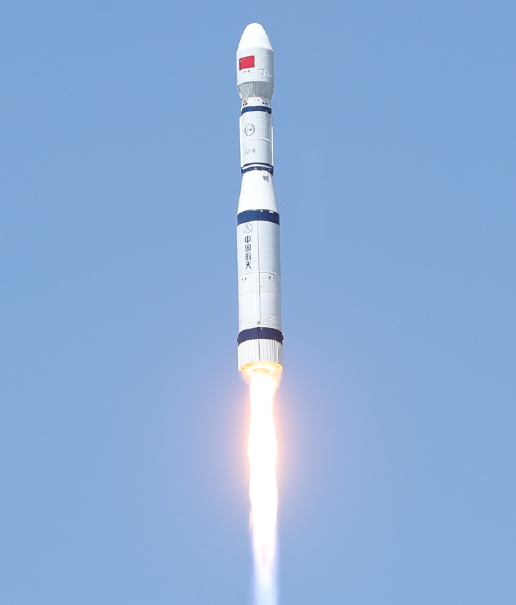
#CNSA #ChinaNationalSpaceAdministration #国家航天局 | #BRI #June2023|#太原卫星发射中心  #TaiyuanSatelliteLaunchCenter  – International Iconic #ChangZheng6 #LongMarch6  yao 12 #CarrierRocket in launched to deploy #TestSatellite #Shiyan Number 25  Satellite  into orbit carry out new earth observation technology experiments #AGallery ..

At 1118 Hours Hong Kong SAR- Beijing Time  20th June 2023 , China- People’s Republic of China- CNSA –China National Space Administration   Successfully launched  the New Next Generation Long March – Chang Zheng 6 Y12 carrier rocket at the Taiyuan Satellite Launch Center Shanxi Province..  the Long March 6 carrier rocket carrying the test 25th satellite ignited and took off at the Taiyuan Satellite Launch Center, and then successfully put the satellite into the predetermined orbit, and the launch was a complete success.

The Long March-6 launch vehicle is a low-temperature liquid three-stage launch vehicle developed by the General Manager of the Eighth Academy of China Aerospace Science and Technology Corporation. Its sun-synchronous circular orbit has a carrying capacity of up to 1.0 tons (orbital height 700 kilometers). In this mission, the rocket test team carried out work in three aspects: optimizing the process, improving reliability and enhancing mission adaptability in response to satellite requirements, to improve the quality and efficiency of rocket launches. The test satellite No. 25 was developed by Aerospace Dongfanghong Satellite Co., Ltd. of the Fifth Academy of Aerospace Science and Technology Group, and is mainly used to carry out new-type earth observation technology experiments. This launch is the 11th launch of the Long March-6 carrier rocket and the 477th launch of the Long March series of carrier rockets

Long March 6 Yao 12 arrow adopts a new inverted cone-shaped frame-type satellite support…… The Long March 6 launch vehicle for this mission was developed by the Eighth Academy of China Aerospace Science and Technology Corporation, and it adopts the Sanping test launch mode A new generation of liquid oxygen kerosene launch vehicle. In this mission, the rocket test team carried out work in three aspects: optimizing the process, improving reliability and enhancing mission adaptability in response to satellite requirements, to improve the quality and efficiency of rocket launches.


Following the launch of the mission, the model team sorted out a total of 36 improvement items, covering operational reliability and test coverage, which further improved the robustness and reliability of the rocket.

“The satellites launched this time are highly compatible with our Long March 6 rocket,” said Yu Yansheng, the overall chief designer of the Eight, Chang Zheng –Long March 6 test team. From the perspective of load weight, there are several types of rockets on the market that can perform this mission, but after an in-depth analysis of the satellite’s shape design and mission requirements, only the fairing envelope and carrying capacity of the Long March 6 are most suitable for the mission.

In view of the overall configuration of the mission satellite with a large aspect ratio, an inverted cone-shaped frame-type satellite support was designed for the model, and it is equipped with a 2.9-meter-diameter satellite fairing to adapt to the layout and interface of the satellite in the fairing. Requirements, provide effective “lifting + support” for satellites. In addition, the foam spraying technology is used on the outside of the satellite fairing to realize the insulation measures of the fairing without operation at the launch site and before launch.

At the same time, in terms of the separation method of the satellite, Chang Zheng –Long March 6 Y12 adopted a point-type connection and separation device composed of four components for the first time, which has the characteristics of light weight and intensive functions of Improved separation reliability.

In view of the fact that there are many satellite operation items after the rocket is transferred to the launch area, the design and operation personnel of the two sides of the model organization, the Star and Rocket, carried out special exchanges to confirm the timing, process, tools, precautions, etc. of the operation one by one; at the same time, arrange Specialized operation drills optimize the operation process to ensure that the time is controllable, safe and smooth in actual operation.

The Taiyuan Satellite Launch Center in June coincided with the season with more thunderstorms, and the model carried out re-identification, re-analysis, and re-confirmation of summer launch risks at the launch site. According to the characteristics of the Long March 6 carrier rocket’s “three-level” test launch mode and unsupported launch, a special review of rain and lightning protection was carried out, including the effectiveness of rain and lightning protection measures, the actual implementation of various measures, and the dismantling and rain protection before launch. Timing, etc., form a tabular inspection and confirmation document to ensure that the rocket meets the pre-launch operation and launch requirements during the thunderstorm season.

Images and visuals are from their Respectives CMS China Manned SpaceCNSA-China National Space Administration

#CNSA #ChinaNationalSpaceAdministration #国家航天局 | #BRI #June2023|#太原卫星发射中心  #TaiyuanSatelliteLaunchCenter  – International Iconic #ChangZheng2D #LongMarch2D  #CarrierRocket in launch readiness to deploy #Gaofen #Jilin  series  41 Satellites into orbit..

At  15th June 2023 , China- People’s Republic of China- CNSA –China National Space Administration   Successfully launched  the New Next Generation Long March – Chang Zheng2D carrier rocket at the Taiyuan Satellite Launch Center Shanxi Province..  Is set to launch 41- forty one Satellites in which the Chang Zheng – Long March 2D Carrier Rocket is in preparing readiness to launch in which dates back to On May 22, a total of 41 satellites set off in the Changchun Aerospace Information Industry Park, among them, “Jilin No. 1” Gaofen 03D19-26 satellites, Gaofen 06A series satellites, platform 02A01-02 The 36 satellites including Si-1 are the “Jilin-1” satellites.

The Chang Zheng -Long March 2D “One Carrier Rocket  41 Satellites” will be launched on the next day on expected on 16th June 2023 …. The latest batch of Jilin-1 satellites launched in the form of “One Carrier Rocket  41 Satellites” involves 3 large software systems and 4 satellite models, 41 satellites, and 50 sets of antenna equipment.

At present, the launch of “One Carrier Rocket 41 Satellites” has officially entered the countdown! It is planned to be launched from the Taiyuan Satellite Launch Center in the near future. This will create the record for the largest number of satellites launched in a single spaceflight in China..

[The countdown to launch has entered! Uncover how “one Carrier Rocket  41 satellites ” is achieved?

How did “41 satellites  with one Carrier Rocket” come true this time? What’s the point? Li Feng, director of the satellite operation and management technology research office of Chang Guang Satellite Technology Co., Ltd., gave the answer in an exclusive interview with China Jilin Net!


“The launch of ‘One Carrier Rocket  41 Satellites’ poses a huge challenge to the transportation and management system. In the past, a maximum of 16 satellites were launched at one time, but this time the number has reached nearly three times that of the maximum one, and it involves multiple satellite models. For measurement and control , data transmission resources, software system development, and personnel requirements are all higher. In order to do a good job in the operation and management of 41 satellites, the colleagues in the Satellite Operation and Management Technology Research Office started the preparation work at the end of last year, and the internal and external coordination of the company , docking, and recently successfully completed the system development and the joint test of the three-wheel operation and management system, involving 3 large software systems, 4 satellite models, 41 satellites, and 50 sets of antenna equipment, and confirmed the functions, performance and interfaces of each system Matching situation. The 41 satellites launched this time include 8 Jilin-1 Gaofen 03D satellites and 30 Gaofen 06A series satellites. Among them, the weight of the Gaofen 06A single satellite has been successfully reduced to 20kg, and its performance indicators are still very advanced.


Li Feng said, “During the satellite-rocket separation stage, the 41 satellites were separated seven times successively. The separation time of each group of satellites lasted for three to five seconds. . This launch has put forward higher requirements for both satellites and rockets, including separation timing and control of satellite force and torque, so as to ensure that each satellite can enter the predetermined orbit smoothly and safely. “


After the 41 satellites launched this time (including 36 “Jilin-1” satellite constellation networking remote sensing satellites) are in orbit, they will form a network with the 72 “Jilin-1” satellites in orbit. So far, “Jilin-1” “The number of satellites in orbit has increased to 108, marking that the “Jilin-1” satellite constellation network project has successfully achieved the phased goal of “Hundred Stars Flying into the Sky”

Images and visuals are from their Respectives CMS China Manned SpaceCNSA-China National Space Administration

#CNSA #ChinaNationalSpaceAdministration #国家航天局 |#BRI #April2023 |  #JiuquanSatelliteLaunchCenter launched on the International Icon #ChangZheng4B  #LongMarch4B  Y51  #CarrierRocket successfully launch #Fengyun- 3G #MeteorologicalSatellite, #Satellites….

On the 16th April 2023 clear 0936 Hours Hong Kong SAR- Beijing time , the Belt and Road Initiative CNSA –China National Space Administration  launching from Jiuquan Satellite Launch Center – Inner Mongolia –China – People’s Republic of China deployed launched the Chang Zheng –   The Chang Zheng – Long March 4B Y51 carrier rocket.. This launch is the 471st launch of the Long March series of launch vehicles.

Successfully launched the Fengyun-3G satellite, and my country has entered a new stage of active precipitation measurement and detection..  At 9:36 Hong Kong SAR- Beijing Time  today, the Long March 4B Yao 51 carrier rocket was ignited and blasted off at the Jiuquan Satellite Launch Center, successfully carrying my country’s first The first precipitation measurement satellite Fengyun-3G was sent into the predetermined orbit, and the launch mission was a complete success……  


Fengyun-3G satellite is China, People’s Republic of China first low-orbit non-sun-synchronous inclined orbit meteorological satellite, and it is also my country’s first and the third international active precipitation measurement satellite. The satellite is equipped with 4 units/sets of active precipitation measurement radar, microwave imager, medium-resolution spectral imager, and global navigation satellite occultation detector, which will fill the gap in domestic precipitation three-dimensional tomographic detection data. So far, my country has successfully launched a total of 20 “two-generation and four-type” Fengyun meteorological satellites.

The FY-3 G star is equipped with my country’s first set of “airborne rain gauge” – the satellite-borne Ku and Ka dual-frequency precipitation measurement radar, which transmits wireless electromagnetic wave signals to the atmosphere and receives the reflection signals of precipitation particles at different altitudes in the atmosphere to achieve vertical Detection of directional precipitation: Using the scanning ability of the radar in the cross-track direction, the detection of precipitation in the horizontal direction is realized, just like the “CT” scanning of atmospheric precipitation, to obtain the fine three-dimensional structure information of precipitation.

Images and visuals are from their Respectives CMS China Manned SpaceCNSA-China National Space Administration

#MadeInChina #中國製造 #中國 |#April2023 | #北京 #Beijing#天兵科技 #TianbingTechnology #SpacePioneer #Apirl2023 |What’s to come with its Next Generation #Tianlong #ReusableCarrierRocket #CarrierRocket Series.

Founded in 2015 located in Beijing ….天兵科技 – 北京天兵科技有限公司Tianbing Technology is an Aerospace propulsion system supplier and spacecraft provider One of Sixty Plus Chinese carrier Rocket companies in China, People’s Republic of China ……. Tianbing Technology is an advanced aerospace propulsion system supplier and aerospace vehicle provider. Tianbing Technology independently develops the next-generation ambient temperature green HCP liquid propellant and minimalist aerospace propulsion system. As an upgraded product of traditional chemical propulsion system, it can meet cost-effective aerospace. Advance system supporting needs. The next-generation green HCP aerospace propulsion system, first tested by Tianbing Technology, can be used in the small-vehicle main power and launch vehicle upper-level propulsion system.

Space Pioneer Next Generation Launch Carrier Rockets are using the Reusable Carrier Rocket eco system Tianlong 3 | Dragon-3 plans to fly for the first time in 2024……. Tianbing Technology’s Tianlong-3 large liquid launch vehicle (“TL-3”) is a benchmark SpaceX Falcon 9 rocket, with a diameter of 3.8m, a take-off mass of 590t, and an SSO capacity of over 15t. It uses a high-thrust, reusable liquid rocket The engine will take the lead in realizing the domestic “60 satellites with one Carrier Rocket” group shooting capability and meet the satellite Internet’s “low cost, high reliability, and high frequency” launch requirements.

At present, the key technologies of the rocket have been researched, and the first sample product has been put into production. It is planned to complete the first flight of the rocket in early 2024, and have the commercial launch capability of more than 12 rounds per year in 2025.

In addition, Tianbing Technology’s “TL-3H” heavy-duty rocket uses a common core-level parallel bundled technical solution to make the rocket’s take-off thrust reach 2310t, and the low-earth orbit capacity can reach 68t. As a reusable heavy-duty liquid rocket, the “TL-3H” sub-stage and booster can return autonomously, which will fully meet the transportation needs of large-tonnage interstellar scenarios such as space station delivery and lunar exploration projects.


“TL-3M” is an aerospace plane designed by Tianbing Technology. With a range of 14,000km, it can carry 100 people to and from any place in the world.

天兵科技 Space Pioneer Tianbing Technology is a high-tech enterprise that takes the lead in the development of a new generation of liquid rocket engines and medium and large liquid launch vehicles in my country’s commercial aerospace field. It was born along with the wave of global commercial aerospace development. The innovative concept of “Pioneer” and the corporate mission of “promoting the fifth transportation revolution of mankind” are determined to bring faster, farther and more economical rail transportation, intercontinental transportation and interstellar transportation services into the lives of the public.

The core team of Tianbing Technology are senior experts in the industry. The company has hundreds of aerospace front-line technical backbones and management backbones. The average age of team members is 38 years old, of which 67% have senior professional titles and above, and 95% have master’s degree or above. Tianbing Technology, a talent and technical elite, is building a world-class commercial aerospace enterprise with a leading force.

Tianbing Technology will take Beijing Rocket R&D Center, Xi’an Power R&D Center, Zhengzhou Comprehensive Test Center and Zhangjiagang Intelligent Manufacturing Base as strategic starting points, and strive to form a product development strategic layout of “three machines and two arrows” and an aerospace industry with “three centers and five platforms”. The intelligent manufacturing system, the supply chain system “based on the Yangtze River Delta and radiating the whole country”, and the launch market network “based on the whole of China and facing the world”, are determined to make unique contributions to the great rejuvenation of the Chinese nation and the prosperity of the global space economy.

Images and visuals are from their respectives also天兵科技 – Tianbing Technology- Space Pioneer..