#MadeInChina #中國製造| #January2025 | International #CASC #TaiyuanSatelliteLaunchCenter #ChinaAerospaceScienceAndTechnologyCorporation #Jielong3 #SmartDragon3 Yao 5 #CarrierRocket Launched Ten Satellites …..Marine sea Launch from #Haiyang #ShangdongProvince #China #PeoplesRepublicOfChina

At 1100 Hours Hong Kong SAR- Beijing Time on An early morning of 13th January  2025 , China- People’s Republic of China- CNSA –China National Space Administration   CASC China Aerospace Science and Technology Corporation  Successfully launched  the New Next Generation ChinaRocket Co. LTD  Smart Dragon –  Jielong three Carrier Rocket Yao 5  carrier rocket  at the in the waters near Haiyang, Shandong Province, the Smart Dragon Carrier rocket successfully launched from a sea borne mobile launch platform…..   

the Jielong-3 carrier rocket developed by the China Academy of Launch Vehicle Technology ignited and took off from the sea near Haiyang City, Shandong Province. The “one rocket, ten satellites” mode was used to successfully send the ten satellites of Micro-Space 01 group into the predetermined orbit using a one-rocket, ten-satellite method to send 10 satellites of the Microcentispace 01 group into a LEO orbit at an altitude of 650 kilometers and an inclination of 55 degrees. The launch mission was a success. This launch is the first sea launch in China this year, and it also marks the “good start” of China’s commercial space launch this year…

The 10 satellites of the MicrocentiSpace 01 group were developed by Beijing Future Navigation Technology Co., Ltd. Among them, the C0001~C0002 satellites were integrated as a whole by Shenzhen Aerospace Dongfanghong Satellite Co., Ltd. of the Fifth Academy of China Aerospace Science and Technology Corporation. The satellites inherited the technical status of the S5 and S6 test satellites developed by Shenzhen Dongfanghong. The construction of the networking satellite constellation system was carried out on the basis of the test satellite’s completion of the full functional status verification of the leading technology, platform and payload.

The other eight satellites were jointly developed by Harbin Institute of Technology and Harbin Institute of Technology Satellite Technology Co., Ltd. They inherited the technical status of the S4 experimental satellite and innovatively adopted a stacked design to achieve decoupling assembly of cabins, making them suitable for mass production of satellites.

The Microcentispace Low-Earth Orbit Satellite Navigation Augmentation System is developed and operated by Future Navigation Technology Co., Ltd. It is a space-ground integrated constellation system consisting of 160 low-orbit satellites and ground systems, which can provide low-cost, highly reliable centimeter-level high-precision positioning commercial services to global users in real time. This mission is the first networking launch of the Microcentispace constellation.

Smart Dragon-3 (SD-3) is a medium-sized solid-propellant carrier rocket developed by the First Academy of China Aerospace Science and Technology Corporation and invested by China Rocket Company under the First Academy. It adopts a four-stage tandem configuration, and the main power all uses solid propellant engines developed by the Fourth Academy of China Aerospace Science and Technology. The rocket is 31.8 meters long, with a diameter of 2.65 meters for the first and second stages, 2 meters for the third stage, and 1.2 meters for the fourth stage. It can be equipped with a 2.9-meter diameter and a 3.35-meter diameter fairing. It has a takeoff mass of 140 tons and a takeoff thrust of 200 tons. It is launched from the sea. Its capacity for a 500-kilometer sun-synchronous orbit (SSO) is about 1.5 tons, and its capacity for a 700-kilometer sun-synchronous orbit is about 1.3 tons. This rocket is equipped with a 3.35-meter diameter fairing.

This mission has further enhanced the rocket’s carrying capacity through overall optimization and solid engine performance improvement. It is the mission with the largest payload mass among all previous missions, reaching 1.6 tons.

At the same time, this mission is the first low-inclination orbit launch in the coastal waters of Haiyang, Shandong. The flight area and landing area are safe, which saves the cost of sea voyage, shortens the technical preparation time, improves the economy of the mission, and provides users with a more cost-effective launch service. In addition, this mission also effectively verifies the rocket’s adaptability to the severe cold at sea and the harsh natural environment of high-altitude winds in winter.

This launch mission is the first launch of the Jielong-3 carrier rocket in 2025, the first launch in the Yellow Sea, the second launch in China, and the seventh orbital space launch in the world. At the same time, this mission is also the world’s first solid rocket launch of the year and the world’s first offshore space launch.

Images and visuals are from their respectives

#CNSA #ChinaNationalSpaceAdministration #国家航天局 |#BRI #April2024| #酒泉卫星发射中心 #JiuquanSatelliteLaunchCenter – #ChangZheng2D #LongMarch2D Y97   #CarrierRocket launched #4D #Gaojing 3-01 commercial #Environmental #OpticalRemoteSensing  #Satellite …..

On the 1212 April 15th Monday 2024   Hours Hong- Kong SAR – Beijing time CNSA –China National Space Administration , China, People’s Republic of China. Successfully launched the 4D Gaojing 3-Remote Sensing satellite with the Chang Zheng- Long March 2D Y97  Carrier Rocket Jiuquan Satellite Launch Center, Inner Mongolia, China, People’s Republic of China, and then successfully launched…..

中国 the Long March 2D carrier rocket was ignited and lifted off at the Jiuquan Satellite Launch Center, and then the 4D Gaojing 3-01 statellite was sent into the predetermined orbit, and the launch mission was achieved A complete success.


The satellite is my country’s first commercial optical remote sensing satellite with an ultra-large width of more than 130 kilometers, while providing 0.5-meter resolution and 9-band combined image data products. It can efficiently serve emerging markets such as digital agriculture, smart water conservancy, and digital cities, as well as It provides users with time-efficient and high-performance spatio-temporal information services in the fields of land and resources survey, urban management, environmental protection, disaster prevention and reduction, and maritime safety…

This mission is the 516th flight of the Long March series of launch vehicles

Images and visuals are from their Respectives CMS China Manned SpaceCNSA-China National Space Administration

#MadeInChina #中國製造| #February2024 | International #CASC #ChinaAerospaceScienceAndTechnologyCorporation #Jielong3 #SmartDragon3 Yao 3 #CarrierRocket Launched Nine Satellites …..Marine sea Launch from #Yangjiang #GuangdongProvince #China #PeoplesRepublicOfChina

At 1106 Hours Hong Kong SAR- Beijing Time on An early morning of 6th December 2023 , China- People’s Republic of China- CNSA –China National Space Administration   CASC China Aerospace Science and Technology Corporation  Successfully launched  the New Next Generation ChinaRocket Co. LTD  Smart Dragon –  Jielong three Carrier Rocket Yao 3  carrier rocket  at the in the waters near Yangjiang, Guangdong Province, the Smart Dragon Carrier rocket successfully launched from a sea borne mobile launch platform….. 

Successfully launch the DRO-L satellite and Zhixing 2 A total of 9 satellites were launched: A satellite, Dongfang Huiyan Gaofen 01 satellite, Weihai No. 1 satellite 01~02, Xingdai-18~20 satellite and NEXSAT-1 satellite. The satellites successfully entered the scheduled orbit and the launch mission was a complete success. .

This launch mission is a Jielong-3 rocket, launched at sea, and included in the annual small series “Jielong Soaring to the Sky” series. The Jielong rocket soars on the sea, and the outer ring design adopts the outline of the red mountain and jade dragon. The Hongshan Jade Dragon looks like a “C” shape from a distance and enjoys the reputation of “China’s No. 1 Dragon”. The dragon is the most representative totem of the Chinese nation. The Jielong rocket has turned the imagination of the sky in traditional culture into an important national weapon for questioning the sky, embodying the cultural heritage of exploring nature and space, and implying the pursuit of technological innovation. Never ending. The wave element on the background of the badge symbolizes that every step in the aerospace industry is full of hard work and wisdom. The Jielong 3 rocket development team rides the wind and waves to realize its dream. The entire year-round combination plan will continue the outer ring design concept of “Dragon Totem”, integrating dragon totems from different dynasties and different regions over five thousand years of China. When traditional culture meets modern technology, it will show unique aerospace technology aesthetics.

Images and visuals are from their respectives

#MadeInChina #中國製造| #December2023 | an International #CASC #ChinaAerospaceScienceAndTechnologyCorporation  #Jielong3 #SmartDragon3 Yao 2  #CarrierRocket of a Test  #Internet #CommunicationSatellite …..Marine sea Launch from #Yangjiang #GuangdongProvince #China #PeoplesRepublicOfChina

At 0324 Hours Hong Kong SAR- Beijing Time on An early morning of 6th December 2023 , China- People’s Republic of China- CNSA –China National Space Administration   CASC China Aerospace Science and Technology Corporation  Successfully launched  the New Next Generation ChinaRocket Co. LTD  Smart Dragon –  Jielong three Carrier Rocket Yao 2  carrier rocket  at the in the waters near Yangjiang, Guangdong Province, the Smart Dragon Carrier rocket successfully launched from a sea borne mobile launch platform…..  This launch is the world’s 200th space launch in 2023, China’s 57th, the third this month, and the first for the Jielong 3 carrier rocket…

Launching  a satellite Internet technology test satellite… At 3:24 on December 6th, 2023, Beijing time, my country’s Taiyuan Satellite Launch Center used the Jielong 3 carrier rocket in the waters near Yangjiang, Guangdong to successfully launch a satellite Internet technology test satellite. , the satellite successfully entered the scheduled orbit, and the launch mission was a complete success. This mission is the second flight of the Jielong 3 carrier rocket…

Images and visuals are from their respectives

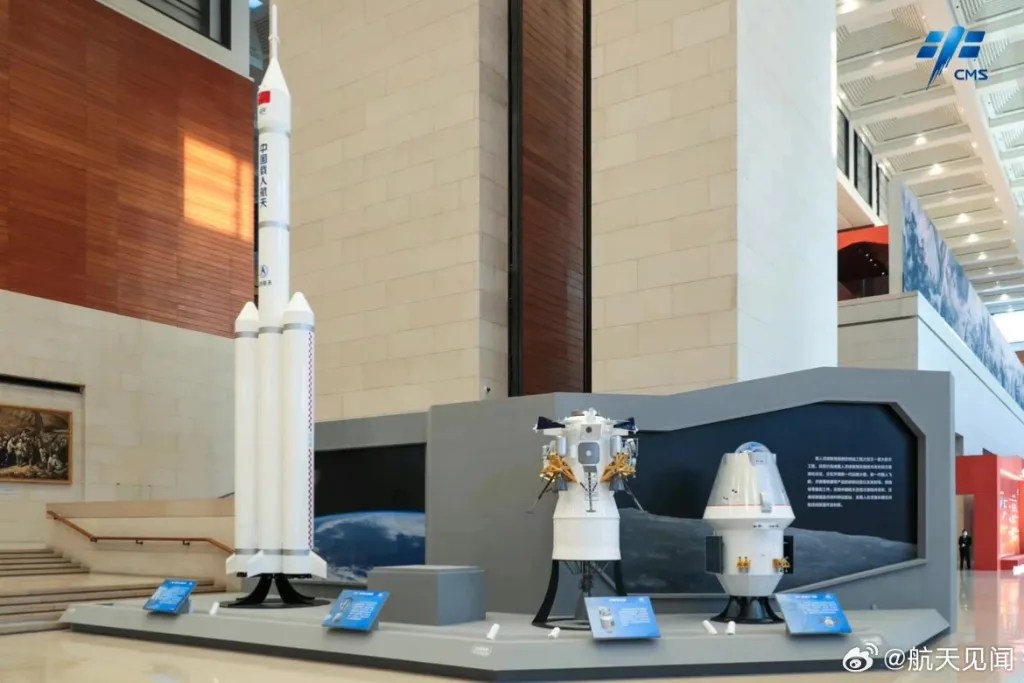
#CNSA #ChinaNationalSpaceAdministration #国家航天局 | #BRI #July2023 |#CASC #ChinaAerospaceScienceAndTechnologyCorporation – #长征十号 #MannedCarrierRocket #CarrierRocketFreighter  #3DPrinting #CarrierRocketEngine Testing the #ChangZheng10 #LongMarch10 engine at Thrust of 130 Tons Successfully …..

长征十号 At 22nd  23rd July  2023 Hong Kong SAR- Beijing time , China- People’s Republic of China- CNSA –China National Space Administration   Successfully Carrier Rocket  engine tested for the New Next Generation Chang Zheng – Long March 10 Manned Lunar mission landing Carrier rocket freighter The main engine of China’s manned lunar landing rocket Long March 10 completed another ignition test run yesterday, which verified all the requirements of the rocket mission for the engine, and provided strong support for the solidification of the engine’s technical status, the establishment of product technology baselines, and the improvement of reliability.


The engine used in this test run uses advanced liquid oxygen kerosene as fuel, which is improved and iterated from the high-thrust liquid oxygen kerosene engine used by the new generation of launch vehicles such as the active Long March 5, with a thrust of 130 tons. (The Sixth Academy of Aerospace Science and Technology Group)

Created with GIMP

The reporter learned from China Aerospace Science and Technology Group Co., Ltd. on July 23 that the main engine of my country’s manned moon landing rocket was tested in the Fengzhou Test Area of ​​the Sixth Academy of Aerospace Science and Technology Corporation, and achieved continuous success. This test run verified the engine flight mission profile, and provided strong support for the solidification of the engine technical state, the establishment of the product technical baseline, and the improvement of reliability.

The engine is the power source of the rocket, and its development process is very complicated. Test run is an important link in the engine development process, and there are dozens of types. In layman’s terms, engine test run is the process of igniting the engine and verifying the rationality of its design scheme and process reliability. This is an indispensable and important part of the development and delivery of a type 1 engine. It will run through all stages before and after engine development. Each stage of test run has different meanings, and the ignition time varies from a few seconds to hundreds of seconds.

It is reported that the engine used in this test run uses advanced liquid oxygen kerosene as fuel, which is improved and iterated from the high-thrust liquid oxygen kerosene engine used by the new generation of launch vehicles such as the Long March 5. The thrust reaches 130 tons. The R&D team of the Sixth Academy of Aerospace Science and Technology Group adheres to the concept of digital design, and has successively overcome key technical problems such as engine start-up and shutdown sequence, engine wide-range continuously variable thrust, and engine long life and high reliability.

In addition, the continuous success of the test run has fully verified the reliability of a number of new carrying process technologies. The engine production of this test run adopts the concept of intelligent manufacturing, and actively applies new materials, new processes, and new technologies. The inner wall of the thrust chamber of the core component adopts a new protective coating, key assemblies adopt automatic welding technology, and a large number of components adopt 3D printing technology.

During the preparation of the engine test run, the participants in the research and test conducted tests and verifications on each subsystem of the test through comprehensive means such as digital modelling, simulation calculation, and system debugging. The successful test run shows that the test area has greatly improved the multi-station parallel test run capability and test efficiency by optimizing the workflow.

Images and visuals are from their Respectives CMS China Manned SpaceCNSA-China National Space Administration  the Sixth Academy of Aerospace Science and Technology Group