#MadeInChina #中國製造| #January2025 | International #CASC #TaiyuanSatelliteLaunchCenter #ChinaAerospaceScienceAndTechnologyCorporation #Jielong3 #SmartDragon3 Yao 5 #CarrierRocket Launched Ten Satellites …..Marine sea Launch from #Haiyang #ShangdongProvince #China #PeoplesRepublicOfChina

At 1100 Hours Hong Kong SAR- Beijing Time on An early morning of 13th January  2025 , China- People’s Republic of China- CNSA –China National Space Administration   CASC China Aerospace Science and Technology Corporation  Successfully launched  the New Next Generation ChinaRocket Co. LTD  Smart Dragon –  Jielong three Carrier Rocket Yao 5  carrier rocket  at the in the waters near Haiyang, Shandong Province, the Smart Dragon Carrier rocket successfully launched from a sea borne mobile launch platform…..   

the Jielong-3 carrier rocket developed by the China Academy of Launch Vehicle Technology ignited and took off from the sea near Haiyang City, Shandong Province. The “one rocket, ten satellites” mode was used to successfully send the ten satellites of Micro-Space 01 group into the predetermined orbit using a one-rocket, ten-satellite method to send 10 satellites of the Microcentispace 01 group into a LEO orbit at an altitude of 650 kilometers and an inclination of 55 degrees. The launch mission was a success. This launch is the first sea launch in China this year, and it also marks the “good start” of China’s commercial space launch this year…

The 10 satellites of the MicrocentiSpace 01 group were developed by Beijing Future Navigation Technology Co., Ltd. Among them, the C0001~C0002 satellites were integrated as a whole by Shenzhen Aerospace Dongfanghong Satellite Co., Ltd. of the Fifth Academy of China Aerospace Science and Technology Corporation. The satellites inherited the technical status of the S5 and S6 test satellites developed by Shenzhen Dongfanghong. The construction of the networking satellite constellation system was carried out on the basis of the test satellite’s completion of the full functional status verification of the leading technology, platform and payload.

The other eight satellites were jointly developed by Harbin Institute of Technology and Harbin Institute of Technology Satellite Technology Co., Ltd. They inherited the technical status of the S4 experimental satellite and innovatively adopted a stacked design to achieve decoupling assembly of cabins, making them suitable for mass production of satellites.

The Microcentispace Low-Earth Orbit Satellite Navigation Augmentation System is developed and operated by Future Navigation Technology Co., Ltd. It is a space-ground integrated constellation system consisting of 160 low-orbit satellites and ground systems, which can provide low-cost, highly reliable centimeter-level high-precision positioning commercial services to global users in real time. This mission is the first networking launch of the Microcentispace constellation.

Smart Dragon-3 (SD-3) is a medium-sized solid-propellant carrier rocket developed by the First Academy of China Aerospace Science and Technology Corporation and invested by China Rocket Company under the First Academy. It adopts a four-stage tandem configuration, and the main power all uses solid propellant engines developed by the Fourth Academy of China Aerospace Science and Technology. The rocket is 31.8 meters long, with a diameter of 2.65 meters for the first and second stages, 2 meters for the third stage, and 1.2 meters for the fourth stage. It can be equipped with a 2.9-meter diameter and a 3.35-meter diameter fairing. It has a takeoff mass of 140 tons and a takeoff thrust of 200 tons. It is launched from the sea. Its capacity for a 500-kilometer sun-synchronous orbit (SSO) is about 1.5 tons, and its capacity for a 700-kilometer sun-synchronous orbit is about 1.3 tons. This rocket is equipped with a 3.35-meter diameter fairing.

This mission has further enhanced the rocket’s carrying capacity through overall optimization and solid engine performance improvement. It is the mission with the largest payload mass among all previous missions, reaching 1.6 tons.

At the same time, this mission is the first low-inclination orbit launch in the coastal waters of Haiyang, Shandong. The flight area and landing area are safe, which saves the cost of sea voyage, shortens the technical preparation time, improves the economy of the mission, and provides users with a more cost-effective launch service. In addition, this mission also effectively verifies the rocket’s adaptability to the severe cold at sea and the harsh natural environment of high-altitude winds in winter.

This launch mission is the first launch of the Jielong-3 carrier rocket in 2025, the first launch in the Yellow Sea, the second launch in China, and the seventh orbital space launch in the world. At the same time, this mission is also the world’s first solid rocket launch of the year and the world’s first offshore space launch.

Images and visuals are from their respectives

#MadeInChina #中國製造 #中國 | #星河动力空间科 #GalacticEnergy #December024| #CarrierRocketShopping #谷神星一号遥 #Ceres1S Yao 4 Sea Launched successfully Deploy Apocalypse Constellation 04 Group 33-36 satellites- #Loong #Satellites from China’s Yellow Sea.

星河动力空间科技有限公司 Galactic Energy-  Galaxy Power (Beijing) Space Technology Co., Ltd.Located in Block D, Aviation Technology Plaza, E-Town, and Beijing – Beijing – China – People’s Republic of China ….Galaxy Aerospace is the first private aerospace company in China to achieve successful continuous launches, the first to send commercial networked satellites into a 500km sun-synchronous orbit, and the first to master the ability to launch multiple satellites with one carrier rocket

At 18:18 Beijing time on December 19, 2024, Galaxy Power Aerospace successfully launched the Apocalypse Constellation 04 Group (33-36 satellites) from the offshore launch platform near Rizhao using the Ceres-1 Haiyao-4 carrier rocket. This launch is the 249th space launch in the world in 2024, the 66th in China, the 7th this month, the 5th for Galaxy Power Aerospace, and the 5th for the Ceres-1 carrier rocket

Five, four, three, two, one, ignition!” On the evening of December 19, in the waters near Rizhao City, as the shore broadcast issued the launch command, the “Ceres-1” carrier rocket standing on the Haiyang “Oriental Spaceport” launch ship ignited its engine, huge clouds of smoke rose around it, and it slowly lifted off with the “Apocalypse Constellation” (stars 33-36). The tail flames from the rocket engine instantly illuminated the night, a huge roar resounded through the sky, and cheers from tens of thousands of spectators on the shore rose one after another. This is the second sea launch mission implemented in the waters near Rizhao after May 29.

At 18:18 on December 19, 2024, the Galaxy Power Aerospace Ceres-1 Sea-launched (Yao-4) (mission code: LOONG) successfully launched the “Apocalypse Constellation” 04 satellites (33 to 36 satellites) in the sea
near Rizhao, Shandong Province. A total of 4 satellites entered the low-Earth orbit with an altitude of 850km and an inclination of 45°. The big red screen and mission badge “Apocalypse Constellation” is China’s first low-orbit Internet of Things communication constellation. The first phase consists of 38 satellites. 33 have been launched so far. It has the characteristics of global coverage, miniaturization, low power consumption and low cost. It provides global users with “air, space, land and sea” consumer-grade satellite Internet of Things data services, which have been widely used in forestry, agriculture, emergency response, and tourism.

Tourism, water conservancy, electricity, petroleum, ocean, ecological environment, smart cities and other industries as well as digital economy scenarios are moving towards the direct-connected satellite market for consumer electronic products.

This mission is the fourth sea launch mission completed by Galaxy Power Aerospace Company. It is also the fifth time that the Ceres-1 series of launch vehicles has launched networking satellites for the “Apocalypse Constellation” (Yao-1, Yao-5, Haiyao-1, Haiyao-2, and Haiyao-4). This marks that as the only private rocket type that can take into account both land and sea launch platforms, the Ceres-1 series of launch vehicles has achieved flexible regional and orbital adaptability and high-density launch capabilities, and can quickly meet the launch needs of different satellite users to the greatest extent. Up to now, Galaxy Power Aerospace Company has successfully carried out 15 commercial launch deliveries, accurately sending a total of 58 commercial satellites with different functions into the predetermined orbits.

❶The 66th launch of China’s space program in 2024 (64 successful launches)

❷The 16th launch of the Ceres-1 carrier rocket (15 successful launches)

❸The 4th launch of the Ceres-1 sea-launched carrier rocket (4 successful launches) ❹The 14th launch of the Oriental Spaceport of the Taiyuan Satellite Launch Center (14 successful launches)

❺The 147th launch of the Taiyuan Satellite Launch Center (141 successful launches) ❻The 36th launch of China’s civil and commercial space program (29 successful launches)

 ❼The 639th launch of China’s space program (604 successful launches)

Images and visuals are from their respectives also Galactic Energy is located in Block D, Aviation Technology Plaza, E-Town, Beijing- China – People’s Republic of China  

#MadeInChina #中國製造 #中國 | #东方空间 #OrienSpace #November2023 | Developing Assembling  to launch the adorable cute #引力一号 #GravityOne Yao 1 Carrier Rocket planned for first sea flight in #December2023..

东方空间 OrienSpace is one of sixty plus Carrier Rocket Companies in Made In China, People’s Republic of China.. Located in headquartered in Beijing, B3, Digital Manor, No. 1 Disheng West Road, Yizhuang Economic and Technological Development Zone, Daxing District, Beijing………Shandong Address: No. 30, Nanjing Street, Economic Development Zone, Haiyang City, Yantai City, Shandong Province………Shaanxi Address: 4th Floor, Northwest Building, Eleven Science and Technology, National Civil Aerospace Industry Base, Xi’an, Shaanxi Province…….Hainan Address: Room 125, 1st Floor, Building 20, No. 169, Wenwei Road, Wencheng Town, Wenchang City, Hainan Province…

Established in 2020, Dongfang Space is mainly engaged in space transportation. It is a design and manufacturing service company for launch vehicles and new aerospace vehicles. Through the research and development of the “Gravity” series of launch vehicles, the company has created serialized, diversified, and flight-based aerospace transportation products such as one-time use, recyclable reuse, and manned flight, and quickly formed low-cost, large-scale, and convenient launches. Service capability, committed to becoming the world’s most respected provider of commercial aerospace products and launch services, so that everyone can realize the dream of spaceflight…….

The actual shape of this bevel cone seems to be a bit sharper than the one in the animation and model?

[The Orient Space Gravity-1 launch vehicle plans to make its first flight at the Oriental Space Port in December this year] Orient Space’s first “Gravity-1” launch vehicle will make its first flight at the Oriental Space Port in Yantai, Shandong in December this year. Aiming at the demand for rapid launch services of low-orbit constellations and medium- and large-scale satellites, the low-Earth orbit carrying capacity of “Gravity-1” is as high as 6.5 tons, which will increase the capacity of the largest commercial space rocket in China by about three times and will effectively help my country improve its medium- and large-scale satellites. Space payload rapid response launch capability.


“Gravity-1” is China’s first commercial space rocket with a bundled design and the world’s first all-solid bundled rocket. The rocket has a three-stage and semi-configuration. The booster stage is bundled with four solid motors. Each unit is more than 10 meters in height, 2.65 meters in diameter, and has a thrust of up to 155 tons. It will provide 600 tons of thrust for the rocket to take off, making the “gravity force” -1″ can achieve a low-Earth orbit carrying capacity of up to 6.5 tons…

Images and visuals are from their respectives also 东方空间 OrienSpace

#CNSA #ChinaNationalSpaceAdministration #国家航天局 |#BRI #October2023 |#ShangdongProvincee #Haiyang #Yantai Oriental Spaceport Science Popularization Museum the newest International #SpaceScienceMuseum..煙臺 #山東 #中國 #中華人民共和國

Just Opening this week  of October 12th 2023 is One of many China, People’s Republic of China News Aerospace Museums is the Oriental Spaceport Science Popularization Museum is located in No. 12, Kepu South Road, Fengcheng Street, Haiyang City, Yantai City, Shandong Province Haiyang a coastal city in Shandong province in eastern China, located on the Yellow Sea coast of the Shandong Peninsula. It is a county-level city under the administration of the prefecture-level city of Yantai.

Carrying forward the past and opening up the future, China Aerospace Oriental Spaceport Command Center: Oriental Spaceport Science Popularization Museum is located at the Oriental Spaceport Sea Launch Technology Service Port, integrating “launch viewing ceremony, aerospace science popularization, and research experience”.


The main venue covers an area of ​​about 20,000 square meters, covering six exhibition areas, more than 60 high-tech exhibition items, the most cutting-edge aerospace display equipment and multiple sets of original aerospace research courses.


The Oriental Spaceport Command Center has a variety of interactive experience forms such as installation art, multimedia interaction, immersive amusement and maker-style teaching. In addition to traditional aerospace science content, it also has experiences with Haiyang characteristics and sea launch characteristics. projects and popular science courses. The base has also created an IP image that is rich in the characteristics of Oriental Spaceport and Haiyang, allowing tourists to be immersed in the scene and learn something while traveling.

The Oriental Spaceport Science Popularization Museum is located at the Oriental Spaceport Sea Launch Technology Service Port, integrating “launch viewing ceremony, aerospace science popularization, and research experience”. The main venue covers an area of ​​about 20,000 square meters, with a total of 7 floors, covering six major exhibition areas, more than 60 high-tech exhibition items, the most cutting-edge aerospace display equipment and multiple sets of original aerospace research courses.


The Oriental Spaceport Command Center has a variety of interactive experience forms such as installation art, multimedia interaction, immersive amusement and maker-style teaching. In addition to traditional aerospace science content, it also has experiences with Haiyang characteristics and sea launch characteristics Projects and popular science courses. The base has also created an IP image that is rich in the characteristics of Oriental Spaceport and Haiyang, allowing tourists to be immersed in the scene and learn something while traveling.

Images and visuals are from their respectives.

#MadeInChina #中國製造 #中國 | #星河动力空间科技有限公司#GalacticEnergy #September2023|#CarrierRocketShopping #ShandongOrientalSpacePort #谷神星一号遥 #Ceres1S Yao 1 #TheLittleMermaid Chinese private commercial rocket company’s first sea launch in which deploying an #Apocalypse #satellite cluster!

星河动力空间科技有限公司 Galactic Energy-  Galaxy Power (Beijing) Space Technology Co., Ltd. Located in Block D, Aviation Technology Plaza, E-Town, and Beijing – Beijing – China – People’s Republic of China ….Galaxy Aerospace is the first private aerospace company in China to achieve successful continuous launches, the first to send commercial networked satellites into a 500km sun-synchronous orbit, and the first to master the ability to launch multiple satellites with one carrier rocket.

Chinese private commercial rocket company’s first sea launch! 谷神星一号海远一 carrier rocket plans to implement a sea launch at the Eastern Aerospace Port at around 17:30 on September 5th 2023!

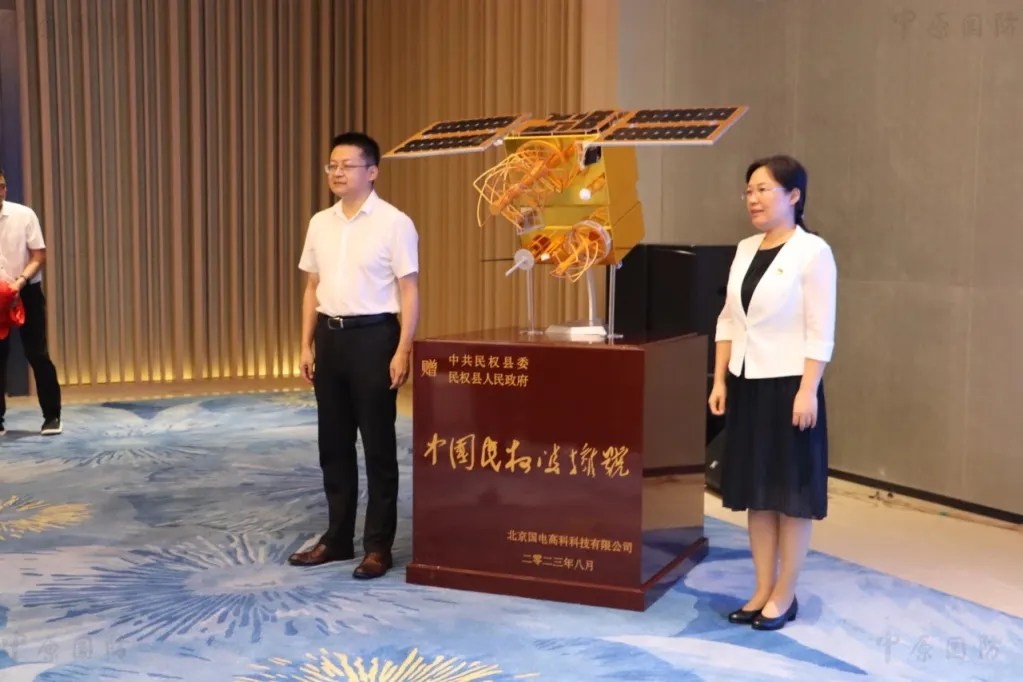
The Galaxy Power Ceres-1 rocket is scheduled to carry the 21st to 24th satellites  of the Apokolips constellation (including the 21st to 24th satellite with one Carrier rocket) in Haiyang, Shandong (Yantai) at around 17:30 on September 5 (evening). Four satellites, including the 21st satellite named “Hefei Gaoxin No. 1” and the 22nd satellite named “China Minquan Shuangyong”, will carry out sea launch missions.

It is expected that at about 17:40 on September 5, 2023, the “Ceres-1” sea-launched Yao 1 carrier rocket carrying “Hefei High-tech-1” and other satellites will be launched from the offshore Shandong Oriental Space Port to execute the “Ceres-1” mission. No. 1 rocket’s first sea launch.

launch of Ceres-1 (Haiyaoyi) launched 16 more technological innovations based on the previous 8 rockets successfully launched from land, and achieved 4 Six major breakthroughs: “World’s first” and two “domestic firsts”:
🔷The first domestic private rocket launch at sea
🔷The first domestic commercial aerospace launch into an 800km inclined orbit
🔷The world’s first launch from a land-sea universal mobile platform without
support 🔷The world’s first solid rocket unguided at sea Thermal launch
🔷The world’s first rocket adopts a maritime vertical self-alignment and online misalignment angle correction high-precision navigation solution
🔷The world’s first solid rocket adopts a non-pyrotechnic locking release mechanism.

This time Ceres 1 (Haiyao 1) entered an 800km inclined orbit, which is the farthest record set by a domestic private rocket. The 21st to 24th stars of the Apokolips constellation successfully carried it into orbit. Apocalypse Constellation 21 to 24 satellites are low-orbit data acquisition satellites developed by Beijing Guodian Hi-Tech Co., Ltd. and are part of the Apocalypse Constellation. The Apocalypse constellation is designed to be networked with 38 satellites, which can provide global data collection services and effectively solve the problem of IoT network access at sea, in the air and in remote areas that are not covered by ground networks. The ground segment of the system includes satellite management center, service operation center, earth station, gateway station, ground network,

 “Hefei High-tech No. 1” is the first special launch satellite in the second phase of construction among the 38 satellites planned by the Apocalypse Constellation. It is also the first satellite launched by Beijing Guodian High-tech Co., Ltd. after the industrial landing in Hefei High-tech Zone.

This mission is codenamed “The Little Mermaid”. “Ceres No. 1” will become China’s first sea-launched private commercial carrier rocket, and it will also become China’s third sea-launched carrier rocket. Prior to this, “Long March 11” and “Jielong 3” had achieved consecutive successes, verifying the feasibility, stability, and reliability of sea launches.

After “Ceres 1”, various types of rockets will be launched from the sea at the Oriental Spaceport. In December 2023, Eastern Space Company’s “Gravity 1” all-solid rocket will make its first flight here; in the first half of 2024, Rocket Company’s “Darwin 2” liquid rocket will also be launched here. In addition, sea-launched rockets such as China Aerospace Corporation’s “Lijian-1” will also be launched at the Oriental Space Port.

Compared with land-based launches, sea-based launches have two major advantages: the launch platform can be maneuvered and deployed and the launch range is wide. Specifically, on the one hand, sea launch can maneuver the launch platform to low latitudes close to the equator, which can maximize the use of the earth’s rotation speed and enhance rocket capacity; on the other hand, sea launch has a wider area Since the wreckage landing area is planned on the sea, it can avoid densely populated areas such as cities, which is convenient and safe.

The sea launch will be an important step for “Ceres-1” and its development company Xinghe Power Aerospace. It will expand the launch site resources for its rapid response and high-density launch delivery, and also provide convenience for various types of launches. At the same time, the sea launch of “Ceres No. 1” will also be an important step for China’s civil and commercial aerospace. The mission was a complete success!

Images and visuals are from their respectives also Galactic Energy is located in Block D, Aviation Technology Plaza, E-Town, Beijing- China – People’s Republic of China