#MadeInChina #中國製造| #中科宇航 #ZhongkeAerospace #ChinaAcademyOfScience #CASSPace #August2024 | #CarrierRocket #ReusableCarrierRocket  #CarrierRocket Series Pulsating Production Model Lijian-1 Y4 successfully delivered and will soon carry out its fourth launch #RemoteSensing #Satellites mission…. #ASummary

Beijing Zhongke Aerospace Exploration Technology Co., Ltd. is the first domestic aerospace enterprise with mixed ownership, and it is also the target enterprise that Oriental Aerospace Port focuses on introducing. Relying on the scientific research strength and resource advantages of the Institute of Mechanics of the Chinese Academy of Sciences and the Aerospace Flight Technology Center of the Chinese Academy of Sciences, China Aerospace Science and Technology has been committed to the research and development and integration of space technology and aerospace vehicles as a platform for the transformation of major national scientific research projects, as well as the transformation and provision of technological achievements. Aerospace launch service. The Lijian-1 rocket project also adds a brand-new name card to the Oriental Space Port, which will surely promote the construction of the Oriental Space Port to take a solid step forward.

[Lijian-1 Y4 launch vehicle has been successfully delivered and will soon carry out its fourth launch mission]

 The launch ceremony of Lijian-1 Y4 launch vehicle was successfully held at the China Science and Technology Aerospace Industrialization Base. Lijian-1 Y4 launch vehicle has completed all pre-delivery tasks according to the process and successfully passed the factory review. It will carry out the “one Carrier rocket, five satellites” launch mission at the Jiuquan Satellite Launch Center in late September. This is also the fourth launch mission of this type of rocket. This batch of launched satellites is mainly used to provide remote sensing information services…

Lijian-1 Y4 launch vehicle has been successfully delivered from the factory –
China Science and Technology Aerospace News; Lijian-1 Y4 launch vehicle has completed all pre-delivery work according to the process. After testing, the product functions and performance indicators meet the flight mission requirements and have successfully passed the factory review. It will carry out the “one rocket, five satellites” launch mission at the Jiuquan Satellite Launch Center in late September. This batch of satellites is mainly used to provide remote sensing information services.

Under the pulsating production mode, the Lijian-1 Yao-6, Yao-7, and Yao-8 launch vehicles are carrying out mass production and final assembly in an orderly manner. The products, equipment, instruments, tooling, etc. involved in the entire process have been planned in advance. Deployment, production tasks are clear, and production and assembly can be started simultaneously in the final assembly and testing plant and intelligent manufacturing plant. It is worth mentioning that the Zhongke Aerospace Industrialization Base currently has complete structural cabin manufacturing and assembly capabilities. Starting from the Lijian-1 Yao-5 launch vehicle, the manufactured cabins will be directly used and delivered for final assembly, further shortening the production and manufacturing cycle. .

As China’s first medium-sized rocket to achieve high-density launches and the record holder for multiple satellite launches in a single launch of Chinese commercial rockets, the Lijian-1 carrier rocket has achieved complete success for three consecutive launches, accurately delivering 37 satellites with a total load of 3.5 tons into the scheduled orbit, with a 100% launch success rate. This type of rocket is suitable for rapid network launch of small and medium-sized satellites in medium and low orbits. It has a carrying capacity of 1.5 tons in a 500-kilometer sun-synchronous orbit. It is a medium-sized solid launch vehicle with core competitiveness in China’s commercial launch vehicle launch market and is also the main force in China’s commercial aerospace industry. It is one of the rockets that can effectively meet the needs of the commercial launch market in medium and low orbits. It also has the ability to respond quickly to diversified market demands and is committed to providing customers with highly reliable, low-cost, and high-density flight-based launch services.

Images and visuals are from their respectives

#CNSA #ChinaNationalSpaceAdministration #国家航天局 |#WenchangSpacecraftLaunchCenter #文昌航天發射場 #BRI #March2024 | #ChangZheng5  #LongMarch5 Yao 8 arrived  for #嫦娥六号#Change6 #LunarLander #LunarProbe…. South Pole-Aitken Basin #ASummary

On the 15 March 2024 Hour Hong- Kong SAR – Beijing time CNSA –China National Space Administration   ….. the “Chang Zheng -Long March 5” Yao-8 carrier rocket which will carry out the Chang’e-6 mission of the fourth phase of the lunar exploration project, safely arrived at the Wenchang Space Launch Site in China. Subsequently, the rocket will be assembled and tested at the launch site together with the Chang’e-6 probe that arrived in advance. Currently, all participating systems in the launch site area are preparing for the Chang’e-6 mission as planned…..

“Chang Zheng -Long March 5” Yao-8 carrier rocket which will carry out the fourth phase of the lunar exploration project嫦娥六号was safely transported to the Wenchang Space Launch Site in China. Subsequently, the rocket will be assembled and tested at the launch site together with the Chang’e-6 probe that arrived in advance. Currently, all participating systems in the launch site area….

Images and visuals are from their Respectives CMS China Manned SpaceCNSA-China National Space Administration

#CNSA #ChinaNationalSpaceAdministration #国家航天局 |#China, #PeoplesRepublicOfChina #Russia #中國,#中華人民共和國 #俄羅斯 Russia and China’s plan to jointly build an international scientific lunar station starting #Year2025 #BriefSummary

[The Russian government will discuss the draft law on the agreement on the joint construction of an international lunar scientific research station between China and Russia]

The Russian Government Information Office stated that the Russian government will discuss on March 15 the draft federal law on the approval of the intergovernmental agreement on the cooperation with China on the construction of an international lunar scientific research station. . Meeting materials stated: “The bill aims to implement bilateral cooperation between Russia and China in the construction and use of international lunar scientific research stations and the training of scientific researchers and experts.”

Lunar Photography images are of @KevinJamesNg. – images and visuals are from their Respectives.

In 2023, the Russian government’s Legislative Council approved the initiative to jointly build a Russian-Chinese international scientific lunar station. Vladimir Gruzdev, chairman of the board of directors of the Russian Law Society, said that the federal bill aims to approve the agreement between the Russian and Chinese governments to jointly build an international scientific lunar station. This agreement is in line with Russia’s interests and will help strengthen Russia-China strategic partnership and the development of Russian aerospace affairs.

Lunar Photography images are of @KevinJamesNg. – images and visuals are from their Respectives.

Russia and China’s plan to jointly build an international scientific lunar station will be implemented in two phases starting in 2025. The station will include research, power, takeoff and landing, orbit and experiment modules, as well as a command center, transmission satellites, telecommunications stations, and technology verification observation modules.

Russia and China signed a cooperation agreement in November 2022 to jointly build an international scientific lunar station.

Lunar Photography images are of @KevinJamesNg. – images and visuals are from their Respectives.

Source: Russian Satellite News Agency

#MadeInChina #中國製造 #中國 | #东方空间 #OrienSpace #January2023 | successfully launch the adorable cute #引力一号 #GravityOne Yao 1 the world’s Largest #SRB #SolidRocketBooster #CarrierRocket successfully for marine first sea flight Multiple #Satellites cluster deployment..  #TaiyuanSatelliteLaunchCenter #Haiyang #Shandong Province.

东方空间 OrienSpace is one of sixty plus Carrier Rocket Companies in Made In China, People’s Republic of China.. Located in headquartered in Beijing, B3, Digital Manor, No. 1 Disheng West Road, Yizhuang Economic and Technological Development Zone, Daxing District, Beijing………Shandong Address: No. 30, Nanjing Street, Economic Development Zone, Haiyang City, Yantai City, Shandong Province………Shaanxi Address: 4th Floor, Northwest Building, Eleven Science and Technology, National Civil Aerospace Industry Base, Xi’an, Shaanxi Province…….Hainan Address: Room 125, 1st Floor, Building 20, No. 169, Wenwei Road, Wencheng Town, Wenchang City, Hainan Province…

Established in 2020, Dongfang Space is mainly engaged in space transportation. It is a design and manufacturing service company for launch vehicles and new aerospace vehicles. Through the research and development of the “Gravity” series of launch vehicles, the company has created serialized, diversified, and flight-based aerospace transportation products such as one-time use, recyclable reuse, and manned flight, and quickly formed low-cost, large-scale, and convenient launches. Service capability, committed to becoming the world’s most respected provider of commercial aerospace products and launch services, so that everyone can realize the dream of spaceflight…….

At 13:30 Hong Kong- Beijing Time  this afternoon, the world’s largest solid launch vehicle Gravity-1 independently developed by China successfully made its first flight in the waters near Haiyang, Shandong. The Gravity-1 launch vehicle uses a number of innovative technologies. Its successful first flight has greatly improved the carrying capacity of my country’s solid launch vehicles and enriched the spectrum of my country’s launch vehicles.

引力一号Gravity-1 Yaoyi commercial launch vehicle in the sea near Haiyang, Shandong, and will carry Yunyao-1 18~20 satellites 3 The satellite was successfully put into the predetermined orbit, and the flight test mission was a complete success.

A total of three satellites of Yunyao-1, ranging from 18 to 20 satellites were successfully put into the predetermined orbit, and the flight test mission was a complete success. The mission was the first flight of the Gravity 1 commercial launch vehicle.
The Gravity-1 launch vehicle was independently developed by Oriental Space. It has created many records such as the world’s largest solid launch vehicle, China’s largest civil and commercial launch vehicle, and China’s first bundled civil and commercial launch vehicle. It marks my country’s independent innovation achievements in commercial launch vehicles. Significant progress has expanded my country’s diversified and large-scale launch capabilities of medium and low orbit satellites, further enriched the spectrum of my country’s launch vehicle types, and assisted the large-scale construction of my country’s China, People’s Republic of China. satellite constellation network.

Images and visuals are from their respectives also 东方空间 OrienSpace

#MadeInChina #中國製造 #中國 | #星河动力空间科技有限公司#GalacticEnergy #September2023|#CarrierRocketShopping #ShandongOrientalSpacePort #谷神星一号遥 #Ceres1S Yao 1 #TheLittleMermaid Chinese private commercial rocket company’s first sea launch in which deploying an #Apocalypse #satellite cluster!

星河动力空间科技有限公司 Galactic Energy-  Galaxy Power (Beijing) Space Technology Co., Ltd. Located in Block D, Aviation Technology Plaza, E-Town, and Beijing – Beijing – China – People’s Republic of China ….Galaxy Aerospace is the first private aerospace company in China to achieve successful continuous launches, the first to send commercial networked satellites into a 500km sun-synchronous orbit, and the first to master the ability to launch multiple satellites with one carrier rocket.

Chinese private commercial rocket company’s first sea launch! 谷神星一号海远一 carrier rocket plans to implement a sea launch at the Eastern Aerospace Port at around 17:30 on September 5th 2023!

The Galaxy Power Ceres-1 rocket is scheduled to carry the 21st to 24th satellites  of the Apokolips constellation (including the 21st to 24th satellite with one Carrier rocket) in Haiyang, Shandong (Yantai) at around 17:30 on September 5 (evening). Four satellites, including the 21st satellite named “Hefei Gaoxin No. 1” and the 22nd satellite named “China Minquan Shuangyong”, will carry out sea launch missions.

It is expected that at about 17:40 on September 5, 2023, the “Ceres-1” sea-launched Yao 1 carrier rocket carrying “Hefei High-tech-1” and other satellites will be launched from the offshore Shandong Oriental Space Port to execute the “Ceres-1” mission. No. 1 rocket’s first sea launch.

launch of Ceres-1 (Haiyaoyi) launched 16 more technological innovations based on the previous 8 rockets successfully launched from land, and achieved 4 Six major breakthroughs: “World’s first” and two “domestic firsts”:
🔷The first domestic private rocket launch at sea
🔷The first domestic commercial aerospace launch into an 800km inclined orbit
🔷The world’s first launch from a land-sea universal mobile platform without
support 🔷The world’s first solid rocket unguided at sea Thermal launch
🔷The world’s first rocket adopts a maritime vertical self-alignment and online misalignment angle correction high-precision navigation solution
🔷The world’s first solid rocket adopts a non-pyrotechnic locking release mechanism.

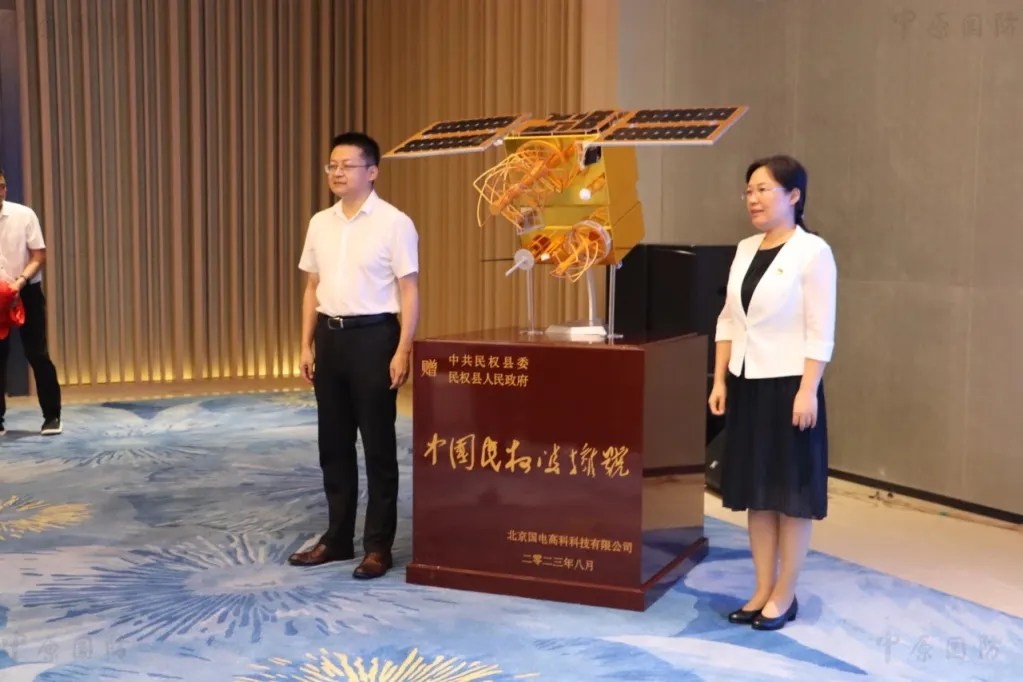
This time Ceres 1 (Haiyao 1) entered an 800km inclined orbit, which is the farthest record set by a domestic private rocket. The 21st to 24th stars of the Apokolips constellation successfully carried it into orbit. Apocalypse Constellation 21 to 24 satellites are low-orbit data acquisition satellites developed by Beijing Guodian Hi-Tech Co., Ltd. and are part of the Apocalypse Constellation. The Apocalypse constellation is designed to be networked with 38 satellites, which can provide global data collection services and effectively solve the problem of IoT network access at sea, in the air and in remote areas that are not covered by ground networks. The ground segment of the system includes satellite management center, service operation center, earth station, gateway station, ground network,

 “Hefei High-tech No. 1” is the first special launch satellite in the second phase of construction among the 38 satellites planned by the Apocalypse Constellation. It is also the first satellite launched by Beijing Guodian High-tech Co., Ltd. after the industrial landing in Hefei High-tech Zone.

This mission is codenamed “The Little Mermaid”. “Ceres No. 1” will become China’s first sea-launched private commercial carrier rocket, and it will also become China’s third sea-launched carrier rocket. Prior to this, “Long March 11” and “Jielong 3” had achieved consecutive successes, verifying the feasibility, stability, and reliability of sea launches.

After “Ceres 1”, various types of rockets will be launched from the sea at the Oriental Spaceport. In December 2023, Eastern Space Company’s “Gravity 1” all-solid rocket will make its first flight here; in the first half of 2024, Rocket Company’s “Darwin 2” liquid rocket will also be launched here. In addition, sea-launched rockets such as China Aerospace Corporation’s “Lijian-1” will also be launched at the Oriental Space Port.

Compared with land-based launches, sea-based launches have two major advantages: the launch platform can be maneuvered and deployed and the launch range is wide. Specifically, on the one hand, sea launch can maneuver the launch platform to low latitudes close to the equator, which can maximize the use of the earth’s rotation speed and enhance rocket capacity; on the other hand, sea launch has a wider area Since the wreckage landing area is planned on the sea, it can avoid densely populated areas such as cities, which is convenient and safe.

The sea launch will be an important step for “Ceres-1” and its development company Xinghe Power Aerospace. It will expand the launch site resources for its rapid response and high-density launch delivery, and also provide convenience for various types of launches. At the same time, the sea launch of “Ceres No. 1” will also be an important step for China’s civil and commercial aerospace. The mission was a complete success!

Images and visuals are from their respectives also Galactic Energy is located in Block D, Aviation Technology Plaza, E-Town, Beijing- China – People’s Republic of China