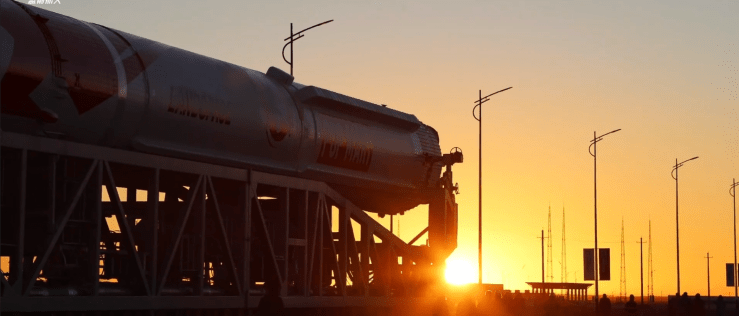
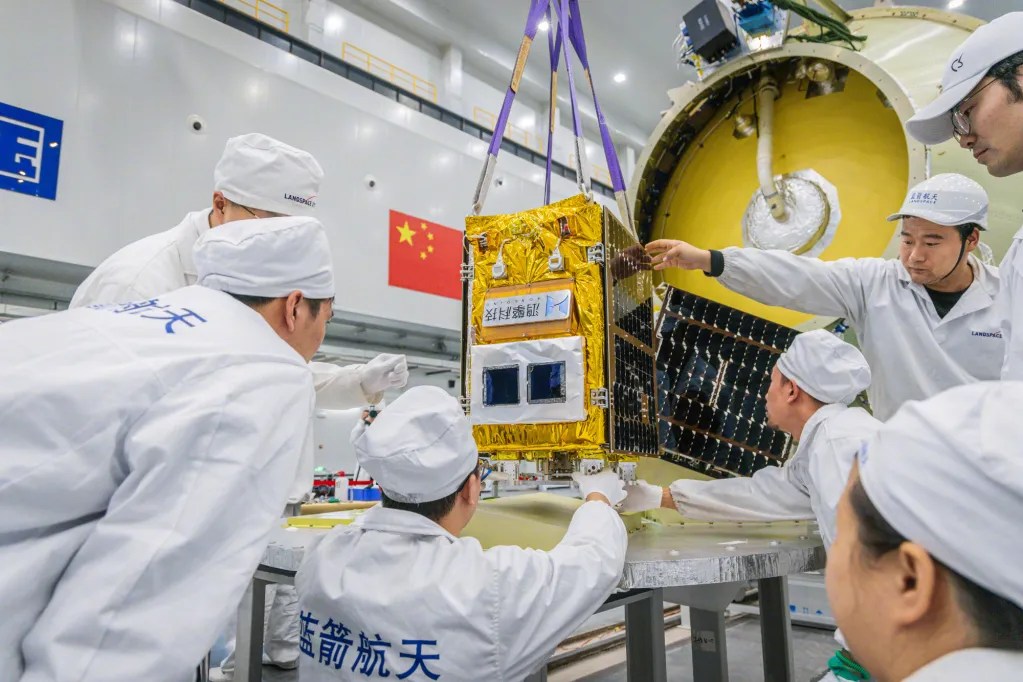
#MadeInChina #中國製造 #ExPace | #May2024 #CASIC Rocket Technology Company #Expace |#酒泉衛星發射中心#JiuquanSatelliteLaunchCenter #PrivateChineseSpaceCompany #Wuhan #CarrierRocketCompany #CarrierRocket #Kuaizhou11 #KX yao 4 successfully launch four adorable Four #Satellites #Wuhan1 #Tainyan22, #Lingque3

On the 21st May 2024 1215 Hong Kong SAR- Beijing Time, on the afternoon of, China, People’s Republic of中國製造 Expace Technology Corporation, China Aerospace Science and Industry Corporation’s Aerospace Sanjiang Rocket Company was a complete success launched Kuaizhou 11 successfully opened a new phase of batch launch!

At 12:15 on May 21, 2024, the “Kuaizhou 11” Yaosi-4 launch vehicle carried the main satellite “Wuhan-1” satellite, the ultra-low orbit technology test satellite and the carrying satellites Tianyan 22 and “Lingque 3” Four satellites of magnitude 01 were ignited and launched from station 95A of the Jiuquan Satellite Launch Center, placing the satellites into predetermined orbits.

Kuaizhou 11 (KZ-11) is a medium-sized solid launch vehicle developed by China Aerospace Science and Industry Corporation’s Aerospace Sanjiang. It adopts a four-stage series configuration, with the first, second and third stages using solid power and the fourth stage using liquid power. The rocket has a height of 25 meters and a diameter of 2.2 meters. It can be equipped with fairings of 2.2 meters in diameter and 3.2 meters in diameter. It has a take-off mass of 78 tons and a take-off thrust of 180 tons. Its low-Earth orbit (LEO) transport capacity is 1.5 tons and its range is 700 kilometers. Sun-synchronous orbit (SSO) capacity 1 ton. This rocket is equipped with a fairing with a diameter of 2.2 meters.

Since its first flight (failed) on July 10, 2020, the Kuaizhou-11 has carried out a total of three launches, with a success rate of about 67%. Starting this year, the Kuaizhou-11 has entered the batch launch phase, with plans to carry out no less than four launch missions, with the target orbit being a sun-synchronous orbit (SSO) at an altitude of 530 kilometers.

This launch is the first launch of the Kuaizhou-11 rocket in 2024, the 8th launch of the Jiuquan Satellite Launch Center, the 24th launch in China, and the 96th launch in the world.

Images and visuals are from a their respectives..

#MadeInChina #中國製造 #中國 | #东方空间 #OrienSpace #January2023 | successfully launch the adorable cute #引力一号 #GravityOne Yao 1 the world’s Largest #SRB #SolidRocketBooster #CarrierRocket successfully for marine first sea flight Multiple #Satellites cluster deployment..  #TaiyuanSatelliteLaunchCenter #Haiyang #Shandong Province.
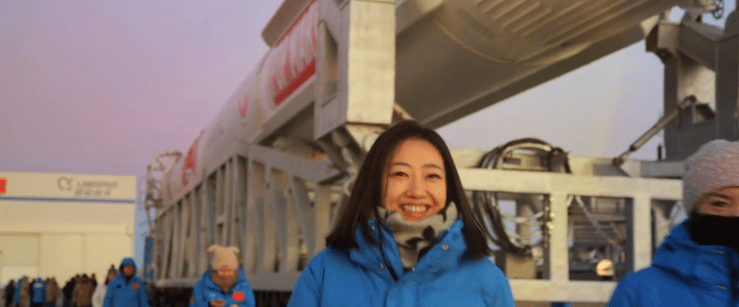
东方空间 OrienSpace is one of sixty plus Carrier Rocket Companies in Made In China, People’s Republic of China.. Located in headquartered in Beijing, B3, Digital Manor, No. 1 Disheng West Road, Yizhuang Economic and Technological Development Zone, Daxing District, Beijing………Shandong Address: No. 30, Nanjing Street, Economic Development Zone, Haiyang City, Yantai City, Shandong Province………Shaanxi Address: 4th Floor, Northwest Building, Eleven Science and Technology, National Civil Aerospace Industry Base, Xi’an, Shaanxi Province…….Hainan Address: Room 125, 1st Floor, Building 20, No. 169, Wenwei Road, Wencheng Town, Wenchang City, Hainan Province…

Established in 2020, Dongfang Space is mainly engaged in space transportation. It is a design and manufacturing service company for launch vehicles and new aerospace vehicles. Through the research and development of the “Gravity” series of launch vehicles, the company has created serialized, diversified, and flight-based aerospace transportation products such as one-time use, recyclable reuse, and manned flight, and quickly formed low-cost, large-scale, and convenient launches. Service capability, committed to becoming the world’s most respected provider of commercial aerospace products and launch services, so that everyone can realize the dream of spaceflight…….

At 13:30 Hong Kong- Beijing Time  this afternoon, the world’s largest solid launch vehicle Gravity-1 independently developed by China successfully made its first flight in the waters near Haiyang, Shandong. The Gravity-1 launch vehicle uses a number of innovative technologies. Its successful first flight has greatly improved the carrying capacity of my country’s solid launch vehicles and enriched the spectrum of my country’s launch vehicles.

引力一号Gravity-1 Yaoyi commercial launch vehicle in the sea near Haiyang, Shandong, and will carry Yunyao-1 18~20 satellites 3 The satellite was successfully put into the predetermined orbit, and the flight test mission was a complete success.

A total of three satellites of Yunyao-1, ranging from 18 to 20 satellites were successfully put into the predetermined orbit, and the flight test mission was a complete success. The mission was the first flight of the Gravity 1 commercial launch vehicle.
The Gravity-1 launch vehicle was independently developed by Oriental Space. It has created many records such as the world’s largest solid launch vehicle, China’s largest civil and commercial launch vehicle, and China’s first bundled civil and commercial launch vehicle. It marks my country’s independent innovation achievements in commercial launch vehicles. Significant progress has expanded my country’s diversified and large-scale launch capabilities of medium and low orbit satellites, further enriched the spectrum of my country’s launch vehicle types, and assisted the large-scale construction of my country’s China, People’s Republic of China. satellite constellation network.

Images and visuals are from their respectives also 东方空间 OrienSpace

#MadeInChina #中國製造 |#深蓝航天 #LANDSPACE #DeepBlueLimitedCompany #December2023| Deep Blue Aerospace #ReusableCarrierRocket # Zhuque-2 #Suzaku-2 Yao 3 #CarrierRocket sponsored by #PopMart #酒泉卫星发射中心 #JiuquanSatelliteLaunchCenter ….

深蓝航天  Deep Blue Limited – Deep Blue Aerospace One of sixty Chinese private space Carrier Rocket Companies in China-People’s Republic of China…  As many of sixty plus Private Rocket Deep Blue Aerospace Co., Ltd. was established in 2017. The company is mainly a high-tech aerospace enterprise that focuses on the direction of liquid recovery and reusable launch vehicles and provides users with commercial launch services. Deep Blue Aerospace Co., Ltd. is headquartered in Nantong City, Jiangsu Province. At the same time, the company has rocket general and liquid engine R&D centers in Yizhuang, Beijing and Xi’an, Shaanxi, respectively, and a rocket power system test base in Tongchuan, Shaanxi…..

On December 1st 2023, the Blue Arrow Aerospace Zhuque Suzaku- 2 Yaosan liquid oxygen methane carrier rocket was successfully transferred to the launch area and is preparing to select an opportunity to carry out the launch mission in the near future. The launch is sponsored by PopMart ..

POP MART is a market-leading character-based entertainment company and a global champion of designer toy culture.

We have set foot in more than 23 countries and regions through our network of 350+ offline stores and 2000+ Roboshops catering to a diverse audience of cultural pioneers and art fans. Some of our best-known characters include MOLLY, The Monsters, DIMOO, Skullpanda and others – each created by one of our artist friends and regular collaborators.

Through global artist development, IP operations, designer toy culture evangelism, and strategic investments, we have built an integrated platform covering the entire designer toy value chain, allowing artists to focus solely on their craft and giving stage to talent from all over the world.

[The third rocket of Blue Arrow Aerospace Suzaku 2 has been transferred and erected and will be launched in the near future]

After the successful go-around, this launch is a key launch and is expected to officially carry commercial payloads. Therefore, it is also possible to carry out research on transportation capacity and orbit accuracy. further test.


It can be seen from the video that domestic private rockets are basically transported by road, and road transportation can easily exceed the 3.35-meter special train limit when conditions permit. It is estimated that it is more difficult for private companies to obtain special trains.


At present, the mainstream next-generation liquid launch vehicles that should be privately operated are basically aiming at a diameter of more than 4 meters, especially the 4.2-meter diameter of Interstellar, which has already passed through some launch sites.


LandSpace – Blue Arrow’s Suzaku 3 has not been officially announced, but the diameter must be more than 4 meters. I am sure that with this diameter, the entire diameter of the passage should have been passed. At present, the two are mainly Jiuquan and Wenchang. As long as they can support a diameter of more than 4 meters, this will be very advantageous for the development of my country’s rockets.

[Chinese Rockets Are Stunningly Beautiful]

Blue Arrow Aerospace has just shared photos of the Zhuque-2 Yaosan-3 rocket being tested and transferred to the launch station at the Jiuquan Satellite Launch Center.


I have to say that the desert scenery and high-tech products are really beautiful.

Blue Arrow Aerospace is a private aerospace enterprise in my country (really private, not a national team vest). Zhuque 2 is a medium-sized liquid oxygen methane rocket (fueled by natural gas), with a total length of 49.5 meters and a diameter of 3.35 meters. The design goal is to be able to carry 6 tons Objects are sent into Earth orbit.

On July 12 this year, the Zhuque-2 Yao-2 rocket was successfully launched, becoming the world’s first liquid oxygen methane rocket to enter orbit…..

Images and visuals are from their Respectives.

#CNSA #ChinaNationalSpaceAdministration #国家航天局 | #太原卫星发射中心 #BRI #July2023|# #TaiyuanSatelliteLaunchCenter  – International Iconic #ChangZheng2D  #LongMarch2D  yao 91  #CarrierRocket in launched to deploy successfully four #Satellites # Sixiang # Yinhe #GalaxyAerospace #Lingxi .. #RemoteSensing #Telecommunications

At 1050 Hours Hong Kong SAR- Beijing Time  23rd July  2023 , China- People’s Republic of China- CNSA –China National Space Administration   Successfully launched  the New Next Generation Long March – Chang Zheng2D Yao 91 …..At 10:50 on July 23, the Chang Zheng- Long March 2D carrier rocket was ignited and blasted off at the Taiyuan Satellite Launch Center Shanxi Province.. Subsequently, the rocket successfully sent a total of four satellites, Sixiang 01~03 and Yinhe 03, into the predetermined orbit, and the launch mission was a complete success.

The four satellites launched this time are provided by the Great Wall Company, a subsidiary of China Aerospace Science and Technology Corporation, as the project contractor to provide launch services. The Chang Zheng- Long March 2D carrier rocket used for this launch mission is a room temperature liquid two-stage launch vehicle developed by the General Manager of the Eighth Academy of China Aerospace Science and Technology Corporation. It has the ability to launch single and multiple satellites with different orbital requirements, and has a carrying capacity of 1.3 tons corresponding to a 700-kilometer sun-synchronous orbit.

Sixiang 01~03 satellites are collectively referred to as Sixiang Group A multi-source remote sensing satellites. Among them, Sixiang 01 satellite is developed by Beijing Sixiang Aishu Technology Co., Ltd.; Sixiang 02~03 satellites are developed by Yinhe Aerospace (Beijing) Network Technology Co., Ltd. The three satellites are equipped with synthetic aperture radar remote sensing payload, optical remote sensing payload and infrared remote sensing payload for remote sensing observation and application.

Galaxy Aerospace Lingxi 03 satellite was developed by Galaxy Aerospace (Beijing) Network Technology Co., Ltd. The satellite is a flat-panel stacked satellite configuration, equipped with flexible solar wings and active thermal control fluid circuits, and the satellite is equipped with millimeter-wave multi-beam digital processing loads for on-orbit verification of broadband communication satellite technology. This is my country’s first satellite to use flexible solar wings, and it is also my country’s first in-orbit verification of multi-satellite stacking launch technology, which will provide technical support for the rapid deployment of my country’s giant low-orbit communication constellation.

Different from the design ideas and physical form of traditional satellites, Lingxi 03 is a flat-panel satellite without a heavy cubic shell, which looks like a car chassis. According to Hu Zhao, the commander-in-chief of Galaxy Aerospace Lingxi 03, Lingxi 03 draws on the design concept of integral casting of automobile chassis, and adopts integrated and highly integrated comprehensive electronic technology, which is easy for mass production of satellites, can shorten the cycle of satellite development, and improve the network efficiency of satellite constellations. After completing relevant technical verification, it is planned to implement multi-satellite launches with one arrow in the future.

This launch is the 479th launch of the Long March series of launch vehicles

Images and visuals are from their Respectives CMS China Manned SpaceCNSA-China National Space Administration

#MadeInChina #中國製造 #中國 |酒泉衛星發射中心#JiuquanSatelliteLaunchCenter #星河动力空间科技有限公司#GalacticEnergy #July2023|#CarrierRocketShopping #谷神星一号遥 #Ceres1 Y6 #CarrierRocket Successfully launched two #Satellites #StarTimes16 #Qiankun1 mission code name #LemonTree  

星河动力空间科技有限公司 Galactic Energy-  Galaxy Power (Beijing) Space Technology Co., Ltd. Located in Block D, Aviation Technology Plaza, E-Town, and Beijing – Beijing – China – People’s Republic of China ….Galaxy Aerospace is the first private aerospace company in China to achieve successful continuous launches, the first to send commercial networked satellites into a 500km sun-synchronous orbit, and the first to master the ability to launch multiple satellites with one carrier rocket.

During today on 1307afternoon 22nd July  2023  launching from one of many complexes酒泉衛星發射中心 Jiuquan Satellite Launch Center in Dongfeng Aerospace City – inner Mongolia –China – People’s Republic of China on 1304 Hong Kong SAR-Beijing Time…..Galaxy Power Aerospace successfully launched the Ceres-1 (Yao-6) Sichuan Ziyang carrier rocket (mission code: LEMON TREE) at the Jiuquan Satellite Launch Center, and successfully sent the Qiankun-1 ultra-low orbit technology test satellite and Tai’an (Star Times-16) satellite into the predetermined orbit.

High-density launch is the only way for a commercial rocket to go from development to maturity, from laboratory products to assembly line industrial products. It comprehensively tests an enterprise’s organizational capabilities, management capabilities, support capabilities, and technical capabilities. It requires continuous innovation and changes in the production organization model. The high-density space launches carried out by the world’s major aerospace countries encountered setbacks in the early days, but through the efforts of all aspects from rocket design and manufacture to inspection and maintenance, they finally achieved unprecedented launch capabilities, and laid the foundation for the generalization, serialization, and modularization of rocket technology, which eventually led to the improvement of the overall level of the launch vehicle industry.

As the first domestic private rocket launcher to start high-density launches, Galaxy Dynamics Aerospace will continue to move towards more efficient, more reliable, and safer goals in the next few months. With the sufficient launch capacity of the Ceres-1 carrier rocket, it can meet the launch windows and orbital requirements of different satellite customers, speed up the closed loop of satellite launch services, and improve the performance and delivery capabilities of high-density launches.

The first domestic ultra-low orbit test satellite “Qiankun-1” launched this time was developed by Seth Base Intelligent Technology Co., Ltd., equipped with hyperspectral imagers, visible light full-color cameras, image intelligent processors and other test loads. It is used to verify the key technologies for breaking through ultra-low orbit flight, build an advanced aerospace intelligent platform, and fill the gap in my country’s ultra-low orbit space technology application field. The Tai’an (Star Times-16) satellite is a hyperspectral remote sensing satellite developed by Nationstar Aerospace. At the same time, it is equipped with the blockchain satellite payload developed by the company. It will implement the world’s first visual blockchain on-orbit certificate storage and commercial services, and launch a series of space computing content applications such as the world’s first space digital life platform (Interstellar Immortal Passenger).

This is the sixth consecutive successful launch of Ceres 1. So far, Galaxy Dynamics has served 12 commercial satellite customers and completed the orbital launch of 21 commercial satellites.

Thanks to the Industrial and Commercial Bank of China Ziyang Branch for its support for this launch…..Today is a good day. The Ceres-1 remote-6 carrier rocket was successfully launched. ….Six consecutive victories! Ceres-1 carrier rocket officially launched high-density launch delivery…

Images and visuals are from their respectives also Galactic Energy is located in Block D, Aviation Technology Plaza, E-Town, Beijing- China – People’s Republic of China