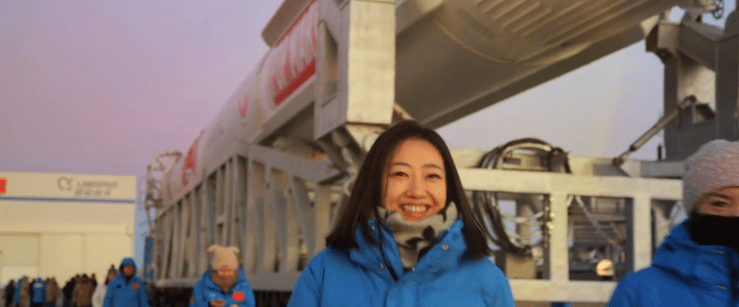
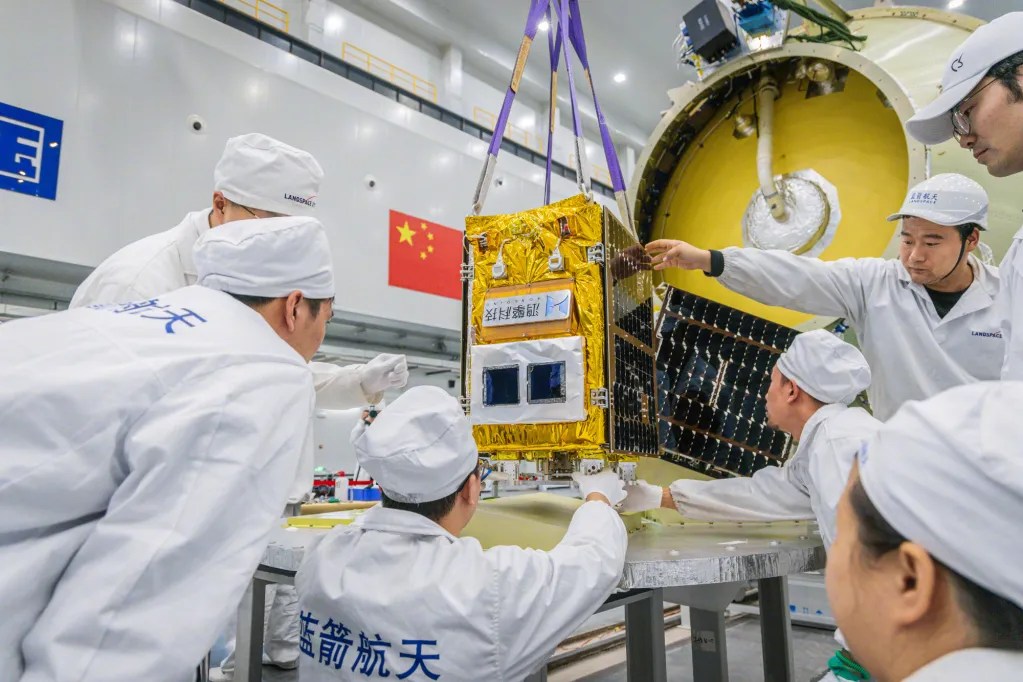
#MadeInChina #中國製造 #中國 | #星河动力空间科 #GalacticEnergy #August2024| #CarrierRocketShopping #谷神星一号遥 #Ceres1S Yao 3 Sea Launched successfully Deploy Six #Satellites from China’s Yellow Sea.

星河动力空间科技有限公司 Galactic Energy-  Galaxy Power (Beijing) Space Technology Co., Ltd.Located in Block D, Aviation Technology Plaza, E-Town, and Beijing – Beijing – China – People’s Republic of China ….Galaxy Aerospace is the first private aerospace company in China to achieve successful continuous launches, the first to send commercial networked satellites into a 500km sun-synchronous orbit, and the first to master the ability to launch multiple satellites with one carrier rocket

[The Ceres-1 sea launch adds 6 more satellites to China’s space program! ]

At 13:22 Hong Kong SAR- Beijing time on August 29th Thursday, 2024, on the “Dongfang Spaceport” sea launch ship in the Yellow Sea, the “Ceres-1” sea-launched Yao-3 carrier rocket carried six small optical remote sensing satellites, including “Yunyao-1” 15-17 satellites, Jitianxing A03 satellite, “Suxing-1” 01 satellite, and “Tianfu Gaofen-2” satellite, and sent the satellites into a sun-synchronous orbit (SSO) at an altitude of 535 kilometers.

The “Ceres-1” sea-launched carrier rocket is a small solid-fuel carrier rocket. The arrow is about 20 meters high, 1.4 meters in diameter, with a takeoff mass of about 33 tons and a capacity of 300 kilograms in a sun-synchronous orbit (SSO) at an altitude of 500 kilometers.

The Ceres-1 sea-launched rocket was developed by Beijing Galactic Energy. It is an adaptive improvement on the Ceres-1 standard rocket. It is a four-stage small rocket with a four-stage tandem configuration. The first, second and third stages use solid power, and the fourth stage uses liquid power. The rocket is about 20 meters high and 1.4 meters in diameter. It has a takeoff mass of about 33 tons and a takeoff thrust of 60 tons. Its altitude is 500 kilometers and the sun-synchronous orbit (SSO) has a carrying capacity of 300 kilograms.

Since its successful maiden flight on November 7, 2020, Ceres-1 has carried out 15 launches, 14 of which were successful, with a success rate of about 93.33%. Since the successful launch of the Ceres-1 sea-launched Yao-1 rocket on September 5, 2023, Ceres-1 has successfully carried out three consecutive sea launches, leading the way among private commercial aerospace companies.


This launch mission is the fourth launch of the Ceres-1 rocket in 2024, the third launch in the Yellow Sea (Taiyuan Satellite Launch Center), the 38th launch in China and the 156th orbital space launch in the world. At the same time, this launch is also the fourth marine space launch in China and the world this year.


This launch mission is the fourth launch of the Ceres-1 rocket in 2024, the third launch in the Yellow Sea (Taiyuan Satellite Launch Center), the 38th launch in China and the 156th orbital space launch in the world.

Images and visuals are from their respectives also Galactic Energy is located in Block D, Aviation Technology Plaza, E-Town, Beijing- China – People’s Republic of China  

#MadeInChina #中國製造 |#深蓝航天 #LANDSPACE #DeepBlueLimitedCompany #August2024| Deep Blue Aerospace #ReusableCarrierRocket #星云-1 #Nebula1 #ReusableCarrierRocket preparations for  flight testing  stage one vertical take-off and landing recovery test Reusable Carrier Rocket 100 Kilometer testing …

深蓝航  Deep Blue Limited – Deep Blue Aerospace  Landspace One of sixty Chinese private space Carrier Rocket Companies in China-People’s Republic of China…  As many of sixty plus Private Rocket Deep Blue Aerospace Co., Ltd. was established in 2017. The company is mainly a high-tech aerospace enterprise that focuses on the direction of liquid recovery and reusable launch vehicles and provides users with commercial launch services. Deep Blue Aerospace Co., Ltd. is headquartered in Nantong City, Jiangsu Province. At the same time, the company has rocket general and liquid engine R&D centers in Yizhuang, Beijing and Xi’an, Shaanxi, respectively, and a rocket power system test base in Tongchuan, Shaanxi…..

[The first stage of the Deep Blue Aerospace Nebula-1 rocket is scheduled to conduct a high-altitude vertical recovery flight test in August and a 100-kilometer-level VTVL vertical recovery flight test at an appropriate time]

Recently, Deep Blue Aerospace successfully completed the B2 round of financing, fully accelerating the technological innovation of recyclable rockets and the commercialization of the recyclable and reusable rocket Nebula-1 (hereinafter referred to as “Nebula-1”). Wuxi High-tech Zone Investment and Control Group led this round of financing and became a cornerstone investor in multiple rounds, completing and locking in nearly 1 billion yuan in funds, injecting strong development momentum into the research and development and production of Deep Blue Aerospace, and jointly promoting the rapid development of China’s aerospace in the era of great aerospace

.

This round of funds will be mainly used to strengthen technology research and development, expand production scale, optimize supply chain management, and accelerate market promotion. It is worth noting that the Deep Blue Aerospace Rocket Intelligent Manufacturing and Assembly Base of more than 20,000 square meters has landed in Wuxi High-tech Zone. With the Beijing-Hangzhou Grand Canal as the background, it will accelerate the expansion of the rocket industry cluster along the canal. The Deep Blue Aerospace Rocket Canal Factory will become a demonstration base for high-end manufacturing and commercial rocket industries in Wuxi High-tech Zone. The

Canal Factory will be mainly used for the mass production of Nebula-1 and Nebula-2 rockets. As a representative of China’s recyclable rockets, the Nebula-1 rocket will significantly reduce launch costs and increase launch frequency, and will be of milestone significance for promoting the sustainable development of China’s commercial aerospace industry. At present, preparations for the first launch of the Nebula-1 rocket are in full swing. The Nebula-2 rocket, which is scheduled to make its maiden flight at the end of 2025, will have a takeoff scale of 1,000 tons and will also be recyclable and reusable. On

July 21, the Nebula-1 rocket completed a series of tests of the first-stage three-machine parallel full-time power system at the Deep Blue Jigang Test Base in Jinan City, simulating the full working conditions of high-altitude recovery flight and a large range of engine variable thrust tests, and achieved complete success. In August, the rocket body will go to the test site to prepare for the upcoming high-altitude vertical recovery flight test of the first stage of the Nebula-1 rocket, and will choose an opportunity to conduct a 100-kilometer-level rocket vertical recovery flight test. Each test of the rocket will accumulate valuable test data for the first flight of the Nebula-1 orbital rocket, ensuring that the Nebula-1 reusable rocket “goes into space without any problems” and that the first flight of the Nebula-1 rocket into orbit and recovery will be completed smoothly by the end of the year. Deep Blue Aerospace will continue to increase its R&D investment in the field of reusable rocket technology, and is committed to exploring more efficient, economical and environmentally friendly space launch solutions to promote the innovative development of China’s commercial space industry. (Deep Blue Aerospace )

Images and visuals are from their Respectives.

#MadeInChina #中國製造| #ISpace #星际荣耀#InterstellarGlory #December2023 | #ChinesePrivateSpaceCompany –#ReusableCarrierRocket #CarrierRocket #JiuquanSatelliteLaunchCenter  #Hyperbola 2 Successfully vertical take-off and landing test verification of rocket recovery and reusability of 343 meters ….

[Hyperbolic 2 completed its second flight test flight to an altitude of 343 meters First time in the country! Reusable technology verifies successful rocket reuse flight!]

At 17:07 on December 10th Sunday 2023 Hong Kong SAR- Beijing Time,  iSpace -Beijing Interstellar Glory Space Technology Co., Ltd.’s Hyperbolic 2 reusable liquid oxygen methane verification rocket (code-named SQX-2Y) was launched on the Jiuquan satellite launch center, Inner Mongolia, China , People’s Republic of China,  The center carried out its second flight test mission. This test flight altitude was 343.12m, the flight time was 63.15s, the target lateral displacement was 50m, the landing position accuracy was about 0.295m, the landing speed was 1.1m/s, the landing attitude angle was about 1.18°, and the roll The angle was about 4.4°, the rocket landed smoothly and accurately, and the state was safely restored. The flight test mission was a complete success.


The rocket successfully completed its first vertical take-off and landing flight test on November 2, 2023. After the first flight, Interstellar Glory completed the rocket’s reuse maintenance and inspection work in only twenty days, and moved to another site to perform repeated operations. The flight mission was a complete success. This flight further obtained flight data samples of each system, provided technical accumulation for more and more efficient reusable flights of the reusable launch vehicle, and provided a basis for the company’s ongoing The development of the large-scale reusable launch vehicle Hyperbola-3 provides key technology verification.

This flight further obtained flight data samples of each system, provided technical accumulation for more and more efficient reuse flights of the reusable launch vehicle, and provided information for the ongoing development of the medium and large reusable launch vehicle Hyperbola-3. The research and development work provided key technical verification….

Images-visuals are from their respectives..

#MadeInChina #中國製造 |#深蓝航天 #LANDSPACE #DeepBlueLimitedCompany #December2023| Deep Blue Aerospace #ReusableCarrierRocket # Zhuque-3 #Suzaku-3″ #CarrierRocket stainless steel launch vehicle announcement ….Ready by 2025…
深蓝航天  Deep Blue Limited – Deep Blue Aerospace One of sixty Chinese private space Carrier Rocket Companies in China-People’s Republic of China…  As many of sixty plus Private Rocket Deep Blue Aerospace Co., Ltd. was established in 2017. The company is mainly a high-tech aerospace enterprise that focuses on the direction of liquid recovery and reusable launch vehicles and provides users with commercial launch services. Deep Blue Aerospace Co., Ltd. is headquartered in Nantong City, Jiangsu Province. At the same time, the company has rocket general and liquid engine R&D centers in Yizhuang, Beijing and Xi’an, Shaanxi, respectively, and a rocket power system test base in Tongchuan, Shaanxi…..

[Zhuque-3 reusable liquid oxygen methane launch vehicle]
1. It uses Blue Arrow Aerospace’s self-developed Tianque series liquid oxygen methane engine. The first sub-stage uses 9 TQ-12B engines, and the second sub-stage is equipped with 1 TQ-15B vacuum engine.
2. The low-orbit carrying capacity for one-time missions reaches 21.3t, the recovery mission in the flight area reaches 18.3t, and the return recovery mission reaches 12.5t
3. In the future, the first stage of the rocket can be reused up to 20 times
4. It is expected to be launched in 2025 Capable of first

[Suzaku 3 officially released, stainless steel rocket, methane fuel, recyclable, 9 machines in parallel, 4.5 meters in diameter, road transportation, capacity of more than 20 tons] After the successful launch of Zhuque 2 Yao 3, the Blue Arrow official website officially disclosed the information of the Suzaku 3 rocket .


It is expected to be capable of first flight in 2025. This first flight in 2025 seems crazy, but this rocket is smart in that it has not changed the engine. It is just an improved version of the TQ-12 of the current Suzaku 2. What needs to be solved is The problem with the bold choice of stainless steel storage tanks is gone. SpaceX’s starships are currently overweight due to their use of stainless steel. Domestic companies that follow the stainless steel route will also encounter similar problems. The current Suzaku 2 may also have the problem of overweight structure, resulting in substandard transportation capacity. The subsequent Suzaku 3 will be switched to stainless steel, which can be said to be very brave and the challenge is not small.


The diameter of the rocket is 4.5 meters, so it is impossible to transport it by special train (it is said that it cannot be scheduled for a special train). According to legend, it has been transported by road from Hainan to Jiuquan. The diameter of the fairing is 5.2 meters (very large), and the entire arrow is 76.6 meters in diameter. It is equipped with 4 sets of grid rudders and 4 deployable landing legs.

The rocket uses Blue Arrow Aerospace’s self-developed Tianque series liquid oxygen methane engine. The first sub-stage uses 9 TQ-12B engines, and the second sub-stage is equipped with 1 TQ-15B vacuum engine. The take-off thrust is 900 tons, and the liquid oxygen methane propellant is

disposable. The mission’s low-orbit carrying capacity reaches 21.3t, the recovery mission in the navigation area reaches 18.3t, and the return recovery mission reaches 12.5t.

In the future, a rocket stage can be reused up to 20 times.

On the Month of October- November 2023  Zhang Changwu, founder/CEO of Blue Arrow Aerospace As a guest speaker, attend this conference event of Aerospace Information Industry International Ecosystem Event 2023 It has finally been officially announced that Blue Arrow has developed the reusable Carrier Rocket  stainless steel Suzaku 3 rocket….  

Many people did not notice the details on. Blue Arrow disclosed for the first time its Suzaku 3, which will succeed Suzaku 2 Carrier Rocket – Reusable Carrier Rocket. Launch vehicle.

Judging from the picture, the one-time launch to low-Earth orbit has a transport capacity of 20 tons, the recovery area is 16.5 tons (not necessarily at sea), and the return transport capacity is 11 tons. Two-stage design, stainless steel storage tank, the diameter should be more than 4 meters by comparison, and it is suspected that 7 engines (maybe 9) are stuffed inside. First stage with grille rudder with deployable landing legs.

The railway transportation limit made by the Shanghai Institute is 3.8 meters. If it is 4 meters higher, it is equivalent to killing the possibility of inland launch? Or is there another way? After all, Landspace Blue Arrow spent a lot of effort on the launch pad in Jiuquan Satellite Launch Center, Inner Mongolia, China, and People’s Republic of China. , so it is unlikely that they will be abandoned. What do you think?

Blue Arrow originally wanted to go to IAC for a press conference, but it was later cancelled for some reason. This time in China, it was taken the opportunity to release. There is nothing unexpected about the overall design. Perhaps the only exception is the use of stainless steel. It is the first mainstream private aerospace company in China to officially announce the use of stainless steel.

General Manager Changwu of Blue Arrow shared that no matter what, I have always recognized Blue Arrow’s hard work and development in the field of China’s commercial space launch vehicles, and I am grateful for its efforts and contributions to the commercialization of China’s launch vehicles. I will always believe in it. , as long as you keep working hard like this, @LANDSPACE Blue Arrow Aerospace will be realized sooner or later.

Images and visuals are from their Respectives.

#MadeInChina #中國製造 |#深蓝航天 #LANDSPACE #DeepBlueLimitedCompany #December2023| Deep Blue Aerospace #ReusableCarrierRocket # Zhuque-2 #Suzaku-2 Yao 3 #CarrierRocket sponsored by #PopMart #酒泉卫星发射中心 #JiuquanSatelliteLaunchCenter ….

深蓝航天  Deep Blue Limited – Deep Blue Aerospace One of sixty Chinese private space Carrier Rocket Companies in China-People’s Republic of China…  As many of sixty plus Private Rocket Deep Blue Aerospace Co., Ltd. was established in 2017. The company is mainly a high-tech aerospace enterprise that focuses on the direction of liquid recovery and reusable launch vehicles and provides users with commercial launch services. Deep Blue Aerospace Co., Ltd. is headquartered in Nantong City, Jiangsu Province. At the same time, the company has rocket general and liquid engine R&D centers in Yizhuang, Beijing and Xi’an, Shaanxi, respectively, and a rocket power system test base in Tongchuan, Shaanxi…..

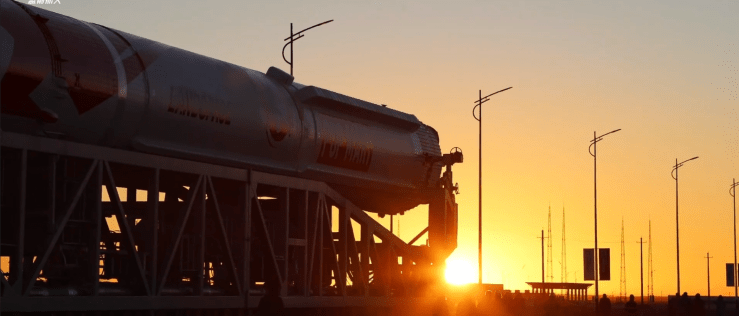
On December 1st 2023, the Blue Arrow Aerospace Zhuque Suzaku- 2 Yaosan liquid oxygen methane carrier rocket was successfully transferred to the launch area and is preparing to select an opportunity to carry out the launch mission in the near future. The launch is sponsored by PopMart ..

POP MART is a market-leading character-based entertainment company and a global champion of designer toy culture.

We have set foot in more than 23 countries and regions through our network of 350+ offline stores and 2000+ Roboshops catering to a diverse audience of cultural pioneers and art fans. Some of our best-known characters include MOLLY, The Monsters, DIMOO, Skullpanda and others – each created by one of our artist friends and regular collaborators.

Through global artist development, IP operations, designer toy culture evangelism, and strategic investments, we have built an integrated platform covering the entire designer toy value chain, allowing artists to focus solely on their craft and giving stage to talent from all over the world.

[The third rocket of Blue Arrow Aerospace Suzaku 2 has been transferred and erected and will be launched in the near future]

After the successful go-around, this launch is a key launch and is expected to officially carry commercial payloads. Therefore, it is also possible to carry out research on transportation capacity and orbit accuracy. further test.


It can be seen from the video that domestic private rockets are basically transported by road, and road transportation can easily exceed the 3.35-meter special train limit when conditions permit. It is estimated that it is more difficult for private companies to obtain special trains.


At present, the mainstream next-generation liquid launch vehicles that should be privately operated are basically aiming at a diameter of more than 4 meters, especially the 4.2-meter diameter of Interstellar, which has already passed through some launch sites.


LandSpace – Blue Arrow’s Suzaku 3 has not been officially announced, but the diameter must be more than 4 meters. I am sure that with this diameter, the entire diameter of the passage should have been passed. At present, the two are mainly Jiuquan and Wenchang. As long as they can support a diameter of more than 4 meters, this will be very advantageous for the development of my country’s rockets.

[Chinese Rockets Are Stunningly Beautiful]

Blue Arrow Aerospace has just shared photos of the Zhuque-2 Yaosan-3 rocket being tested and transferred to the launch station at the Jiuquan Satellite Launch Center.


I have to say that the desert scenery and high-tech products are really beautiful.

Blue Arrow Aerospace is a private aerospace enterprise in my country (really private, not a national team vest). Zhuque 2 is a medium-sized liquid oxygen methane rocket (fueled by natural gas), with a total length of 49.5 meters and a diameter of 3.35 meters. The design goal is to be able to carry 6 tons Objects are sent into Earth orbit.

On July 12 this year, the Zhuque-2 Yao-2 rocket was successfully launched, becoming the world’s first liquid oxygen methane rocket to enter orbit…..

Images and visuals are from their Respectives.