#MadeInChina #中國製造 #中國 | #北京 #Beijing #天兵科技 #TianbingTechnology #SpacePioneer #July2023 |#Tianhuo12 #TH12-  100-ton liquid #ReusableCarrierRocketEngine  #ReusableCarrierRocketEngine first flight status and long-range thermal test of the whole system were successfully completed….

Founded in 2015 located in Beijing ….天兵科技 – 北京天兵科技有限公司Tianbing Technology is an Aerospace propulsion system supplier and spacecraft provider One of Sixty Plus Chinese carrier Rocket companies in China, People’s Republic of China ……. Tianbing Technology is an advanced aerospace propulsion system supplier and aerospace vehicle provider. Tianbing Technology independently develops the next-generation ambient temperature green HCP liquid propellant and minimalist aerospace propulsion system. As an upgraded product of traditional chemical propulsion system, it can meet cost-effective aerospace. Advance system supporting needs. The next-generation green HCP aerospace propulsion system, first tested by Tianbing Technology, can be used in the small-vehicle main power and launch vehicle upper-level propulsion system.

[Tianbing Technology’s 100-ton liquid rocket engine first flight status and long-range thermal test of the whole system were successfully completed] Recently on the week on 24th July 2023 , Tianhuo 12 (hereinafter referred to as TH-12), a 110-ton thrust liquid oxygen kerosene rocket engine “Tianhuo 12” (hereinafter referred to as TH-12), a large liquid carrier rocket of Tianbing Technology, successfully completed the long-range thermal test of the whole system.

During the test run, the engine started quickly, worked smoothly, and shut down normally. The data shows that the engine works stably for a long time under the rated working conditions, and various performance indicators meet the design requirements and meet the rocket flight requirements.


The Tianhuo 12  is specifically  designated towards the  Reusable Carrier Rocket Tianlong-2 medium-sized liquid carrier rocket independently developed by Tianbing Technology successfully made its maiden flight. This is the first private liquid rocket in China. On the basis of the successful launch, Tianbing Technology independently developed the Tianlong-3 large liquid launch vehicle. Compared with the Tianlong-2 rocket, the Tianlong-3 rocket has a greater carrying capacity. The self-developed 100-ton Tianhuo 12 liquid oxygen kerosene rocket engine has passed the test run of the whole system under various working conditions.

Through multiple long-range hot test runs under rated conditions, the following goals have been achieved:

1) The correctness of the engine design state has been verified.
The test results have proved that all key technologies such as air-conditioning multiple start technology, self-ignition ignition technology, combustion instability suppression technology, super-large thrust chamber 3D printing manufacturing technology and turbine disk thermal component 3D printing technology have made breakthroughs, and the design state of the engine has been completely determined.
2) The correctness of the engine batch production process was verified.


This test product is the first set of products to be mass-produced and manufactured relying on social resources, which marks that the low-cost manufacturing routes such as the engine manufacturing process plan, process flow, and production organization model have been verified. It can be fully transferred to the mass production and delivery stage of 40 engines.

Tianlong-3 is the first large-scale liquid launch vehicle in my country’s commercial aerospace field, which will greatly enhance the carrying capacity of my country’s commercial spaceflight. The power system of Tianlong-3 adopts a fully self-developed TH-12 liquid oxygen kerosene rocket engine, with a design thrust of 110 tons and a thrust-to-weight ratio of 163.

The TH-12 engine has deep variable thrust, whole-process real-time health monitoring, and multiple ignition and start functions, which can meet the market demand for launch vehicle reusability and low-cost launch; at the same time, it adopts no pyrotechnics start-up technology, which can meet the development needs of high-frequency tests and enhanced reliability verification. The TH-12 engine has a simple structure, high thrust-to-weight ratio, and high surface thrust density, and its product performance is at an international leading level.

The complete success of the long-range thermal test run of the TH-12 engine system marks the acceleration of the development of Tianlong-3, a large reusable liquid rocket of Tianbing Technology, and has entered the stage of mass production, which will help the comprehensive and rapid implementation of satellite Internet constellation construction. (Tianbing Technology)..

Images and visuals are from their respectives also天兵科技 – 北京天兵科技有限公司Tianbing Technology- Space Pioneer..

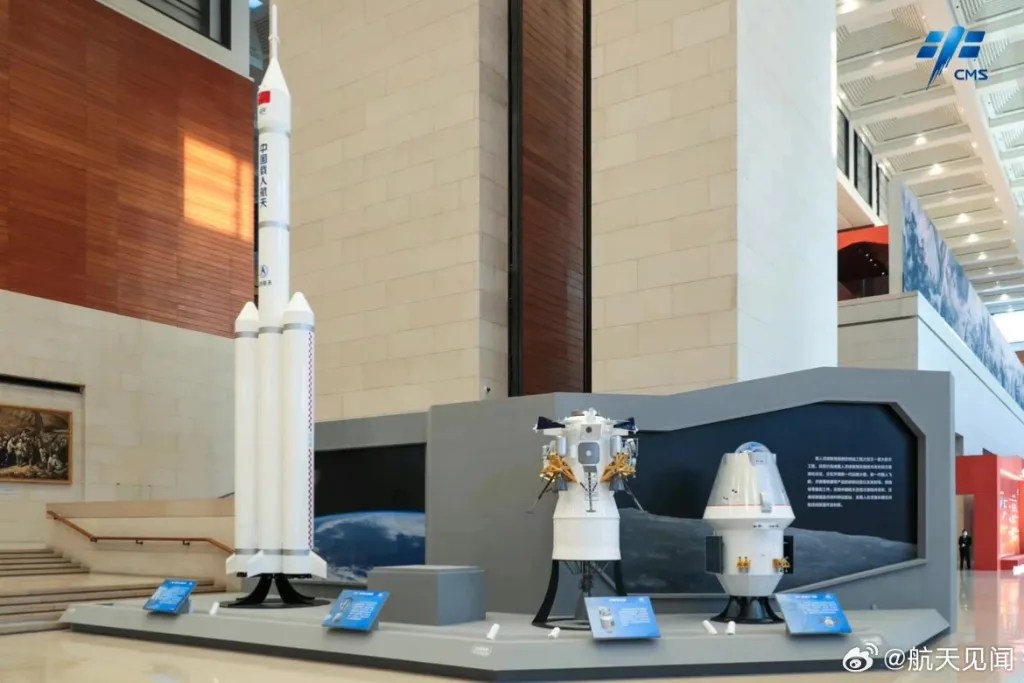
#CNSA #ChinaNationalSpaceAdministration #国家航天局 | #BRI #July2023 |#CASC #ChinaAerospaceScienceAndTechnologyCorporation – #长征十号 #MannedCarrierRocket #CarrierRocketFreighter  #3DPrinting #CarrierRocketEngine Testing the #ChangZheng10 #LongMarch10 engine at Thrust of 130 Tons Successfully …..

长征十号 At 22nd  23rd July  2023 Hong Kong SAR- Beijing time , China- People’s Republic of China- CNSA –China National Space Administration   Successfully Carrier Rocket  engine tested for the New Next Generation Chang Zheng – Long March 10 Manned Lunar mission landing Carrier rocket freighter The main engine of China’s manned lunar landing rocket Long March 10 completed another ignition test run yesterday, which verified all the requirements of the rocket mission for the engine, and provided strong support for the solidification of the engine’s technical status, the establishment of product technology baselines, and the improvement of reliability.


The engine used in this test run uses advanced liquid oxygen kerosene as fuel, which is improved and iterated from the high-thrust liquid oxygen kerosene engine used by the new generation of launch vehicles such as the active Long March 5, with a thrust of 130 tons. (The Sixth Academy of Aerospace Science and Technology Group)

Created with GIMP

The reporter learned from China Aerospace Science and Technology Group Co., Ltd. on July 23 that the main engine of my country’s manned moon landing rocket was tested in the Fengzhou Test Area of ​​the Sixth Academy of Aerospace Science and Technology Corporation, and achieved continuous success. This test run verified the engine flight mission profile, and provided strong support for the solidification of the engine technical state, the establishment of the product technical baseline, and the improvement of reliability.

The engine is the power source of the rocket, and its development process is very complicated. Test run is an important link in the engine development process, and there are dozens of types. In layman’s terms, engine test run is the process of igniting the engine and verifying the rationality of its design scheme and process reliability. This is an indispensable and important part of the development and delivery of a type 1 engine. It will run through all stages before and after engine development. Each stage of test run has different meanings, and the ignition time varies from a few seconds to hundreds of seconds.

It is reported that the engine used in this test run uses advanced liquid oxygen kerosene as fuel, which is improved and iterated from the high-thrust liquid oxygen kerosene engine used by the new generation of launch vehicles such as the Long March 5. The thrust reaches 130 tons. The R&D team of the Sixth Academy of Aerospace Science and Technology Group adheres to the concept of digital design, and has successively overcome key technical problems such as engine start-up and shutdown sequence, engine wide-range continuously variable thrust, and engine long life and high reliability.

In addition, the continuous success of the test run has fully verified the reliability of a number of new carrying process technologies. The engine production of this test run adopts the concept of intelligent manufacturing, and actively applies new materials, new processes, and new technologies. The inner wall of the thrust chamber of the core component adopts a new protective coating, key assemblies adopt automatic welding technology, and a large number of components adopt 3D printing technology.

During the preparation of the engine test run, the participants in the research and test conducted tests and verifications on each subsystem of the test through comprehensive means such as digital modelling, simulation calculation, and system debugging. The successful test run shows that the test area has greatly improved the multi-station parallel test run capability and test efficiency by optimizing the workflow.

Images and visuals are from their Respectives CMS China Manned SpaceCNSA-China National Space Administration  the Sixth Academy of Aerospace Science and Technology Group

#MadeInChina #中國製造 #中國 |酒泉衛星發射中心#JiuquanSatelliteLaunchCenter #星河动力空间科技有限公司#GalacticEnergy #July2023|#CarrierRocketShopping #谷神星一号遥 #Ceres1 Y6 #CarrierRocket Successfully launched two #Satellites #StarTimes16 #Qiankun1 mission code name #LemonTree  

星河动力空间科技有限公司 Galactic Energy-  Galaxy Power (Beijing) Space Technology Co., Ltd. Located in Block D, Aviation Technology Plaza, E-Town, and Beijing – Beijing – China – People’s Republic of China ….Galaxy Aerospace is the first private aerospace company in China to achieve successful continuous launches, the first to send commercial networked satellites into a 500km sun-synchronous orbit, and the first to master the ability to launch multiple satellites with one carrier rocket.

During today on 1307afternoon 22nd July  2023  launching from one of many complexes酒泉衛星發射中心 Jiuquan Satellite Launch Center in Dongfeng Aerospace City – inner Mongolia –China – People’s Republic of China on 1304 Hong Kong SAR-Beijing Time…..Galaxy Power Aerospace successfully launched the Ceres-1 (Yao-6) Sichuan Ziyang carrier rocket (mission code: LEMON TREE) at the Jiuquan Satellite Launch Center, and successfully sent the Qiankun-1 ultra-low orbit technology test satellite and Tai’an (Star Times-16) satellite into the predetermined orbit.

High-density launch is the only way for a commercial rocket to go from development to maturity, from laboratory products to assembly line industrial products. It comprehensively tests an enterprise’s organizational capabilities, management capabilities, support capabilities, and technical capabilities. It requires continuous innovation and changes in the production organization model. The high-density space launches carried out by the world’s major aerospace countries encountered setbacks in the early days, but through the efforts of all aspects from rocket design and manufacture to inspection and maintenance, they finally achieved unprecedented launch capabilities, and laid the foundation for the generalization, serialization, and modularization of rocket technology, which eventually led to the improvement of the overall level of the launch vehicle industry.

As the first domestic private rocket launcher to start high-density launches, Galaxy Dynamics Aerospace will continue to move towards more efficient, more reliable, and safer goals in the next few months. With the sufficient launch capacity of the Ceres-1 carrier rocket, it can meet the launch windows and orbital requirements of different satellite customers, speed up the closed loop of satellite launch services, and improve the performance and delivery capabilities of high-density launches.

The first domestic ultra-low orbit test satellite “Qiankun-1” launched this time was developed by Seth Base Intelligent Technology Co., Ltd., equipped with hyperspectral imagers, visible light full-color cameras, image intelligent processors and other test loads. It is used to verify the key technologies for breaking through ultra-low orbit flight, build an advanced aerospace intelligent platform, and fill the gap in my country’s ultra-low orbit space technology application field. The Tai’an (Star Times-16) satellite is a hyperspectral remote sensing satellite developed by Nationstar Aerospace. At the same time, it is equipped with the blockchain satellite payload developed by the company. It will implement the world’s first visual blockchain on-orbit certificate storage and commercial services, and launch a series of space computing content applications such as the world’s first space digital life platform (Interstellar Immortal Passenger).

This is the sixth consecutive successful launch of Ceres 1. So far, Galaxy Dynamics has served 12 commercial satellite customers and completed the orbital launch of 21 commercial satellites.

Thanks to the Industrial and Commercial Bank of China Ziyang Branch for its support for this launch…..Today is a good day. The Ceres-1 remote-6 carrier rocket was successfully launched. ….Six consecutive victories! Ceres-1 carrier rocket officially launched high-density launch delivery…

Images and visuals are from their respectives also Galactic Energy is located in Block D, Aviation Technology Plaza, E-Town, Beijing- China – People’s Republic of China

#MadeInChina #中國製造 #ExPace | #July2023 | #CASIC Rocket Technology Company #Expace #Wuhan #CarrierRocketCompany #CarrierRocket #快舟十一号  #Kuaizhou11 #KX11 Carrier Rocket Carrying Capacity Surplus Announced…

Currently at the moment中國製造 Expace Technology Corporation- a CASIC -China aerospace science and industry corporation has been very busy in building a New Carrier Rocket Factory in Wuhan National Aerospace Industrial Base in which the base will be in operations in May 2020   Kuaizhou Rocket Industrial Park that forms the manufacturing of twenty plus more Kuaizhou Rockets also its other sister larger carrier rockets in process of The assembly test capability of 20 solid launch vehicles……in which is now in operation……

快舟十一号The Kuaizhou 11 carrier rocket is a solid rocket developed by China Aerospace Science and Industry Corporation. The rocket adopts a vehicle-mounted mobile launch method, with a take-off mass of 78 tons, a rocket body diameter of 2.2 meters, and a maximum carrying capacity of 1.5 tons in low-earth orbit . The synchronous orbit carrying capacity is 1.0 tons. And control the launch cost per kilogram within 10,000 US dollars. 

Kuaizhou 11, which has been widely discussed recently, is a launch mission of a small miniature single-satellite or multi-satellite network with an orbital altitude of 400-1500 kilometers and a sun-synchronous orbit. It is a new type of solid launch vehicle with the strongest carrying capacity, the largest take-off mass and the largest diameter of the rocket body in China.

Kuaizhou-11 Rocket Carrying Capacity Surplus Announced According to news from Aerospace Science and Industry Rocket Technology Co., Ltd. on July 13, Kuaizhou-11 solid launch vehicle can be “booked”. The shipping space released this time is the remaining cargo space of Kuaizhou 11 solid launch vehicle for 5 rockets from the fourth quarter of 2023 to the fourth quarter of 2024. kg, 300 kg, 300 kg.

“The public announcement of the remaining capacity to the market is an attempt by the company to explore a commercial aerospace cooperation model.” The relevant person in charge of CASIC Rocket Technology Co., Ltd. said that this model can provide “high reliability, low cost, and fast response” for carry-on launches Serve. Kuaizhou 11 solid launch vehicle is a medium-sized solid launch vehicle. The entire rocket is made of carbon fibre composite materials. The take-off mass is 78 tons, the diameter of the rocket body is 2.2 meters, and the carrying capacity of the 700-kilometer sun-synchronous orbit is not less than 1 ton. It adopts an international common interface. , the overall technology has reached the international advanced level of solid launch vehicle…

The Kuaizhou 11 rocket will arrange multiple launch missions from 2023 to 2024. At present, some missions still have a carrying margin. Welcome to book a space….The CASIC Kuaizhou-11 launch vehicle Yaosanjian is currently scheduled to be launched in the fourth quarter of this year, and the 4 rockets from Yao4 to Yao7 are planned to be launched in 2024. The above-mentioned launches are all sun-synchronous orbit launch missions. 

Images and visuals are from their respectives..

#MadeInChina #中國製造| #ISpace #星际荣耀#InterstellarGlory #July2023 | #ChinesePrivateSpaceCompany –#ReusableCarrierRocket #CarrierRocket Ninth China (International) Commercial Aerospace Summit Forum Summary of the latest Reusable Carrier Rocket development launch vehicle…

In which iSpace- Interstellar Glory in which it is the first Chinese Private Space Company to do so successfully commercially first out from sixty known private space companies in China People’s Republic of China…  Founded in Beijing 2016 located in Beijing Economic and Technological Development Zone or known for short as E-Town in Capital of China – People’s Republic of China …

Beijing Interstellar Glory Space Technology Co., Ltd. (referred to as “Interstellar Glory”) was established in October 2016, with Peng Xiaobo as the legal representative. The company is committed to developing excellent commercial launch vehicles and providing systematic launch solutions, providing global commercial aerospace customers with more efficient, higher-quality, and more cost-effective launch services, so as to greatly improve the ability of human beings to freely enter and exit space.

The company focuses on the research and development of intelligent launch vehicles, and provides integrated commercial launch services for global satellite and constellation customers.

 On July 12, 2023, the Ninth China (International) Commercial Aerospace Summit Forum opened in Wuhan. This forum is jointly directed by China National Space Administration, China Meteorological Administration, China Manned Space Engineering Office, Hubei Provincial People’s Government, Wuhan Municipal People’s Government, China Aerospace Science and Industry Corporation, China Aerospace Science and Technology Corporation, China Electronics Technology Co., Ltd. It is co-sponsored by Group Co., Ltd., China Aerospace Foundation and Chinese Society of Astronautics. Ji Qiming, Assistant Director of China Manned Space Engineering Office, Zhang Hailian, Deputy Chief Designer of China Manned Space Engineering and other leaders attended the forum.

【Summary of the latest development of the Interstellar Glory launch vehicle】

▲The rocket type spectrum is only hyperbolic No. 1, hyperbolic No. 2 Y, hyperbolic No. 3, hyperbolic No. 3 B, SQZ-2 and the abstract asymmetrical SQX- 3A does not seem to engage in.

▲ Hyperbolic No. 1 Yaoqijian is scheduled to be launched in August 2023, and the final assembly of 4 rounds of Hyperbolic No. 1 will be completed by the end of this year. It is expected to have a launch capacity of 10 rounds per year by 2025.

▲ The 15-ton methane machine “Focus No. 1” has been tested for more than 12,000 seconds on the ground.

▲ The 105-ton methane machine “Focus No. 2” completed the semi-system test run in March this year, and this month is carrying out the hot test run of the whole system. It is planned to complete the engine reliability test run by December 2024 (the test run time will reach 10,000 seconds)


▲Hyperbola No. 2 Verification (SQX-2Y) The arrow has a diameter of 3.35 meters and a total length of 17 meters. It uses a Focus No. 1 engine. It is currently planned to carry out vertical take-off and landing tests in the second half of this year. The landing accuracy is expected to be better than 3 meters.

▲The basic type of Hyperbola No. 3 is a two-stage liquid oxygen methane rocket, with a diameter of 4.2 meters, a total length of 69 meters, a take-off mass of 490 tons, 9 units of Focus No. 2 in parallel, and a LEO capacity of 13.4 tons (not recycled)/8.5 tons ( Reuse), 500kmSSO capacity is 10.4 tons (non-recycling)/6.2 tons (reuse). It is currently planned to make its first flight in 2025, realize rocket recovery in 2026, and have a launch capacity of 25 rounds per year in 2030.

▲The hyperbolic No. 3 extended model includes: the hyperbolic No. 3 B bundled with CBC, and the three-stage configuration high-orbit rocket with the addition of a low-temperature final stage. Among them, the LEO transportation capacity of Hyperbola No. 3 B in the recovery state is not less than 15 tons, and the 500km SSO transportation capacity is 26.2 tons (non-recycling)/10.6 tons (reuse).

▲The hyperbolic No. 3 series of liquid rockets adopts the “three-level” test and launch mode. The expected test and launch cycle is 14 days, and the rocket takes up 2.5 days at the station. The 4.2-meter rocket body is transported into the field by road and is expected to be launched at the Hainan Commercial Launch Site in Wenchang.

▲Interstellar Glory plans to finally realize the annual production capacity of 50 liquid oxygen methane engines, 8 attitude control engine systems, and 10 liquid rockets. At present, the storage tank production line is undergoing equipment debugging and some process verification, and it is expected to be in the state of final assembly and debugging by the end of this year.

Images-visuals are from Weibo and their respectives..