东方空间 OrienSpace is one of sixty plus Carrier Rocket Companies in Made In China, People’s Republic of China.. Located in headquartered in Beijing, B3, Digital Manor, No. 1 Disheng West Road, Yizhuang Economic and Technological Development Zone, Daxing District, Beijing………Shandong Address: No. 30, Nanjing Street, Economic Development Zone, Haiyang City, Yantai City, Shandong Province………Shaanxi Address: 4th Floor, Northwest Building, Eleven Science and Technology, National Civil Aerospace Industry Base, Xi’an, Shaanxi Province…….Hainan Address: Room 125, 1st Floor, Building 20, No. 169, Wenwei Road, Wencheng Town, Wenchang City, Hainan Province…
Established in 2020, Dongfang Space is mainly engaged in space transportation. It is a design and manufacturing service company for launch vehicles and new aerospace vehicles. Through the research and development of the “Gravity” series of launch vehicles, the company has created serialized, diversified, and flight-based aerospace transportation products such as one-time use, recyclable reuse, and manned flight, and quickly formed low-cost, large-scale, and convenient launches. Service capability, committed to becoming the world’s most respected provider of commercial aerospace products and launch services, so that everyone can realize the dream of spaceflight…….
The actual shape of this bevel cone seems to be a bit sharper than the one in the animation and model?
[The Orient Space Gravity-1 launch vehicle plans to make its first flight at the Oriental Space Port in December this year] Orient Space’s first “Gravity-1” launch vehicle will make its first flight at the Oriental Space Port in Yantai, Shandong in December this year. Aiming at the demand for rapid launch services of low-orbit constellations and medium- and large-scale satellites, the low-Earth orbit carrying capacity of “Gravity-1” is as high as 6.5 tons, which will increase the capacity of the largest commercial space rocket in China by about three times and will effectively help my country improve its medium- and large-scale satellites. Space payload rapid response launch capability.
“Gravity-1” is China’s first commercial space rocket with a bundled design and the world’s first all-solid bundled rocket. The rocket has a three-stage and semi-configuration. The booster stage is bundled with four solid motors. Each unit is more than 10 meters in height, 2.65 meters in diameter, and has a thrust of up to 155 tons. It will provide 600 tons of thrust for the rocket to take off, making the “gravity force” -1″ can achieve a low-Earth orbit carrying capacity of up to 6.5 tons…
Images and visuals are from their respectives also 东方空间 OrienSpace
星河动力空间科技有限公司 Galactic Energy- Galaxy Power (Beijing) Space Technology Co., Ltd. Located in Block D, Aviation Technology Plaza, E-Town, and Beijing – Beijing – China – People’s Republic of China ….Galaxy Aerospace is the first private aerospace company in China to achieve successful continuous launches, the first to send commercial networked satellites into a 500km sun-synchronous orbit, and the first to master the ability to launch multiple satellites with one carrier rocket.
The latest news from Galaxy Power – Ceres 1 will return to flight in two months – Progress of Pallas 1 Onwards
October 29, 2023, at the Beihang Alumni Innovation Forum held during the 71st anniversary of Beihang University, Galaxy Power CEO Liu Baiqi, who is a Beihang alumnus He delivered a speech titled “Building a New Generation of Low-Cost, Highly Reliable Commercial Launch Vehicles” and introduced the development of Galaxy Power. Among the more important new information are: 🚀 Ceres 1 has a low-orbit carrying capacity of 300 kilograms and sells for 4.5 million
. Around US$7 million, compared to US$7 million for 150 kilograms of electronic numbers.
🚀 Ceres 1 has been put into production for 30 rounds (!) 🚀 Ceres 1 is expected to return to flight in two months, with the mission of Remote Nine, codenamed “We won’t stop” 🚀 Some people think that Ceres 1 has been fired too intensively. It is necessary to slow down, but Liu Baiqi insists that there is no room for reuse of small rockets. The only way to achieve commercial success is large-scale industrial production, and high-density launches must continue to be promoted. 🚀 Ceres 1 will have two more launches by the end of this year. The future goal is 40 launches per year, which is equivalent to rockets hitting the sky every week.
🚀 The future development direction of medium and large liquid rockets must be reusable. 🚀 Pallas 1 uses seven engines in the first stage, which are reusable to achieve power redundancy and can complete the launch even if one engine fails. 🚀 Pallas 1 is currently aiming for its first flight in the second half of 2024. The recyclable first-level Pallas 1A will make its first flight in 2025, and the CBC configuration Pallas 1B will make its first flight in 2026. 🚀 The Pallas No. 1 that was “off the assembly line” reported by the media was actually a joint training test arrow. 🚀 There are also complete speech videos and transcripts of Galaxy Power’s Anhui engine production base, vertical take-off and landing verification, sky liquid oxygen kerosene engine test, etc. See: Highlights of the 2nd Beihang Alumni Innovation Forum | Galaxy Power Aerospace Founder & CEO Liu Baiqi
( The text is automatically generated based on visual inspection, and there are some errors and deletions.)
“Dear leaders, teachers, and alumni, good afternoon! I am very honored to be invited to participate in the second Beihang Alumni Innovation Forum. Every time I come back to school, I feel like I am going home. It feels very cordial. I came to Beihang University to study for a PhD in 2003. I graduated in Department 17 and enrolled in Department 15. After graduation, I stayed in Department 17 and worked there for three and a half years. In 2011, I was assigned to the China Launch Vehicle Research Institute. I found that many of my colleagues and leaders around me were alumni of Beihang University, and they were no strangers to them after I arrived there. In 2018, I left the First Institute of Aerospace Engineering and founded a private company. At that time, I wanted to start a business. I wanted to build rockets but had no money. So I got the first angel funding. He is also an alumnus of Beihang University. Of course, the backbone of core technologies are Beihang alumni, so the genes of Beihang are engraved in my bones, and the strength of Beihang has always been with me as I grew up.
The title of today’s report is “Building a new generation of low-cost, highly reliable commercial launch vehicles.” What is a rocket company’s business model? Making rockets has corresponding courses and techniques for Beihang people, but for commercialization, the business model of making rockets is to independently develop and manufacture a rocket, use it as a means of transportation, and use it to put satellites into orbit. , charging a fee for launch services. You can understand that Rocket Company is essentially a courier company, and we actually deliver couriers.
We have also established a website where you can book our launch services. If you want to send something to the sky, you can contact us. Why come to us? Because in China’s private commercial aerospace field, Galaxy Power has created some technologies. We are the first private rocket company to put satellites into orbit. We are also the first private rocket company to implement sea launches. We are also the first private rocket company to achieve industrial mass production of rockets and the first private rocket company to implement high-density launches. In the field of private rockets, we have the most launches and the highest success rate. So it is worth having.
However, most people do not have the opportunity to launch satellites into the sky. Where is our market? Who will launch the satellite? What kind of customers do we face? The market we are facing is mainly low-orbit satellite Internet. In 2021, the National Development and Reform Commission included this as a new device. From an academic perspective, it has set off a craze for low-orbit satellite Internet. Tens of thousands of satellites may enter space in the next five to ten years. , these satellites are manufactured, launched and operated by themselves, and the data formation services will be an external market. With so many satellites wanting to enter space, rockets are the only channel for satellites to enter space. If all these satellites enter space, our country’s current transportation capacity will be less than one-tenth of this capacity. This is a huge gap in demand. This is one of the driving forces for the birth of Chinese private rocket companies and the birth of commercial rocket companies. The market needs rockets and transportation capacity. But don’t think this requires all rockets. For example, the Chinese car market is huge and they need cars, but some cars sell a million cars a year, and some cars only sell a few cars a year. So let’s analyze what kind of rockets are needed for such an upsurge in the development of low-orbit satellite Internet? What kind of rocket is needed to meet such market demand.
There are two trends in the development of low-orbit satellite Internet, one is large and the other is small. The trends are very obvious. The big trends refer to the big satellites and big constellations. For example, the United States and China launch tens of thousands of satellites into space. The mass of the satellites increases from 260 kilograms to 750 kilograms, and will increase to 1.2 tons in the future. This means that more than 10,000 tons of weight must be sent from the earth to orbit. Requires a lot of experience. It is impossible for us to send such a heavy weight to the sky one kilogram by one. We can only send a lot in batches at one time. At this time, medium and large liquid launch vehicles are needed. At the same time, traditional rockets are disposable and will be damaged after each launch. In order to reduce costs, we need to reuse rockets. For large satellites, we need large reusable liquid rockets. Few countries can complete the construction of such a giant constellation, and few people can build such a constellation.
Another trend is small satellites and small constellations. Everyone recognizes the trend of satellite miniaturization. In the past, satellites weighing several tons may now be able to achieve their functions with satellites weighing hundreds or even tens of kilograms. Building such a small satellite constellation with dozens or hundreds of stars can also solve narrow applications in various fields such as communications, joysticks, meteorology, etc. If there are dozens of stars, each of which only weighs tens of kilograms, and is distributed to There are several orbital planes, and each orbital plane only has a total weight of a few hundred to launch. At this time, if we still use a large rocket with a carrying capacity of more than ten tons or more than twenty tons to launch this satellite, it is equivalent to using an Airbus 380 to make a straight-line passenger plane. , that one must lose money. So for small satellites and small constellations, this small trend requires lightweight launch vehicles.
According to this market analysis, Galaxy Power only focuses on market demand. We have deployed two types of rockets: One is a lightweight launch vehicle called Ceres 1, which is deployed around small satellites and small constellations. Its carrying capacity is only a few hundred kilograms. , but it is as convenient as a taxi. Once the satellite comes, you can get in the car and go, and it can have a high frequency of transmission. The other is a medium-to-large reusable liquid launch vehicle, with a carrying capacity ranging from five tons to more than ten tons, and in the future it will reach a large-scale carrying capacity of more than thirty tons. When developing large-scale reusable liquid rockets, the development ideas of modularization and serialization were adopted. The rocket in the middle actually has a red line. The red line is the first stage of the rocket. Above the red line is the second stage. The first and second stages are made to have independent control systems, power systems, structural systems, and independent flight modes. The two are connected in series to form a low-orbit carrier. If its carrier capacity is not enough, two boosters can be added to the one-level parallel bundle to increase the carrier capacity to about 14 tons. In this way, the difficulty of rocket development is reduced, the development cycle is shortened, and the corresponding risks are reduced. For business, it is also very necessary for an enterprise to control corporate risks.
Let me introduce these two rockets to you: The first one is Ceres 1. It is a light and small launch vehicle with a diameter of only 1.4 meters. It has a low-orbit carrying capacity of 400 kilograms and can carry an orbit up to 300 kilograms. But this rocket is bragging. Beihang people are generally relatively low-key and pragmatic. At this time, based on the data, it is still bragging. It is the most cost-effective lightweight launch vehicle in the world. Before this, we all knew that the US Electron was Rocket Laboratory. The Electronic Number made by this company is the best small rocket in the world. It has launched more than 30 times. Its low-orbit carrying capacity is 150 kilograms and the price is 7 million US dollars. Ours is 300 kilograms and the price is 450. About ten thousand US dollars. In terms of cost performance, it is a complete victory over electronic rockets, so we say that China and the United States do not cooperate or compete in small rockets. If this competition can be opened up, we actually still have some advantages in the field of small rockets.
You may be curious and ask, why does our rocket have such a competitive advantage in the market since Galaxy Power was established in such a short time? It is because of the technological innovation spirit and innovative power of our Beihang people.
This rocket is called a four-star rocket. It has corresponding technological innovations in design, materials, processes, and experimental methods. Although there are many people in our company, most of the products produced by the aerospace institute in the past were mature launch vehicles. It is not that we have made a rocket from the past, but we have carefully analyzed the market demand ourselves. Market-oriented needs have been redefined to create such a rocket. There are many details of these technological innovations that have not been elaborated here.
For example, we used to call Beihang University laser rapid prototyping, but now it is called 3D printing. This is Beihang University’s advantageous technology. The engine here is the 4D engine of our rocket, which adopts the traditional manufacturing model. But what are the disadvantages? The cost is relatively high. Such a small engine is only about the size of a finger, costs 500,000 to 600,000 yuan, has a production cycle of 6 months, and is also very heavy. We transformed it into titanium alloy 3D printing, reducing its cost from 5 to 6 million yuan to 70,000 yuan. The production cycle was shortened from the past 6 months to one month and the weight was reduced by half. So we say that this is the power of innovation, and it is also the power of Beihang that we talked about in today’s forum.
At the same time, we have completed the launch of 10 rounds of Ceres 1, the first launch vehicle to achieve mass production. Any technological product, any equipment, or equipment must be industrialized and mass-produced in order to reduce its cost and achieve higher reliability. At present, this rocket is the first mass-produced rocket in China, and it is also the first domestic commercial launch vehicle to achieve high-density launch, because we have to launch it after we produce it. From July 22 to September 11 this year, we launched a rocket every 12 days. This is currently the highest launch frequency in China. This high launch frequency is like taking a high-speed train. There are more choices for customers. Provide better launch services.
At the same time, Ceres 1 is the first rocket that can be launched both from land and sea, and Galaxy Power is the only private rocket company. Sea launch has caused a relatively large impact at home and abroad. This launch is also a technology that has successfully launched Ceres 1 for nine consecutive times. Starting a business is a risky thing, and building rockets is also a risky thing. There is an analogy in making rockets: ten thousand people, one gun. If ten thousand people participate in building a rocket, what are the requirements for each person? Everyone is required to do things right the first time, and the work he does is required to have zero defects. If one person’s work is defective, it may bring fatal risks. When Ceres 1 was producing the tenth launch vehicle, when we were producing the supplier’s engine nozzle, due to improper drilling operations, internal defects and damage were caused to the nozzle, so in September 2021 When our Jiuquan Satellite Launch Center carried out its tenth launch mission on the 21st, it no longer had nine consecutive victories. The pause button was pressed during high-density launches. Many people sent messages to comfort and encourage. Many shareholders were also worried, and even many People don’t call me for fear of getting seriously hurt. As a Beihang person and an entrepreneur in the aerospace industry, we cannot be defeated by failure or any setback. This is number one.
When we failed the second time, we didn’t’t have time to think about this. We immediately obtained all the telemetry data of the flight time and all the external images, and analysed each frame of data and images, hoping to find the cause of the failure. We worked non-stop for 48 hours. , quickly located the fault that caused the rocket’s flight failure, and located the fault on the engine baffle. We formed a working group with the baffle supplier, completed the special review of Ceres 1 on October 23, and began preparations for flight. This was the shortest and fastest rocket flight failure in the history of aerospace. We also discussed and researched with our suppliers and raised issues to prevent similar things from happening again. We proposed a series of setbacks and methods for subsequent improvement of quality. At the same time, we not only made requirements for suppliers, but also proposed to Inner Galaxy Power to carry out a The quality improvement project will sort out our potential risks and weaknesses from the entire process of our design, production, assembly, testing, and launch, and propose targeted quality improvement measures. Through these measures, we will further improve the quality of Ceres 1. We hope that it will take two months Afterwards, test flights will be carried out, and I hope everyone will see a better Ceres 1.
I heard different voices. Some people with good intentions advised us whether we shot too much. If we shot one rocket every 12 days, if we shot a few less, we would not face such a failure. Look at it this way, there are big rockets and small rockets. For a small rocket like Ceres 1, first of all, we believe that it has its own segmented commercial market, so the demand for industrialization necessitates this. There is no need to reuse small rockets. Once reused, a lot of systems will be added, a lot of fuel will be reserved, and the carrying capacity will drop sharply. The only channel is industrialized large-scale production, which means high-speed launch. For this We will not change our direction and goals, and we will continue to promote high-density launches. We have completed 6 launches this year, and there will be two more by the end of the year. In the future, we hope to increase the frequency of Ceres-1 rockets to 40 launches per year, which is equivalent to rockets every week. At that time, we will be able to provide our satellite customers with better A more valuable launch.
For small rockets, it is necessary to implement large-scale industrial mass production. For liquid rockets, it is necessary to focus on commercial closed loop. The future development direction must be reusable. Galaxy Power has also laid out reusable medium and large launch vehicles. First of all, in order to make the rocket reusable, we designed a layout concept with seven engines in parallel. This can be reused and can also achieve power redundancy, allowing one Even if the engine fails, it can still fly normally. We have also developed a depth-variable thrust reusable liquid oxygen engine for the rocket, and have also conducted research on a vertical recovery algorithm. In terms of development direction, this rocket is aimed at being reusable, but in order to reduce risks, the first step is to put it into orbit and then recover it to increase the rocket’s carrying efficiency.
What you are looking at now is the engine production base built in Anhui. This engine was independently developed by us for this rocket. It also has a series of technological innovations. These are some large-scale support injectors with coaxial dual-core high-speed Filter pumps are innovative equipment in China. We have also completed the experimental verification of recycling. This is also the first time in China that the online optimization algorithm has been verified. This implementation is still very stable. Galaxy Power has built a 100-ton dual-station test bench around different production facilities for design, production, and experimentation. The first joint training test rocket has been assembled. We hope that through this launch vehicle, we will make greater contributions to the development of our country’s commercial aerospace industry. Contribution and strength of Beihang University.
On the 9th November 2023 in CNSA _China National Space Administration -China – People’s Republic of China 0403 hours Hong Kong –Beijing Time China- People’s Republic of China launch the Chang Zheng – Long march 3B Carrier Rocket launching from station form Xichang Satellite Launch Center Sichuan Province….. in which中国 successfully launched the ChinaSat 6E satellite# At 19:23 on November 9, the Long March 3B carrier rocket lifted the ChinaSat 6E satellite into space at the Xichang Satellite Launch Center, and then sent the satellite into the predetermined orbit. The launch mission was achieved A complete success.
The ChinaSat 6E satellite was developed by the Fifth Academy of China Aerospace Science and Technology Corporation. It adopts the Dongfanghong 4 enhanced satellite platform independently developed by my country. The satellite is equipped with C, Ku and other multi-band broadcast communication payloads, and is the first to use the domestic No. Fourth generation digital transparency processing technology. This satellite is my country’s new generation of dedicated transmission satellite for radio and television. It will succeed the ChinaSat 6B satellite business and undertake the mission of radio and television broadcasting. At the same time, the satellite will realize the on-orbit demonstration application of my country’s fourth-generation digital transparent processing technology and Ku high-throughput payload for the first time.
The Long March 3B carrier rocket is developed by the First Academy of China Aerospace Science and Technology Corporation. This rocket is the first application of the special development and implementation of the “double improvement” of the Changsanjia series model’s carrying capacity and reliability, which is a milestone in the development of the model. The geostationary transfer orbit rocket carrying capacity of this rocket reaches 5.55 tons. The whole rocket has a total of 74 improvements, including 52 first-flight improvement projects. This mission is developed and organized and managed based on the first-flight model.
After completing the on-orbit test, the ChinaSat 6E satellite will be handed over to China Satcom, a subsidiary of China Aerospace Science and Technology Corporation, for operation and management. It is planned to be located at 115.5 degrees east longitude. Its radio and television resources mainly cover China, Southeast Asia, Australia and other regions, and its communication resources mainly cover China’s land and territorial waters, Central Asia and South Asia. It will provide important support for the construction of the “Belt and Road”, new infrastructure construction and the construction of Digital China. This launch is the 496th launch of the Long March series of launch vehicles.
As a “new star” for broadcasting, Vimicro’s 6E satellite can not only provide services for my country’s central and local 95 channels of satellite TV and 213 channels of digital audio broadcasting, but also expand satellite functions with a number of “new” capabilities, adding 8K ultra-high-definition High-definition business, user viewing range and user viewing quality will be greatly improved, helping my country’s radio and television broadcasting industry to flourish.
According to the designer of the ChinaSat 6E satellite from the Fifth Academy, in order to meet users’ high requirements for satellite coverage performance indicators, the development team adopted a variety of methods to reduce surface errors and improve antenna radiation characteristics; it also adopted power synthesis technology to meet the requirements for 8K ultra-high definition. Video transmission business requirements. At the same time, the development team configured four high-frequency bandwidth channels for the satellite, which increased the load power and significantly improved the data transmission rate. In addition, the current C-band continuous wave maximum output power traveling wave tube amplifier is used, which increases the power of the ChinaSat 6B satellite by 31%. For radio and television broadcasting projects, we will continue to improve the robustness of the platform by improving satellite transfer orbit autonomy and fault recovery capabilities, and selecting the best key products
[ Chang Zheng- Long March 3B carrier Rocket, carrying capacity digs 50kg geostationary transfer orbit carrying capacity increased from 5.5 tons to 5.55 tons] On November 9, the Long March 3B carrier rocket lifted the ChinaSat 6E satellite into space, and the mission was a complete success. The “upgraded version” of the Changsha 3A series rocket successfully made its first flight, achieving the goal of “double improvement”. The Long March 3B geostationary transfer orbit carrying capacity has been increased from 5.5 tons to 5.55 tons; there are 74 technical improvement projects, including 52 first flight improvement projects; the improvements involve all rocket systems.
According to Zhang Tao, deputy chief designer of the Changsanjia series rockets, the rocket has also helped improve the rocket’s carrying capacity by 50% by overall optimizing the flight trajectory plan, canceling the terminal velocity correction, optimizing the pre-cooling flow of the three-stage rocket engine, and canceling the booster cylinder in the engine. Kilogram.
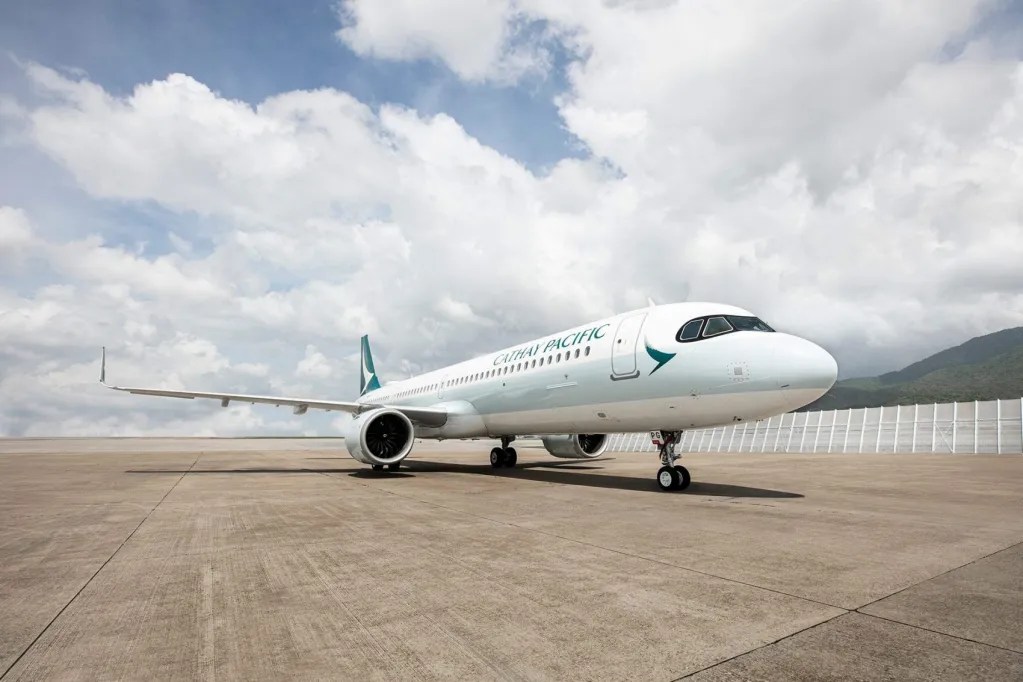
On the 5th November 2023 Cathay Pacific – Cathay Partaking in the CIIE China International Export Expo in Shanghai Located in National Convention and Exhibition Center- Shanghai- China, People’s Republic of China in which showing casing in between 5th to 10th November 2023 …
As the “new face” of 2023CIIE , Cathay Airlines- Cathay Pacific appeared in the service trade exhibition area of Hall 8.2, focusing on “Working together, “Leap to the Future” theme, comprehensively displaying its four major business segments of “premium tourism, low-cost passenger transportation, freight and lifestyle”, as well as its development highlights and innovative measures in the Guangdong-Hong Kong-Macao Greater Bay Area and green and low-carbon fields, further demonstrating its in-depth development Confidence and determination in the mainland market. Online Exhibition Portal 👉 Online travel to the CIIE, immersive check-in at the Cathay Pacific booth! Come take a look!
The first China Air Transport Association was successfully held on November 3! As one of the exhibitors, Cathay Airlines – Cathay Pacific made an active appearance at this high-profile conference, providing strong support for the high-quality development of civil aviation in the new era and helping to promote society’s extensive understanding and recognition of the civil aviation industry.
At our booth, we presented Cathay Pacific’s global aviation network, exclusive and comfortable in-flight experience, unremitting pursuit of sustainable development, the huge potential of intermodal services in the Greater Bay Area, as well as operational highlights in cargo and other aspects. , conveying our corporate spirit of being committed to thoughtful service, being proactive, and creating innovative, convenient, and comfortable experiences for customers.
The first China Air Transport Association is a rare opportunity to gather industry elites to discuss the future of aviation. We eagerly look forward to more cooperation possibilities in the future, working with industry colleagues to shape the future of the aviation industry and provide passengers with a better flying experience!
Walk with Cathay Airlines- Cathay Pacific will take you to the exhibition online!
At the first China Air Transport Association, which opened today, we built a booth full of uniqueness and creativity, bringing you a brand new exhibition experience. The high energy on site will take you directly to the 👀:
✅ Light up travel destinations and gain exclusive
travel Exploration… Report
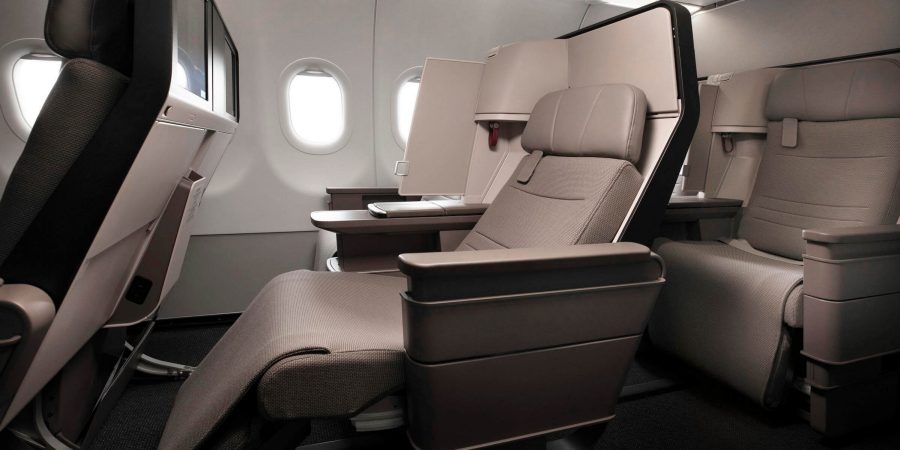
✅ Take photos and check in, generate AI images, and take photos with Cathay Pacific’s “landmarks” ✅ Enjoy the exclusive in-flight experience and immersively enjoy the luxurious business class seats
✅ Explore the real-life VIP room and experience the comfortable atmosphere of travel ✅ Check in to experience “turning waste into treasure” and refueling aircraft with sustainable aviation fuel..
In addition, we also showcased Cathay Pacific’s service highlights in different fields, such as the Multimodal Transport service in the Greater Bay Area. Web links , Cathay Pacific freight services, etc.
The first China Air Transport Association provides us with a platform for communication and mutual learning. We will firmly seize this opportunity and join hands with all parties to create better services for passengers and jointly contribute to the high-quality development of civil aviation in the new era!
What will it be like to unlock the highlights of travel services in one stop at the booth, explore the world and get exclusive reports, and generate AI photos as souvenirs?
On November 5, the 6th China International Import Expo officially kicked off. Cathay Pacific Airways , which made its debut at the CIIE , set up a unique and creative booth to provide a wonderful experience for people from all walks of life who came to visit. There are many highlights and more than a little surprise. Let’s take a look at the picture “Palm Palm Eye”~
2023CIIE Humanities exchange activities, the number of participating countries, provinces and booths has reached a new high. While promoting international cooperation and exchanges, it also provides more market opportunities for all parties. In order to firmly grasp the country’s “14th Five-Year Plan”, give Hong Kong, China new historical opportunities for development, and better integrate into the overall development of the country, we will continue to give full play to the unique advantages of “rooted in Hong Kong, backed by the motherland, and connected to the world”, and closely Connect the mainland with Hong Kong, China and other parts of the world, and consolidate and strengthen Hong Kong, China’s position as an international aviation hub…
The 6th China International Import Expo is in full swing! The editor invites you to come to the Cloud Exhibition~ 📍 Explore the world and light up every unforgettable journey 📍 Customize AI photos to freeze the beautiful moments with Cathay Pacific 📍 Enjoy the immersive business class experience on the ground 📍 Check in to the VIP room and take a photo It’s a blockbuster
📍 Use your little hands to add sustainable aviation fuel to the plane…
A “four-leaf clover”, an exhibition “benefitting the world”, 2023CIIE ushered in the last day. In the past week, Cathay’s carefully built booth was full of highlights, attracting an endless stream of visitors. Come explore and experience, the place is buzzing with activity. Friends who haven’t checked in yet still have a chance~
It is worth mentioning that Mr. Li Jiachao, the Chief Executive of Hong Kong, also visited our booth. Under the explanation of the staff, he further understood and experienced Cathay Pacific’s service concept and experience with the audience present. feature.
CIIE is open for a while, and a new chapter is about to begin! This conference has provided us with new opportunities, and everyone’s enthusiastic participation and recognition is the greatest affirmation of our unremitting efforts. While we are very encouraged, we are also looking forward to future development and working with you to create more excitement!
During this month November 2023 the development of the China, People’s Republic of China, CNSA- China’s National Space AdministrationLunar Manned Program in which to established a Chinese lunar Manned Mission due by 2030 least .. in which The preliminary results of China, People’s Republic of China’s manned lunar rover development program were announced. The program “Wangshu Zhichao” led by Tsinghua University was selected, focusing on innovative design and single advantageous technologies for in-depth research.
The bronze chariots and horses of the Terracotta Warriors from Qin Shihuang’s Mausoleum provided inspiration for the design team. The design team developed the man-machine intelligent hybrid enhanced driving technology of the manned lunar rover, which realizes three modes of manual driving, autonomous driving and human-machine hybrid driving. The angle of the vehicle body is adjustable and it can creep when necessary….
The preliminary results of my China, People’s Republic of China’s manned lunar rover development program were announced, and the program “Wangshu Zhichao” led by Tsinghua University was selected.
Tsinghua University’s four-wheel vehicle design plan
: Tsinghua University’s design plan for a four-wheel vehicle with adjustable body angle and creeping ability
: The bronze chariots and horses unearthed from Qin Shi Huang’s Terracotta Warriors provided inspiration for the design team
Design Plan of “Wangshu Chariot”
Key design elements of “Wangshu Chariot”
清華大學 Tsinghua University is located 30 Shuangqing Rd, 蓝旗营 Haidian District, Beijing, China, 100190, China, People’s Republic of China .