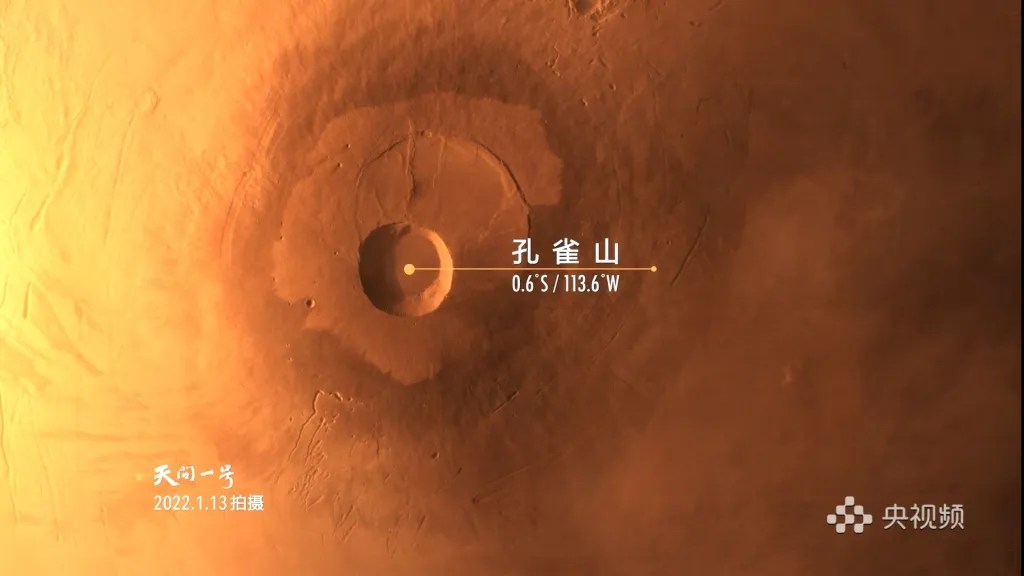
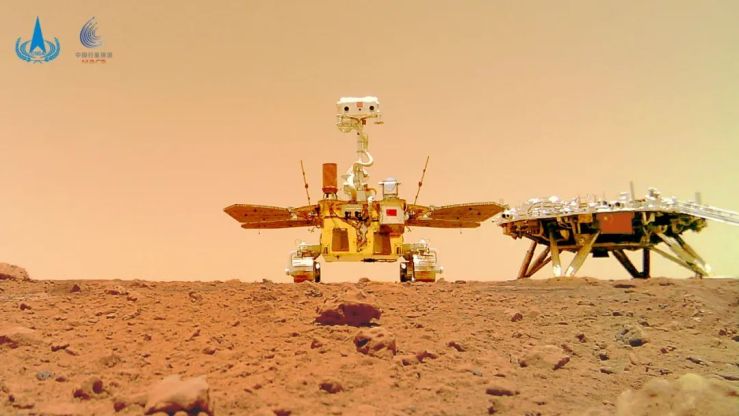
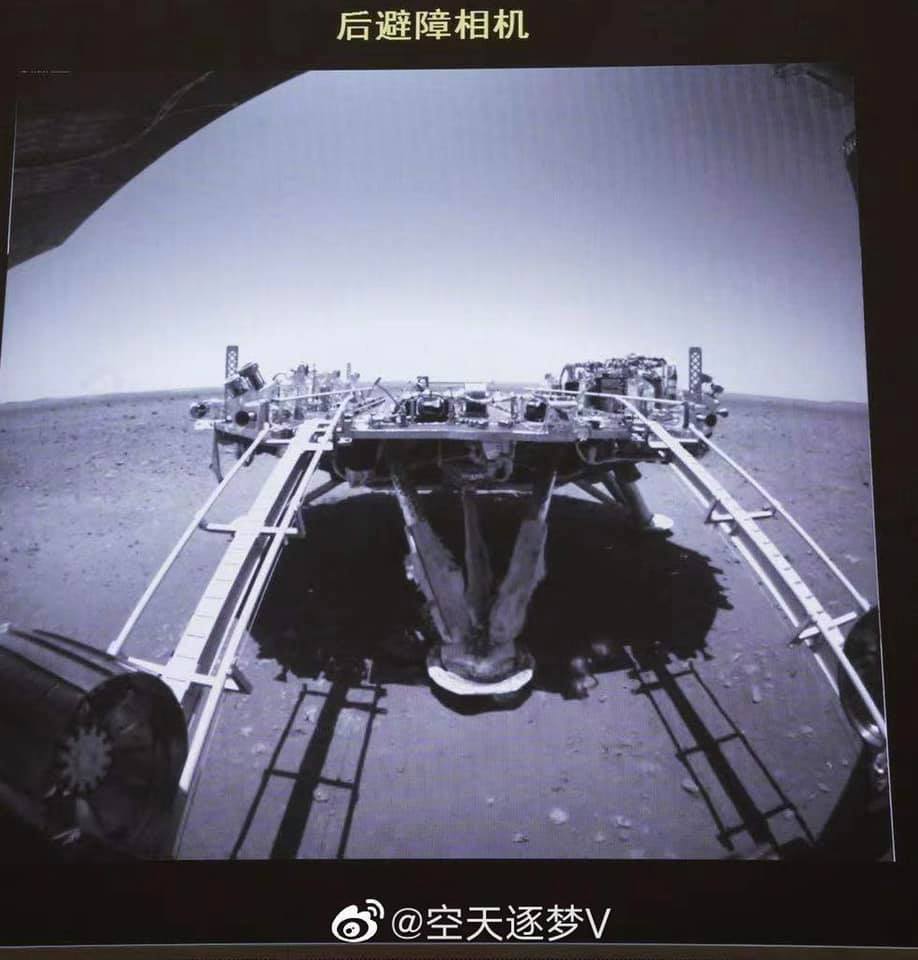
#CNSA #ChinaNationalSpaceAdministration #國家航天局 |#BeltAndRoadinitiative #May2022 | #火星 # 天問 #天问一号#TianwenOne #MarsMission #Tianwen1 probe  #祝融号 #ZhuRong #Tianwen1 #CCTV #HelloMars Episode Three-  What’s the Difference between Mars and Earth? What new discoveries have Tianwen-1 “Orbiting” Mars?

“Hello! Mars Episode 3 What’s the Difference between Mars and Earth? What new discoveries have Tianwen-1 “circled” Mars? Hello Mars……!

On the months week of  19th May 2022   天问一号飞運騎遊達达3亿CNSA – China National Space Administration – ESA – European Space agency Belt and road initiative mars mission…first Mars exploration mission, Tianwen- Martian Probe One  sent back stunning images of the Half Earth Mass size of the Rustic Planet Mars in which show stunning Martian landscape with its iconic polar caps of either southern or northern … With its timeless Stunning Mars Photography. Tianwen-1″ returned high-resolution images of the Mars inspection area The “Zhurong” rover is preparing for winter, and the orbiter continues to carry out orbital exploration….. in which one year ago it was it’s first landing on Utopia Planitia region on the planet Mars .. in celebrating a CCTV five part Episode was produced..

《你好!火星》Hello Mars Episode Three The content of this issue: On February 10, 2021, 202 days have passed since the launch of Tianwen-1. After a trek of 475 million kilometers, Mars is close at hand. At this time, the earth has circled the sun and has walked half a circle. Mars Falling behind, it is nearly 200 million kilometers away from the earth, and it takes 11 minutes for light to travel this distance. The main engine nozzle of the orbiter is facing forward, and it is about to ignite and brake. After a series of operation controls, Tianwen-1 has become an artificial Mars satellite.

本期内容:2021年2月10日,距离天问一号发射已经过去了202天,经过4.75亿公里的跋涉,火星近在眼前,此时地球已经绕着太阳,走过了大半圈,火星落在了后面,距离地球将近两亿公里,光线飞越这段距离也需要11分钟。环绕器主发动机喷口朝前,即将点火制动刹车,经过一系列的操作控制,天问一号成为了人造火星卫星。

Hello everyone, I would like to tell you some good news about the documentary “Hello!” about China’s first Mars exploration mission. “Mars” is finally on the air, friends who want to know more about Mars can stay in front of the TV tonight

“Hello! “Mars” is a large-scale scientific documentary jointly produced by the National Space Administration and China Central Radio and Television to commemorate the first anniversary of the Tianwen-1 Mars probe’s successful landing on Mars. It took three years to complete the filming and is divided into “Departure” and “Journey” “Surrounding”, “Landing” and “Patrol” have 5 episodes, each of which is 30 minutes long. They focus on the important stages of the Tianwen-1 mission, and describe a large number of astronomy, astrophysics, space applications, aerospace engineering and other disciplines in a simple way. Knowledge, in-depth analysis of Chinese wisdom and Chinese solutions in Mars exploration. Since May 2020, the co-production team has continued to track the key nodes of the Tianwen-1 mission, filmed many wonderful moments, and obtained a large number of first-hand precious materials. Many of the contents of the documentary were made public for the first time and were released authoritatively.


Broadcasting plan CCTV-1 CCTV integrated channel every night at 22:36, five days of continuous broadcast from May 18th to 22nd; CCTV-10 CCTV science and education channel every night at 20:10, from May 19th to 23rd five days of continuous broadcast

大家好,告诉大家一个好消息,讲述中国首次火星探测任务的纪录片《你好!火星》终于要开播啦,想更多了解火星的朋友们今晚可以守在电视机前哟《你好!火星》是为纪念天问一号火星探测器成功着陆火星一周年,由国家航天局和中央广播电视总台联合出品的大型科学纪录片,共历时3年摄制完成,分为《出发》《征途》《环绕》《着陆》《巡视》5集,每集30分钟,分别聚焦天问一号任务的重要阶段,以深入浅出的形式讲述了大量天文学、天体物理学、空间应用学、航天工程学等学科知识,深度解析了火星探索中的中国智慧、中国方案。联合摄制团队自2020年5月起,持续跟踪天问一号任务关键节点,拍摄众多精彩瞬间,获得大量一手珍贵素材,纪录片中很多内容是首次公开,并权威发布。


播出计划CCTV-1央视综合频道 每晚22:36,5月18日至22日五天连播;CCTV-10央视科教频道 每晚20:10,5月️19日至23日五天连播

Images and visuals are from CNSA- China National Space Administration also from there respectives- CLEP –China Lunar Exploration Project..

#CNSA #ChinaNationalSpaceAdministration #國家航天局 |#BeltAndRoadinitiative #May2022 | #火星 # 天問 #天问一号#TianwenOne #MarsMission #Tianwen1 probe  #祝融号 #ZhuRong #Tianwen1 #CCTV #HelloMars Episode Two-  Going to Mars, there is no map and no road signs. What kind of road will #TianwenOne follow…..?

“Hello Mars…!” Episode 2 Going to Mars, there is no map and no road signs. What kind of road will Tianwen-1 follow?

On the months week of  19th May 2022   天问一号飞運騎遊達达3亿CNSA – China National Space Administration – ESA – European Space agency Belt and road initiative mars mission…first Mars exploration mission, Tianwen- Martian Probe One  sent back stunning images of the Half Earth Mass size of the Rustic Planet Mars in which show stunning Martian landscape with its iconic polar caps of either southern or northern … With its timeless Stunning Mars Photography. Tianwen-1″ returned high-resolution images of the Mars inspection area The “Zhurong” rover is preparing for winter, and the orbiter continues to carry out orbital exploration….. in which one year ago it was it’s first landing on Utopia Planitia region on the planet Mars .. in celebrating a CCTV five part Episode was produced..

《你好!火星》Hello Mars Episode Two The content of this issue: At 13:17 on July 23, 2020, the Long March 5 rocket completed its mission and sent the Tianwen-1 probe to the entrance of the ground fire transfer orbit with the result of hitting the bulls eye, and gave it more than one second per second At a flight speed of 11.2 kilometers, Tianwen-1 separated from Fat Five and flew towards the dark deep space. The total weight of the probe is 5 tons. This is the largest probe to Mars in human history. The entry cabin at the front is like a steamed bun, with the landing platform and the rover inside, and the orbiter at the back. On this long journey, it has to fly alone for nearly 7 months, with a distance of nearly 500 million kilometers.

本期内容:2020年7月23日13点17分,长征五号火箭完成了使命,以正中靶心的成绩将天问一号探测器送到地火转移轨道的入口,并赋予它超过每秒11.2公里的飞行速度,天问一号与胖五分离,向着漆黑的深空飞去。探测器总重有5吨,这是人类历史上飞往火星吨位最大的探测器,前部的进入舱如同一个馒头,里面是着陆平台和火星车,后边是环绕器,在这条漫漫征途上,它要孤独地飞行近7个月,路程近5亿公里。

Hello everyone, I would like to tell you some good news about the documentary “Hello!” about China’s first Mars exploration mission. “Mars” is finally on the air, friends who want to know more about Mars can stay in front of the TV tonight

“Hello! “Mars” is a large-scale scientific documentary jointly produced by the National Space Administration and China Central Radio and Television to commemorate the first anniversary of the Tianwen-1 Mars probe’s successful landing on Mars. It took three years to complete the filming and is divided into “Departure” and “Journey” “Surrounding”, “Landing” and “Patrol” have 5 episodes, each of which is 30 minutes long. They focus on the important stages of the Tianwen-1 mission, and describe a large number of astronomy, astrophysics, space applications, aerospace engineering and other disciplines in a simple way. Knowledge, in-depth analysis of Chinese wisdom and Chinese solutions in Mars exploration. Since May 2020, the co-production team has continued to track the key nodes of the Tianwen-1 mission, filmed many wonderful moments, and obtained a large number of first-hand precious materials. Many of the contents of the documentary were made public for the first time and were released authoritatively.
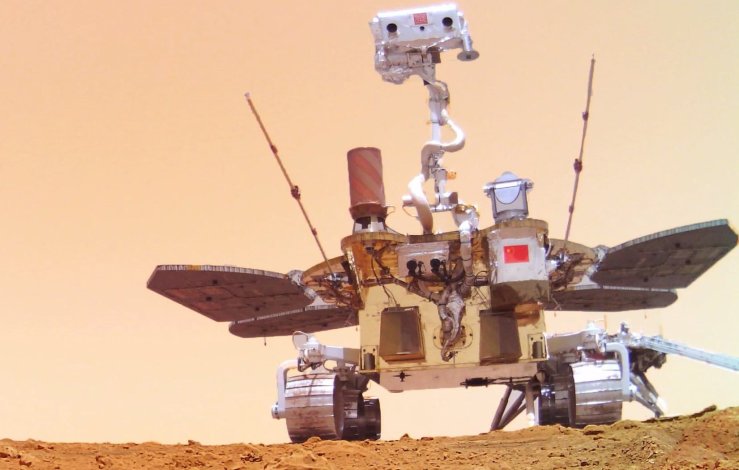

Broadcasting plan CCTV-1 CCTV integrated channel every night at 22:36, five days of continuous broadcast from May 18th to 22nd; CCTV-10 CCTV science and education channel every night at 20:10, from May 19th to 23rd five days of continuous broadcast

大家好,告诉大家一个好消息,讲述中国首次火星探测任务的纪录片《你好!火星》终于要开播啦,想更多了解火星的朋友们今晚可以守在电视机前哟《你好!火星》是为纪念天问一号火星探测器成功着陆火星一周年,由国家航天局和中央广播电视总台联合出品的大型科学纪录片,共历时3年摄制完成,分为《出发》《征途》《环绕》《着陆》《巡视》5集,每集30分钟,分别聚焦天问一号任务的重要阶段,以深入浅出的形式讲述了大量天文学、天体物理学、空间应用学、航天工程学等学科知识,深度解析了火星探索中的中国智慧、中国方案。联合摄制团队自2020年5月起,持续跟踪天问一号任务关键节点,拍摄众多精彩瞬间,获得大量一手珍贵素材,纪录片中很多内容是首次公开,并权威发布。


播出计划CCTV-1央视综合频道 每晚22:36,5月18日至22日五天连播;CCTV-10央视科教频道 每晚20:10,5月️19日至23日五天连播
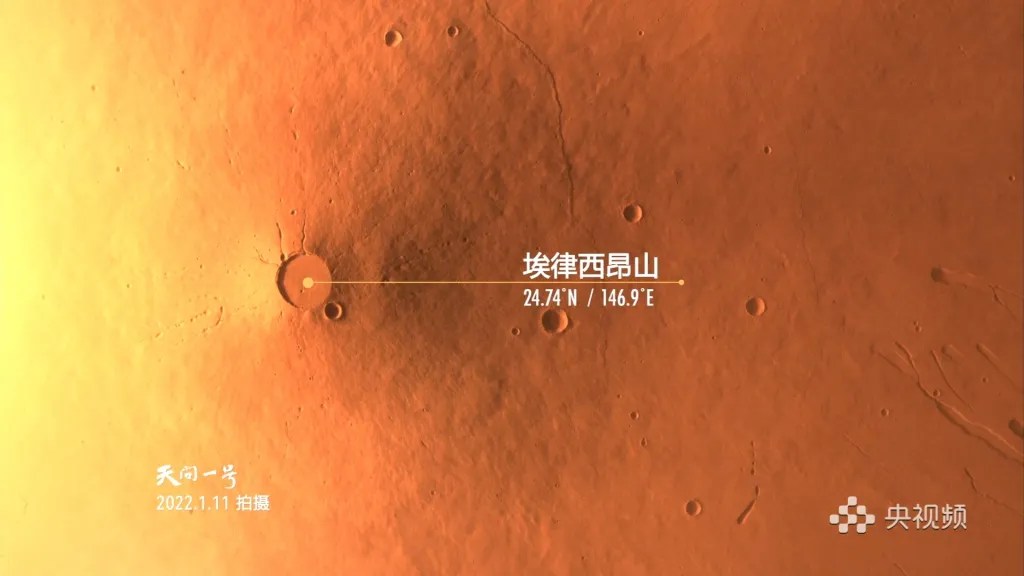
Images and visuals are from CNSA- China National Space Administration also from there respectives- CLEP –China Lunar Exploration Project..

#CNSA #ChinaNationalSpaceAdministration #國家航天局 |#BeltAndRoadinitiative #May2022 | #火星 # 天問 #天问一号#TianwenOne #MarsMission #Marslander #MarsRover #Tianwen1 probe keep hardworking while  #祝融号 #ZhuRong enters winter sleep mode in case of strong sand and dust weather …..

On the months week of  20th  May 2022   天问一号飞運騎遊達达3亿CNSA – China National Space Administration – ESA – European Space agency Belt and road initiative mars mission…first Mars exploration mission, Tianwen- Martian Probe One  ……On the 20th May 2022 on the surface of Utopia Planitia on the Planet Mars doing the ultimate Selfie by the CNSA CLEP Tianwen Mars orbiting Probe Satellite obtaining ​​The medium-resolution images obtained by the Tianwen-1 mission team through the orbiter found that the inspection area of ​​the “Zhurong” Mars rover experienced an obvious sandstorm process. Scientists compared the typical landforms (especially the crater edge) in the 120m resolution images of the “Zhurong” inspection area on March 16 and April 30, 2022 (see Figures 1 and 2, respectively), combined with the recent Mars The change of the solar wing power generation current reflected by the telemetry information of the vehicle can be judged that the local area is experiencing strong sand and dust weather.

Medium-resolution image of Zhurong’s inspection area on April 30, 2022

At present, the Mars rover inspection area has entered winter, and the highest temperature during the daytime has dropped to below minus 20°C, and the lowest temperature at night has dropped to minus 100°C. By mid-July, around the Martian winter solstice, the temperature will drop further. In order to cope with the reduction in the power generation capacity of the solar wing caused by the dusty weather and the extremely low ambient temperature in winter, according to the design plan and flight control strategy, the rover went into sleep mode on May 18. It is expected that around December this year, the “Zhurong” inspection area will enter the early spring season, and will resume normal work after the environmental conditions improve.

: Medium-resolution image of Zhurong’s inspection area on March 16, 2022

The orbiter is implementing remote sensing exploration of the global coverage of Mars, and the current imaging area is mainly concentrated in the high latitudes of the southern hemisphere of Mars. The mission team will continue to monitor local weather conditions using the orbiter whenever possible.

Images and visuals are from CNSA- China National Space Administration also from there respectives- CLEP –China Lunar Exploration Project..

#CNSA #ChinaNationalSpaceAdministration #國家航天局 |#BeltAndRoadinitiative #May2022 | #火星 # 天問 #天问一号#TianwenOne #MarsMission #Marslander #MarsRover #Tianwen1 probe  #祝融号 #ZhuRong #Tianwen1 #CCTV #HelloMars first year anniversary of China’s first Mars exploration mission….

On the months week of  19th May 2022   天问一号飞運騎遊達达3亿CNSA – China National Space Administration – ESA – European Space agency Belt and road initiative mars mission…first Mars exploration mission, Tianwen- Martian Probe One  sent back stunning images of the Half Earth Mass size of the Rustic Planet Mars in which show stunning Martian landscape with its iconic polar caps of either southern or northern … With its timeless Stunning Mars Photography. Tianwen-1″ returned high-resolution images of the Mars inspection area The “Zhurong” rover is preparing for winter, and the orbiter continues to carry out orbital exploration….. in which one year ago it was it’s first landing on Utopia Planitia region on the planet Mars .. in celebrating a CCTV five part Episode was produced..

Hello everyone, I would like to tell you some good news about the documentary “Hello!” about China’s first Mars exploration mission. “Mars” is finally on the air, friends who want to know more about Mars can stay in front of the TV tonight

“Hello! “Mars” is a large-scale scientific documentary jointly produced by the National Space Administration and China Central Radio and Television to commemorate the first anniversary of the Tianwen-1 Mars probe’s successful landing on Mars. It took three years to complete the filming and is divided into “Departure” and “Journey” “Surrounding”, “Landing” and “Patrol” have 5 episodes, each of which is 30 minutes long. They focus on the important stages of the Tianwen-1 mission, and describe a large number of astronomy, astrophysics, space applications, aerospace engineering and other disciplines in a simple way. Knowledge, in-depth analysis of Chinese wisdom and Chinese solutions in Mars exploration. Since May 2020, the co-production team has continued to track the key nodes of the Tianwen-1 mission, filmed many wonderful moments, and obtained a large number of first-hand precious materials. Many of the contents of the documentary were made public for the first time and were released authoritatively.


Broadcasting plan CCTV-1 CCTV integrated channel every night at 22:36, five days of continuous broadcast from May 18th to 22nd; CCTV-10 CCTV science and education channel every night at 20:10, from May 19th to 23rd five days of continuous broadcast

大家好,告诉大家一个好消息,讲述中国首次火星探测任务的纪录片《你好!火星》终于要开播啦,想更多了解火星的朋友们今晚可以守在电视机前哟《你好!火星》是为纪念天问一号火星探测器成功着陆火星一周年,由国家航天局和中央广播电视总台联合出品的大型科学纪录片,共历时3年摄制完成,分为《出发》《征途》《环绕》《着陆》《巡视》5集,每集30分钟,分别聚焦天问一号任务的重要阶段,以深入浅出的形式讲述了大量天文学、天体物理学、空间应用学、航天工程学等学科知识,深度解析了火星探索中的中国智慧、中国方案。联合摄制团队自2020年5月起,持续跟踪天问一号任务关键节点,拍摄众多精彩瞬间,获得大量一手珍贵素材,纪录片中很多内容是首次公开,并权威发布。


播出计划CCTV-1央视综合频道 每晚22:36,5月18日至22日五天连播;CCTV-10央视科教频道 每晚20:10,5月️19日至23日五天连播

Images and visuals are from CNSA- China National Space Administration also from there respectives- CLEP –China Lunar Exploration Project..

#CNSA #ChinaNationalSpaceAdministration #國家航天局 |#BeltAndRoadinitiative #May2022 | #火星 # 天問 #天问一号#TianwenOne #MarsMission #Marslander #MarsRover probe  #祝融号 #ZhuRong finds signs of recent water activity on the planet Mars……

On the months of March 2022  the week of 13th May 2022   天问一号飞運騎遊達达3亿CNSA – China National Space Administration – ESA – European Space agency Belt and road initiative mars mission…first Mars exploration mission, Tianwen- Martian Probe One  and the cute Mars Rover have reportingly to everyone, have a new discovery acquired recently : According to the obtained short-wave infrared spectrum and navigation and terrain camera data, a rocky plate-shaped hard shell was found in the landing area. By analysing the spectral data, it was found that these plate-like crusts similar to sedimentary rocks are rich in minerals such as hydrous sulfate. The research team of scientists deduced that these sulfate-rich crusts may have been formed by lithification after groundwater overflow or capillary evaporation and crystallization of salt minerals cemented the Martian soil. For the first time, water-bearing minerals were detected in situ on Mars using the short-wave infrared spectrometer on the rover…..

The findings suggest that water activity on Mars may have been more active during the Amazonian period than previously thought. My landing zone utopia Planitia and the broad area of ​​the northern plains of Mars may contain large amounts of available water in the form of hydrous minerals for in situ resource utilization for future manned Mars exploration.


As of now, I have been in Utopia in the northern lowlands of Mars. After driving in the plain area for one year, the accumulated driving distance is nearly 2 kilometers, and a large amount of valuable scientific detection data has been obtained. Existing crater dating work shows that the landing zone is located in the Amazonian strata that have undergone late remodelling events, at the end of several major stages of Martian geological age (Pre-Noah, Noah, Occidental, and Amazonian), The climate has changed from warm and humid to cold and dry. Analysis of orbital remote sensing data shows that various geomorphological features distributed around the landing site (Fig. 1) indicate that there may have been a large amount of volatiles in the Utopian Plain. However, limited by the spatial resolution and coverage, orbital remote sensing data did not find water-bearing minerals near the landing area, which raised many questions about the formation mechanism of such landforms and the nature of water activity in the area.


Using short-wave infrared spectroscopy, the researchers detected water-bearing minerals in these bright-colored plate-like rocks that were not identified in the region by previous orbital data, presumed to be water-containing silica or water-containing sulfates (Figure 2). The research team believes that these bright-colored rocks are related to pirates. The broken rock observed in situ by the Mars 1 lander is similar in morphology, and is a layer of locally developed duricrust. However, the hard crust of the Viking 1 landing area is relatively brittle and thin, which may be formed by the long-term interaction of water vapor in the atmosphere and the soil on the surface of Mars. The hard crust of Zhurong’s landing site appears to be more resistant to erosion and forms a thick layer in the surrounding loose soil (Figure 3), which requires large amounts of liquid water, which cannot be formed by atmospheric water vapor alone. At the same time, the study found that there was no obvious surface runoff or traces left by the river in the landing area, and no fluffy surface and salt residues formed by the

(The above research results were published in the international authoritative academic journal Science Advances. The first author and corresponding author of the paper is Liu Yang, a researcher at the National Space Science Center, Chinese Academy of Sciences. Link to the paper