#CNSA #ChinaNationalSpaceAdministration #国家航天局 | #BeltAndRoadinitiative #June2021|#太原卫星发射中心 #TaiyuanSatelliteLaunchCenter – Launching of the International Iconic #LongMarch2D #ChangZheng2D #CarrierRocket deploying the Four Satellites #EnvironmentalSciences #RemoteSensing #Satellites ….

At 1120 Hours Morning Hong Kong Beijing Time  on a very clear 11TH June  2021, China- People’s Republic of China- CNSA –China National Space Administration   Successfully launched  the Long March 2D Chang Zheng 2D carrier rocket at the Taiyuan Satellite Launch Center Shanxi Province   China successfully launched the four  satellite using the Long March 2D carrier rocket at the Taiyuan Satellite Launch Center, on 1103 on a clear Friday Summery Morning Day ….

Launched Successfully At 11:03 Hours Hong Kong SAR- Beijing Time on June 11th Friday, the Long March- Chang Zheng 2D carrier rocket launched the Beijing 3 satellite at the Taiyuan Satellite Launch Center. At the same time, it carried The Haisi 2 satellite and also. One satellite for, space test.. The Second Tianjian satellite. All four satellites entered the scheduled orbit, and the launch mission was a complete success. The Long March- Chang Zheng 2D launch vehicle has a good start in 2021, and it also kicked off the high-density launch of this year’s Long March Chang Zheng Carrier rocket launch schedule.

The Beijing-3 satellite is an optical agile remote sensing satellite developed by the Aerospace Dongfanghong Satellite Co., Ltd. of the Fifth Academy of Aerospace Science and Technology Group. Through the new generation of agile satellite technology, the satellite can quickly obtain high-quality, high-resolution, and high-precision ground imagery, which greatly improves the technical level of my country’s commercial remote sensing satellites. This mission is the 373rd launch of the Long March series of carrier rockets. 

The other is Genesis Space “Yangwang-1” carries the payload of a visible light/ultraviolet large field of view telescope] The Origin Space “Yangwang-1” optical band space telescope , Equipped with visible light/ultraviolet large field of view astronomical telescope payload, after going up to the sky, multi-band astronomical observation and commercial observation cooperation will be carried out, and the “treasure map” of the sky will be drawn. At the same time, it will become the ultraviolet band of human beings in orbit with large field of view.

The strongest detector. “Lang Wang No. 1” is designed and developed by OriginSpace. The space optics/ultraviolet telescope will observe moving targets such as near-Earth small celestial bodies through the optimized design of the ultra-large field of view, capture more detailed orbital and physical state information, and accumulate space resources development Data; deepen the understanding of the origin, composition and evolution of small celestial bodies in the solar system; carry out astronomical observations of targets in different celestial regions, including observations of magnitudes and light changes, and realize the phenomenon of shock bursts, super-bright supernovae, and mutual interactions in late stellar evolution. Interacting supernovae and peculiar temporary sources, black hole tidal disintegration, gamma-ray burst afterglow, and detection of gravitational wave electromagnetic counterparts…Originspace cooperates with Shenzhen Aerospace Dongfanghong Co., Ltd. to develop a platform, and adopts miniaturized attitude control.

 Technology, realizes the high-stability attitude maneuvering control of the whole star, such as cruise to the sun, ground operation, inertial space pointing, and GEO target tracking. It can observe more than dozens of target sky areas every day and conduct thousands of times of large field of view Observation and data collection, downloading, with various functions as criteria..

Images and visuals are from Weibo

#CNSA #ChinaNationalSpaceAdministration #國家航天局 |#BeltAndRoadinitiative #June2021 |#火星 # 天問 #天问一号#TianwenOne #MarsMission #Marslander #MarsRover #Tianwen1 probe #祝融号 #ZhuRong Exploring the #RedPlanet #Mars #UtopiaPlanitia released high-resolution images of The Zhurong ultimate #PlanetMarselfies #Selfies of the #MartainSurface …. #AGallery

天问一号飞運騎遊達达3亿 …….As of 11th  June 2021Friday  CNSA – China National Space Administration – ESA – European Space agency Belt and road initiative mars mission…first Mars exploration mission, Tianwen- Martian Probe One …….”祝融号Zhu Rong” Mars Lander – Mars rover successfully sent back telemetry towards China National Space Administration released a high-resolution image of the landing area of ​China- People’s Republic of China’s first Mars exploration Tianwen-1 mission. The image of the Zhongtianwen-1 landing platform, the “Zhurong” rover and the surrounding area are clearly visible.   Also to of the ultimate Mars Selfie of itself also it’s Mars Landing platform in releasing a high definition patches of travelling least six meters of it landing platform 天问一号-1 landing on Mars first batch of scientific images revealingly…  


That Mars  on Hong Kong SAR- Beijing  Earth Friday  time On June 11th  2021 , at the unveiling ceremony of the first batch of scientific image maps of the Tianwen-1 rover landing on Mars in Beijing, the panoramic view of the landing site, the topography of Mars, the “Chinese imprint” and the image taken by the “Zhurong” rover were announced. “Photographs with the tour” and other image maps. The release of the first batch of scientific image maps marked the complete success of my country’s first Mars exploration mission.


The panoramic view of the landing site is a 360-degree ring shot taken by the navigation terrain camera on the rover’s mast before the rover has left the landing platform, after correction and mosaic stitching. The image shows that the terrain near the landing site is flat, the Martian horizon can be seen in the distance, and the abundance and size of the rocks are consistent with expectations, indicating that the autonomous selection of the landing site and the implementation of hovering obstacle avoidance are effective.


The Mars topography map  is the first topography and geomorphology image map taken by the navigation terrain camera after the rover reaches the surface of Mars. The image shows that the nearby surface is relatively flat, with stones of different sizes distributed, with smooth edges, lighter colours, and semi-buried. There is an annular pit at the far end, and the edges of the annular pit are distributed with darker, angular stones. , And a few sand dunes farther away.
The “Chinese Imprint” map is an image of the landing platform taken when the Mars rover travels to about 6 meters southeast of the landing platform 60° southeast. The image shows that the landing platform is shining, the national flag is bright red and square, and the surface is rich in details.


The picture of the “touring group photo” shows the rover traveling about 10 meters south of the landing platform, releasing the separate camera installed at the bottom of the vehicle, and then retreating to the vicinity of the landing platform. The separate camera took pictures of the movement of the rover and the photo of the rover and the landing platform. The image is transmitted to the rover through wireless signals, and then relayed back to the ground by the rover through the orbiter

images of the mascots of the 2022 Winter Olympics “Bingdundun” and “Xuerongrong” on the landing platform

Mars surface Photography of Zhurong with the landing platform …. The picture of the “tourist group photo” shows the rover traveling about 10 meters south of the landing platform, releasing the separate camera installed at the bottom of the vehicle, and then retreating to the vicinity of the landing platform. The separate camera took pictures of the movement of the rover and the photo of the rover and the landing platform. The image is transmitted to the rover through wireless signals, and then relayed back to the ground by the rover through the orbiter. 

Chinese Imprint” image, the image of the landing platform taken by the Zhurong Mars rover driving to about 6 meters southeast of the landing platform 60° south. The image shows that the landing platform is shining, the national flag is bright red and square, and the surface is rich in details. 

Images and visuals are from Weibo of CNSA – China National Space Administration – CLEP –China Lunar Exploration Program

#CNSA #ChinaNationalSpaceAdministration #国家航天局 |#BeltAndRoadinitiative #June2021|#西昌衛星發射中心 # Xichang Satellite Launch Center – Successfully launching the advance iconic #LongMarch3B #ChangZheng3B #CarrierRocket deploying #WeatherSatellite #EarthSciences #MeteorologicalSatellite #Fengyun4B also testing Chang San B #ReusableExternalBoosters …..

On the 3rd June 2021 in early morning CNSA _China National Space Administration -China – People’s Republic of China At 0017 Hong Kong –Beijing Time on pasting midnight  early morning …. China- People’s Republic of China successfully launched the advance Earth Sciences successful launch of Fengyun 4B At 0:17 Hong Kong -Beijing time on June 3rd 2021, amid the huge roar of the Xichang Satellite Launch Center, the Long March 3B- Chang Zheng 3B carrier rocket pierced the night sky and sent the Fengyun 4B star into its intended orbit. The launch was a complete success .from the Xichang Satellite Launch Center Sichuan Province …. This launch is the 119th launch of the Long March series of rockets and the 372nd launch of the Long March series of carrier rockets. 

The Fengyun-4B star was developed by the Eighth Academy of Aerospace Science and Technology Group. It has a launch weight of 5400 kg and a design life of 7 years. It is mainly used in my country’s weather analysis and forecasting, environment and disaster monitoring and other fields. The 4A satellite jointly realizes the operation of the dual-satellite networking service of my country’s new generation of geostationary orbit satellites.

The Long March –Chang Zheng 3B external Chang San B booster successfully controls the parachute landing zone] The Chang San B rocket, which performs the FY-4B satellite launch mission, has completed the verification of the booster landing zone control flight based on 300 square meters of controllable Para foil in my country for the first time. After the booster is separated from the core stage, the continuous positioning of the satellite navigation under high dynamics is realized, and various key actions are performed at a predetermined altitude. Finally, under the action of the Para foil, it flies to the target maneuvering point according to the predetermined homing strategy, The test was a complete success.


According to Hu Wei, deputy chief designer of the Changsanjia series of carrier rockets, this is also the heaviest rocket detachment in the world that uses Para foil control to return successfully. The test has obtained all the flight data of the landing zone control system, which is the follow-up parachute landing zone control technology. Engineering applications and the improvement of the safety of the rocket wreckage landing area provide important references. The booster parachute landing control system was developed by the overall design department of the Rocket Academy, and the parachute system was developed by the Beijing Space Electromechanical Research Institute. In terms of the control technology of the rocket separation body landing zone, the Rocket Academy has successively broken through the first sub-level grid rudder landing zone control technology and the booster parachute landing zone control technology, laying a foundation for the realization of new technologies such as sub-level controllable recovery and vertical return in the future in which is an important technical foundation or reusable External Booster Rockets..

The Long March – Chang Zheng 3B Chang San B external booster rocket successfully completed the booster landing zone control flight verification side note] The Chang San B rocket carrying out the Fengyun 4 B satellite launch mission is equipped with a 300 square meter controllable parafoil for the first time. The large parafoil carrying booster is in accordance with the homing procedure is controlled and landed safely, which signifies that my country has a controllable recovery capability for a 4-ton load. “This is also the heaviest rocket detachment in the world that uses parafoil control to successfully return home. The test has obtained all the flight data of the landing zone control system, which is for the subsequent engineering application of parachute landing zone control technology and the improvement of the safety of the rocket wreckage landing zone. To provide an important reference, Hu Wei, the deputy chief designer of the Long Three A series of carrier rockets, introduced.


In this loading verification, the 300 square meter parafoil is currently the largest area of ​​parafoil under development in China, and it weighs a full 160 seventy kilograms. , The specification completed the three actions of deployment, homing, and obstacle avoidance. This series of actions is also an important basis for judging the success of this flight verification. In this verification, a total of 21 obstacle avoidance areas were set up within a range of 2,700 kilometers. The realization is quite perfect; the nearest obstacle avoidance point is 10 km~12 km. “Teng Haishan said. In this External Booster Changsan B rocket mission, after the booster and the core stage were separated, the continuous positioning of satellite navigation under high dynamics was realized, and various key actions were performed at the predetermined altitude. Finally, in the wing Under the action of the parachute, the booster flew to the target manoeuvre point according to the predetermined homing strategy, and the test was a complete success.
The successful verification of the parachute landing zone control system created another “international first” for China Aerospace. An important milestone in the field of thruster’s accurate recovery, it also provides strong support for the subsequent accurate recovery and reusability of the rocket separation body. In layman’s terms, in the future, the system can allow the rocket wreck to complete the launch mission to fall in a controlled state in order to Yu landed in a more suitable safe area to minimize the impact on the landing are

This testing is a major breakthrough has been made in the precision recovery technology of the 508 large parafoil, the first international use of a large parafoil controllable recovery rocket booster] June 3, 2021, the booster large parafoil recovery system developed by the 508 was equipped with the Long March III The B carrier rocket conducted its first flight test. After the booster was separated from the core stage of the rocket, the country’s largest parafoil (300 square meters) controlled the 4-ton booster to manoeuvre toward the scheduled landing point and landed in a safe area. After the flight data interpretation and the on-site product inspection in the landing area, the recovery system’s working procedures were normal, the parachutes at all levels decelerated normally, and the automatic homing control was normal. The flight test was successfully completed. This flight test is the first time in the world that a large parafoil has been used to realize the controllable recovery of rocket boosters and the safety control of the landing zone. It indicates that my country has mastered the precise recovery technology of large parafoil and has the ability to adopt large parafoil controllable recovery4 Tonnage load capacity.
Figure 1: The large parafoil after the successful verification of the booster landing zone control flight….

Images and visual are from Weibo

#CNSA #ChinaNationalSpaceAdministration #国家航天局 |#BeltAndRoadinitiative #June2021|#酒泉衛星發射中心 #JiuquanSatelliteLaunchCenter preparing to Launch the International Iconic #LongMarch2F #ChangZheng2F #CarrierRocket deploying #Shenzhou12 docking with #CSS #ChinaSpaceStation #TianheCoreModule….

On 9th June 2021 Hong Kong SAR- Beijing Time-  CNSA –China National Space Administration  preparing to launching from one of its many launch Complexes from China used the Long March 2F – Chang Zheng 2F carrier rocket at the Jiuquan Satellite Launch Center – Inner Mongolia- China-People’s Republic of China…  in which Transfer of the Shenzhou 12 command module  and rocket assembly to the launch area According to the China Manned Space Engineering Office, on June 9, 2021, Beijing time, the Shenzhou 12 manned spacecraft was combined with the Long March 2 F Yao 12 carrier rocket The body has been transferred to the launch area launch complex station 921. At present, the facilities and equipment at the launch site are in good condition, and various functional inspections and joint tests before launch will be carried out as planned. ……

After the Shenzhou 12 manned spacecraft completes its launch, it will rendezvous and dock with the Tianhe core module of the CSS- China Space Station. Three Chinese astronauts will enter the Tianhe core module and begin a three-month stay in orbit.

It’s been after nearly 5 years, that China -People’s Republic of China the Chinese once again entered space and stationed in their own space station, looking forward to the day of launch 加油 After the Shenzhou 12 manned spacecraft completes its launch, it will rendezvous and dock with the Tianhe core module of the Chinese space station, 3 Chinese astronauts will enter the Tianhe core module and begin a three-month stay in orbit.

Under normal circumstances, the ship will use the fully autonomous rapid rendezvous and docking scheme as the Tianzhou-2 cargo spacecraft to dock with the forward docking interface of the core module of Tianhe.

Shenzhou 12 carries three astronauts. According to the plan, they will stay at the Tiangong space station for three months. This time will be three times that of the Shenzhou 11 crew at the Tiangong-2 space laboratory…..

Taking the Shenzhou 12 mission as a new starting point, we will maintain the mission frequency of launching two manned spacecraft each year. The Shenzhou series of manned spacecraft have already had mass production capacity as early as the Shenzhou 8 mission.


During the stay of Shenzhou 12 on the space station, a series of technical verification work will be implemented including astronauts walk out of space and verification of regenerative life support system.

This month, an in-line Tiangong space station configuration consisting of the Tianhe core cabin, the Tianzhou-2 cargo spacecraft, and the Shenzhou-12 manned spacecraft will be presented to the world. As the first hundred years are approaching anniversary of the CPC of modern China- People’s Republic of China, you can imagine what kind of blessings the three astronauts will send to our motherland in the vast space on July 1….

Images and visuals are from Weibo

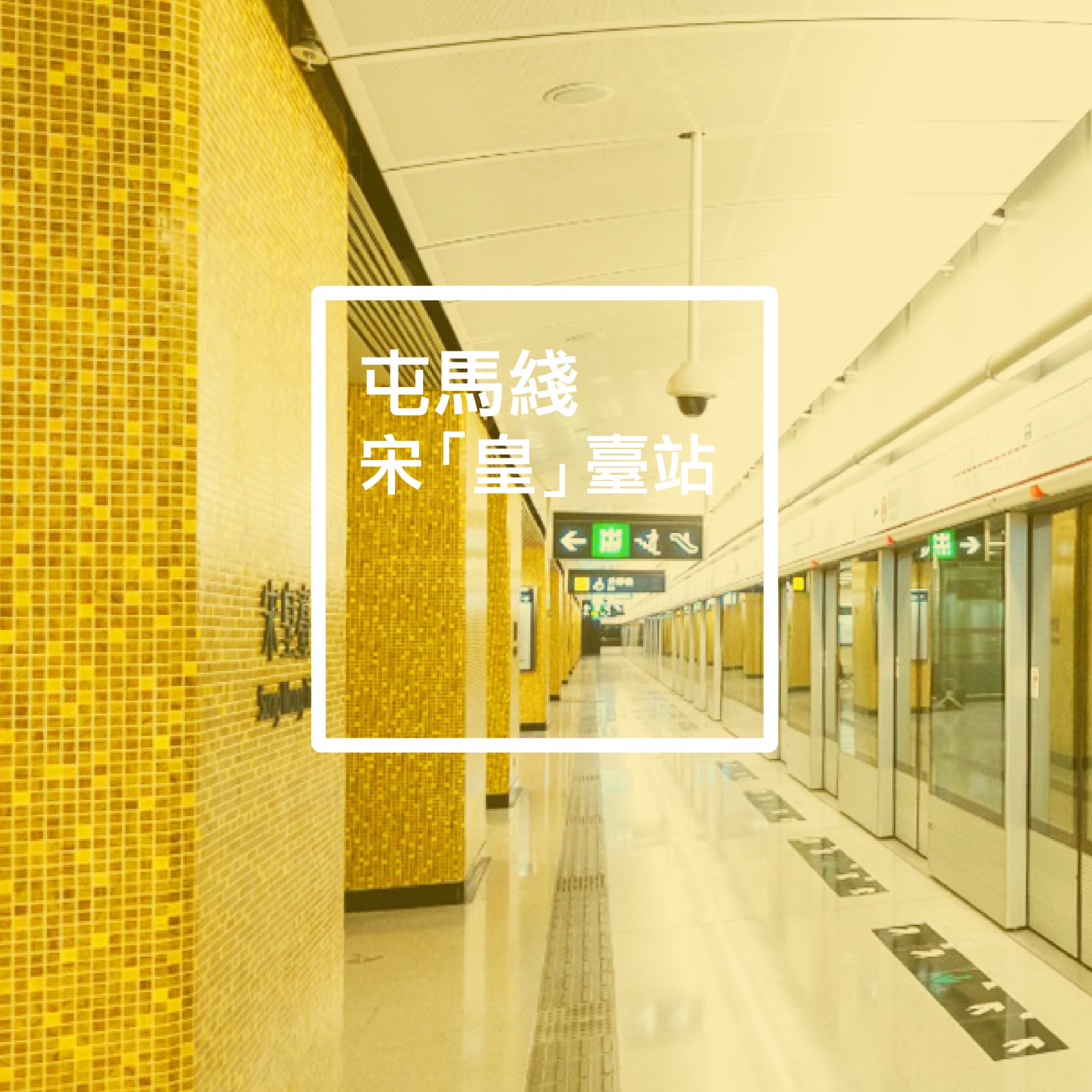
#香港 #AlreadyTomorrowInHongKong | #MTRHongKong #港鐵 #June2021 | 屯馬綫全綫列車測試 #屯馬綫全綫 #TuenMaLine Sneak peeks of Tuen Ma Line new stations… Transformation of the Hung Hom Station….

During June2021 The World’s Leading Public Transport provider The MTR Hong Kong – Hong Kong SAR-China- People’s Republic of China..  in which ever so constantly the MTR Hong Kong have been grown innovatively providing  In order to provide faster and more convenient rail services for the residents of Hong Kong SAR –China – People’s Republic of China…. In which there’s a Tuen Ma Line in which has been fully in running..  The full Tuen Ma Line –TML line running approximately 56 kilometers running through twenty seven stations with six interchange stations in which the line will be expected to be operationally on the third quarter of 2021.. Is the longest railway line in Hong Kong connecting the West Rail Line and the Tuen Ma Line Phase 1….  #TuenMaLine​ (TML) has entered into trial operations, and our three new stations #SungWongToiStation​, #ToKwaWanStation​ and #HungHomStation​ are also gearing up for passenger service. To know more about the features of the new stations and other useful information, check out our new TML station leaflets: Tuen Ma Line ​To get a copy, you may also visit the Customer Service Centre of any of the West Rail Line and TML Phase 1 stations….

The Tuen Ma Line (TML) full line will commence passenger service on 27 June. As the West Rail Line will become part of the TML, Hung Hom Station will be the interchange station of the TML and the East Rail Line in the future. The station has undergone a major transformation and new interchange arrangements will be in place starting from 20 June.

The Opening of the Tuen Ma Line is coming.. are you ready.. that runs in between Tuen Mun – Hung Hom – Wu Kai Sha MTR Stations in which will become the West Rail Line , Hung Hom Station will Also be Transformed…. That massive transformation and renovations will have the concourse and platforms retrofitted upgraded, with able of natural lighting like the west Kowloon Austin Road Station with Natural brightness lit given the passengers and patronages of more sense of wellness being..

The newly retrofitted platform is really spacious on the New Hung Hom Platform, with amble of community art works from the locally all walks of life contributing towards the sense of the neighbourhood  district with fine designs.. As part of the Retrofitting upgrades the restrooms and Platforms screen doors make for the better journey experiences … with the upgrades the Additionally paths connecting with East Tsim Sha Tsui and Hong Kong PolyU..

Other New Arrangements with the East Rail Line Platform with the interchange is the preparations for the opening of the full Tuen Ma Line  in which that preparation the West Rail Line Platform will be relocated in advance …. Colour labels of that preparations is follow the Fuchsia colour signage in between the twenty to twenty six of June 2021..  To change to the West Rail Line at the new platform, after the twenty six of June 2021 of the Opening of the full Tuen Ma Line follow the brown signage from twenty seven June 2021..

 Following that Brown interchange Signage with a three minute average walk reaching to that new platform… It is best to utilities fully of the MTR Mobile Planning your Journey in advance, also it may take time to get used to the new arrangements.. In which the New Interchange arrangement will continue until the commencement of the Cross harbour section of the East Rail line.