During January 2022 The World’s Leading Public Transport provider The MTR Hong Kong – Hong Kong SAR-China- People’s Republic of China.. In the term of Staycation why not take MTR Hong Kong Railcation and check out one of various interesting family fun locations around the Hong Kong SAR – China – People’s Republic of China in which You don’t have to fly on a plane to look for somewhere romantic family fun weekend time – ride on MTR adventuring instead!
Taking MTR is definitely the best choice if you want comfort and convenient locations for a family weekend excursion. Let’s take MTR to the newly opened East Coast Park Precinct near Fortress Hill Station. Following that you can go to the spacious grassland and cycling in the West Kowloon Cultural District and also visit the sky corridor nearby Hong Kong West Kowloon Station to overlook Victoria Harbour and take some IG-able photos.
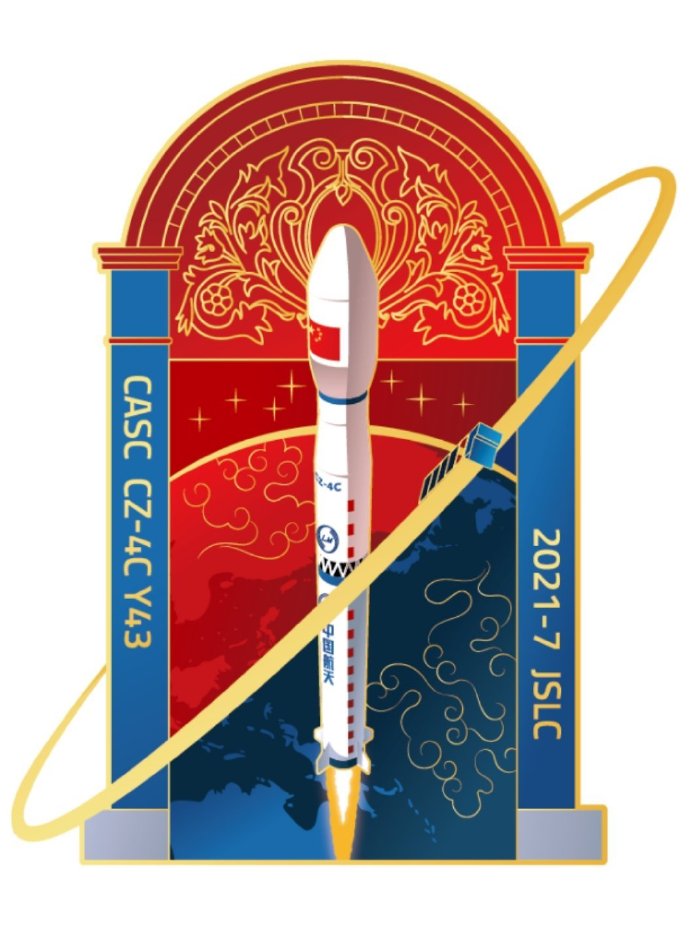
On 5th July 2021 Monday 0728 a summery clear morning Hong Kong SAR- Beijing Time- CNSA –China National Space Administration on which from Jiuquan Satellite launch Center – Inner Mongolia- China-People’s Republic of China… It successfully launched the international ionic Long March 4C- Chang Zheng 4C Carrier Rocket in which July 2021 there’s been numerous launches in which celebrating the 100th CPC year anniversary more in China – People’s Republic of China..
Launching scheduling in which this mission is the 377th flight of the Long March series of carrier rockets….deploying on the sending the Fengyun-3 E star into its intended orbit , The launch was a complete success…. The Long March 4 series is developed by the Eighth Academy of Sciences…
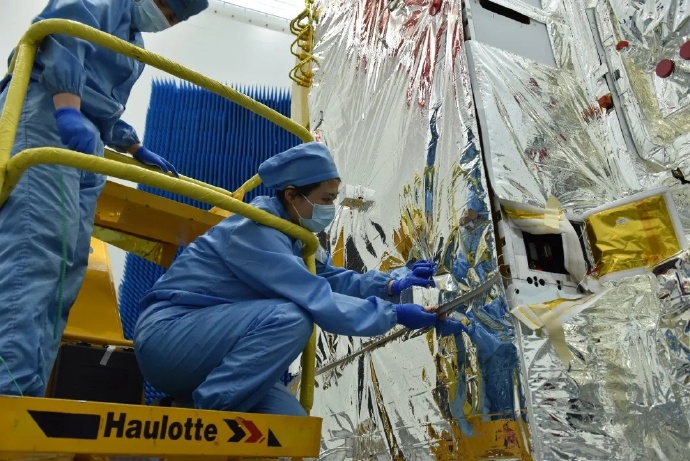
The Fengyun-3 E weather earth Science successfully launched deployed..! in which the it’s provision design is as a Service emergency weather event decision-making evaluation . The Fengyun-3 E satellite is mainly used for weather forecasting, climate forecasting, environmental monitoring and disaster prevention and mitigation, etc. It provides weather detection information for the world, and provides reliable weather data for government departments at all levels to make decisions and assessments of sudden weather events. Fengyun-3 E satellite. E FY FY-III satellite is a satellite of the family’s first dawn orbit meteorological satellite, but also the world’s first implementation of business operations at dawn sun-synchronous orbit meteorological satellite
Developed by the Eighth Academy of China Aerospace Science and Technology Corporation (Shanghai Institute of Aerospace Technology) has a total weight of 2.69 tons and runs on the earth’s twilight boundary. On the sun-synchronous orbit above, it can fill the gap of satellite observation data in the 6-hour assimilation window of global numerical weather prediction, achieve 100% coverage of global observation data, significantly improve the accuracy of numerical weather prediction, and effectively improve China’s weather forecast prediction, response to climate change, Build disaster prevention and mitigation systems, establish environmental and ecological monitoring, and space weather forecast and early warning capabilities.
The Fengyun-3 E star is loaded with 11 payloads, including 3 newly developed instruments represented by wind field measurement radar, solar irradiance spectrometer and solar X-EUV imager, 7 upgraded instruments and 1 inherited Upgrade the instrument. Among the three newly added payloads, the wind field measurement radar is the first active detection radar carried by the Fengyun series satellites. It is a dual-frequency, dual-polarization cone-scanning microwave radar. It mainly obtains global ocean surface wind field information through sea surface backscatter measurement. ; The solar irradiance spectrometer measures the solar spectral irradiance daily through the three channels of ultraviolet, visible and infrared, and obtains the characteristics of solar spectral irradiance. The measurement data will be widely used in solar physics, atmospheric physics and climate physics. Scientific research; the solar X-EUV imager uses solar radiation in the X-ray band and extreme ultraviolet band radiation to achieve long-term, continuous, high-time-resolved full-plane and low-corona imaging observations of the sun, and obtain high-resolution images of the sun. Space weather forecast provides a more accurate reference.
Among the 7 upgraded instruments, the medium-resolution spectral imager (low-light type) has a new low-light channel, which can obtain images covering the world’s 100-meter level (250m*2600km) spatial resolution, which is 33% higher than the previous generation product. %, is China’s most advanced quantitative global low-light detection instrument; infrared hyperspectral atmospheric sounder (type Ⅱ) medium-wave and short-wave sensitivity will be more than doubled than before; microwave thermometer (type Ⅲ) added 4 channels , The number of detection channels has reached 17; the GNSS-R sea surface wind field detection function has been added to the global navigation satellite occultation sounder (Type II), which will realize the three-dimensional monitoring of the ionosphere, atmosphere and sea surface wind field. For the first time, the integrated detection of GNSS occultation and GNSS-R remote sensing has been realized; the solar radiation monitor (international comparison type) used to monitor changes in solar irradiance and capture solar activity signals is newly added to the Swiss DARA radiometer, which will be realized for the first time in Chinese and foreign instruments Simultaneous observation in orbit.
At 1120 Hours Morning Hong Kong Beijing Time on a very clear 11TH June 2021, China- People’s Republic of China- CNSA –China National Space Administration Successfully launched the Long March 2D Chang Zheng 2D carrier rocket at the Taiyuan Satellite Launch Center Shanxi Province China successfully launched the four satellite using the Long March 2D carrier rocket at the Taiyuan Satellite Launch Center, on 1103 on a clear Friday Summery Morning Day ….
Launched Successfully At 11:03 Hours Hong Kong SAR- Beijing Time on June 11th Friday, the Long March- Chang Zheng 2D carrier rocket launched the Beijing 3 satellite at the Taiyuan Satellite Launch Center. At the same time, it carried The Haisi 2 satellite and also. One satellite for, space test.. The Second Tianjian satellite. All four satellites entered the scheduled orbit, and the launch mission was a complete success. The Long March- Chang Zheng 2D launch vehicle has a good start in 2021, and it also kicked off the high-density launch of this year’s Long March Chang Zheng Carrier rocket launch schedule.
The Beijing-3 satellite is an optical agile remote sensing satellite developed by the Aerospace Dongfanghong Satellite Co., Ltd. of the Fifth Academy of Aerospace Science and Technology Group. Through the new generation of agile satellite technology, the satellite can quickly obtain high-quality, high-resolution, and high-precision ground imagery, which greatly improves the technical level of my country’s commercial remote sensing satellites. This mission is the 373rd launch of the Long March series of carrier rockets.
The other is Genesis Space “Yangwang-1” carries the payload of a visible light/ultraviolet large field of view telescope] The Origin Space “Yangwang-1” optical band space telescope , Equipped with visible light/ultraviolet large field of view astronomical telescope payload, after going up to the sky, multi-band astronomical observation and commercial observation cooperation will be carried out, and the “treasure map” of the sky will be drawn. At the same time, it will become the ultraviolet band of human beings in orbit with large field of view.
The strongest detector. “Lang Wang No. 1” is designed and developed by OriginSpace. The space optics/ultraviolet telescope will observe moving targets such as near-Earth small celestial bodies through the optimized design of the ultra-large field of view, capture more detailed orbital and physical state information, and accumulate space resources development Data; deepen the understanding of the origin, composition and evolution of small celestial bodies in the solar system; carry out astronomical observations of targets in different celestial regions, including observations of magnitudes and light changes, and realize the phenomenon of shock bursts, super-bright supernovae, and mutual interactions in late stellar evolution. Interacting supernovae and peculiar temporary sources, black hole tidal disintegration, gamma-ray burst afterglow, and detection of gravitational wave electromagnetic counterparts…Originspace cooperates with Shenzhen Aerospace Dongfanghong Co., Ltd. to develop a platform, and adopts miniaturized attitude control.
Technology, realizes the high-stability attitude maneuvering control of the whole star, such as cruise to the sun, ground operation, inertial space pointing, and GEO target tracking. It can observe more than dozens of target sky areas every day and conduct thousands of times of large field of view Observation and data collection, downloading, with various functions as criteria..
On the 3rd June 2021 in early morning CNSA _China National Space Administration -China – People’s Republic of China At 0017 Hong Kong –Beijing Time on pasting midnight early morning …. China- People’s Republic of China successfully launched the advance Earth Sciences successful launch of Fengyun 4B] At 0:17 on June 3, amid the huge roar of the Xichang Satellite Launch Center, the Long March 3B- Chang Zheng 3B carrier rocket pierced the night sky and sent the Fengyun 4B star into its intended orbit. The launch was a complete success .from the Xichang Satellite Launch Center Sichuan Province …. This launch is the 119th launch of the Long March series of rockets and the 372nd launch of the Long March series of carrier rockets.
The Fengyun-4B star was developed by the Eighth Academy of Aerospace Science and Technology Group. It has a launch weight of 5400 kg and a design life of 7 years. It is mainly used in my country’s weather analysis and forecasting, environment and disaster monitoring and other fields. The 4A satellite jointly realizes the operation of the dual-satellite networking service of my country’s new generation of geostationary orbit satellites.
“The main characteristics of a geostationary meteorological satellite are reflected in two aspects. The first is to use the advantages of stationary gaze, and the second is to have a very flexible observation mode.” Said Chen Xiaojie, deputy director of the General Office of Meteorology and Environment, 509 Institute of Aerospace Science and Technology Group. The Fengyun-4A satellite is my country’s first second-generation geostationary meteorological satellite, which is a scientific experimental satellite. The FY-4B satellite is the second satellite in the FY-4 series and the first operational satellite in the series. Based on the FY-4A star, the FY-4B star’s ability to observe this aspect flexibly has been greatly improved.
“The design life of the Fengyun-4 A star is 7 years, and the assessment life is 5 years. The assessment life will expire at the end of this year, but from the current overall situation, the star is expected to continue to work normally for 7 years or more, and the B star will go up. Later, it will form a situation of double star observation in orbit with Star A.” said Chen Qiang, the overall chief designer of Fengyun 4 B Star. According to reports, in the earliest period, the Fengyun 2 can achieve one picture per hour, and then gradually realize one picture for half an hour. When the Fengyun 4A satellite is reached, the image of the entire China area can be updated every 5 minutes. Now with two satellites, you can see two pictures in 5 minutes. “The weather forecast process is very complicated and involves many factors. Satellites play a major role in providing data. The FY-4 A and B satellite networks will generate more, more accurate, and faster updated data. It will help improve the accuracy of forecasting.” said Dong Yaohai, chief designer of Fengyun 4 B satellite.
【FY-4B Star】FY-4B is the second satellite in the FY-4 series. It has a launch weight of 5400 kg and a design life of 7 years. It is also the first operational satellite of the series. After entering orbit, it can realize imaging of a million square kilometers area 3-4 times per minute, and the visible light resolution is the highest among the current global stationary meteorological satellites, reaching 250 meters, which is double that of the A satellite; it will be more flexible to achieve with the A satellite The double-satellite network observation of China has brought a leap in the ability of high-frequency weather observation. . During the “14th Five-Year Plan” period, my country will also launch two Fengyun-4 series meteorological satellites. Referencing from the Eighth Academy of Aerospace Science and Technology…
During the Fengyun 4 B satellite launch mission, the Long March 3 B to 3 Yao 72 launch vehicle completed 17 technologies in terms of engine and utilization control machine. The state improvement makes the quality of the engine more stable and reliable, and at the same time the use of the control machine is improved and optimized to continuously improve the reliability and safety of the product. “Using the control machine is mainly used to adjust the propellant mixture ratio of the rocket’s three-stage engine to achieve the same proportional consumption of the two propellants, which can effectively guarantee the carrying capacity. We can further improve the system by optimizing the design of the relay using the control machine. Reliability of work.” Zhang Tao said. In terms of quality management, the Changsan B Rocket Launch Team has implemented an electronic, full-process launch site quality verification system for the first time, linking the refinement of quality control with the verification system, and improving the efficiency of quality management.
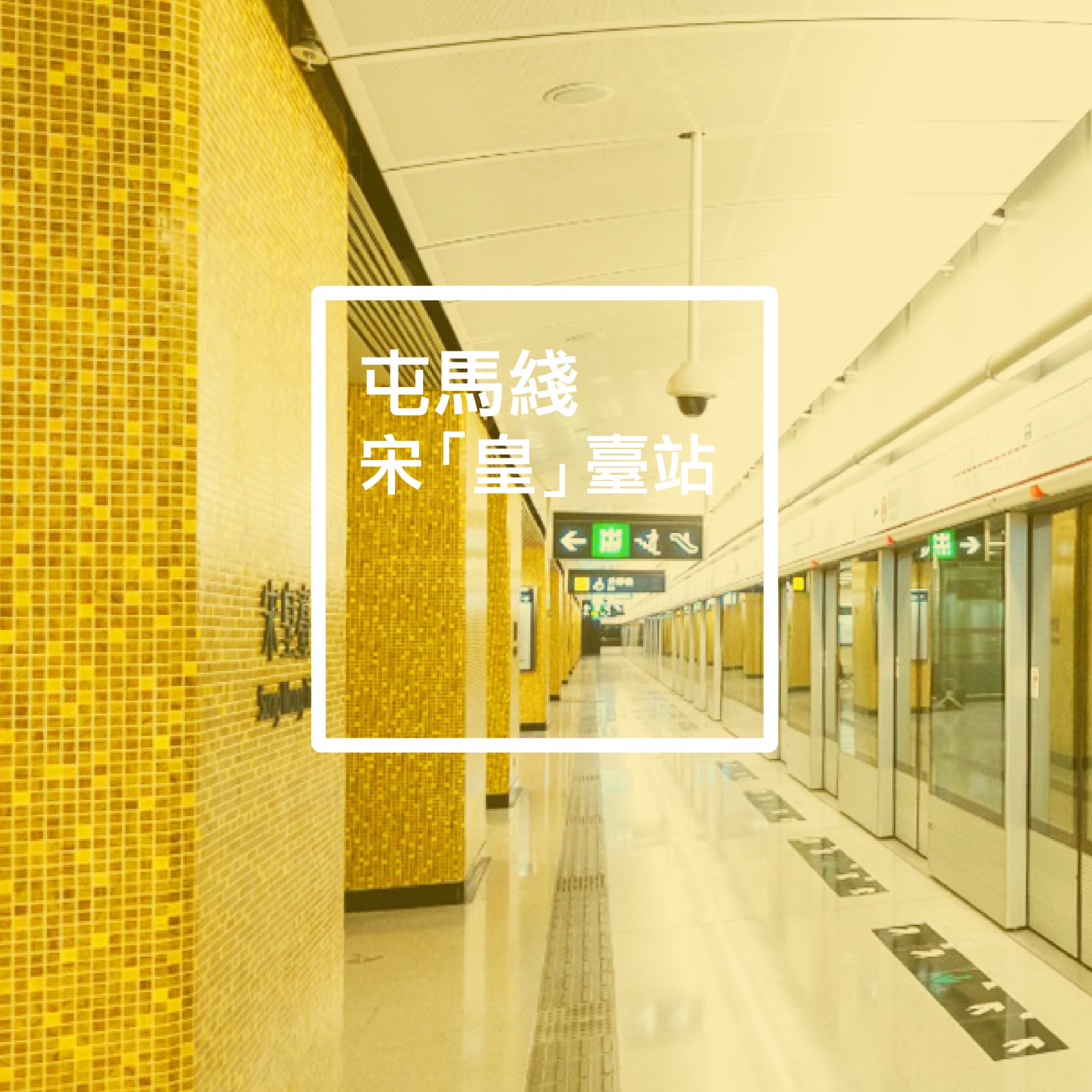
During May2021 The World’s Leading Public Transport provider The MTR Hong Kong – Hong Kong SAR-China- People’s Republic of China.. in which ever so constantly the MTR Hong Kong have been grown innovatively providing In order to provide faster and more convenient rail services for the residents of Hong Kong SAR –China – People’s Republic of China…. In which there’s a Tuen Ma Line in which has been fully in running.. The full Tuen Ma Line –TML line running approximately 56 kilometers running through twenty seven stations with six interchange stations in which the line will be expected to be operationally on the third quarter of 2021.. Is the longest railway line in Hong Kong connecting the West Rail Line and the Tuen Ma Line Phase 1…. #TuenMaLine (TML) has entered into trial operations, and our three new stations #SungWongToiStation, #ToKwaWanStation and #HungHomStation are also gearing up for passenger service. To know more about the features of the new stations and other useful information, check out our new TML station leaflets: Tuen Ma Line To get a copy, you may also visit the Customer Service Centre of any of the West Rail Line and TML Phase 1 stations….
If you would like to secure a spot via MTR Mobile, please be reminded that only registered users of MTR Mobile could sign up for the Open Days. Do register with MTR Mobile now if you have not yet done so!
The new excitement of about the new experience of the new #TuenMaLine stations to be opened on 27 June? Let us give you a brief in advance!
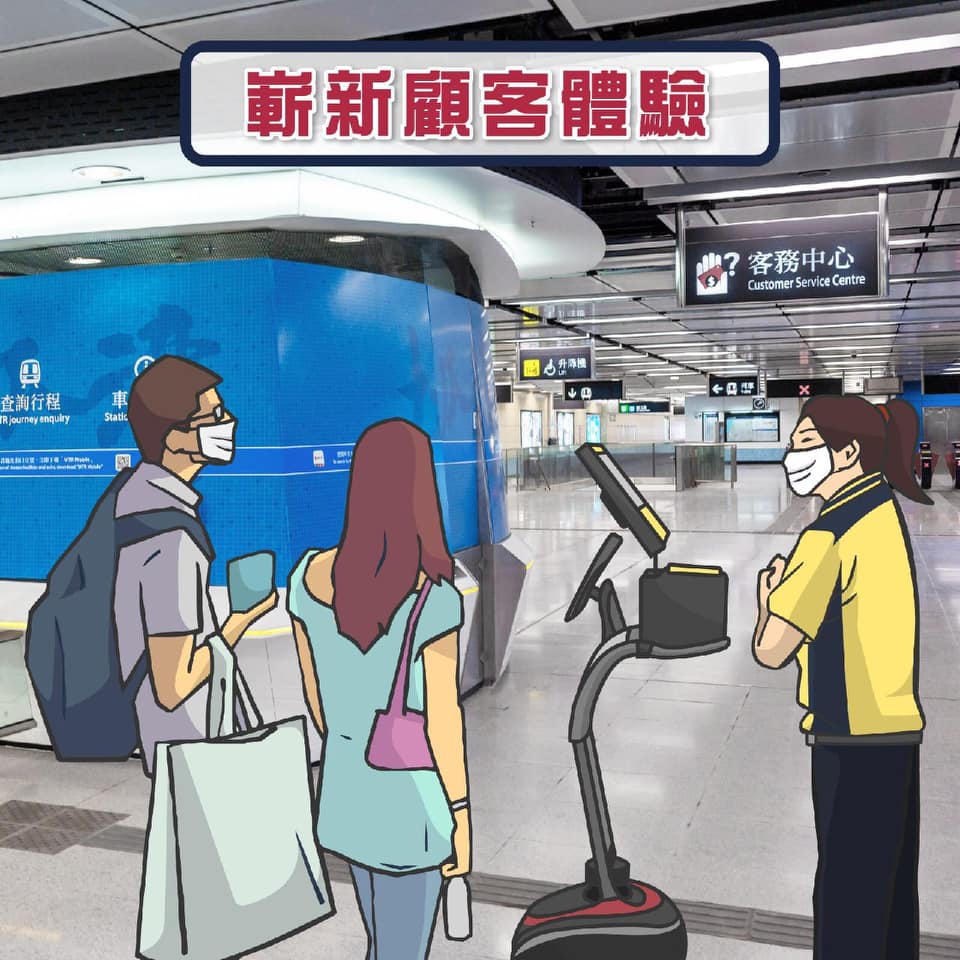
The new stations will offer you a brand new customer experience with staff providing assistance as a roving team with a more proactive approach and several types of robots serving inside the stations.
Besides, the station design also integrates station artworks as well as the elements of local community and history to enrich passengers’ journeys. The entrances/exits also connect to different parts of the community as well as local facilities, providing you with convenient and all-weathered admits to access the district.
One thing more, the “Train Car Loading Indicator” will be introduced to provide real-time information about the estimated spatial conditions of each train compartment to serve you as a reference for train boarding.
Together with the commissioning of the Tuen Ma Line Phase 1, three new stations, i.e. Hin Keng Station, the expanded part of Diamond Hill Station and Kai Tak Station commenced service on 14 February 2020. The remaining railway section (between Kai Tak Station and Hung Hom Station) will commence service very soon, providing efficient and convenient railway service to the To Kwa Wan and Kowloon City areas, as well as bringing new vitality to the community Networking, providing more alternatives for passengers travelling to different districts.
The Tuen Ma Line also includes a number of interchange stations which enhance connectivity with the rest of the city’s railway system network..