#MadeInChina #中國製造 #中國 | #北京 #Beijing #天兵科技 #TianbingTechnology #SpacePioneer #October2023 | #Tianlong2 Yao-2 #CarrierRocket departed from #Tianjin assembled at the Zhangjiagang preparing to launch second half next year..

Founded in 2015 located in Beijing ….天兵科技 – 北京天兵科技有限公司Tianbing Technology is an Aerospace propulsion system supplier and spacecraft provider One of Sixty Plus Chinese carrier Rocket companies in China, People’s Republic of China ……. Tianbing Technology is an advanced aerospace propulsion system supplier and aerospace vehicle provider. Tianbing Technology independently develops the next-generation ambient temperature green HCP liquid propellant and minimalist aerospace propulsion system. As an upgraded product of traditional chemical propulsion system, it can meet cost-effective aerospace. Advance system supporting needs. The next-generation green HCP aerospace propulsion system, first tested by Tianbing Technology, can be used in the small-vehicle main power and launch vehicle upper-level propulsion system.

[天龙三号Tianlong 3 plans to complete the first flight of the rocket in the first half of 2024] Recently, Tianbing Technology announced the completion of several hundred million yuan in C+ round financing, which will be used for the mass production of the Tianlong 2 medium-sized liquid rocket that successfully made its first flight, as well as the Tianlong 3 The development and first flight of large-scale liquid launch vehicles and engines, the research and testing of recyclable and reusable technology, the construction of Tianlong-3 dedicated launch stations, the construction of batch production capabilities and the improvement of talent teams.

[The Tianlong-2 Yao-2 rocket departed from Tianjin and successfully arrived in Zhangjiagang. The rocket will be assembled at the Zhangjiagang Intelligent Manufacturing Base and is expected to carry out its launch mission in the second half of next year! 】On October 29, the Tianlong-2 Yao-2 rocket developed by Tianbing Technology successfully arrived in Zhangjiagang from Tianjin. This marks that Tianbing Technology’s rocket assembly plant in Tianjin has officially moved to Zhangjiagang. Tianbing Technology’s Zhangjiagang intelligent manufacturing base will soon be fully operational. use.


It is reported that the rocket will be assembled at the Zhangjiagang Intelligent Manufacturing Base and will be launched next year.


The Tianlong-2 Yao-2 rocket body was split into three parts: the fairing, the third sub-stage, and the first sub-stage for transportation. It departed from Tianjin at 5:15 a.m. on October 27 and arrived at Zhangjiagang Intelligent Manufacturing of Tianbing Technology at 12 noon today. base. At the scene, (Integrated Media Reporter: Huang Jiayuan) the reporter saw that the rocket body successfully entered the rocket transfer area of ​​the base, waiting for subsequent final assembly work. The Tianlong-2 rocket, once named after the city of Zhangjiagang, is my country’s first medium-sized liquid launch vehicle for commercial aerospace to fly on its first flight. It has created a history of successful first flights for private aerospace in the world in more than 20 years, and also created a new era for Chinese commercial aerospace. A new era of liquid rockets in space.
Tianbing Technology’s Zhangjiagang Intelligent Manufacturing Base is expected to be fully delivered and put into use by the end of December this year. Once put into operation, it will be able to produce 30 liquid launch vehicles and 500 rocket engines annually.

Images and visuals are from their respectives also天兵科技北京天兵科技有限公司Tianbing Technology- Space Pioneer..

#MadeInChina #中國製造 |#深蓝航天#DeepBlueLimitedCompany  #October2023| Deep Blue Aerospace #ReusableCarrierRocket Development Progress -The first long-distance test run of Deep Blue Aerospace’s #3DPrinted  #ThunderR1 #ReusableCarrierRocket  liquid oxygen kerosene engine was a complete success 420 Seconds .. !

深蓝航天  Deep Blue Limited – Deep Blue Aerospace One of sixty Chinese private space Carrier Rocket Companies in China-People’s Republic of China…  As many of sixty plus Private Rocket Deep Blue Aerospace Co., Ltd. was established in 2017. The company is mainly a high-tech aerospace enterprise that focuses on the direction of liquid recovery and reusable launch vehicles and provides users with commercial launch services. Deep Blue Aerospace Co., Ltd. is headquartered in Nantong City, Jiangsu Province. At the same time, the company has rocket general and liquid engine R&D centers in Yizhuang, Beijing and Xi’an, Shaanxi, respectively, and a rocket power system test base in Tongchuan, Shaanxi…..

Recently , the reusable liquid engine “Thunder-R1” independently developed by Deep Blue Aerospace conducted its first long-distance test run of 420 seconds under rated operating conditions. The test run time covered more than twice the flight time of the first stage of the reusable rocket “Nebula-1 ” ; The engine started and shut down normally, and the whole process worked stably. The test was a complete success, marking that the “Thunder-R1” engine entered the series boundary, life and reliability test stage.

As China’s first pin-bolt reusable liquid oxygen kerosene engine , this long-distance test run verified the reliability and stability of the system and components of the “Thunder-R1” engine under rated operating conditions. The engine status is stable and its performance is excellent. It demonstrates the technical strength and product leadership of Deep Blue Aerospace’s reusable rocket engine, and proves that the “Thunder-R1” is one step closer to being officially delivered, carrying out the high-altitude recovery test of the first stage of the “Nebula-1” rocket, and flying into orbit.

 Thunder-R1″ is a liquid engine product specially developed for vertical recovery and reuse of launch vehicles. It currently demonstrates excellent performance in various aspects such as reuse, multiple starts, and wide-range thrust adjustment. 85% of the weight of this engine is made by 3D printing. It adopts a pump-back swing and has a compact structure. It is used as the main power for the first and second stages of the Deep Blue Aerospace “Nebula-1” recyclable and reusable liquid launch vehicle.

Up to now, the cumulative test run time of the same engine has reached 2,000 seconds, which has verified the anti-fatigue characteristics and service life of engine components in the harsh engine working environment.

The single ground ignition of the engine lasted 420 seconds. It assessed the long-range work coordination, process reliability and margin design of the entire engine and each component. According to real-time monitoring throughout the test run, the engine was working stably and in good condition. The test data is consistent with the set indicators, and all indicators meet the flight requirements of the “Nebula-1” rocket.

Long-distance test run is an indispensable and important link in the development, production and engineering application of a type of engine. The success of this long-distance test marks the rapid development of Deep Blue Aerospace’s reusable liquid oxygen kerosene rocket engine, and also provides strong power support for the subsequent “Nebula-1” rocket to enter orbit. Previously, the same “Thunder-R1” engine has completed starting and ignition test, complete machine test, secondary start test, and full flight sequence three-start test. In the future, we will continue to carry out ground testing work such as a series of working conditions for pulling deviation, swing test, life and reliability test for engineering applications. The “Thunder-R1” engine is the power foundation of the medium-sized launch vehicle “Nebula-1” and will cover the needs of liquid rockets entering orbit and first-stage recovery. 

Images and visuals are from their Respectives.

#CNSA #ChinaNationalSpaceAdministration #国家航天局 |#BRI #October2023 |#ShangdongProvincee #Haiyang #Yantai Oriental Spaceport Science Popularization Museum the newest International #SpaceScienceMuseum..煙臺 #山東 #中國 #中華人民共和國

Just Opening this week  of October 12th 2023 is One of many China, People’s Republic of China News Aerospace Museums is the Oriental Spaceport Science Popularization Museum is located in No. 12, Kepu South Road, Fengcheng Street, Haiyang City, Yantai City, Shandong Province Haiyang a coastal city in Shandong province in eastern China, located on the Yellow Sea coast of the Shandong Peninsula. It is a county-level city under the administration of the prefecture-level city of Yantai.

Carrying forward the past and opening up the future, China Aerospace Oriental Spaceport Command Center: Oriental Spaceport Science Popularization Museum is located at the Oriental Spaceport Sea Launch Technology Service Port, integrating “launch viewing ceremony, aerospace science popularization, and research experience”.


The main venue covers an area of ​​about 20,000 square meters, covering six exhibition areas, more than 60 high-tech exhibition items, the most cutting-edge aerospace display equipment and multiple sets of original aerospace research courses.


The Oriental Spaceport Command Center has a variety of interactive experience forms such as installation art, multimedia interaction, immersive amusement and maker-style teaching. In addition to traditional aerospace science content, it also has experiences with Haiyang characteristics and sea launch characteristics. projects and popular science courses. The base has also created an IP image that is rich in the characteristics of Oriental Spaceport and Haiyang, allowing tourists to be immersed in the scene and learn something while traveling.

The Oriental Spaceport Science Popularization Museum is located at the Oriental Spaceport Sea Launch Technology Service Port, integrating “launch viewing ceremony, aerospace science popularization, and research experience”. The main venue covers an area of ​​about 20,000 square meters, with a total of 7 floors, covering six major exhibition areas, more than 60 high-tech exhibition items, the most cutting-edge aerospace display equipment and multiple sets of original aerospace research courses.


The Oriental Spaceport Command Center has a variety of interactive experience forms such as installation art, multimedia interaction, immersive amusement and maker-style teaching. In addition to traditional aerospace science content, it also has experiences with Haiyang characteristics and sea launch characteristics Projects and popular science courses. The base has also created an IP image that is rich in the characteristics of Oriental Spaceport and Haiyang, allowing tourists to be immersed in the scene and learn something while traveling.

Images and visuals are from their respectives.

#CNSA #ChinaNationalSpaceAdministration #国家航天局 |#BRI #October2023 | #CLEP the #鹊桥号中继卫星#Queqiao2 #LunarRelay Satellite is expected to be launched in #WenchangSpacecraftLaunchCenter in #March2024  …..

鹊桥号中继卫星 Queqiao 2 Lunar Relay Satellite is expected to be launched in Wenchang in March 2024 from CNSA – China National Space Adminstration- Wenchang Spacecraft Launch Center, Hainan Province, China, People’s Republic of China launched and deployed from the Chang Zheng- Long March 8 modified variant Carrier Rocket..  Designed to assistance communications between the far- Dark side of Earth’s Moon for further lunar  

“Chang’e 5”

After completing the three-step tasks of “circling”, “landing” and “returning”, China’s lunar exploration project has entered the fourth phase. This phase has planned “Chang’e 4” (already implemented), “Chang’e 6”, “Chang’e 6” and “Chang’e 6”. “7” and “Chang’e 8” and other four missions will eventually lay the foundation for the construction of an international lunar scientific research station.

It is expected that in the first half of 2024, my country will organize and implement the “Chang’e-6” mission to implement sample return in the south pole-Aitken basin (SPA) on the far side of the moon. This will be a pioneering step for human lunar exploration. Because a human spacecraft has never carried out a sample return on the far side of the moon before. To complete the feat of back-lunar sampling and return, it is necessary to provide support for back-lunar communications. Since the “Queqiao” relay communication satellite has entered the end of its life, it is imperative to launch new relay satellites.

Chang Zheng- Long March 5″ Yao 5 Carrier Rocket.- Wenchang Spacecraft launch center – Hainan Province China, People’s Republic of China
 

It is expected that in March 2024, the “Queqiao-2” relay communication satellite will be launched from the Wenchang launch site by the “Long March 8” carrier rocket. The satellite will be sent into the Earth-moon transfer orbit and then transferred to the orbit on its own. The “Queqiao-2” relay satellite has been upgraded on the basis of “Queqiao”. Its overall capabilities and level have been greatly improved, and its launch quality has nearly doubled. The “Queqiao-2” relay satellite weighs 1.2 tons, has an antenna diameter of 4.2 meters, and a design life of 8 years. The communication payload carried by the satellite includes a 4.2-meter-diameter X-band parabolic antenna inherited from “Queqiao” for communicating with the detector. It has no tracking device and points to the detector through the guidance navigation control system (GNC); a 0.6-meter-diameter S/Ka dual Frequency parabolic antenna used to transmit data to ground stations. Dual-axis tracking and pointing ground station; S-band antenna for measurement and control (TT&C); ultra-high frequency (UHF) relay antenna. As a relay communication satellite, “Queqiao 2” not only provides data and signal forwarding, but also forwards various instructions issued by the ground to the detector.

[Queqiao-2 Relay Star] The Queqiao-2 relay star weighs 1.2 tons, has an antenna of 4.2 meters, and a design life of 8 years. It is planned to be launched into the Earth-moon transfer orbit using the Long March 8 carrier rocket at the Wenchang launch site in March 2024. Queqiao Chang’e-2 will provide relay communication services for the Chang’e-6, 7, and 8 missions. Queqiao-2 also carries three scientific payloads: the extreme ultraviolet camera, the array neutral atom imager, and the Earth-Moon VLBI test system

In addition to its main mission of relay communications, “Queqiao 2” also undertakes additional detection missions and carries three scientific payloads: extreme ultraviolet camera, array neutral atom imager, and Very-long-baseline interferometry of the Earth and Moon. Interferometry, VLBI) test system.

After being put into operation, “Queqiao 2” will first serve the “Chang’e 6” mission, and then adjust its orbit at an appropriate time to provide services for “Chang’e 7”, “Chang’e 8” and subsequent lunar exploration missions. In addition, “Queqiao 2” will provide relay communication services for the “Chang’e 4” lander and the “Yutu 2” rover.

Via CNSA China Space Administration –CLEP China Lunar Exploration project management office

#MadeInChina #中國製造 #中國 | #星河动力空间科技有限公司#GalacticEnergy #September2023|#CarrierRocketShopping #ShandongOrientalSpacePort #谷神星一号遥 #Ceres1S Yao 1 #TheLittleMermaid Chinese private commercial rocket company’s first sea launch in which deploying an #Apocalypse #satellite cluster!

星河动力空间科技有限公司 Galactic Energy-  Galaxy Power (Beijing) Space Technology Co., Ltd. Located in Block D, Aviation Technology Plaza, E-Town, and Beijing – Beijing – China – People’s Republic of China ….Galaxy Aerospace is the first private aerospace company in China to achieve successful continuous launches, the first to send commercial networked satellites into a 500km sun-synchronous orbit, and the first to master the ability to launch multiple satellites with one carrier rocket.

Chinese private commercial rocket company’s first sea launch! 谷神星一号海远一 carrier rocket plans to implement a sea launch at the Eastern Aerospace Port at around 17:30 on September 5th 2023!

The Galaxy Power Ceres-1 rocket is scheduled to carry the 21st to 24th satellites  of the Apokolips constellation (including the 21st to 24th satellite with one Carrier rocket) in Haiyang, Shandong (Yantai) at around 17:30 on September 5 (evening). Four satellites, including the 21st satellite named “Hefei Gaoxin No. 1” and the 22nd satellite named “China Minquan Shuangyong”, will carry out sea launch missions.

It is expected that at about 17:40 on September 5, 2023, the “Ceres-1” sea-launched Yao 1 carrier rocket carrying “Hefei High-tech-1” and other satellites will be launched from the offshore Shandong Oriental Space Port to execute the “Ceres-1” mission. No. 1 rocket’s first sea launch.

launch of Ceres-1 (Haiyaoyi) launched 16 more technological innovations based on the previous 8 rockets successfully launched from land, and achieved 4 Six major breakthroughs: “World’s first” and two “domestic firsts”:
🔷The first domestic private rocket launch at sea
🔷The first domestic commercial aerospace launch into an 800km inclined orbit
🔷The world’s first launch from a land-sea universal mobile platform without
support 🔷The world’s first solid rocket unguided at sea Thermal launch
🔷The world’s first rocket adopts a maritime vertical self-alignment and online misalignment angle correction high-precision navigation solution
🔷The world’s first solid rocket adopts a non-pyrotechnic locking release mechanism.

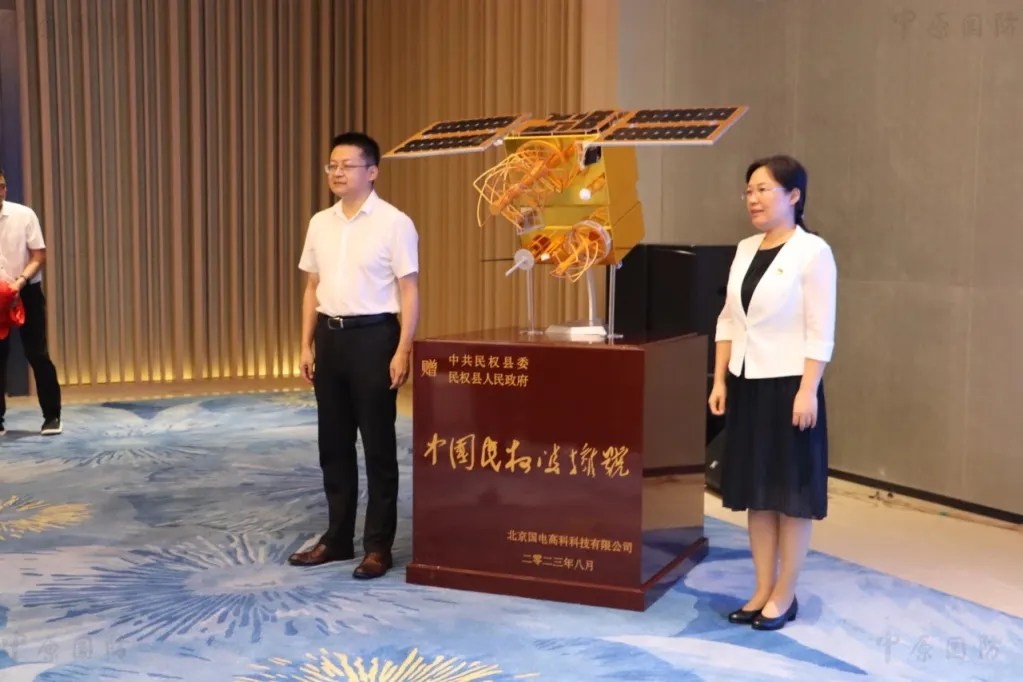
This time Ceres 1 (Haiyao 1) entered an 800km inclined orbit, which is the farthest record set by a domestic private rocket. The 21st to 24th stars of the Apokolips constellation successfully carried it into orbit. Apocalypse Constellation 21 to 24 satellites are low-orbit data acquisition satellites developed by Beijing Guodian Hi-Tech Co., Ltd. and are part of the Apocalypse Constellation. The Apocalypse constellation is designed to be networked with 38 satellites, which can provide global data collection services and effectively solve the problem of IoT network access at sea, in the air and in remote areas that are not covered by ground networks. The ground segment of the system includes satellite management center, service operation center, earth station, gateway station, ground network,

 “Hefei High-tech No. 1” is the first special launch satellite in the second phase of construction among the 38 satellites planned by the Apocalypse Constellation. It is also the first satellite launched by Beijing Guodian High-tech Co., Ltd. after the industrial landing in Hefei High-tech Zone.

This mission is codenamed “The Little Mermaid”. “Ceres No. 1” will become China’s first sea-launched private commercial carrier rocket, and it will also become China’s third sea-launched carrier rocket. Prior to this, “Long March 11” and “Jielong 3” had achieved consecutive successes, verifying the feasibility, stability, and reliability of sea launches.

After “Ceres 1”, various types of rockets will be launched from the sea at the Oriental Spaceport. In December 2023, Eastern Space Company’s “Gravity 1” all-solid rocket will make its first flight here; in the first half of 2024, Rocket Company’s “Darwin 2” liquid rocket will also be launched here. In addition, sea-launched rockets such as China Aerospace Corporation’s “Lijian-1” will also be launched at the Oriental Space Port.

Compared with land-based launches, sea-based launches have two major advantages: the launch platform can be maneuvered and deployed and the launch range is wide. Specifically, on the one hand, sea launch can maneuver the launch platform to low latitudes close to the equator, which can maximize the use of the earth’s rotation speed and enhance rocket capacity; on the other hand, sea launch has a wider area Since the wreckage landing area is planned on the sea, it can avoid densely populated areas such as cities, which is convenient and safe.

The sea launch will be an important step for “Ceres-1” and its development company Xinghe Power Aerospace. It will expand the launch site resources for its rapid response and high-density launch delivery, and also provide convenience for various types of launches. At the same time, the sea launch of “Ceres No. 1” will also be an important step for China’s civil and commercial aerospace. The mission was a complete success!

Images and visuals are from their respectives also Galactic Energy is located in Block D, Aviation Technology Plaza, E-Town, Beijing- China – People’s Republic of China