星河动力空间科技有限公司 Galactic Energy- Galaxy Power (Beijing) Space Technology Co., Ltd.Located in Block D, Aviation Technology Plaza, E-Town, and Beijing – Beijing – China – People’s Republic of China ….Galaxy Aerospace is the first private aerospace company in China to achieve successful continuous launches, the first to send commercial networked satellites into a 500km sun-synchronous orbit, and the first to master the ability to launch multiple satellites with one carrier rocket
[The Ceres-1 sea launch adds 6 more satellites to China’s space program! ]
At 13:22 Hong Kong SAR- Beijing time on August 29th Thursday, 2024, on the “Dongfang Spaceport” sea launch ship in the Yellow Sea, the “Ceres-1” sea-launched Yao-3 carrier rocket carried six small optical remote sensing satellites, including “Yunyao-1” 15-17 satellites, Jitianxing A03 satellite, “Suxing-1” 01 satellite, and “Tianfu Gaofen-2” satellite, and sent the satellites into a sun-synchronous orbit (SSO) at an altitude of 535 kilometers.
The “Ceres-1” sea-launched carrier rocket is a small solid-fuel carrier rocket. The arrow is about 20 meters high, 1.4 meters in diameter, with a takeoff mass of about 33 tons and a capacity of 300 kilograms in a sun-synchronous orbit (SSO) at an altitude of 500 kilometers.
The Ceres-1 sea-launched rocket was developed by Beijing Galactic Energy. It is an adaptive improvement on the Ceres-1 standard rocket. It is a four-stage small rocket with a four-stage tandem configuration. The first, second and third stages use solid power, and the fourth stage uses liquid power. The rocket is about 20 meters high and 1.4 meters in diameter. It has a takeoff mass of about 33 tons and a takeoff thrust of 60 tons. Its altitude is 500 kilometers and the sun-synchronous orbit (SSO) has a carrying capacity of 300 kilograms.
Since its successful maiden flight on November 7, 2020, Ceres-1 has carried out 15 launches, 14 of which were successful, with a success rate of about 93.33%. Since the successful launch of the Ceres-1 sea-launched Yao-1 rocket on September 5, 2023, Ceres-1 has successfully carried out three consecutive sea launches, leading the way among private commercial aerospace companies.
This launch mission is the fourth launch of the Ceres-1 rocket in 2024, the third launch in the Yellow Sea (Taiyuan Satellite Launch Center), the 38th launch in China and the 156th orbital space launch in the world. At the same time, this launch is also the fourth marine space launch in China and the world this year.
This launch mission is the fourth launch of the Ceres-1 rocket in 2024, the third launch in the Yellow Sea (Taiyuan Satellite Launch Center), the 38th launch in China and the 156th orbital space launch in the world.
At 0639 Hours Hong Kong SAR- Beijing Time 26th December 2023 , China- People’s Republic of China- CNSA –China National Space Administration Successfully launched the New Next Generation Long March – Chang Zheng 11 carrier rocket at the Taiyuan Satellite Launch Center Shanxi Province.. Successfully launched a Series of Shiyan 24 C Test Satellites…. From a mobile marine launch platform in off shore Yangjiang Guangdong Province, in which is Known as the Greater Bay Area.. China, People’s Republic of China.
Yangjiang is a city in China’s southern Guangdong Province. To the north, the mountains around Yangchun City feature hot springs and the Lingxiao Caves, a network of karst rock formations. To the south, Hailing Island is a summer resort known for sandy beaches. The island is also home to the Guangdong Maritime Silk Road Museum…
Taiyuan Satellite Launch Center used the Long March 11 carrier rocket in the waters near Yangjiang, Guangdong to successfully launch and test Satellite – Shiyan 24. C satellite, successfully entered the scheduled orbit, and the launch mission was a complete success. Satellites are mainly used for space science and technology experiments.
This mission is the 503rd flight of the Long March series of launch vehicles.
东方空间 OrienSpace is one of sixty plus Carrier Rocket Companies in Made In China, People’s Republic of China.. Located in headquartered in Beijing, B3, Digital Manor, No. 1 Disheng West Road, Yizhuang Economic and Technological Development Zone, Daxing District, Beijing………Shandong Address: No. 30, Nanjing Street, Economic Development Zone, Haiyang City, Yantai City, Shandong Province………Shaanxi Address: 4th Floor, Northwest Building, Eleven Science and Technology, National Civil Aerospace Industry Base, Xi’an, Shaanxi Province…….Hainan Address: Room 125, 1st Floor, Building 20, No. 169, Wenwei Road, Wencheng Town, Wenchang City, Hainan Province…
Established in 2020, Dongfang Space is mainly engaged in space transportation. It is a design and manufacturing service company for launch vehicles and new aerospace vehicles. Through the research and development of the “Gravity” series of launch vehicles, the company has created serialized, diversified, and flight-based aerospace transportation products such as one-time use, recyclable reuse, and manned flight, and quickly formed low-cost, large-scale, and convenient launches. Service capability, committed to becoming the world’s most respected provider of commercial aerospace products and launch services, so that everyone can realize the dream of spaceflight…….
The actual shape of this bevel cone seems to be a bit sharper than the one in the animation and model?
[The Orient Space Gravity-1 launch vehicle plans to make its first flight at the Oriental Space Port in December this year] Orient Space’s first “Gravity-1” launch vehicle will make its first flight at the Oriental Space Port in Yantai, Shandong in December this year. Aiming at the demand for rapid launch services of low-orbit constellations and medium- and large-scale satellites, the low-Earth orbit carrying capacity of “Gravity-1” is as high as 6.5 tons, which will increase the capacity of the largest commercial space rocket in China by about three times and will effectively help my country improve its medium- and large-scale satellites. Space payload rapid response launch capability.
“Gravity-1” is China’s first commercial space rocket with a bundled design and the world’s first all-solid bundled rocket. The rocket has a three-stage and semi-configuration. The booster stage is bundled with four solid motors. Each unit is more than 10 meters in height, 2.65 meters in diameter, and has a thrust of up to 155 tons. It will provide 600 tons of thrust for the rocket to take off, making the “gravity force” -1″ can achieve a low-Earth orbit carrying capacity of up to 6.5 tons…
Images and visuals are from their respectives also 东方空间 OrienSpace
星河动力空间科技有限公司 Galactic Energy- Galaxy Power (Beijing) Space Technology Co., Ltd. Located in Block D, Aviation Technology Plaza, E-Town, and Beijing – Beijing – China – People’s Republic of China ….Galaxy Aerospace is the first private aerospace company in China to achieve successful continuous launches, the first to send commercial networked satellites into a 500km sun-synchronous orbit, and the first to master the ability to launch multiple satellites with one carrier rocket.
Chinese private commercial rocket company’s first sea launch! 谷神星一号海远一 carrier rocket plans to implement a sea launch at the Eastern Aerospace Port at around 17:30 on September 5th 2023!
The Galaxy Power Ceres-1 rocket is scheduled to carry the 21st to 24th satellites of the Apokolips constellation (including the 21st to 24th satellite with one Carrier rocket) in Haiyang, Shandong (Yantai) at around 17:30 on September 5 (evening). Four satellites, including the 21st satellite named “Hefei Gaoxin No. 1” and the 22nd satellite named “China Minquan Shuangyong”, will carry out sea launch missions.
It is expected that at about 17:40 on September 5, 2023, the “Ceres-1” sea-launched Yao 1 carrier rocket carrying “Hefei High-tech-1” and other satellites will be launched from the offshore Shandong Oriental Space Port to execute the “Ceres-1” mission. No. 1 rocket’s first sea launch.
launch of Ceres-1 (Haiyaoyi) launched 16 more technological innovations based on the previous 8 rockets successfully launched from land, and achieved 4 Six major breakthroughs: “World’s first” and two “domestic firsts”: 🔷The first domestic private rocket launch at sea 🔷The first domestic commercial aerospace launch into an 800km inclined orbit 🔷The world’s first launch from a land-sea universal mobile platform without support 🔷The world’s first solid rocket unguided at sea Thermal launch 🔷The world’s first rocket adopts a maritime vertical self-alignment and online misalignment angle correction high-precision navigation solution 🔷The world’s first solid rocket adopts a non-pyrotechnic locking release mechanism.
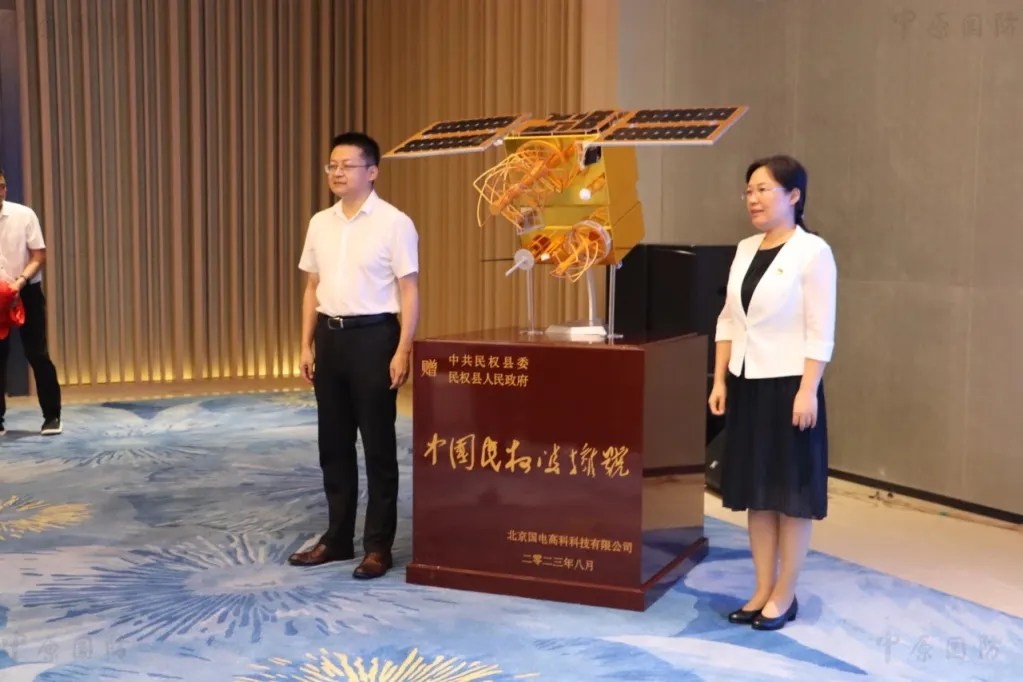
This time Ceres 1 (Haiyao 1) entered an 800km inclined orbit, which is the farthest record set by a domestic private rocket. The 21st to 24th stars of the Apokolips constellation successfully carried it into orbit. Apocalypse Constellation 21 to 24 satellites are low-orbit data acquisition satellites developed by Beijing Guodian Hi-Tech Co., Ltd. and are part of the Apocalypse Constellation. The Apocalypse constellation is designed to be networked with 38 satellites, which can provide global data collection services and effectively solve the problem of IoT network access at sea, in the air and in remote areas that are not covered by ground networks. The ground segment of the system includes satellite management center, service operation center, earth station, gateway station, ground network,
“Hefei High-tech No. 1” is the first special launch satellite in the second phase of construction among the 38 satellites planned by the Apocalypse Constellation. It is also the first satellite launched by Beijing Guodian High-tech Co., Ltd. after the industrial landing in Hefei High-tech Zone.
This mission is codenamed “The Little Mermaid”. “Ceres No. 1” will become China’s first sea-launched private commercial carrier rocket, and it will also become China’s third sea-launched carrier rocket. Prior to this, “Long March 11” and “Jielong 3” had achieved consecutive successes, verifying the feasibility, stability, and reliability of sea launches.
After “Ceres 1”, various types of rockets will be launched from the sea at the Oriental Spaceport. In December 2023, Eastern Space Company’s “Gravity 1” all-solid rocket will make its first flight here; in the first half of 2024, Rocket Company’s “Darwin 2” liquid rocket will also be launched here. In addition, sea-launched rockets such as China Aerospace Corporation’s “Lijian-1” will also be launched at the Oriental Space Port.
Compared with land-based launches, sea-based launches have two major advantages: the launch platform can be maneuvered and deployed and the launch range is wide. Specifically, on the one hand, sea launch can maneuver the launch platform to low latitudes close to the equator, which can maximize the use of the earth’s rotation speed and enhance rocket capacity; on the other hand, sea launch has a wider area Since the wreckage landing area is planned on the sea, it can avoid densely populated areas such as cities, which is convenient and safe.
The sea launch will be an important step for “Ceres-1” and its development company Xinghe Power Aerospace. It will expand the launch site resources for its rapid response and high-density launch delivery, and also provide convenience for various types of launches. At the same time, the sea launch of “Ceres No. 1” will also be an important step for China’s civil and commercial aerospace. The mission was a complete success!
东方空间 OrienSpace is one of sixty plus Carrier Rocket Companies in Made In China, People’s Republic of China.. Located in headquartered in Beijing, B3, Digital Manor, No. 1 Disheng West Road, Yizhuang Economic and Technological Development Zone, Daxing District, Beijing………Shandong Address: No. 30, Nanjing Street, Economic Development Zone, Haiyang City, Yantai City, Shandong Province………Shaanxi Address: 4th Floor, Northwest Building, Eleven Science and Technology, National Civil Aerospace Industry Base, Xi’an, Shaanxi Province…….Hainan Address: Room 125, 1st Floor, Building 20, No. 169, Wenwei Road, Wencheng Town, Wenchang City, Hainan Province…
Established in 2020, Dongfang Space is mainly engaged in space transportation. It is a design and manufacturing service company for launch vehicles and new aerospace vehicles. Through the research and development of the “Gravity” series of launch vehicles, the company has created serialized, diversified, and flight-based aerospace transportation products such as one-time use, recyclable reuse, and manned flight, and quickly formed low-cost, large-scale, and convenient launches. Service capability, committed to becoming the world’s most respected provider of commercial aerospace products and launch services, so that everyone can realize the dream of spaceflight…….
As of August 2023引力一号 #GravityOne Yao 1 Carrier Rocket ….passed the final assembly start review of the Yaoyi rocket…. Dongfang Space held the evaluation work for the start of the final assembly of the “Gravity-1” Yaoyi rocket. Plans, etc. were reviewed. The participating experts unanimously agreed that the “Gravity-1” Yaoyi rocket has the conditions to start the final assembly, marking the official departure of the “Gravity-1” Yaoyi rocket. The work of Dongfang Space’s first carrier rocket “Gravity-1” is progressing smoothly as planned, ensuring a complete success in the first sea flight in December.
“Gravity-1” is a three-and-a-half-stage rocket. The booster stage is bundled with 4 solid motors. A single unit is more than 10 meters high, 2.65 meters in diameter, and has a thrust of 155 tons. It will provide 600 tons for the rocket to take off. The thrust can achieve a low-Earth orbit carrying capacity of up to 6.5 tons …
[“Gravity-1” rocket has passed the review of the final assembly of the Yaoyi rocket]
Recently, with the completion of key tests and the complete set of first-flight products, Dongfang Space held a review for the start-up of the final assembly of the “Gravity-1” rocket. The preparation of the design and process documents, the completeness of the final assembly and ground products, and the final assembly plan were reviewed. The participating experts unanimously agreed that the “Gravity-1” Yaoyi rocket has the conditions to start the final assembly, marking the official departure of the “Gravity-1” Yaoyi rocket.
The work of Dongfang Space’s first carrier rocket “Gravity-1” is progressing smoothly as planned, ensuring a complete success in the first sea flight in December…
In recent years, China’s aerospace industry has developed rapidly. At the China Aerospace Conference on April 23rd 2023, Dongfang Space joined hands with strategic partner to release the world’s largest solid launch vehicle [Gravity-1], which is scheduled to launch its first flight in the second half of the year. The large carrying capacity of “Gravity-1” can not only achieve economies of scale and reduce the unit cost of rocket launches, but also meet the “one arrow and multiple satellites” satellite constellation networking work, and develop satellite networking more quickly. Dongfang Space innovates to create the “Gravity” series of large and medium-sized commercial launch vehicles, and maintains rapid development in accordance with the general idea of ”coexistence of solid and liquid, step-by-step, effective iteration, and system innovation…
[“Gravity-1” rocket booster separation test was a complete success]
Recently on the 2nd August 2023 , Dongfang Space independently designed, organized and implemented two “Gravity-1” carrier rocket booster separation tests at the Eastern Space Port. This test is the first commercial aerospace boost separation test in China. The test has fully assessed the timing of boost separation, the compatibility of the work of multiple sets of separation devices, the reliability of the binding structure, and the coordination of the separation process. A complete success. “Gravity-1” is the first domestic commercial space rocket with bundled design, and the world’s first all-solid bundled rocket. The rocket has a three-and-a-half-stage configuration. The booster stage is bundled by 4 solid motors. A single unit is more than 10 meters high, 2.65 meters in diameter, and has a thrust of 155 tons. It will provide 600 tons of thrust for the rocket to take off, making the “gravity -1” can achieve a low-earth orbit carrying capacity of up to 6.5 tons. The complete success of this test marks that the key booster separation technology and booster vertical assembly technology of the “Gravity-1” launch vehicle have been verified, and the established goal of “good, fast, and economical” has been achieved, laying the foundation for the rocket’s first flight at the end of the year. solid foundation.
[Changguang Satellite and Dongfang Space officially signed a contract for the “High Score 05” batch-production satellite launch service project, which will be launched into orbit on the first rocket of “Gravity-1” this year! 】
On April 17th 2023, Chang Guang Satellite Technology Co., Ltd. (hereinafter referred to as “Chang Guang Satellite”) and Dongfang Space held a signing ceremony for the “Jilin-1” high-resolution 05 satellite launch service project in Beijing.
Dongfang Space will use the “Gravity-1” carrier rocket to launch the “Jilin-1” high-resolution 05 satellite, providing batch and rapid network launch services for the new generation of high-resolution remote sensing constellations of Chang Guang Satellite.
At the signing ceremony, Xu Kai, deputy general manager of Changguang Satellite, expressed his expectation that the launch vehicle, satellite, data application and other industries will form a joint force to jointly promote the development of China’s commercial spaceflight. At the same time, we highly affirm the efforts made by Dongfang Space in the joint development of the star and rocket, and wish the first flight of “Gravity One” a complete success this year. Yao Song of Dongfang Space said that Changguang Satellite is the pioneer and leader of China’s commercial aerospace, and will continue to learn from Changguang Satellite, and the two sides will make progress and develop together. Dongfang Space Bu Xiangwei said that the “Jilin-1” satellite launch mission has posed new challenges to the company, and has also created a large application of large rockets. The company is confident in successfully completing the mission.
The “Jilin-1” constellation is the core project under construction of Changguang Satellite. It has built the world’s largest sub-meter commercial remote sensing satellite constellation, occupies a dominant position in remote sensing information services, and has gradually become an important source of space remote sensing information in the world. “Jilin No. 1” high-scoring 05-batch production star is the fourth-generation technology satellite of Chang Guang Satellite. It adopts a new generation of high-integration electronic control system, advanced technologies such as ultra-high-speed data transmission and electric propulsion, and adopts mass production and mass launch. , batch networking and the business model of rapidly providing remote sensing information services. It will provide higher-quality remote sensing information and product services in various fields such as homeland security, geographic surveying and mapping, land planning, agricultural and forestry production, ecological environmental protection, and smart cities, and provide customers with more abundant remote sensing data products.
“Gravity-1” is the first medium-sized solid launch vehicle for my country’s commercial spaceflight. The LEO carrying capacity reaches 6.5 tons, which triples the existing domestic solid capacity and meets the needs of low-orbit constellations and rapid launch services for medium and large satellites. The “Jilin-1” high-scoring 05-batch satellite launch mission is the first time that the “Gravity-1” rocket has been fully customized to support the construction of large-scale constellations. Through the joint design of the two parties for nearly half a year, the advantages of the large capacity and large space of the “Gravity-1” rocket will be “full and fully utilized”, which will help the construction of the “Jilin-1” constellation to greatly improve efficiency and reduce launch costs.
[“Gravity No. 1” has completed a number of static tests such as the inclined nose cone of the booster]
On the week of 30th July 2023…. The static test is also called the static strength test. By simulating the actual force and boundary conditions of the structure in actual work, the axial Force, bending moment and shear force are used to assess the structural strength, and the accuracy of the simulation results is verified to ensure the safety and reliability of the actual work. “Gravity One” adopts many low-cost and new forms that are conducive to mass production. During the development process, a large number of finite element simulations and serial static tests were carried out, which effectively verified the design results.
Since the beginning of this year, “Gravity-1” has successively completed a series of static tests including the combination of the instrument cabin, the second-level tail section of the core, the inclined nose cone, the first-level tail section of the core, and the booster tail section. Reliability of working under complex load conditions during flight. In order to speed up the progress, many trials are designed and carried out by the company itself.
In addition, the test adopted a method of multi-channel and multi-site parallel implementation. After full investigation, domestic units that meet the test capabilities were selected to ensure that multiple static tests were completed quickly within a short period of time. In the design of working conditions, through finite element simulation, the test team simplified more than ten working conditions into 3 to 5 working conditions (slightly different at each level), taking into account both efficiency and cost. The test adopts a staged loading method, and various working conditions are fully assessed, and the remaining strength coefficients of each section meet the service requirements.
Take the booster bevel cone as an example. Gravitation No. 1 adopts the design of uploading force, and the use of the inclined cone scheme can not only reduce the height of the section, but also provide a streamlined aerodynamic shape, but it requires high design and manufacturing capabilities. Yang Shuang, the person in charge of the oblique head cone, said that the structure is the most difficult project since the work: the oblique head cone is a special-shaped structure with a height of 4 meters. Constrained by small space and difficult force transmission and diffusion, it faces many difficulties such as bearing a concentrated load of 200 tons within a diameter of 250mm. In order to deliver on schedule, in less than half a year, the team fully practiced the concept of carrying out design and production to the end, and solved many technical problems after comparing multiple plans. In terms of testing, the team proposed an integrated loading scheme that simulated the flight state, which resolved related restrictions such as the site and loading conditions, and finally completed the delivery task on time.
At the same time as the series of static tests were completed, more than 20 flight rocket structures of “Gravity One” were produced and delivered simultaneously. This model also helps the company organize and carry out more innovative work in the future, and has accumulated valuable practical experience in “design-trial-manufacture-test-mass production”. The work of “Gravity One” is progressing smoothly as planned to ensure the complete success of the first flight in the fourth quarter. First flight test article | “Gravity One” completed….
.On the 2nd August 2023 Dongfang Space’s first carrier rocket “Gravity-1” will make its maiden flight at Dongfang Aerospace Port in December 2023. In order to ensure the success of the first flight, Dongfang Space has carried out various research and development work in a rigorous and meticulous manner. The structural system has recently completed the vibration test of the first-level core section and achieved complete success.
[Officially signed! Orient Space Aerospace Power Headquarters landed in Wuxi, and liquid rockets were launched at full speed]
On August 7, Orient Space and the People’s Government of Liangxi District, Wuxi City formally signed a contract for the Aerospace Power Headquarters Project in Wuxi. The project is expected to invest about 3 billion yuan. It will focus on the “Original Force” series of liquid rocket engines in Orient Space, develop core industries such as research and development, production, and testing of recyclable and reusable aerospace engines, and realize the ability to support an annual output of 300 liquid rocket engines. A first-class aerospace power comprehensive industrial base.
The world’s strongest solid launch vehicle “Gravity-1” will make its first flight at the Eastern Aerospace Port at the end of this year; the large-scale recyclable liquid oxygen kerosene rocket “Gravity-2” has been developed. The main feature is high-orbit launch, which will further increase the carrying capacity to 15 tons, which can meet the needs of large-scale satellite networking and medium-high orbit launches, and achieve first-class commercial space launch capabilities. It will make its first flight in 2025.
In the development of rockets, power comes first, and the capabilities of rocket engines determine the capabilities of rockets in space exploration to a certain extent. The “Gravity-2” rocket core first + core second stage will use the “Force-85” engine self-developed by “9+1” Dongfang Space. The “Original Force-85” 100-ton liquid oxygen kerosene engine adopts a gas generator cycle and a pintle injector, which has the characteristics of high reliability, high thrust, reusability, non-toxic environmental protection, and good economy. The scheme design and product production have been completed, and the test run of the gas generator has been successfully completed in March this year. The half-system and full-system test runs will be completed in the fourth quarter, and further development, testing and production work will be carried out at the Wuxi Aerospace Power Headquarters project. In 2025 it was applied to the “Gravitation-2” rocket for flight tests in 2010…
Images and visuals are from their respectives also 东方空间 OrienSpace