On the 17th September 2023 in CNSA _China National Space Administration -China – People’s Republic of China 1213 hours Hong Kong –Beijing Time China- People’s Republic of China launch the Chang Zheng – Long march 2D Yao 83 Carrier Rocket launching from station form Xichang Satellite Launch Center Sichuan Province…..
The Chang Zheng- Long March 2D Yao 83 carrier rocket ignited and took off at the Xichang Satellite Launch Center, and then successfully sent the Remote Sensing 39 satellite accurately into the predetermined orbit. The launch mission was a complete success. So far, China Aerospace Science and Technology Corporation has successfully completed its 30th space launch mission this year, winning all 30 times. The Long March 2D launch vehicle is a room-temperature liquid two-stage launch vehicle developed by the Eighth Academy of China Aerospace Science and Technology Corporation. It has the ability to launch single and multiple satellites with different orbital requirements. Its 700-kilometer sun-synchronous orbit carrying capacity is 1.3 Ton.
Remote Sensing Satellite 39 was developed by the Aerospace Dongfanghong Satellite Co., Ltd. of the Fifth Academy of China Aerospace Science and Technology Corporation and the Eighth Academy of China Aerospace Science and Technology Corporation. This launch is the 488th launch of the Long March series of launch vehicle….
星河动力空间科技有限公司 Galactic Energy- Galaxy Power (Beijing) Space Technology Co., Ltd. Located in Block D, Aviation Technology Plaza, E-Town, and Beijing – Beijing – China – People’s Republic of China ….Galaxy Aerospace is the first private aerospace company in China to achieve successful continuous launches, the first to send commercial networked satellites into a 500km sun-synchronous orbit, and the first to master the ability to launch multiple satellites with one carrier rocket.
Chinese private commercial rocket company’s first sea launch! 谷神星一号海远一 carrier rocket plans to implement a sea launch at the Eastern Aerospace Port at around 17:30 on September 5th 2023!
The Galaxy Power Ceres-1 rocket is scheduled to carry the 21st to 24th satellites of the Apokolips constellation (including the 21st to 24th satellite with one Carrier rocket) in Haiyang, Shandong (Yantai) at around 17:30 on September 5 (evening). Four satellites, including the 21st satellite named “Hefei Gaoxin No. 1” and the 22nd satellite named “China Minquan Shuangyong”, will carry out sea launch missions.
It is expected that at about 17:40 on September 5, 2023, the “Ceres-1” sea-launched Yao 1 carrier rocket carrying “Hefei High-tech-1” and other satellites will be launched from the offshore Shandong Oriental Space Port to execute the “Ceres-1” mission. No. 1 rocket’s first sea launch.
launch of Ceres-1 (Haiyaoyi) launched 16 more technological innovations based on the previous 8 rockets successfully launched from land, and achieved 4 Six major breakthroughs: “World’s first” and two “domestic firsts”: 🔷The first domestic private rocket launch at sea 🔷The first domestic commercial aerospace launch into an 800km inclined orbit 🔷The world’s first launch from a land-sea universal mobile platform without support 🔷The world’s first solid rocket unguided at sea Thermal launch 🔷The world’s first rocket adopts a maritime vertical self-alignment and online misalignment angle correction high-precision navigation solution 🔷The world’s first solid rocket adopts a non-pyrotechnic locking release mechanism.
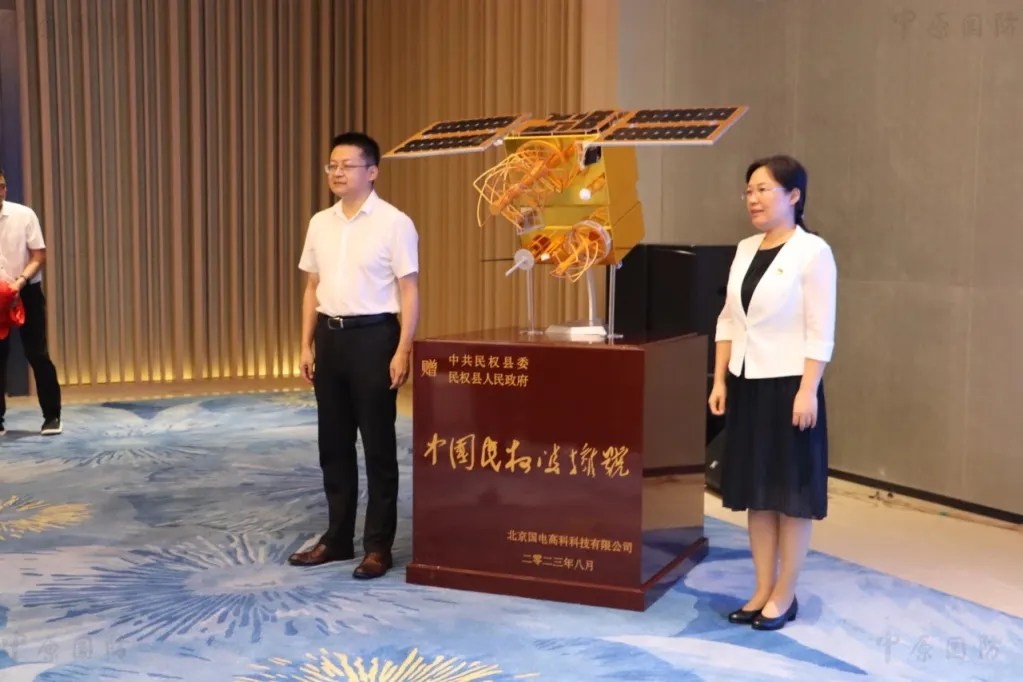
This time Ceres 1 (Haiyao 1) entered an 800km inclined orbit, which is the farthest record set by a domestic private rocket. The 21st to 24th stars of the Apokolips constellation successfully carried it into orbit. Apocalypse Constellation 21 to 24 satellites are low-orbit data acquisition satellites developed by Beijing Guodian Hi-Tech Co., Ltd. and are part of the Apocalypse Constellation. The Apocalypse constellation is designed to be networked with 38 satellites, which can provide global data collection services and effectively solve the problem of IoT network access at sea, in the air and in remote areas that are not covered by ground networks. The ground segment of the system includes satellite management center, service operation center, earth station, gateway station, ground network,
“Hefei High-tech No. 1” is the first special launch satellite in the second phase of construction among the 38 satellites planned by the Apocalypse Constellation. It is also the first satellite launched by Beijing Guodian High-tech Co., Ltd. after the industrial landing in Hefei High-tech Zone.
This mission is codenamed “The Little Mermaid”. “Ceres No. 1” will become China’s first sea-launched private commercial carrier rocket, and it will also become China’s third sea-launched carrier rocket. Prior to this, “Long March 11” and “Jielong 3” had achieved consecutive successes, verifying the feasibility, stability, and reliability of sea launches.
After “Ceres 1”, various types of rockets will be launched from the sea at the Oriental Spaceport. In December 2023, Eastern Space Company’s “Gravity 1” all-solid rocket will make its first flight here; in the first half of 2024, Rocket Company’s “Darwin 2” liquid rocket will also be launched here. In addition, sea-launched rockets such as China Aerospace Corporation’s “Lijian-1” will also be launched at the Oriental Space Port.
Compared with land-based launches, sea-based launches have two major advantages: the launch platform can be maneuvered and deployed and the launch range is wide. Specifically, on the one hand, sea launch can maneuver the launch platform to low latitudes close to the equator, which can maximize the use of the earth’s rotation speed and enhance rocket capacity; on the other hand, sea launch has a wider area Since the wreckage landing area is planned on the sea, it can avoid densely populated areas such as cities, which is convenient and safe.
The sea launch will be an important step for “Ceres-1” and its development company Xinghe Power Aerospace. It will expand the launch site resources for its rapid response and high-density launch delivery, and also provide convenience for various types of launches. At the same time, the sea launch of “Ceres No. 1” will also be an important step for China’s civil and commercial aerospace. The mission was a complete success!
深蓝航天 Deep Blue Limited – Deep Blue Aerospace One of sixty Chinese private space Carrier Rocket Companies in China-People’s Republic of China… As many of sixty plus Private Rocket Deep Blue Aerospace Co., Ltd. was established in 2017. The company is mainly a high-tech aerospace enterprise that focuses on the direction of liquid recovery and reusable launch vehicles and provides users with commercial launch services. Deep Blue Aerospace Co., Ltd. is headquartered in Nantong City, Jiangsu Province. At the same time, the company has rocket general and liquid engine R&D centers in Yizhuang, Beijing and Xi’an, Shaanxi, respectively, and a rocket power system test base in Tongchuan, Shaanxi…..
Development Progress | Deep Blue Aerospace completed the first fairing separation test in China using a non-pyrotechnic connection unlocking mechanism…
On the 2nd September 2023….. Recently, the separation test of the fairing of the “Xingyun-1” liquid recyclable and reusable launch vehicle of Shenlan Aerospace was a complete success. This is the first test in China to use a non-pyrotechnic connection unlocking mechanism to separate the fairing. In order to fully verify the separation state of the fairing under different deviations, Deep Blue Aerospace has carried out many experiments on this round, all of which use the self-developed non-pyrotechnic connection unlocking mechanism. The separation timing of the test is correct, which is basically consistent with the simulation results. No damage occurred.
This round of separation tests was completed at the Deep Blue Aerospace Nantong Rocket Assembly Base, and the fairing was completely recovered after multiple tests.
This round of separation tests was completed at the Deep Blue Aerospace Nantong Rocket Assembly Base, and the fairing was completely recovered after multiple tests.
This round of testing used the same set of connection and unlocking mechanisms to complete multiple separation tests within three days, verifying the reusability and rapid response capabilities of the self-developed non-pyrotechnical connection and unlocking mechanism. This is the first time in domestic fairing separation tests. This round of fairing separation test is one of the phased tests before the first flight of the “Nebula-1” liquid recyclable launch vehicle. The success of this round of test will lay the foundation for the successful first flight of the “Nebula-1” rocket in 2024. Solid foundation.
Why do rockets need to separate their Fairings?
The launch vehicle will encounter harsh environments during flight. The fairing protects the satellite payload from the aerodynamic forces and aerodynamic heat and also reduces the aerodynamic resistance of the launch vehicle during flight. After leaving the atmosphere, the launch vehicle is no longer affected by aerodynamics and throwing away the fairing helps to increase rockets capacity..
Beijing Zhongke Aerospace Exploration Technology Co., Ltd. is the first domestic aerospace enterprise with mixed ownership, and it is also the target enterprise that Oriental Aerospace Port focuses on introducing. Relying on the scientific research strength and resource advantages of the Institute of Mechanics of the Chinese Academy of Sciences and the Aerospace Flight Technology Center of the Chinese Academy of Sciences, China Aerospace Science and Technology has been committed to the research and development and integration of space technology and aerospace vehicles as a platform for the transformation of major national scientific research projects, as well as the transformation and provision of technological achievements. Aerospace launch service. The Lijian-1 rocket project also adds a brand-new name card to the Oriental Space Port, which will surely promote the construction of the Oriental Space Port to take a solid step forward.
Holding the torch of science and casting the heavy arrow of a great country | the ability of final assembly testing has been further improved! Lijian-1 Yaosan carrier rocket has completed the final assembly at the China Science and Technology Aerospace Industrialization Base and has entered the testing stage…
On August 19th 2023, the Lijian-1 Yao-3 launch vehicle successfully completed the final assembly work as planned at the China Aerospace Industrialization Base. During this period, each final assembly link achieved the “three noes”: no accidents, no hidden dangers, and no redundant objects. At present, the test conditions have been met, and the factory test is in progress. It is planned to leave the factory in October and carry out the third launch mission at the Jiuquan Satellite Launch Center. The Lijian-1 launch vehicle successfully launched twice in a row, successfully sending a total of 32 satellites into predetermined orbits. The total weight of the satellites was nearly 2 tons, further promoting a new chapter in the flight launch of China’s commercial launch vehicles. Based on the accumulated practical experience of previous multi-engine missions, the China Aerospace General Assembly team has continuously improved the technical details. Based on the pulsating production line of the industrial base, it has optimized the entire assembly production process, applied automatic intelligent tooling equipment, and strengthened personnel organization and management. etc., shortening the final assembly cycle of Lijian-1 Yaosan launch vehicle to 30 days .
In order to meet the refined design requirements and production needs of the rocket assembly process, Zhongke Aerospace technicians independently designed a variety of tooling products to assist in the final assembly , which can be used to improve measurement accuracy, simplify operation difficulty, and improve product reliability. For example, due to the existence of the rotating shaft, the zero position measurement of the servo system is difficult to locate and read with ordinary vernier calipers or steel rulers. In order to solve this problem, technicians designed special tooling according to actual needs, which effectively solved the difficulty of positioning and inaccurate readings. problem, greatly improving the accuracy and efficiency of measurement.
It is worth mentioning that, in order to improve the level of product launch services, the factory test project of the Lijian-1 Yaosan launch vehicle adopted a de-mission design , subverting the traditional process of waiting for the launch mission to be confirmed before carrying out test design, making the rocket production And the test cycle is greatly shortened, and the process is greatly simplified.
Zhongke Aerospace Technology Industrialization Base – a world-class serial launch vehicle production base built by Zhongke Aerospace. It is located in Nansha, the only sub-center of Guangzhou. It is mainly used for the development, production, and development of a series of solid and liquid launch vehicles. Testing, final assembly and testing have formed a complete manufacturing service system, marking the official entry into the stage of mass production, large-scale operation and serial development. The base has the final assembly and testing capabilities to produce 30 launch vehicles per year, the manufacturing and assembly capabilities of electronic equipment, and the production capabilities of launch vehicle structural compartments and storage tanks . At present, a semi-physical simulation laboratory, a comprehensive laboratory, etc. have been built, and have the capabilities of semi-physical simulation test and comprehensive test .
Zhongke Aerospace is the first commercial aerospace enterprise in China to develop medium and large-scale launch vehicles . With innovative, advanced, and efficient design ideas, it develops innovative, advanced, and economical launch vehicles. It is capable of undertaking low-orbit satellite constellation construction and space station cargo transportation. Ability. The Lijian-1 carrier rocket has a series of outstanding advantages such as large carrying capacity, high orbital accuracy, high inherent reliability, fast response, high launch efficiency, low support requirements, low launch cost, flexible and convenient use, and good environmental adaptability. , is a medium-sized launch vehicle with core competitiveness in the current commercial rocket launch market, and can provide high-quality, low-cost, and fast-response customized launch services for domestic and foreign satellite users .
星河动力空间科技有限公司 Galactic Energy- Galaxy Power (Beijing) Space Technology Co., Ltd. Located in Block D, Aviation Technology Plaza, E-Town, and Beijing – Beijing – China – People’s Republic of China ….Galaxy Aerospace is the first private aerospace company in China to achieve successful continuous launches, the first to send commercial networked satellites into a 500km sun-synchronous orbit, and the first to master the ability to launch multiple satellites with one carrier rocket.
On the 25th August 2023 Thursday 1259 Hours Hong- Kong SAR – Beijing time星河动力空间科技有限公司 Galactic Energy- Galaxy Power Jiuquan Satellite Launch Center- Inner Mongolia China, People’s Republic of China. Successfully launched the Ceres-1 Yao-8 carrier rocket….. Eight consecutive victories! Galaxy Power Aerospace successfully sent the Jilin-1 wide-width 02A star into the scheduled orbit
At 12:59 on August 25, 2023, Galaxy Power Aerospace successfully launched the Ceres-1 (Yao 8) carrier rocket (mission code: CORNFIELD CHASE) at the Jiuquan Satellite Launch Center, and successfully carried the Jilin-1 wide-width 02A satellite Accurately sent into the predetermined orbit, this mission is the eighth consecutive successful launch of the Ceres-1 series of commercial launch vehicles, the fourth consecutive successful launch this year, and the third launch within 35 days.
The “Jilin-1” wide-format 02A satellite is the first star of a new generation of coverage satellites funded and self-developed by Changguang Satellite Technology Co., Ltd., and its payload is an off-axis four-mirror optical camera. The wide-width 02A satellite has achieved a number of key technological breakthroughs in the design and manufacturing stage. Under the premise that the performance index is equivalent to that of the “Jilin-1” wide-width 01 series satellites, the weight of the entire satellite has successfully dropped from the 1200kg level of the wide-width 01 star to 230kg. , will provide users with high-definition satellite image products with a width of 150km and a resolution of 0.5m, featuring high resolution, large width, high-speed data transmission, and low cost. After the successful launch of the satellite, it will further accelerate the networking process of the “Jilin-1” satellite constellation, and expand the “Jilin-1” large-scale, high-resolution remote sensing information resources, which can be used for land and resources census, smart city, agriculture and forestry development and other fields Provide richer remote sensing data and product services. As a leading enterprise in domestic commercial aerospace, Galaxy Power Aerospace has been actively fulfilling corporate social responsibilities while practicing commercial value. In August 2022, the company joined hands with the China Social Welfare Foundation to jointly promote the “Starlight Yicai” project, using the company’s own influence to appeal to the society to care for the growth of children with autism. The launch mission of Ceres-1 (Yaoba) is based on the public welfare theme of “Xingyun Co-creates Rural Revitalization”, co-sponsored by Galaxy Power Aerospace, Ping An Bank and other parties, aiming to give full play to their respective advantages and jointly help rural revitalization. Previously, Galaxy Power Aerospace adopted sweet lilies in advance at the Hengdeyuan lily planting base in Lintao County, Gansu through the “Pingan Cloud Farm” on-site adoption. When the lilies mature, they can share the joy of harvest and help local villagers increase their income
In terms of brand cooperation, Galaxy Power Aerospace has joined hands with the modern humanistic gold jewelry and jewelry brand “YIN Yin” to launch rocket pendant bracelets and necklaces, based on the stage and tail sections of the Ceres 1 series rocket, which is the first domestic private company to enter a 500km sun-synchronous orbit The pendant is used as the raw material. After three years of ingenious planning, the two parties finally created a unique and proud souvenir of the “Cosmic Romance” series from the glittering space dream.
At present, the Ceres-1 carrier rocket has entered an intensive launch period, and it is expected to usher in the ninth land launch and the first sea launch of this type of rocket in the near future. In the future, Xinghe Power Aerospace will play a greater role in helping my country quickly enter orbital space at low cost.