#AlreadyTomorrowInHongKong #香港| #香港太空館 #HongKongSpaceMuseum #November2021 | #CNSA #ChinaNationalSpaceAdministration #國家航天局 #ChinaMarsMission the Contributions of #HongKong Research Team on Mars Landing Surveillance Camera for #Tianwen1 Mission orbit on the #RedPlanet #Mars#天问一号探测器进入日凌阶段…

Located in the Heart of Hong Kong central of Victoria Harbour in which locate looking at the iconic Megatroplis HongKong Island city landscape from the opposite is the Hong Kong Space Museum  香港太空館 in which located at 10 Salisbury Road, Tsim Sha Tsui, Kowloon, Hong Kong SAR, China –People’s Republic of China..  in which is one of the most international iconic buildings architecturally due to its hemispheric round dome in which is iconic known as one of Hong Kong’s local most cherish bread pastries the Pineapple Bun – Bolo Bao due to the pineapple ceramic texturing tiles of the dome structure that resembles the delicious texturing of the Pineapple Bun .. In which on In June 2014, the Hong Kong Government listed the pineapple bun as a part of Hong Kong’s intangible cultural heritage. … Despite the name, it does not traditionally contain pineapple; rather, the name refers to the look of the characteristic topping (which resembles the texture of a pineapple)……

On the 20th November 2021 Saturday – 1330 to 1530 Hong Kong SAR- Beijing Time  One of leading international Iconic Planetarium Space Museums  香港太空館 Hong Kong Space Museum   spoken in Chinese – Cantonese –Guangdong Dialect .. live streaming in one of its Auditorium in which Hong Kong SAR Space Program thorough outs it’s Universities collaborated in China- People’s Republic of China’s first most Challenging Mars Mission in which China’s CNSA –China National Space Administration  skill set far out weight NASA’s Mar Missions current and past.. . In One of Hong Kong SAR Universities, Hong Kong PloyU has contributed the Camera system of Tianwen One’s one of many Camera systems also it’s Mars lander, Zhurong Mars rover, and Mars Orbiter other elementally equiment system…. Speaker: Prof. Yung Kai-leung, BBS (Chair Professor & Associate Head, Department of Industrial and Systems Engineering, The Hong Kong Polytechnic University)

The Tianwen-1, China’s first Mars mission successfully landed on it in May, achieving another extraordinary feat in the recent Chinese Aerospace Industry. This first Mars exploration mission of China is unique that employed novel technology and engineering design and encounters exceptional challenges.

The Tianwen-1, China’s first Mars mission successfully landed on it in May, achieving another extraordinary feat in the recent Chinese Aerospace Industry. This first Mars exploration mission of China is unique that employed novel technology and engineering design and encounters exceptional challenges.

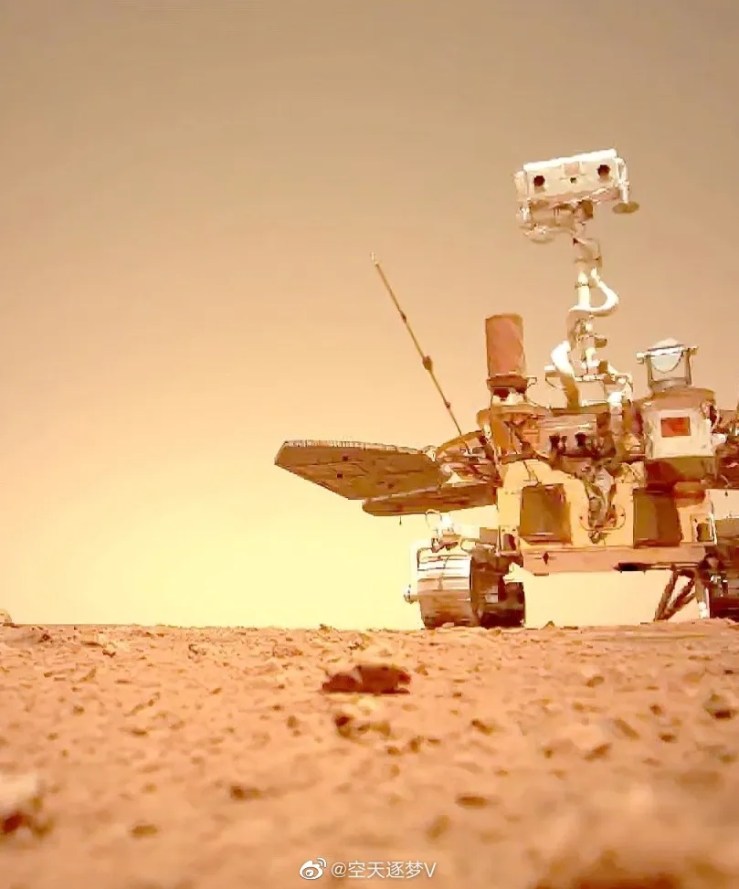
The Mars Landing Surveillance Camera (Mars Camera) is developed mainly by the research team of the Hong Kong Polytechnic University. It is a sophisticated space instrument mounting on the top surface of the lander platform of Tianwen-1, which monitors the landing status, the surrounding environment of the red planet and the operation status of the Zhu Rong rover. The Mars Camera is light in weight, yet strong and durable enough to withstand the huge impact shocks of 6,200 times Earth’s gravity. Moreover, it has to operate under low Martian temperature as well as overcome extreme temperature differences it experienced during its flight. In this lecture, Professor Yung from the Hong Kong Polytechnic University will talk about the challenges of the Mars mission and delineate the contributions of the Hong Kong research team.

Images and visuals are from CNSA- China National Space Administration also from there respectives..

#CNSA #ChinaNationalSpaceAdministration #国家航天局 |#BeltAndRoadinitiative #November2021| #CMS #ChinaMannedSpace The International Iconic #CSS #ChinaSpaceStation #TianheCoreModule #Shenzhou12 crew #Takionaut Nie Hainsheng of #EarthPhotography with timeless stunning #Earth Orbiting #Astrophotography  through his bedroom porthole window

中国空间站 Today On 13th November 2021 in which during On 9th September, 2021, at Hong Kong SAR – Beijing Time  morning, the Belt and Road Initiative CNSA –China National Space Administration  CSS China Space Station in which on a three month setting up a new home of the first three Shenzhou 12 crew Takionauts –Chinese Astronauts Nie Haisheng – Liu Boming – Tang Hongbo …  in which on that Thursday Official release! The Stunning photography works taken by the Shenzhou 12 Takionauts in orbit are stunning timeless in incredible stunning photography detail through the China – The China Manned Space Engineering Office officially released the Shenzhou 12 manned mission 3 Takionauts in orbit photography shot 从空间看地球 high-definition pictures…..   The Shenzhou 12 astronaut crew take you to appreciate the shocking beauty of the earth from the first perspective of the Takionauts though their time during the three months in Earth’s orbit in which last week of November 2021 all three of Shenzhou 12 crew are doing fine as their recovery into readaptivness of   Earth’s environment also out from quarantine are back to work and with their families.

During that time of Shenzhou 12 crew Commander Nie Haisheng photography shot through the day and the core pillars cabin portholes Chinese section of the space station robotic arm large video.. Many have wondering where was his bedroom in which where was his Space Station porthole window of The case is solved…! It was taken by Nie Haisheng!  : And it should be taken through the portholes of the large column of the core cabin. Compared with the portholes in the sleeping area, its angle of view is more suitable for space station photography!  He used a special camera to shoot outside through the porthole; the effect is different from the surveillance camera in which gives a different perspectives on resolution and definition..

Looking through the large column portholes when Tianhe Robotic Arm ……Shenzhou 12 enters the Tiangong space station, there are more three portholes in the living area of ​​the small column section of the Tianhe core cabin, and these three portholes are only facing the second and fourth quadrants. Quadrant, the viewing field is limited.

Indeed, the Tianhe core cabin is equipped with multiple panoramic outside high-definition cameras, plus the wrist binocular camera of the Tianhe robotic arm, which can achieve all-round imaging without blind spots.


However, relying solely on electronic equipment is not a fool proof option, and visual portholes have the advantage of reliability.

For example, the three portholes in the residential area can directly visually observe the outer surfaces of the Wentian experimental cabin and the Mengtian experimental cabin in the future.

In fact, in addition to the portholes in the residential area, there is also a porthole at the second quadrant of the front cone of the large column section. There is a robotic arm adapter near the porthole, and the Tianhe robotic arm is parked here.

On the one hand, the porthole can directly observe the sky and the robotic arm, and it can also visually observe the radially docked Shenzhou spacecraft. After the Tiangong space station enters the operational phase, it can also record the radial docking of the Shenzhou spacecraft in high definition from here.

Images and visuals are from Weibo also their respectives.

#CNSA #ChinaNationalSpaceAdministration #国家航天局 |#BeltAndRoadinitiative #酒泉衛星發射中心 #JiuquanSatelliteLaunchCenter  #November2021| #CMS #ChinaMannedSpace  the crew  #Shenzhou13 #Takionaut crew #CSS #ChinaSpaceStation #TianheCoreModule performing their #HomeCleaning after a great #Meal #WangYaping #ZhaiZhigang #YeGuangfu ….

中国空间站 On 11th November 2021 Hong Kong SAR – Beijing Time  morning, the Belt and Road Initiative CNSA –China National Space Administration  CSS China Space Station in which on a three to six months setting up a new home of the first three Shenzhou 13 in which spending up to on for the further construction and verifications of the systems of the CSS –China Space Station 2021 launch calendar in which currently the three Takionauts current Shenzhou 13 ……  Preparations for the six months of extension of the China Space Station  In which the currently it remains awaiting for the crew of setting up home in conducting fun scientifically onboard中国空间站.. the China Space station

This is  fourth episode of the second season of Tiangong China Space Station Clean the Space House Cleaning after a great meal , After watching the food story of the Shenzhou 13 Taikonauts in space, how to clean the space house after a meal, come and see Ye Guangfu’s small theatre “Wipe the Air”! And you can never think of how to gargle in space. In which also clean the tableware after eating in space? What should I do if the drink is spilled? Sort the garbage? Information center manned spacecraft office….

 Images and visuals are from Weibo also their respectives.

#CNSA #ChinaNationalSpaceAdministration #國家航天局 |#BeltAndRoadinitiative #November2021 |#火星 # 天問 #天问一号#TianwenOne #MarsMission #Marslander #MarsRover #Tianwen1 probe  #祝融号 #ZhuRong Tianwen No.1 probe orbiter enters remote sensing mission orbit on the #RedPlanet #Mars#天问一号探测器进入日凌阶段…

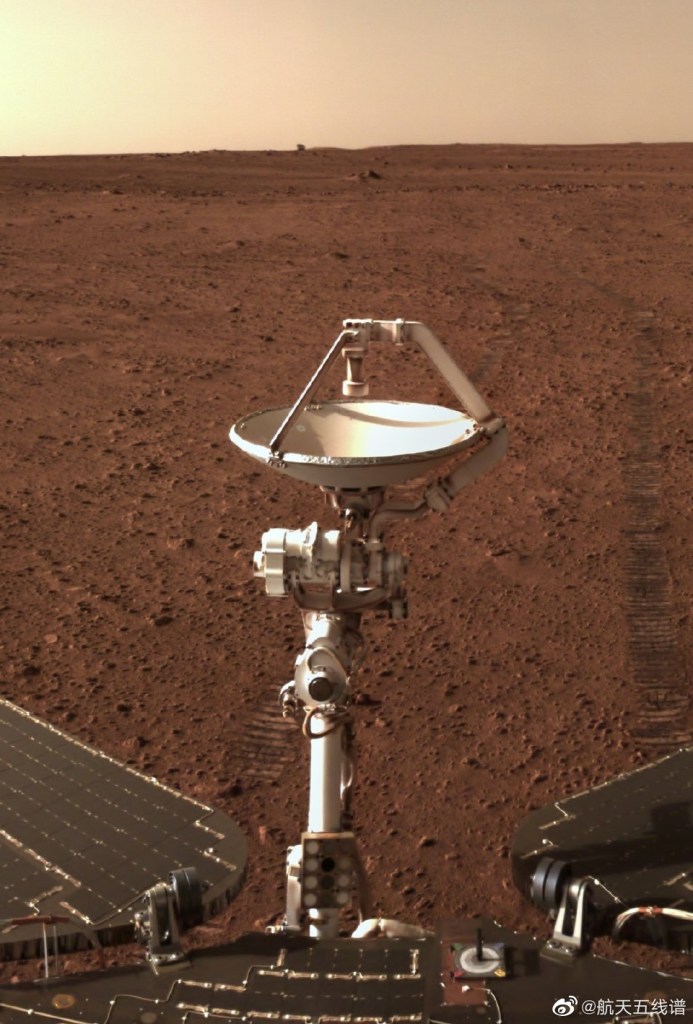
On the  8TH November 2021 Friday 天问一号飞運騎遊達达3亿CNSA – China National Space Administration – ESA – European Space agency Belt and road initiative mars mission…first Mars exploration mission, Tianwen- Martian Probe One …….祝融号Zhu Rong”  also have been exploration Roamingly1,253 meterson the Rustic half diameter planet size Red planet Mars… During that time Tianwen-1 orbiter enters remote sensing mission orbit…


November 8, 2021, “Heaven” successfully implemented around the fifth brake near the fire, into the exact orbit remote sensing mission, the Mars Global to carry out remote sensing. In the early stage, the “Zhurong” Mars rover has successfully completed the established inspection mission objectives, and is in good condition, and continues to carry out the detection mission. Considering the global remote sensing detection of the orbiter and the relay communication requirements of the Mars rover, the engineering development team optimized the orbit design and determined a remote sensing orbit plan with a near fire point of about 265 kilometers, a far fire point of about 10,700 kilometers, and a period of about 7.08 hours. While ensuring the development of orbiting scientific exploration, it will provide more relay communication support for the Mars rover to improve the efficiency of mission development.

n the remote sensing orbit, seven scientific payloads including mid-resolution cameras, high-resolution cameras, subsurface detection radars, mineral spectrum analyzers, magnetometers, ion and neutral particle analyzers, and energy particle analyzers will be acquired Scientific data such as fire star morphology and geological structure, surface material composition and soil type distribution, atmospheric ionosphere, Martian space environment, etc., focusing on typical landforms and geological units such as craters, volcanoes, canyons, and dry river beds, and implement high-resolution detection.

Up to now, the orbiter has been in orbit for 473 days, the ground fire distance is 384 million kilometers, and the light travel time is 21 minutes and 20 seconds; the rover has worked on the surface of Mars for 174 Mars days and travelled 1,253 meters in total. The two devices are in good condition. The working condition is normal. 

​2021年11月8日,“天问一号”环绕器成功实施第五次近火制动,准确进入遥感使命轨道,开展火星全球遥感探测。前期,“祝融号”火星车已圆满完成既定巡视探测任务目标,各项状态良好,继续开展探测任务。综合考虑环绕器全球遥感探测和火星车中继通信需求,工程研制团队优化了轨道设计,确定了近火点约265千米、远火点约1.07万千米、周期约7.08小时的遥感轨道方案,在保证开展环绕科学探测的同时,为火星车提供更多的中继通信支持,提升任务开展的效率…


在遥感轨道,环绕器中分辨率相机、高分辨率相机、次表层探测雷达、矿物光谱分析仪、磁强计、离子与中性粒子分析仪、能量粒子分析仪等7台科学载荷,将获取火星形貌与地质构造、表面物质成分与土壤类型分布、大气电离层、火星空间环境等科学数据,重点关注陨石坑、火山、峡谷、干涸河床等典型地貌和地质单元,实施高分辨率探测。

截至目前,环绕器在轨运行473天,地火距离3.84亿千米,光行时21分20秒;火星车在火星表面工作174个火星日,累计行驶1253米,两器状态良好,各系统工况正常。  


Images and visuals are from CNSA- China National Space Administration also from there respectives..

Author: Geng Yan Chen Gang

#CNSA #ChinaNationalSpaceAdministration #国家航天局 |#BeltAndRoadinitiative #酒泉衛星發射中心 #JiuquanSatelliteLaunchCenter  #November2021| #CMS #ChinaMannedSpace  the crew  #Shenzhou13 #Takionaut crew #CSS #ChinaSpaceStation #TianheCoreModule performing their first Crew #EVA #Spacewalk  #WangYaping #ZhaiZhigang #YeGuangfu ….

中国空间站 On 8th  November 2021 Hong Kong SAR – Beijing Time  morning, the Belt and Road Initiative CNSA –China National Space Administration  CSS China Space Station in which on a three to six months setting up a new home of the first three Shenzhou 13 in which spending up to on for the further construction and verifications of the systems of the CSS –China Space Station 2021 launch calendar in which currently the three Takionauts current Shenzhou 13 ……  Preparations for the six months of extension of the China Space Station  In which the currently it remains awaiting for the crew of setting up home in conducting fun scientifically onboard中国空间站.. the China Space station

According to the China Manned Space Engineering Office, at 1:16 on November 8th, Hong Kong SAR-  Beijing time, after about 6.5 hours of outing activities, 神舟十一号 The crew of the astronauts worked closely together to successfully complete all the scheduled missions for the exit activity. Takionaut Zhai Zhigang and Takionaut Wang Yaping returned to the 中国空间站 Tianhe core module safely , and the exit activity was a complete success.


This is the third Takionaut exit activity during the space station stage, the first exit activity of the Shenzhou 13 astronaut crew, and the first exit activity involving a female Takionaut in the history of Chinese spaceflight. During the astronaut’s outing activities, the space and the earth cooperated vigorously, inside and outside the cabin, and completed tasks such as the installation of the robotic arm suspension and the adapter, and the test of typical actions outside the cabin. The functional performance of the outer space suit has verified the astronauts’ ability to work with the robotic arm and the reliability and safety of the supporting equipment related to exiting the spacecraft

During the Takionaut’s outing activities, the space and the earth cooperated vigorously, inside and outside the cabin, and completed tasks such as the installation of the robotic arm suspension and the adapter, and the test of typical actions outside the cabin. The functional performance of the outer space suit has verified the astronauts’ ability to work with the robotic arm and the reliability and safety of the supporting equipment related to exiting the spacecraft.

Images and visuals are from Weibo also their respectives.