#CNSA #ChinaNationalSpaceAdministration #国家航天局 |#WenchangSpacecraftLaunchCenter #文昌航天發射場 #BRI #February2024 | #ChangZheng8 #LongMarch8 Yao 3 #CarrierRocket Shipped to Wenchang for the Lunar Mission #Change7  #Queqiao2 relay #TelecommunicationSatellite #Satellite ….  A Summary ..  

On the Sunset of 14th February  Hour Hong- Kong SAR – Beijing time CNSA –China National Space Administration   the combination of the Chang Zheng -Long March 8 Yao 3 carrier rocket has been shipped towards Wenchang Spacecraft Launch Center, Hainan Province, China, People’s Republic of China. in the during the National Holidays of celebrating the Year of the Dragon of the Chinese Lunar New Year, Spring Festival..

The working logistics of the Chang Zheng – Long March 8 Yao 3 was transported at an over speed in which making its way before schedule. The Chang Zheng -Long March 8 Yao 3 carrier rocket is executing a major national special project – the fourth phase of the lunar exploration project, the Chang’e-7 relay star mission. Can the relay star (Queqiao-2 satellite) go smoothly? The launch will directly affect the progress of the overall plan for the fourth phase of the lunar exploration project, which is of great significance and cannot be missed.

The loading work of the Chang Zheng -Long March 8 Yao 3 carrier rocket was completed at an This mission is the first time that the Chang Zheng -Long March 8 Yao 3 carrier uses the China Satellite Maritime Measurement and Control Department’s Yuanwang series transport measurement and control vessels and the first time to perform an Earth-moon transfer orbit mission. The launch window is tight. To ensure the successful completion of the mission, every minute and every second cannot be spared…

Chang Zheng -Long March 8 Yao 3 carrier rocket has been shipped and is about to arrive….According to the China Academy of Launch Vehicle Technology, the Long March-8 Yao-3 rocket that will be used to launch the Queqiao-2 relay star has been shipped today…..Which will be subsequently shipped to Wenchang Qinglan Port by sea.

On February 2nd 2024, the lunar exploration project phase 4 relay satellite (Queqiao-2 satellite) arrived at Hainan Meilan International Airport by air, and then passed the road Transport method to Wenchang Space Launch Site in China. Subsequent test preparations before launch will be carried out as planned. The relay satellite will establish a ground relay communication link to realize communication between the lunar surface detector and the ground station, and provide relay support for the four missions of Chang’e 4, Chang’e 6, Chang’e 7 and Chang’e 8. . At present, the launch site facilities are in good condition and all preparations are being carried out in an orderly manner as planned. The Queqiao-2 satellite is scheduled to be launched in the first half of this year…

Images and visuals are from their Respectives CMS China Manned SpaceCNSA-China National Space Administration  

#CNSA #ChinaNationalSpaceAdministration #国家航天局 |#BRI #February2024 |#西昌衛星發射中心 #XichangSatelliteLaunchCenter the advance iconic #ChangZheng2C #LongMarch2C launches  长二婷狠 #Geely #GeeSpace Eleven Constellation two #Satellites…..  #ASummary  

On the 3rd February  2024 in  CNSA _China National Space Administration -China – People’s Republic of China 0737 hours Hong Kong –Beijing Time China- People’s Republic of China launch the Chang Zheng – Long march 2C  Carrier Rocket launching from station form Xichang Satellite Launch Center Sichuan Province, China, People’s Republic of China. …..

The Chang Zheng -Long March 2C carrier rocket ignited and took off at the Xichang Satellite Launch Center, launching Geely in the way of “one Carrier rocket and eleven satellites” The Constellation 02 group of satellites was subsequently successfully put into the predetermined orbit, and the launch mission was a complete success. In this mission, the number of satellites launched by the Chang-II Pro rocket in a single time reached a new high.

Shitong Daoyu will complete the deployment of 72 satellites in the first phase of the constellation within 2 years to achieve global real-time data communication services; the second phase will be expanded to 168 satellites to achieve global centimeter-level high-precision positioning services; Provide high-reliability, low-cost application services for human future travel fields, such as autonomous driving, intelligent network connection, consumer electronics and other industries.

Geely’s Future Mobility Constellation Second Orbit 11 Satellite Departure Ceremony was held at the Taizhou Satellite Super Factory

On December 27, 2023, the launch ceremony for the second orbit satellite of Geely’s future mobility constellation was held at the Taizhou Satellite Super Factory of Space and Time Daoyu.

This group of satellites, a total of 11 satellites, will depart from Taizhou and will reach the Xichang Satellite Launch Center across 3,000 kilometers. They will be launched at an appropriate time in early 2024 to complete the deployment of the second orbital area network of the constellation.


The 11 satellites in the second orbit of Geely’s future travel constellation are all independently developed by Spacetime Daoyu and shipped from its Taizhou Satellite Super Factory. The factory draws on the world’s advanced satellite manufacturing production lines and satellite development concepts, and combines the automotive industry’s industrialization, standardization, and automated R&D and production experience to achieve disruptive innovation in satellite mass production AIT. Satellite manufacturing efficiency and system reliability have reached industry-leading levels , is the world’s first satellite mass production factory that deeply integrates aerospace manufacturing and automobile manufacturing capabilities.

Geely’s future travel constellation is built and operated by Shitong Daoyu. It is the world’s first commercial communication, navigation and remote sensing integrated constellation. The nine satellites in the first orbit of the constellation were successfully launched into orbit on June 2, 2022, and have been operating stably in orbit for more than a year. Spacetime Daoyu plans to launch the second-orbit satellite of the constellation in early 2024 and complete the network deployment of 72 satellites in the first phase of the constellation in 2025.

By building Geely’s future travel constellation and its own ground system, Spacetime Daoyu independently develops chip module terminal products to provide satellite application services to global users. By integrating communication, navigation, and remote sensing technologies, in the field of automotive regulations, it empowers autonomous driving and intelligent network connection; in the field of consumer electronics, it empowers mobile phones and IoT devices to directly connect to satellite communications; it provides multimodal transportation, smart oceans, and smart It provides satellite data products and services in the fields of agriculture, emergency disaster reduction, ecological environment monitoring and other fields, comprehensively serves the global “Belt and Road” international cooperation, and accelerates the commercialization, scale and global development of satellite applications.

This mission is the 508th flight of the Long March series of launch vehicles…

Images and visuals are from their Respectives CMS China Manned Space CNSA-China National Space Administration

#CNSA #ChinaNationalSpaceAdministration #国家航天局 |#BRI #December2023 | #Geely #GeelyGlobal #GeeSpace – Geely’s Future Mobility Constellation Second Orbit 11 Satellite Departure Ceremony was held at the Taizhou Satellite Super Factory towards |#西昌衛星發射中心 #XichangSatelliteLaunchCenter …

Geely’s Future Mobility Constellation Second Orbit 11 Satellite Departure Ceremony was held at the Taizhou Satellite Super Factory

On December 27, 2023, the launch ceremony for the second orbit satellite of Geely’s future mobility constellation was held at the Taizhou Satellite Super Factory of Space and Time Daoyu.

This group of satellites, a total of 11 satellites, will depart from Taizhou and will reach the Xichang Satellite Launch Center across 3,000 kilometers. They will be launched at an appropriate time in early 2024 to complete the deployment of the second orbital area network of the constellation.
 

The 11 satellites in the second orbit of Geely’s future travel constellation are all independently developed by Spacetime Daoyu and shipped from its Taizhou Satellite Super Factory. The factory draws on the world’s advanced satellite manufacturing production lines and satellite development concepts, and combines the automotive industry’s industrialization, standardization, and automated R&D and production experience to achieve disruptive innovation in satellite mass production AIT. Satellite manufacturing efficiency and system reliability have reached industry-leading levels , is the world’s first satellite mass production factory that deeply integrates aerospace manufacturing and automobile manufacturing capabilities.

Geely’s future travel constellation is built and operated by Shitong Daoyu. It is the world’s first commercial communication, navigation and remote sensing integrated constellation. The nine satellites in the first orbit of the constellation were successfully launched into orbit on June 2, 2022, and have been operating stably in orbit for more than a year. Spacetime Daoyu plans to launch the second-orbit satellite of the constellation in early 2024 and complete the network deployment of 72 satellites in the first phase of the constellation in 2025.

By building Geely’s future travel constellation and its own ground system, Spacetime Daoyu independently develops chip module terminal products to provide satellite application services to global users. By integrating communication, navigation, and remote sensing technologies, in the field of automotive regulations, it empowers autonomous driving and intelligent network connection; in the field of consumer electronics, it empowers mobile phones and IoT devices to directly connect to satellite communications; it provides multimodal transportation, smart oceans, and smart It provides satellite data products and services in the fields of agriculture, emergency disaster reduction, ecological environment monitoring and other fields, comprehensively serves the global “Belt and Road” international cooperation, and accelerates the commercialization, scale and global development of satellite applications.

Imagines and visuals are from their respectives.

#CNSA #ChinaNationalSpaceAdministration #国家航天局 |#BRI #November2023 |#西昌衛星發射中心 #XichangSatelliteLaunchCenter the advance iconic #ChangZheng3B #LongMarch3B  launches advance #ChinaSat6E #TelecommunicationSatellite 8K ultra-high-definition #Satellite ….

On the 9th November 2023 in  CNSA _China National Space Administration -China – People’s Republic of China 0403  hours Hong Kong –Beijing Time China- People’s Republic of China launch the Chang Zheng – Long march 3B  Carrier Rocket launching from station form Xichang Satellite Launch Center Sichuan Province….. in which中国 successfully launched the ChinaSat 6E satellite# At 19:23 on November 9, the Long March 3B carrier rocket lifted the ChinaSat 6E satellite into space at the Xichang Satellite Launch Center, and then sent the satellite into the predetermined orbit. The launch mission was achieved A complete success.


The ChinaSat 6E satellite was developed by the Fifth Academy of China Aerospace Science and Technology Corporation. It adopts the Dongfanghong 4 enhanced satellite platform independently developed by my country. The satellite is equipped with C, Ku and other multi-band broadcast communication payloads, and is the first to use the domestic No. Fourth generation digital transparency processing technology. This satellite is my country’s new generation of dedicated transmission satellite for radio and television. It will succeed the ChinaSat 6B satellite business and undertake the mission of radio and television broadcasting. At the same time, the satellite will realize the on-orbit demonstration application of my country’s fourth-generation digital transparent processing technology and Ku high-throughput payload for the first time.


The Long March 3B carrier rocket is developed by the First Academy of China Aerospace Science and Technology Corporation. This rocket is the first application of the special development and implementation of the “double improvement” of the Changsanjia series model’s carrying capacity and reliability, which is a milestone in the development of the model. The geostationary transfer orbit rocket carrying capacity of this rocket reaches 5.55 tons. The whole rocket has a total of 74 improvements, including 52 first-flight improvement projects. This mission is developed and organized and managed based on the first-flight model.


After completing the on-orbit test, the ChinaSat 6E satellite will be handed over to China Satcom, a subsidiary of China Aerospace Science and Technology Corporation, for operation and management. It is planned to be located at 115.5 degrees east longitude. Its radio and television resources mainly cover China, Southeast Asia, Australia and other regions, and its communication resources mainly cover China’s land and territorial waters, Central Asia and South Asia. It will provide important support for the construction of the “Belt and Road”, new infrastructure construction and the construction of Digital China.
This launch is the 496th launch of the Long March series of launch vehicles.

As a “new star” for broadcasting, Vimicro’s 6E satellite can not only provide services for my country’s central and local 95 channels of satellite TV and 213 channels of digital audio broadcasting, but also expand satellite functions with a number of “new” capabilities, adding 8K ultra-high-definition High-definition business, user viewing range and user viewing quality will be greatly improved, helping my country’s radio and television broadcasting industry to flourish.


According to the designer of the ChinaSat 6E satellite from the Fifth Academy, in order to meet users’ high requirements for satellite coverage performance indicators, the development team adopted a variety of methods to reduce surface errors and improve antenna radiation characteristics; it also adopted power synthesis technology to meet the requirements for 8K ultra-high definition. Video transmission business requirements. At the same time, the development team configured four high-frequency bandwidth channels for the satellite, which increased the load power and significantly improved the data transmission rate. In addition, the current C-band continuous wave maximum output power traveling wave tube amplifier is used, which increases the power of the ChinaSat 6B satellite by 31%. For radio and television broadcasting projects, we will continue to improve the robustness of the platform by improving satellite transfer orbit autonomy and fault recovery capabilities, and selecting the best key products

[ Chang Zheng- Long March 3B carrier Rocket, carrying capacity digs 50kg geostationary transfer orbit carrying capacity increased from 5.5 tons to 5.55 tons] On November 9, the Long March 3B carrier rocket lifted the ChinaSat 6E satellite into space, and the mission was a complete success. The “upgraded version” of the Changsha 3A series rocket successfully made its first flight, achieving the goal of “double improvement”. The Long March 3B geostationary transfer orbit carrying capacity has been increased from 5.5 tons to 5.55 tons; there are 74 technical improvement projects, including 52 first flight improvement projects; the improvements involve all rocket systems.


According to Zhang Tao, deputy chief designer of the Changsanjia series rockets, the rocket has also helped improve the rocket’s carrying capacity by 50% by overall optimizing the flight trajectory plan, canceling the terminal velocity correction, optimizing the pre-cooling flow of the three-stage rocket engine, and canceling the booster cylinder in the engine. Kilogram.

Images and visuals are from their Respectives CMS China Manned SpaceCNSA-China National Space Administration

#MadeInChina #中國製造 #中國 | #星河动力空间科技有限公司#GalacticEnergy #September2023|#CarrierRocketShopping #ShandongOrientalSpacePort #谷神星一号遥 #Ceres1S Yao 1 #TheLittleMermaid Chinese private commercial rocket company’s first sea launch in which deploying an #Apocalypse #satellite cluster!

星河动力空间科技有限公司 Galactic Energy-  Galaxy Power (Beijing) Space Technology Co., Ltd. Located in Block D, Aviation Technology Plaza, E-Town, and Beijing – Beijing – China – People’s Republic of China ….Galaxy Aerospace is the first private aerospace company in China to achieve successful continuous launches, the first to send commercial networked satellites into a 500km sun-synchronous orbit, and the first to master the ability to launch multiple satellites with one carrier rocket.

Chinese private commercial rocket company’s first sea launch! 谷神星一号海远一 carrier rocket plans to implement a sea launch at the Eastern Aerospace Port at around 17:30 on September 5th 2023!

The Galaxy Power Ceres-1 rocket is scheduled to carry the 21st to 24th satellites  of the Apokolips constellation (including the 21st to 24th satellite with one Carrier rocket) in Haiyang, Shandong (Yantai) at around 17:30 on September 5 (evening). Four satellites, including the 21st satellite named “Hefei Gaoxin No. 1” and the 22nd satellite named “China Minquan Shuangyong”, will carry out sea launch missions.

It is expected that at about 17:40 on September 5, 2023, the “Ceres-1” sea-launched Yao 1 carrier rocket carrying “Hefei High-tech-1” and other satellites will be launched from the offshore Shandong Oriental Space Port to execute the “Ceres-1” mission. No. 1 rocket’s first sea launch.

launch of Ceres-1 (Haiyaoyi) launched 16 more technological innovations based on the previous 8 rockets successfully launched from land, and achieved 4 Six major breakthroughs: “World’s first” and two “domestic firsts”:
🔷The first domestic private rocket launch at sea
🔷The first domestic commercial aerospace launch into an 800km inclined orbit
🔷The world’s first launch from a land-sea universal mobile platform without
support 🔷The world’s first solid rocket unguided at sea Thermal launch
🔷The world’s first rocket adopts a maritime vertical self-alignment and online misalignment angle correction high-precision navigation solution
🔷The world’s first solid rocket adopts a non-pyrotechnic locking release mechanism.

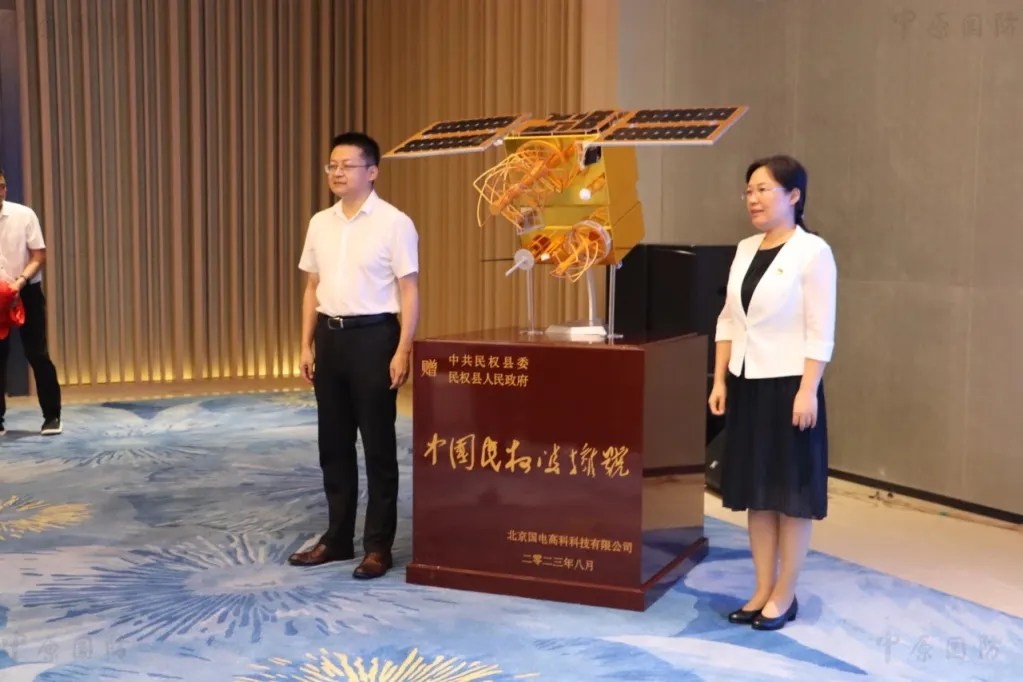
This time Ceres 1 (Haiyao 1) entered an 800km inclined orbit, which is the farthest record set by a domestic private rocket. The 21st to 24th stars of the Apokolips constellation successfully carried it into orbit. Apocalypse Constellation 21 to 24 satellites are low-orbit data acquisition satellites developed by Beijing Guodian Hi-Tech Co., Ltd. and are part of the Apocalypse Constellation. The Apocalypse constellation is designed to be networked with 38 satellites, which can provide global data collection services and effectively solve the problem of IoT network access at sea, in the air and in remote areas that are not covered by ground networks. The ground segment of the system includes satellite management center, service operation center, earth station, gateway station, ground network,

 “Hefei High-tech No. 1” is the first special launch satellite in the second phase of construction among the 38 satellites planned by the Apocalypse Constellation. It is also the first satellite launched by Beijing Guodian High-tech Co., Ltd. after the industrial landing in Hefei High-tech Zone.

This mission is codenamed “The Little Mermaid”. “Ceres No. 1” will become China’s first sea-launched private commercial carrier rocket, and it will also become China’s third sea-launched carrier rocket. Prior to this, “Long March 11” and “Jielong 3” had achieved consecutive successes, verifying the feasibility, stability, and reliability of sea launches.

After “Ceres 1”, various types of rockets will be launched from the sea at the Oriental Spaceport. In December 2023, Eastern Space Company’s “Gravity 1” all-solid rocket will make its first flight here; in the first half of 2024, Rocket Company’s “Darwin 2” liquid rocket will also be launched here. In addition, sea-launched rockets such as China Aerospace Corporation’s “Lijian-1” will also be launched at the Oriental Space Port.

Compared with land-based launches, sea-based launches have two major advantages: the launch platform can be maneuvered and deployed and the launch range is wide. Specifically, on the one hand, sea launch can maneuver the launch platform to low latitudes close to the equator, which can maximize the use of the earth’s rotation speed and enhance rocket capacity; on the other hand, sea launch has a wider area Since the wreckage landing area is planned on the sea, it can avoid densely populated areas such as cities, which is convenient and safe.

The sea launch will be an important step for “Ceres-1” and its development company Xinghe Power Aerospace. It will expand the launch site resources for its rapid response and high-density launch delivery, and also provide convenience for various types of launches. At the same time, the sea launch of “Ceres No. 1” will also be an important step for China’s civil and commercial aerospace. The mission was a complete success!

Images and visuals are from their respectives also Galactic Energy is located in Block D, Aviation Technology Plaza, E-Town, Beijing- China – People’s Republic of China