中国空间站On 9th September, 2021, at Hong Kong SAR – Beijing Time morning, the Belt and Road InitiativeCNSA –China National Space Administration CSS China Space Station in which on a three month setting up a new home of the first three Shenzhou 12 crew Takionauts –Chinese Astronauts Nie Haisheng – Liu Boming – Tang Hongbo … in which on that Thursday Official release! The Stunning photography works taken by the Shenzhou 12 Takionauts in orbit are shocking in incredible stunning photography detail through the China – The China Manned Space Engineering Office officially released the Shenzhou 12 manned mission 3 Takionauts in orbit photography shot 从空间看地球 high-definition pictures . Today, let the “Shenzhen photographers” of the Shenzhou 12 astronaut crew take you to appreciate the shocking beauty of the earth from the first perspective of the Takionauts!
CMS China Manned Space the Manned Space department has Official release from China Manned Space Office! Space Photographer Like the red lake water of PS color, the last tear from the Atlantic Ocean, the “curve” that has been seen after nine years….. The second batch 宇宙员给地球拍写真Takionauts Liu Boming and Tang Hongbo will show you the wonderful rivers and mountains of this world. …..
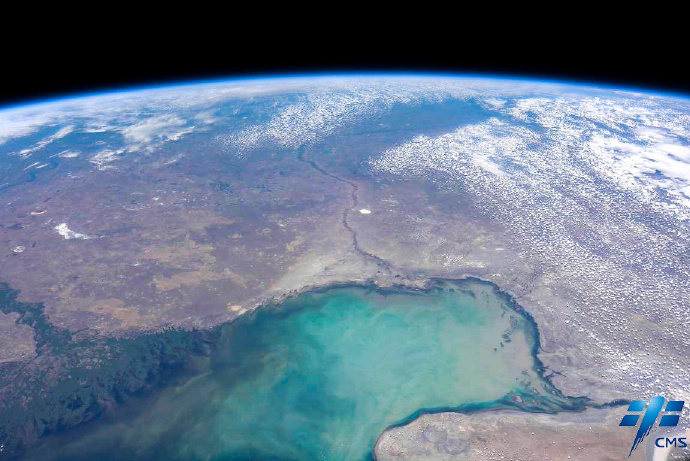
The China Manned Space Engineering Office officially released the second batch of high-definition pictures taken by the Shenzhou 12 astronauts in orbit. Among them, Figures 1-4 and 6 are taken by Shenzhou 12 Takionauts Liu Boming, and Figures 7-8 are taken by Tang Hongbo: Figure 1: The second largest saltwater lake in the world, Urumiya Lake, Iran Figure 2: Northern Xinjiang (Junggar Basin + Sailimu Lake + Tianshan) Mountains) Figure 3: Lake Balkhash and northern Xinjiang Figure 4: Lake Van in Armenia Figure 5/6: Caspian Sea (photographed by Shenjiu astronauts in Figure 5) Figure 7: South Africa Figure 8: Peruvian Plateau and Peru’s fishing grounds
Images and visuals are from Weibo also their respectives.
On the 9th September2021 in Monday CNSA _China National Space Administration -China – People’s Republic of China At 1950 hours Hong Kong –Beijing Time on an. China successfully launched Satellites using the Long March 3B Chang Zheng 3B carrier rocket at the Xichang Satellite Launch Center Sichuan Province…… successfully launched the satellite with the Long March 3B carrier rocket at 西昌 Satellite Launch Center The satellite entered the scheduled orbit smoothly, and the launch mission was a complete success. This mission is the 388rd flight of the Long March series of carrier rockets…..
Successfully launching 19:50 on September 9, 2021, Hong Kong SAR- Beijing time successfully launched the Zhongxing 9B satellite into the air with the Long March Chang Zheng 3B-to-two Yao86 carrier rocket at the Xichang Satellite Launch Center. The satellite successfully entered the scheduled orbit. Subsequently, the satellite solar wing unfolded smoothly, and the launch mission was a complete success. This marks the official “entry into the compilation” of another direct broadcast satellite in my country, and the follow-up will work with the satellites in orbit represented by the China Star 6A satellite to escort the broadcast and television security work. This mission is the 388th flight of the Long March series of carrier rockets.
The 4K and 8K HD transmissions of Zhongxing 9B help the live broadcast of the Beijing Winter Olympics] The Zhongxing 9B satellite is a geosynchronous orbit broadcast and TV broadcast satellite developed by the Fifth Academy of China Aerospace Science and Technology Corporation, and is enhanced by the Dongfanghong 4 independently developed by my country. Type satellite public platform (DFH-4E platform). As a new-generation satellite public platform, the DFH-4E platform has the advantages of high load capacity, high power, long life, and high reliability, which can meet the needs of various future communication satellite applications and has a broad satellite application market.
Zhongxing 9B is a high-quality satellite that meets the requirements of my country’s live TV transmission and ensures the safe broadcast of broadcast and TV live broadcast services. Compared with the China Star 9A satellite, the China Star 9B satellite has a larger coverage area and a stronger coverage area. It can provide more high-quality broadcast and TV live broadcast services for the vast number of direct broadcast satellite users in China’s territory and territorial waters. The satellite has 3 downlink beams, namely the national beam, the sea area beam and the southwest beam. The sea area beams fully cover my country’s four major territorial waters, and the southwest beam is a new beam, which can further enhance the satellite’s coverage of the southwest region.
The successful launch and in-orbit operation of China Star 9B satellite will significantly improve the transmission performance of direct broadcast satellites. The Zhongxing 9B satellite based on the DFH-4E platform has specially designed a special transponder, the downlink signal strength has been significantly enhanced, and the 54MHz broadband channel has been added, which can realize 4K and 8K ultra-high-definition TV program broadcasting. The ability to provide high-quality live broadcast transmission services for large-scale events or sports events.
In this mission, the solar wing quickly unfolded after the satellites and arrows were separated, which further improved the energy security of the satellite after launch.
China Satellite Communications, a subsidiary of China Aerospace Science and Technology Group, is responsible for the in-orbit operation and management of the China Satellite 9B satellite. After the satellite is delivered in orbit, China Satellite Communications operates and manages 15 civilian commercial communications and broadcast satellites in orbit, covering the entire territory of China, Australia, Southeast Asia, South Asia, the Middle East, Europe, Africa and other regions
Images and visual are from Weibo and their Respectives..
As of this year of 2021, TheCNSA –China National Space Administration, the international iconic Chang Zheng – Long March Carrier Rocket series rockets are expected to complete the 400th launch this year 2021 launch calendar . Deng Hongbing, deputy general manager of the Aerospace Science and Technology Group, revealed in Beijing on August 31st Tuesday 2021 that since the successful launch of the Long March 1 carrier rocket, the Long March series rockets have completed 386 launches and are expected to complete their first launch this year.
400 launches before the end of the year, the Aerospace Science and Technology Group’s aerospace launch missions are still very heavy, especially in the area of manned spaceflight. The space station construction continues to advance, and there are two important launch missions of Tianzhou-3 and Shenzhou-13. Up to now, the group has completed 29 aerospace launch missions this year, all of which have been successful. It took 37 years, more than 7 years, and more than 4 years for the Long March rocket to achieve the first three 100 launches. The fourth 100th launch is expected to take more than 2 years to complete. The Long March Rockets will reach a new level with a faster speed. In addition, the new generation of manned launch vehicles, heavy launch vehicles and other 10-type launch vehicle models, high-scoring and remote sensing satellites, and China’s first solar exploration satellite planned to be launched this year will also be unveiled at the air show
Images and visuals are from CNSA- China National Space Administration also from there respectives…!
As of 6th September 2021, The CNSA –China National Space AdministrationCLEP- China Lunar Exploration Program Belt and Road Initiative Lunar Mission……Chang’e-4 with Yutu two the Lunar rover still working exploring more than 799 meters on the other side of the moon on the 103 Kilometers Diameter Von Karman Crater in which is least than two length by length fifty five Kilometers Hong Kong –Macau- Zhuhai Bridges …. Working Exploring the Crater on the other side of the Moon Chang’e Luna….
Having exploring more than 799 meters taking lunar photography with the ultimate Lunar Selfies in which gathering then Yutu two Lunar Rover team China Lunar and Deep Space Exploration Engineering Ground Application System also : Lunar and Planetary Data Publishing System… After processing the eighteenth batch of scientific data just released by Chang’e-4, a part of it was selected to synthesize several large pictures to continue to show the desolation of the moon. The first three shots were taken in full color mode, and the fourth shot was a high-definition photo in color mode.
Processing the eighteenth batch of scientific data of Chang’e 4 was released, and the mileage of Yutu 2 reached 799 meters On September 3, 2021, the ground application system of the lunar exploration project publicly released the 18th batch of scientific data of Chang’e 4. As of the end of August 2021, the Chang’e 4 lander and the Yutu 2 lunar rover have completed the 33rd month of scientific exploration, and the lunar rover has accumulated a mileage of 799 meters. The data released this time is provided by the ground application system, including the scientific data obtained by the four scientific payloads on the Chang’e 4 lander and the patrol vehicle (Yutu 2 lunar rover) during the second December day. There are a total of 603 data files, with a total data volume of 2.82GB……
Images and visuals are from CNSA- China National Space Administration also from there respectives…!