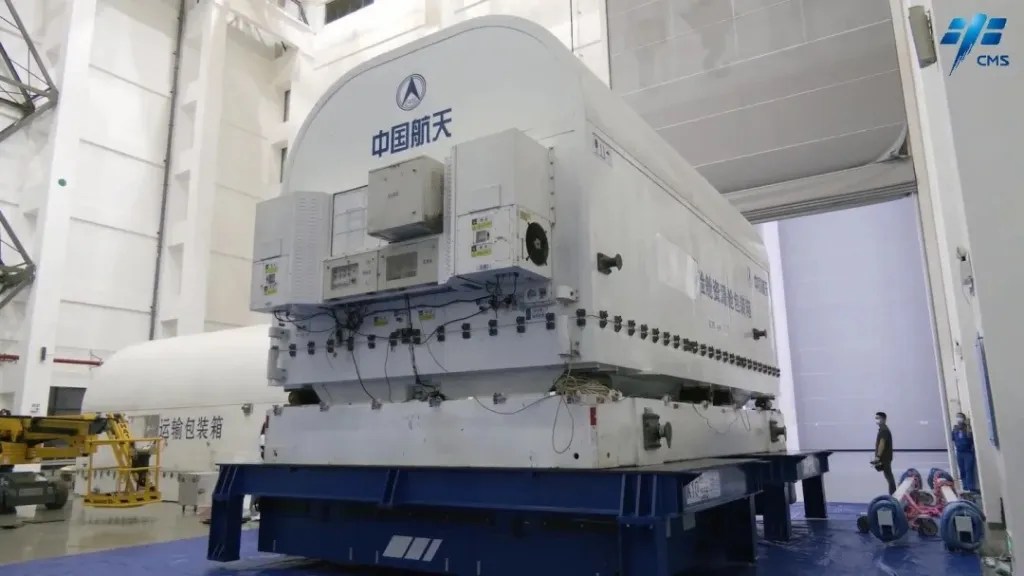
#CNSA #ChinaNationalSpaceAdministration #国家航天局 |#BeltAndRoadinitiative #August2022 | #WenchangSpacecraftLaunchCenter #文昌航天發射場 | #ChinaSpaceStation #实验舱 #文天 #Wentian The very cute five meter smart #RoboticArm preparing for a #EVA #Spacewalk soon..

On Hainan Province –China –People’s Republic of China…. in the district area of the Wenchang – Wenchang Spacecraft launch center in which the awesome team at one of many CNSA –China National Space Administration  that China National Space Administration…………… On 24th July 2022

After Wentian experimental module entered orbit, the status setting was successfully completed. At 3:13 on July 25, 2022, Beijing time, it was successfully connected to the forward port of 天和 Tianhe Core Module. The entire rendezvous and docking process lasted about 13 hours. . This is the first time that two 20-ton spacecraft in my country- China- People’s Republic of China have achieved rendezvous and docking in orbit. …According to the mission plan, the Shenzhou 14 Takionaut crew will then enter the Wentian experimental module….. In which finally docked in early morning time of the 25th July 2022 in with CNSA –Beijing Aerospace City in which co-ordinated the docking maneuverers have achieved rendezvous and docking in orbit.…   in which the crew of the Shenzhou 14 staying for six months in construction of the stage one of the China Space station with the additional Mengtian experimental module in which will be delivered on the October 2022 Launch Schedule calendar..

The Wentian six meter small robotic arm has been “online” on the 8th August 2022 in which The small robotic arm installed outside the Wentian experimental cabin module shoulders the heavy responsibility of independently completing the installation and replacement of extravehicular loads and other care operations. Recently, the small robotic arm successfully completed the on-orbit test with the support of the ground personnel. Let us look forward to its wonderful performance in the future!

Wentian experimental cabin small manipulator arm completed on-orbit test – Wentian experimental cabin small manipulator arm is more sophisticated, adopts a 7-DOF symmetrical configuration, and has an end effector at each end; its arm is nearly five meters long and can be effectively operated The space is about 5 meters, and the maximum load is 3 tons; it can be used alone or form a combined robotic arm with a large robotic arm; it supports astronauts’ out-of-vehicle activities, extravehicular status inspection, extravehicular cargo transfer and installation, extravehicular maintenance and repair, and load 6 application tasks including care and maintenance of optical facilities.

Yesterday on the 10th August 2022 practically On-orbit test of Chinese space station extravehicular arm recently, the Chinese space station extravehicular manipulator has carried out on-orbit test. At present, the space station assembly is in stable condition, and the Takionauts are in good physical and mental state, and they are preparing for the follow-up mission Space Walk EVA- Extravehicular Activities.

Images and Visuals are from their Respectives…

#CNSA #ChinaNationalSpaceAdministration #国家航天局 |#BeltAndRoadinitiative #July2022 | #WenchangSpacecraftLaunchCenter #文昌航天發射場 | #ChinaSpaceStation #ChangZheng5B #Longmarch5B# Carrier Rocket #实验舱 #文天 #Wentian #ExperimentalCabinModule Successfully launches towards #ChinaSpaceStation …..

On Hainan Province –China –People’s Republic of China…. in the district area of the Wenchang – Wenchang Spacecraft launch center in which the awesome team at one of many CNSA –China National Space Administration  that China National Space Administration…………… On 23rd July  2022 The Chang Zheng- Long March 5B Yao three carrier rocket successfully launch from the  Wenchang Space Launch Site complex  According to the China Manned Space Engineering Office, the Long March 5B Yao 3 carrier rocket that carried out the launch mission of the Wentian experimental module has completed all the research and development finalisation certification at the Factory also Wenchang Spacecraft Center…….   

At 14:22 hour clear afternoon Hong Kong SAR – Beijing time  on July 24th 2022, the Chang Zheng- Long March 5B Yaosan carrier rocket carrying the Wentian experimental module was ignited on time at China’s Wenchang Space Launch Site emission. …….About 495 seconds later, the文天Experimental Cabin – The Wentian Experimental Cabin and the rocket successfully separated and entered the predetermined orbit, and the launch was a complete success!

The axial length of the Wentian experimental cabin is 17.9 meters, and the maximum diameter of the cabin is 4.2 meters. After the solar wing was launched into orbit, the first deployment was about 6.5 meters, and the second deployment was about 23 meters in length. The Wentian experimental module is the largest single module in my country’s space station, with a launch mass of about 23 tons and a dry weight of 21.5 tons and a propellant of 1.5 tons.
The Wentian experimental module uses a rapid rendezvous and docking method to dock the space station assembly the Tiangong –China Space Station  of the small robotic arm (about 5 meters) of the Wentian experimental cabin…

From June 2022 The Expected Countdown towards the Launch of the Chang Zheng- Long March 5 Yao 3 Carrier Rocket in which is 28 Days in between late July 2022  until the Launch towards the China Space Station for the Wentian Experimental module in connecting Strengthen the mission and have the courage to innovate and make breakthroughs! Carefully prepare, organize, and implement carefully to ensure the complete success of the launch mission, and take practical actions to welcome the Party’s 20th National Congress of Victory….

Launch wise of the Chang Zheng –Long March 5 Yao 3 Carrier Rocket .

Location: China Wenchang Space Launch Site 101 Launch Station (WSLS LC101)
Mission Rocket: Long March 5 Yiyao-3 Rocket (CZ-5B Y3)
Mission Load: Space Station “Wentian” Experimental Module (WT)
Launch Window: 2022 estimated launch time in late July,
2022: Afternoon of July 24, 2022 ( be determined at 1422 hours Hong Kong SAR- Beijing time )

Previously As of May 2022 both The experimental cabin is progressing smoothly, waiting for the launch The Wentian experimental cabin to be launched in July is ready for finally and the Mengtian experimental cabin is also making corresponding preparations.


After the construction of the China Space Station is completed, the two experimental cabins will be the main working places for Takionauts in orbit. In both experimental cabins, space science experiments and technical experiments in the sealed cabin and outside the sealed cabin can be carried out. Both cabins are equipped with The load test cabinet inside the cabin and the load installation platform outside the cabin also provide support and guarantee measures such as information, power supply and heat dissipation, and can carry out experiments in various fields such as space science, space materials, space medicine and space exploration.

  The Wentian experimental module is equipped with the same Taikonauts’ living facilities as the core module, including 3 sleeping areas, 1 sanitary area, kitchen and other facilities, which can guarantee the astronauts’ life. It can also work with the core module to support the life of 6 astronauts during the rotation of the two manned spacecraft; in addition, a small robotic arm is also configured, which can be used alone or in combination with the large robotic arm of the core module. , to jointly complete the tasks of Taikonauts leaving the cabin, caring for extravehicular facilities, and patrolling. In addition, the Wentian experimental cabin is also equipped with an astronaut exit airlock. After the space station is completed, the airlock of the Wentian experimental cabin will be As the main airlock cabin for Takionauts to leave the cabin, the node cabin of the core cabin is used for other functions at this time, just as a backup; the Wentian experimental cabin also has a backup section for the core cabin to manage and control the assembly. That is to say, when the function of the core module platform fails, it can be switched to the Wentian experimental module to exercise the combined control and management functions, which can improve the reliability of the space station as a whole.


  The Mengtian experimental cabin is equipped with a cargo airlock and an outboard deployment test platform. In the future, the scientific test equipment that needs to be installed outside the cabin can be transported to the space station through a cargo spacecraft, and then the load will be sent to the outside of the cabin through the cargo airlock, and the robotic arm or Takionauts will install it on the platform outside the cabin. Realize the continuous update of the extravehicular test project.

Images and visuals are from their respectives.

#CNSA #ChinaNationalSpaceAdministration #國家航天局 |#BeltAndRoadinitiative #July2022 | #火星 # 天問 #天问一号#TianwenOne #MarsMission #Tianwen1 probe  On the second anniversary of the launch of Tianwen-1, high-definition images of #Planet #Mars #MartianMoon #Phobos were sent back ….

天问一号飞運騎遊達达3亿CNSA – China National Space Administration – ESA – European Space agency Belt and road initiative mars mission…first Mars exploration mission, Tianwen- Martian Probe One on 23rd July 2022 On the second anniversary of the launch of Tianwen-1, high-definition images of Phobos were sent back

23 July 2022 Today is the second anniversary of the launch of the Tianwen-1 mission, and the orbiter returned Phobos images. Recently, the Tianwen-1 operation team seized the opportunity when the orbiter was relatively close to Phobos, used a high-resolution camera to image Phobos, and obtained a clear image of the “full moon” state.


Phobos (Forbes) is one of the two natural satellites of Mars, with a size of about 27 kilometers × 22 kilometers × 18 kilometers. It runs in a near circular orbit at an altitude of about 6,000 kilometers from the surface of Mars, and orbits Mars every day. about 3 turns. The orbiter runs on a polar elliptical orbit with an altitude of about 220 kilometers near the fire point and an altitude of about 10,800 kilometers at the far fire point with a period of about 7 hours. Due to the orbital relationship between Phobos and the orbiter, as well as the lighting requirements during imaging, the operation team made precise calculations and precise control, and obtained a clear image with a resolution of about 50 meters when the two were about 5,100 kilometers apart.

The image shows that Phobos is a small celestial body with irregular shape, in the shape of a potato. The stripes on the surface can be seen in the upper left of the picture, which may be formed by the impact of the impact process. There is an obvious impact crater in the upper right of the picture, with a diameter of about 2 kilometer, named Öpik crater (Upik was an Estonian astronomer, known for his research on asteroids and meteorites).

Another satellite of Mars is Deimos (Deimos), with an average radius of only about 6.2 kilometers. The two satellites are named after the two sons of Ares, the god of war in ancient Greek mythology. The Greeks used to call Mars by Ares. Both moons are small irregular objects that many scientists believe were captured by Mars’ gravity into Mars’ orbit, but their origins remain controversial.

 Image: National Astronomical Observatory​​​​…

Images and visuals are from CNSA- China National Space Administration also from there respectives- CLEP –China Lunar Exploration Project..

#CNSA #ChinaNationalSpaceAdministration #国家航天局 |#BeltAndRoadinitiative #June2022 | #WenchangSpacecraftLaunchCenter #文昌航天發射場 | #ChinaSpaceStation #ChangZheng5B Longmarch5B Carrier Rocket #Yuanwang rocket transport fleet returns to home port….

On Hainan Province –China –People’s Republic of China…. in the district area of the Wenchang – Wenchang Spacecraft launch center CNSA –China National Space Administration ….On 21st June 2022 Tuesday the  Chang Zheng – Long March Carrier Yuanwang rocket carrier fleet returns to home port……. Tianjin City in which that afternoon  , China’s first dedicated rocket carrier, Yuanwang 21 and 22, returned to China safely after completing the maritime transport mission of the Long March 5 B Yao 3 carrier rocket and containers The home port of the Satellite Maritime Monitoring and Control Department….

Since the voyage, the two rocket carriers have operated continuously for more than 40 days and have travelled about 10,000 nautical miles in total. It is reported that the Yuanwang rocket transport fleet will also perform several maritime transport missions this year……  

Images and visuals are from their respectives.

#CNSA #ChinaNationalSpaceAdministration #國家航天局 |#BeltAndRoadinitiative #May2022 | #火星 # 天問 #天问一号#TianwenOne #MarsMission #Tianwen1 probe  #祝融号 #ZhuRong #Tianwen1 #CCTV #HelloMars Episode 1 How should a spacecraft get to Mars? Demystifying every step of Tianwen-1’s departure to Mars Hello Mars…

“Hello! Mars Episode 1 How should a spacecraft get to Mars? Demystifying every step of Tianwen-1’s departure to Mars Hello Mars”

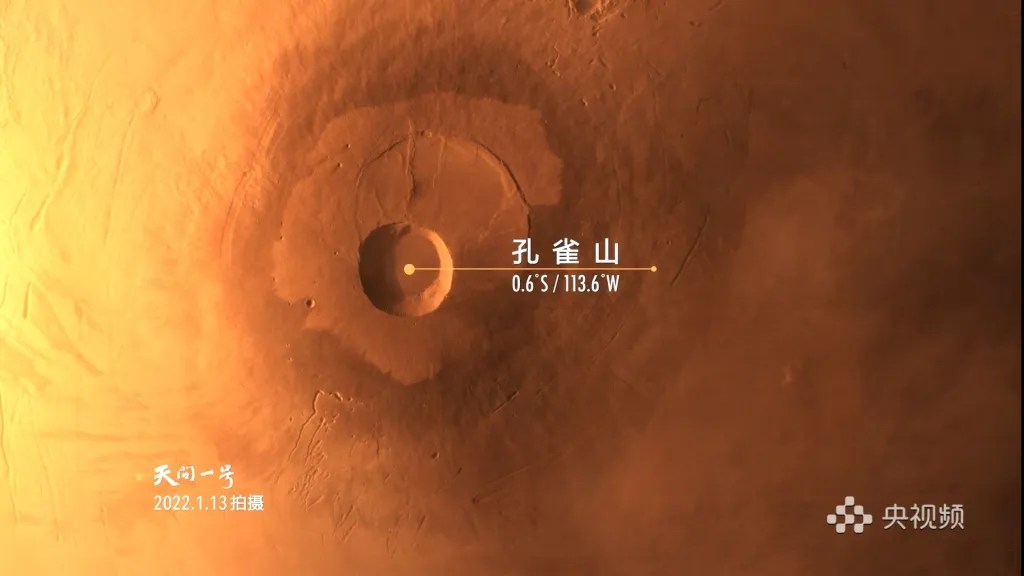
On the months week of  19th May 2022   天问一号飞運騎遊達达3亿CNSA – China National Space Administration – ESA – European Space agency Belt and road initiative mars mission…first Mars exploration mission, Tianwen- Martian Probe One  sent back stunning images of the Half Earth Mass size of the Rustic Planet Mars in which show stunning Martian landscape with its iconic polar caps of either southern or northern … With its timeless Stunning Mars Photography. Tianwen-1″ returned high-resolution images of the Mars inspection area The “Zhurong” rover is preparing for winter, and the orbiter continues to carry out orbital exploration….. in which one year ago it was it’s first landing on Utopia Planitia region on the planet Mars .. in celebrating a CCTV five part Episode was produced..

《你好!火星》Hello Mars Episode One The content of this issue: Among the stars, there is a unique red planet, which is the nearest neighbour of the earth – Mars. Mars will oppose the sun on October 14, 2020, and Mars is less than 63 million kilometers away from the earth. The opposition of Mars is not only the best moment to observe Mars, but also the moment when Mars is relatively close to the earth. In July 2020, the launch window for flying to Mars will come again, and China’s first Mars probe, Tianwen-1, is about to set off for a planetary exploration journey.

本期内容:在点点繁星中,有一颗泛着独特红色的星球,它就是地球的近邻——火星。2020年10月14日火星冲日,火星距离地球不到6300万公里。火星冲日,不仅仅是观测火星的最佳时刻,也是火星距离地球相对近的时刻。2020年7月,飞向火星的发射窗口再次来临,中国第一个火星探测器天问一号即将启程,开启行星探测之旅

Hello everyone, I would like to tell you some good news about the documentary “Hello!” about China’s first Mars exploration mission. “Mars” is finally on the air, friends who want to know more about Mars can stay in front of the TV tonight

“Hello! “Mars” is a large-scale scientific documentary jointly produced by the National Space Administration and China Central Radio and Television to commemorate the first anniversary of the Tianwen-1 Mars probe’s successful landing on Mars. It took three years to complete the filming and is divided into “Departure” and “Journey” “Surrounding”, “Landing” and “Patrol” have 5 episodes, each of which is 30 minutes long. They focus on the important stages of the Tianwen-1 mission, and describe a large number of astronomy, astrophysics, space applications, aerospace engineering and other disciplines in a simple way. Knowledge, in-depth analysis of Chinese wisdom and Chinese solutions in Mars exploration. Since May 2020, the co-production team has continued to track the key nodes of the Tianwen-1 mission, filmed many wonderful moments, and obtained a large number of first-hand precious materials. Many of the contents of the documentary were made public for the first time and were released authoritatively.


Broadcasting plan CCTV-1 CCTV integrated channel every night at 22:36, five days of continuous broadcast from May 18th to 22nd; CCTV-10 CCTV science and education channel every night at 20:10, from May 19th to 23rd five days of continuous broadcast

大家好,告诉大家一个好消息,讲述中国首次火星探测任务的纪录片《你好!火星》终于要开播啦,想更多了解火星的朋友们今晚可以守在电视机前哟《你好!火星》是为纪念天问一号火星探测器成功着陆火星一周年,由国家航天局和中央广播电视总台联合出品的大型科学纪录片,共历时3年摄制完成,分为《出发》《征途》《环绕》《着陆》《巡视》5集,每集30分钟,分别聚焦天问一号任务的重要阶段,以深入浅出的形式讲述了大量天文学、天体物理学、空间应用学、航天工程学等学科知识,深度解析了火星探索中的中国智慧、中国方案。联合摄制团队自2020年5月起,持续跟踪天问一号任务关键节点,拍摄众多精彩瞬间,获得大量一手珍贵素材,纪录片中很多内容是首次公开,并权威发布。


播出计划CCTV-1央视综合频道 每晚22:36,5月18日至22日五天连播;CCTV-10央视科教频道 每晚20:10,5月️19日至23日五天连播

Images and visuals are from CNSA- China National Space Administration also from there respectives- CLEP –China Lunar Exploration Project..