#MadeInChina #中國製造| #西北工业大学 #NorthWesternUniversityOfTechnology #December2022 | Students planned to Launched School made #Microsatellites #NanoSatelllites during the Year2023 on an  International #CASC #ChinaAerospaceScienceAndTechnologyCorporation  #Jielong3 SmartDragon3  #CarrierRocket …..

西北工业大学 North Western University of Technology located in Shanxi is located in Xi’an, Shaanxi Province- China- People’s Republic of China . It is a multidisciplinary, research-oriented and open university characterized by the development of personnel training and scientific research in the fields of aviation, aerospace, navigation (three aviation), etc. “University” construction university (category A), affiliated to the Ministry of Industry and Information Technology, in which operated as a High School/ Domestic High School also..

During the Chinese China Private Carrier Launch Calendar of CASC China Aerospace Science and Technology Corporation using the LieLong-  Smart Dragon 3 Carrier Rocket to launch a series of Micro-Nano – Satellites ..

‘Xingmu 01 (XM-1, “Taigao Zhiyuan” micro-nano satellite is planned to be launched into orbit by Jielong-3 in the first half of 2023] Recently, Professor of Software College of Northwestern Polytechnical University, Taicang Yangtze River Delta Research Institute Data Science He Liang, dean of the Institute of Intelligent Systems, and student representatives from Taicang Senior High School, named the “Taigao Zhiyuan” micro-nano satellite at the Suzhou Aerospace Industry Innovation Cluster Promotion Conference.


The “Taigao Zhiyuan” satellite named this time is a micro-nano satellite, and the Star Curtain 01 (XM-1, “Taigao Zhiyuan”) satellite is the Northwestern Polytechnical University Taicang Yangtze River Delta Research Institute, relying on Professor He Liang from the School of Software A micro-nano new technology verification satellite developed by the team is mainly used to verify hyperspectral remote sensing, new space-based data acquisition, and new electric propulsion technology. The star will be launched into orbit with the Jielong-3 carrier rocket in the first half of 2023. On this basis, the “Star Curtain Project” project construction will be completed by combining various resources. The “Star Curtain Project” is a comprehensive sensing micro-nano constellation composed of 42 micro-nano satellites. It mainly provides comprehensive multi-spectrum data sensing and analysis services.

Images and visuals are from their respectives

#CNSA #ChinaNationalSpaceAdministration #国家航天局 | #BRI #December2022|#太原卫星发射中心  #TaiyuanSatelliteLaunchCenter  –  International #CASC #ChinaAerospaceScienceAndTechnologyCorporation  #SmartDragon3 #CarrierRocket #Jielong3 #CarrierRocket Ecosystem look like ……..?

At 1435 Hours Hong Kong SAR- Beijing Time on An early morning of 9th December 2022 , China- People’s Republic of China- CNSA –China National Space Administration   CASC China Aerospace Science and Technology Corporation  Successfully launched  the New Next Generation ChinaRocket Co. LTD  Smart Dragon –  Jielong three Carrier Rocket  carrier rocket at the Taiyuan Satellite Launch Center Shanxi Province rocket successfully launched from a sea borne mobile launch platform…..  Launching 14 satellites in one payload launch..  from the Yellow Sea it was an off shore launch to forward test case of mobile launch platform on series of larger launch carrier rocket in the process of its developmentally stage also provides a best longitude/ latitude minimum distance to launch at optimum orbitally solution …

China Aerospace Science and Technology Corporation….What does the new rocket Jielong III look like?

杰龙三号运输火重成功  What does the new rocket “Jielong III- Smart Dragon” look like? Chinese launch vehicle family has added a new member! The Jielong-3 carrier rocket has a total length of 31.8 meters, a maximum diameter of 2.65 meters, a take-off mass of 140 tons, and a carrying capacity of 1.5 tons in a 500-kilometer sun-synchronous orbit. It supports land-based and sea-based rapid launches. The rocket has a diameter of 2.9 meters and a diameter of 3.35 meters. The mission is cost-effective and applicable. It has the launch capability of “one arrow with 20 satellites”. The launch can provide reliable, convenient and economical exclusive launch, fixed-orbit launch and loading services for domestic and foreign commercial satellite users for constellation networking, network replenishment, and payload verification.

The total length of the Jielong-3 rocket is about 31 meters, the largest diameter of the rocket body is 2.65 meters, the smallest diameter is 2 meters, and the total mass is about 140 tons. The rocket is a series layout of four-stage solid motors. Among them, the high-performance fiber-wound composite shell integral solid motor with the largest charge and the largest thrust developed by the Fourth Research Institute of Aerospace Science and Technology Group is adopted. The diameter of the engine is 2.65 meters. 71 tons, the thrust reaches 200 tons.
At the same time, the Jielong-3 rocket also has two configurations of fairings with a diameter of 3.35 meters and 2.9 meters, which can be adapted to various satellite rocket interfaces and meet various satellite installation requirements.

The rocket is arranged in series with four solid motors. Jin Xin, the commander-in-chief of the Jielong-3 rocket, introduced that the successful first flight of the Jielong-3 rocket has effectively promoted the serialization of my country’s solid launch vehicles. At present, the Jielong series of rockets have a carrying capacity of 200 kilograms to 1.5 tons in a 500-kilometer sun-synchronous orbit.


Jin Xin introduced: At present, we are planning a larger-scale Jielong-4 solid launch vehicle, with a carrying capacity of 2.5 tons in a 500-kilometer sun-synchronous orbit, and actively exploring the sea launch capability of liquid rockets. In the future, we will achieve a more complete “both cooling and heating” ‘Solid-liquid compatible’, ‘fixed + manoeuvrable’, ‘multiple launch at once’ sea launch capability.

Images and visuals are from their Respectives CMS China Manned SpaceCNSA-China National Space Administration

#CNSA #ChinaNationalSpaceAdministration #国家航天局 | #BeltAndRoadinitiative #January2022|#太原卫星发射中心  #TaiyuanSatelliteLaunchCenter  – Launching of the – Launching of the International Iconic #LongMarch2D  #ChangZheng2D  #CarrierRocket deploying the #Shiyan13 #ExperimentalSatellite  #Satellite …

At 10.35 Hours wintery Morning Hong Kong Beijing Time  on a very clear 17th January 2022 Sunday 2022, China- People’s Republic of China- CNSA –China National Space Administration   Successfully launched  the Long March 2D Chang Zheng 2D carrier rocket at the Taiyuan Satellite Launch Center Shanxi Province …… at the Taiyuan Satellite Launch Center,, the Chang Zheng 2D Long March 2D carrier rocket ignited and took off, and then sent the Shiyan13 test satellite No. 13 into the predetermined orbit for launch. The mission was a complete success. In the New Year, the first series of Launches of my country- China – People’s Republic of China space launch mission was successful.

The Shiyan13 Experiment No. 13 satellite was developed by the Institute of Microsatellite Innovation, Chinese Academy of Sciences, and is mainly used for space environment detection and related technology experiments. In response to the special requirements of the satellite interface, the Chang Zheng 2D Long March 2D carrier rocket uses a 2-meter-diameter satellite-carrier Rocket separation device for the first time.

During At 10:35 on January 17,
The Chang Zheng 2D Long March 2D carrier rocket for this mission was developed by the Eighth Academy of China Aerospace Science and Technology Corporation. Chang Zheng 2D Long March 2D carrier rocket is known as the “golden rocket” and has the characteristics of high reliability, high safety, low cost, and short-cycle launch.

The mission was in the middle of winter, and the lowest temperature in the launch site area exceeded minus 37 degrees Celsius. The Chang Zheng 2D Long March 2D carrier rocket test team upgraded the product sealing measures, and coordinated with the launch site to formulate an improved launch process for low temperature, which further improved the rocket’s low temperature adaptability.
The Shiyan13 Experiment No. 13 satellite is mainly used to carry out space environment detection and related technology experiments. ….. This year, the Aerospace Science and Technology Group plans to arrange more than 40 space launch missions. Among them, the Chang Zheng 2D Long March 2D carrier rocket is scheduled to launch more than 15 times, which is expected to set the record for the highest number of annual launches of this type of rocket. Facing the challenge of high-density launch in 2022, Chang Zheng 2D Long March 2D carrier rocket of the present invention adopts the design idea of ​​”de-mission” to improve product production efficiency and enhance the ability to adjust the launch plan. …This mission is the 406th launch of the Long March series of launch vehicle

Images and visuals are from their respectives..

#MadeInChina #LinkSpace #翎客航天 | #LinkSpaceChina #ReusableCarrierRocket #insta360OneX – Successfully Testing the #RLVT5 hover flight testing August 2019 lift off and pad landing making another third historic #milestone..

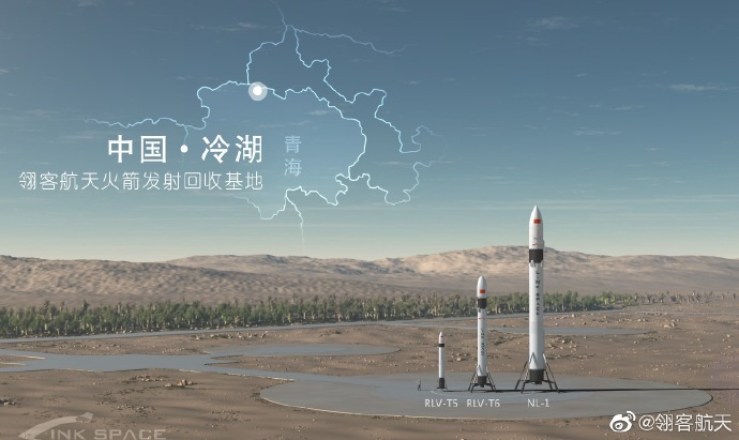
On the first weeks of 10th August 2019 , Link Space Aerospace Technology, a Beijing based Private Space Commercial Company among sixty more in China.. have successfully tested there small version of what’s to come with an larger reusable carrier rocket that’s set out to become like of Space X Falcon Nine Reusable, also its heavier variants, among in the reusable Carrier Rocket Development is the next generation of CNSA- China National Space Administration Heavier Long March  reusable Carrier in the eight, nine series of their third milestone launch and landing of the RL 客航天RLV-T5 model Reusable Carrier rocket test article in which is the platform of their three new larger series of reusable carrier Rockets

Successfully testing lift off at a height of Apogee 300.2 Meters and recovery  point of 0.07 meters  in which holding landing in which the coverage was recorded on an Insta360 One X, on to an LinkSpace X circular launch and land pad at which LinkSpace has built flying vertical-take-off/vertical-landing (VTVL) prototype test rockets, to develop its reusable rocket technology. By July 2016, it achieved hover flight with a single-engine thrust-vectored rocket. By September 2017, it had built three hovering rockets, tested in Shandong Province….

Learning from the second and first testing articles, the third was advanced and improved to which new breakthroughs were developing tested with focusing on the neural network based guidance and control technology and new technologies such as improving ballistics and guiding and high speed precision position systems.

Credit Images and visuals are from Weibo –  Link Space Aerospace Technology

#MadeInChina #LinkSpace #翎客航天 | #LinkSpaceChina #ReusableCarrierRocket – Successfully Testing the #RLVT5 hover flight testing in a live lift off and pad landing making historic #milestone..

Link Space Aerospace Technology- Medium Reusable carrier rockets..

On a very spring day of 27th March 2019 LinkSpace in which is among sixty more Private Space Companies in China …. Link Space Aerospace Technology, a Beijing based Private Space Commercial Company among sixty more in China.. have successfully tested there small version of what’s to come with an larger reusable carrier rocket that’s set out to become like of Space X Falcon Nine Reusable, also its heavier variants, among in the reusable Carrier Rocket Development is the next generation of CNSA- China National Space Administration Heavier Long March  reusable Carrier in the eight, nine series..

 On July 2016 the company have achieved the required means of Rocket retro Technologies, on using a single vector control engine…  in which leading to controlling engine thrust on recovering the Carrier Rocket stage to reused again to lower the cost involved in sending a payload into orbital means on the same launched design heritage among Space X , Blue Origins…..located in heart of Beijing Economic Technological Development Area… also they located in the Beijing, Guangdong, Shandong, Shaanxi ..

During the early this year they successful tested a short range smaller scale of the initial size of their carrier rocket from VT-VL- Vertical Take-off towards Vertical- Landing…  at their testing facilities in which they being Home Made designing since founded on 2014 January  from many whom worked within the Aerospace and space industry in China..

They recent been featured in the Hangzhou Technological innovation conference in a three day event show casing their startup n Reusable carrier Rockets in which the design lineages is Akin but Home grown too the same aspects of SpaceX Reusable Carrier Rockets..  There evolution is towards to multiple staging reusable Carrier Rockets…  as to that as part to that the company plans to manufacture micro and cube satellites communications or variant purpose designs satellites in Subsidiaries Company as all the components of the Space Link Aerospace is built in house..   As there carrier Rocket becomes commercially it can transport at 200 Kg payload satellite into five Hundred Kilometers attitude …..The primary propulsion system of their RLV-T3 Carrier Rocket is primary a liquid-solid engine combination design

 On that day Link Space Aerospace Technology have successfully test launched untethered their new experimental reusable Carrier Rocket on its testing firing its launch on its newly acquired launch pad marked “Welcome to Earth” on that day it launched to an experimental height in which test its capabilities un tendered to which It launched successfully then it was on a holding height for a few minutes more till it was time to land on the same location where it launched from.. in which landed comfortably…  it was observed by Doctor Robert Zubrin  whom witness the milestone perfect landing in which will leading to a newer design New line Baby the RLV-T5 series in which will launched further with higher achiever