#CNSA #ChinaNationalSpaceAdministration #国家航天局 |#BRI #August2022 | #嫦娥五号#CLEP The #Moon #Change5 #LunarMission #MonsRumker #LunaExploration the New research achievements – Chinese scientists reveal the composition of lunar soil minerals and space wind at the landing site of Chang’e 5…

More than One year ago on 24th November 2020, the Chang Zheng – Long March Five Carrier Rocket Launched away  in CNSA – China National Space Administration China Wenchang spaceport launch, Change Five  Lunar probe into orbit, opened up towards China – People’s Republic of China’s first celestial bodies sample return trip from Mons Rumker on the Lunar Surface of the moon New research achievements – Chinese scientists reveal the composition of lunar soil minerals and space wind at the landing site of Chang’e 5

China – People’s Republic of China’s first lunar sampling return mission, Chang’e-5 (CE-5), landed on the young KREEP terrane Mons Rumker in the northern part of the Ocean of Storms, and successfully brought back 1731 grams of lunar soil.

 Predecessors have used orbital remote sensing data to conduct extensive research on the topography and material composition of the CE-5 landing area. Recently, a series of sample analyses have advanced the understanding of lunar chronology, late lunar volcanism, and magma evolution mechanisms. Different from large-scale remote sensing observation and fine sample analysis, in situ spectral detection can not only provide local background information of the sampling area, but also be beneficial to study the characteristics of lunar soil in undisturbed and disturbed states. The Lunar Mineral Spectrometer (LMS) carried by the CE-5 lander acquired the visible-infrared reflectance spectrum of the lunar soil, which provided important data support for the study of the material composition of the lunar soil and space weathering.

Researchers from the Key Laboratory of Solar Activity and Space Weather of the National Space Science Center of the Chinese Academy of Sciences (hereinafter referred to as the “Space Center”) used the Chang’e-5 LMS in situ detection data to analyse the material composition and maturity, spectral parameters and unmixing of the lunar soil at the landing site The study shows that the mafic minerals in the lunar soil are mainly clinopyroxene, which is consistent with the chemical analysis and orbital spectral analysis results of the CE-5 sample in the laboratory.

The optical maturity and submicroscopic iron (SMFe) of the lunar soil did not change significantly before and after the rocket purge and shovel sampling. This study provides spectral evidence that the lunar soil surface experienced rapid tillage and adequate mixing.

Figure 1: (A) The measured field of view of the LMS spectral data is shown in the red box. Panoramic cameras show images of (B) lunar soil and (C) rocks, respectively. (D) LMS reflectance spectrum curve.

The red box in Figure 1A shows the observation field of LMS spectral data, where D11 is the rock block, and D14-D16 are the lunar soil spectra after shovelling. The magnified images of lunar soil and rocks are shown in Figure 1B and C, and Figure 1D shows the reflectance spectrum curve after preprocessing such as radiometric calibration and thermal correction.

Through the spectral parameter map of the absorption features at 1 μm and 2 μm (Fig. 2A), it was found that with the increase of calcium content, the absorption positions of pyroxene at 1 μm and 2 μm moved to the long-wave direction, and the lunar soil and rocks at the CE-5 landing site For high-calcium pyroxene, this is further confirmed in the 1 μm absorption center and the ratio projection of the 2 μm to 1 μm absorption area (Fig. 2B).

In this study, the Hapke model and the sparse unmixing algorithm were used to invert the mineral composition and abundance of the in situ spectra. The inversion results were consistent with the analysis results of CE-5 samples and the inversion results of orbital remote sensing (Fig.

Figure 2: LMS in situ spectral composition analysis

Space weathering is a common phenomenon of spectral reddening and darkening caused by micrometeorite impacts and solar wind injection on non-atmospheric celestial bodies.

First, the maturity of the lunar soil at the CE-5 landing site was qualitatively analyzed by using the projection maps of the spectral slopes R950/R750 and R1600/R700 and R750 and R700 respectively (Fig. 3A, B). It was found that compared with the lunar soil at the CE-4 landing site, the The lunar soil in the CE-3 and CE-5 landing areas is relatively immature, which may be related to the fact that CE-3 and CE-5 landed on a young impact crater sputter carpet (<100 Ma).

This study further calculated the optical maturity (OMAT, Fig. 3C) and submicroscopic iron (SMFe, Fig. 3D) content, and found that there was no significant change in lunar soil maturity before and after the rocket purge, and before and after scooping, indicating CE-5 landing The lunar soil in the district has experienced an equivalent exposure history within the scooping depth (<3cm).

This result is consistent with the radionuclide analysis results of the Apollo drilling samples and the simulation results of the lunar soil tillage model. This study provides spectroscopic evidence that the lunar soil surface undergoes rapid tillage and adequate mixing.

Figure 3: LMS In Situ Spectral Maturity Analysis

Space weathering is a common phenomenon of spectral reddening and darkening caused by micrometeorite impacts and solar wind injection on non-atmospheric celestial bodies.

First, the maturity of the lunar soil at the CE-5 landing site was qualitatively analyzed by using the projection maps of the spectral slopes R950/R750 and R1600/R700 and R750 and R700 respectively (Fig. 3A, B). It was found that compared with the lunar soil at the CE-4 landing site, the The lunar soil in the CE-3 and CE-5 landing areas is relatively immature, which may be related to the fact that CE-3 and CE-5 landed on a young impact crater sputter carpet (<100 Ma).

This study further calculated the optical maturity (OMAT, Fig. 3C) and submicroscopic iron (SMFe, Fig. 3D) content, and found that there was no significant change in lunar soil maturity before and after the rocket purge, and before and after scooping, indicating CE-5 landing The lunar soil in the district has experienced an equivalent exposure history within the scooping depth (<3cm).

This result is consistent with the radionuclide analysis results of the Apollo drilling samples and the simulation results of the lunar soil tillage model. This study provides spectroscopic evidence that the lunar soil surface undergoes rapid tillage and adequate mixing.

上述研究成果

已成功发表于国际权威学术期刊

Earth and Planetary Science Letters上。

Via CNSA China Space Administration –CLEP China Lunar Exploration project management office

#CNSA #ChinaNationalSpaceAdministration #国家航天局 |#BeltAndRoadinitiative #August2022 #MAY2023 |  #YoukuDocumentary #PeoplesDaily # 北京航天飞行控制中心 #北京 #BeijingAerospaceFlightControlCenter #北京明白#Beijing understands Post 90’s girl #BaoShuo The First female Dispatcher commander ..

CNSA –China National Space Administration ….. Returning to the Television and media Screens on Youku Documentary Variety is   Searching for the night returner the latest preview of the third season of “The Night Returning” is coming. Bao Shuo, the chief dispatcher of the Beijing Aerospace Flight Control Center, is about to show her night return story. In order to say “Beijing understands”, she repeatedly practiced a calm voice and more the ability to parallelize tasks, work hard to exercise, and hope to better stick to the post. One person’s experience condenses the efforts of generations of predecessors. Let’s witness her space dream together

Sampling of the lunar surface! 在380,000km外拍娃是一种的感觉 Controlling Chang’e-5 from the earth to “dig soil” on the moon, how difficult is this process? Bao Shuo, dispatcher of the Beijing Aerospace Flight Control Center, described it as like catching a doll 380,000 kilometers away, with an accuracy of 1 millimeter.

北京明白””Beijing understands”

Beijing understands that there are hundreds of people behind it  In the live broadcast of China’s aerospace launch, the “Beijing understands” that the Beijing Flight Control Center received a report and answered was impressive. In fact, behind every “Beijing understands”, there are hundreds of “understands”. Behind every sentence “understood”, it is the space workers who ensure that every plan and every instruction is in place. Chinese Space engineers and Takionauts 24 hours guarding the home of space, paying tribute to China Aerospace- space Industry..

Bao Shuo, a “post-90s” girl, is the first female dispatcher at the Beijing Aerospace Flight Control Center. From “Chang’e 5” to “Tianwen No. 1”, the excellent completion of the mission has made many people remember this young but calm face. Bao Shuo said that every time She said the words “Beijing understands”, there was an extremely difficult responsibility behind it. #searching for Yeguiren… In the third season, see how the Beijing general dispatcher who ordered “Bafang” was made?  I didn’t expect the working with of Takionauts to be like this. Bao Shuo, the first female dispatcher of the Beijing Center, said: “We are more like a big housekeeper, guarding our spacecraft and Takionauts on the ground.” The spacecraft is regarded as a child, and she refuses to rest until he sees a safe landing. It can be seen that the astronauts have a very deep affection for the spacecraft. I look forward to the launch of the program at 10:00 tomorrow morning….. on Youku and People’s Daily..

Images and visuals are from their respectives.

#CNSA #ChinaNationalSpaceAdministration #国家航天局 |#BeltAndRoadinitiative #August2022 | #WenchangSpacecraftLaunchCenter #文昌航天發射場 | #ChinaSpaceStation #实验舱 #文天 #Wentian #ExperimentalCabinModule There are many experiments in the sky cabin, and space science is on a higher level….

On Hainan Province –China –People’s Republic of China…. in the district area of the Wenchang – Wenchang Spacecraft launch center in which the awesome team at one of many CNSA –China National Space Administration  that China National Space Administration…………… On 24th July 2022

After Wentian experimental module entered orbit, the status setting was successfully completed. At 3:13 on July 25, 2022, Beijing time, it was successfully connected to the forward port of 天和 Tianhe Core Module. The entire rendezvous and docking process lasted about 13 hours. . This is the first time that two 20-ton spacecraft in my country- China- People’s Republic of China have achieved rendezvous and docking in orbit. …According to the mission plan, the Shenzhou 14 Takionaut crew will then enter the Wentian experimental module….. In which finally docked in early morning time of the 25th July 2022 in with CNSA –Beijing Aerospace City in which co-ordinated the docking maneuverers have achieved rendezvous and docking in orbit.…   in which the crew of the Shenzhou 14 staying for six months in construction of the stage one of the China Space station with the additional Mengtian experimental module in which will be delivered on the October 2022 Launch Schedule calendar..

There are many experiments in the sky cabin, and space science is on a higher level…

​​​​On July 24, the high-profile Wentian experimental module was launched into space by the Long March 5B carrier rocket, and successfully rendezvoused with the space station Tianhe core module. It is understood that the Wentian experimental cabin carries 8 experimental cabinets, and its main tasks are life science and biotechnology research. What exactly are these scientific studies? Why work on the space station? Recently, a reporter from China Aerospace News visited relevant experts from the Chinese Academy of Sciences, who answered these questions.

Life Ecological Experiment Cabinet

Biomedicine welcomes opportunities

“The Wentian Experiment Module has planned and deployed more than 10 research themes in four fields, including space life science and biotechnology, microgravity fluid physics, space material science, and space application new technology experiments. Currently, more than 40 scientific projects have been established. The space station After completion, relevant scientific projects will be continuously demonstrated and implemented rollingly.” Lu Congmin, a researcher at the Space Application Center of the Chinese Academy of Sciences and deputy chief of the space application system for manned space engineering, introduced.

​In order to ensure the smooth development of the above-mentioned scientific tasks and the continuous production of scientific achievements, the space application system has deployed biological ecological experimental cabinets, biotechnology experimental cabinets, scientific glove boxes and low-temperature storage cabinets, and variable gravity scientific experimental cabinets in the Wentian experimental cabin. The experimental facility is equipped with shared support equipment for application tasks inside and outside the cabin, and jointly supports the implementation of the entire mission chain of scientific projects in orbit.

Among them, the life ecology experiment cabinet uses various types of biological individuals (such as plant seeds, seedlings, plants, and small animals) as experimental samples to carry out spatial growth experiments of animals and plants such as Arabidopsis thaliana, nematodes, fruit flies, and zebrafish. Attempts to reveal the influence of microgravity on the growth, development and metabolism of individual organisms, promote human understanding of the nature of life phenomena, study the effects and mechanisms of space radiation biology and submagnetic biology, and explore the establishment of an applied controlled life ecosystem. Provide scientific basis for astronaut on-orbit radiation damage assessment and protection.

Biotechnology Experiment Cabinet

​Biotechnology experiment cabinet takes tissue, cells and biochemical molecules and other different levels and types of biological samples as research objects, and carries out experiments such as cell tissue culture, space protein crystallization and analysis, protein and nucleic acid co-origin, space biomechanics, etc., to explore microgravity The law and mechanism of cell growth and differentiation in the environment may provide a theoretical basis for human health, reproduction and development; explore the impact of gravity on the origin and evolution of life; strive for high-efficiency protein/peptide drugs, nanocrystalline bone biotechnology, etc. The breakthrough discovery is expected to play an important role in guiding the research and application of tissue engineering and biomedicine.

Scientific Glove Boxes and Cryogenic Storage Cabinets

The scientific glove box provides clean and confined space and environmental control of temperature and humidity. It is equipped with a dexterous robotic arm and has the ability to operate at the cell level. The glove box provides safe and efficient support for astronauts to operate multidisciplinary experimental samples. The low-temperature storage device has three typical low-temperature storage temperature zones (minus 80 degrees Celsius, minus 20 degrees Celsius, and 4 degrees Celsius), which can meet the low-temperature storage requirements of different experimental samples.

The variable gravity scientific experiment cabinet provides 0.01~2g high-precision simulated gravity environment for scientific experiments. It adopts advanced wireless energy transmission and carrier communication technology to support the development of complex fluid physics under different gravity levels such as microgravity, simulated lunar gravity, and simulated Mars gravity. , the movement of particulate matter and other scientific research.

Variable Gravity Science Experiment Cabinet Opened

​Lv Congmin introduced that energy particle detectors and plasma in-situ imaging detectors are also deployed outside the Wentian experimental cabin to obtain data on environmental elements such as protons, electrons, neutrons, heavy ions and plasma in space, so as to protect the health of astronauts , to provide guarantee support for the safe operation of the space station, and can also be used for basic research on the space environment.

Special environment hardware is available

The completed China Space Station, as a national space laboratory, will support long-term, multi-field, large-scale space science and application research. Zhang Wei, a researcher at the Space Application Center of the Chinese Academy of Sciences and director of the Application Development Center, summarized the advantages of the Chinese space station from four aspects.

​First, the Chinese space station can provide long-term microgravity, radiation and other special research environments. ​Zhang Wei said that on the earth, life and matter are affected by gravity, and some essential laws will be covered up, and under the condition of microgravity, scientists hope to discover the essential laws of these substances. Not only that, but there are some physical effects in microgravity. “The first is that buoyant convection is greatly reduced; the second is that precipitation and stratification have basically disappeared; the third is that the pressure gradient is greatly reduced.” Zhang Wei said.

​Second, the Chinese space station has astronauts involved, which is convenient for experimental operations, experimental module replacement, and maintenance.

​Third, the Chinese space station can carry out round-trip transportation between the sky and the earth, and can realize the replacement of experimental modules and the return of experimental samples. After carrying out scientific experiments on life and materials in orbit, it is necessary to bring the samples back to the ground for further research.

​Fourth, at the specific orbital altitude of the Chinese space station, it is convenient to conduct astronomy, earth observation and space physics research. ​In this regard, Zhang Wei gave an example of astronomical observation: due to atmospheric absorption and interference, gamma rays, X-rays, ultraviolet rays, and infrared rays in the universe cannot be effectively observed on the ground. device into space.

It is worth mentioning that after the construction of the Chinese space station is completed, it will operate in orbit for more than 10 years. In addition to the advanced scientific experimental cabinets that have been developed, the space station’s external exposure experimental devices and the future launch of the Sky Survey Optical Module will also bring opportunities for more scientific experiments. 

Source – 航天五线谱

Images and Visuals are from their Respectives ..

#MadeInChina #中國製造| #西北工业大学 #NorthWesternUniversityOfTechnology #July2022 | #酒泉衛星發射中心 #JiuquanSatelliteLaunchCenter #CASIC #ChinaAerospaceScienceAndIndustryCorporation – Have successfully test launch #飞天一号 #Fetian1 #Ramjet #Carrier Rocket….  

西北工业大学 North Western University of Technology located in Shanxi is located in Xi’an, Shaanxi Province- China- People’s Republic of China . It is a multidisciplinary, research-oriented and open university characterized by the development of personnel training and scientific research in the fields of aviation, aerospace, navigation (three aviation), etc. “University” construction university (category A), affiliated to the Ministry of Industry and Information Technology, in which operated as a High School/ Domestic High School also..

On the 4th July 2022 Monday the North Western University of Technology have successfully, the “Feitian No. 1” rocket ramjet combined power developed by the Aerospace Combination Power Innovation Team of the School of Aeronautics and Astronautics of North western Polytechnical University was successfully launched in a base in Northwest Chinain collaboration with CASIC China Aerospace Science And Industry Corporation..

The multi-mode smooth transition of rocket/sub-combustion, sub-combustion, super-combustion, and rocket/super-combustion and wide-area comprehensive capabilities have broken through key technologies such as thermal throat adjustment and ultra-wide envelope efficient combustion organization, and the flight test was a complete success….  

In which . For the first time in the world, it has verified the multi-mode smooth transition and wide-area comprehensive capability of kerosene-fueled rocket-ramjet combined cycle engine rocket/sub-combustion, sub-combustion, scramjet, and rocket/supercombustion, breaking through the thermal throat adjustment, ultra-wide envelope and high efficiency Combustion organization and other key technologies…

Images and visuals are from their respectives

#CNSA #ChinaNationalSpaceAdministration #國家航天局 |#BeltAndRoadinitiative #May2022 | #火星 # 天問 #天问一号#TianwenOne #MarsMission #Tianwen1 probe  #祝融号 #ZhuRong #Tianwen1 #CCTV #HelloMars Episode Four Landing on Mars has many risks. How did Tianwen-1 complete a perfect landing……?

“Hello! Mars” Episode 4 Landing on Mars has many risks. How did Tianwen-1 complete a perfect landing?”

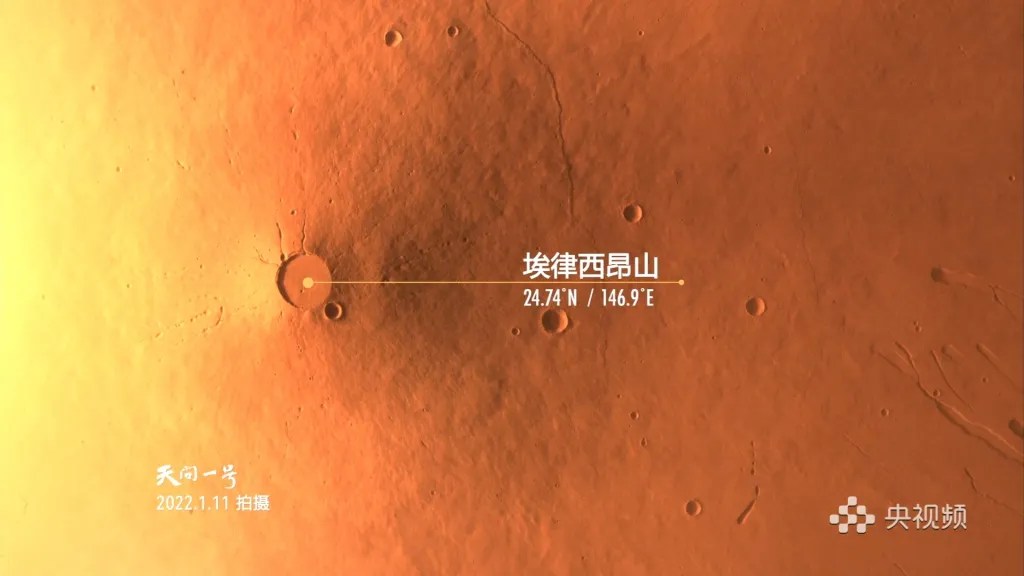
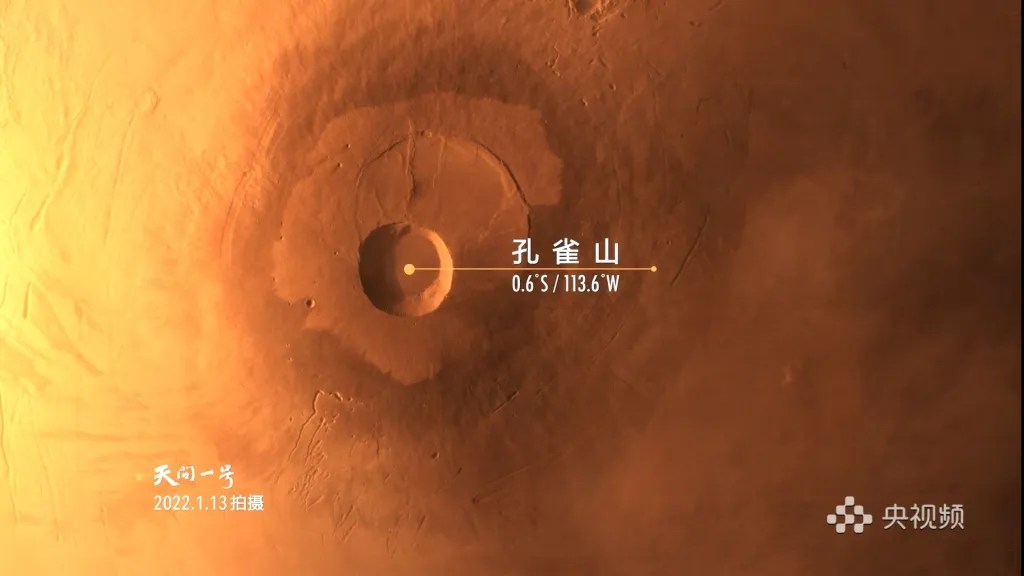
On the months week of 19th May 2022   天问一号飞運騎遊達达3亿CNSA – China National Space Administration – ESA – European Space agency Belt and road initiative mars mission…first Mars exploration mission, Tianwen- Martian Probe One sent back stunning images of the Half Earth Mass size of the Rustic Planet Mars in which show stunning Martian landscape with its iconic polar caps of either southern or northern … With its timeless Stunning Mars Photography. Tianwen-1″ returned high-resolution images of the Mars inspection area The “Zhurong” rover is preparing for winter, and the orbiter continues to carry out orbital exploration….. in which one year ago it was it’s first landing on Utopia Planitia region on the planet Mars .. in celebrating a CCTV five part Episode was produced..

《你好!火星》Hello Mars Episode Two The content of this issue At 7:18 on May 15, 2021, Beijing time, the Chinese probe successfully landed in the southern part of the Utopia Plain in the northern hemisphere of Mars. It can be said that this is a perfect landing, because the land chosen by the landing platform itself is really too flat. At 10:40 on May 22, 2021, the rover slowly drove away from the landing platform along the ramp, and travelled 0.522 meters on the Utopia Plain. This short distance marked China as the second to achieve Mars tour……

本期内容: 北京时间2021年5月15日7点18分,中国探测器成功着陆在火星北半球乌托邦平原南部,可以说这是完美的一落,因为着陆平台自己选择的这块地儿实在是太平坦了。2021年5月22日10点40分,火星车沿着坡道缓缓驶离着陆平台,在乌托邦平原上行驶了0.522米,这短短一小段路程标志着中国成为第二个实现火星巡视的国家。

Hello everyone, I would like to tell you some good news about the documentary “Hello!” about China’s first Mars exploration mission. “Mars” is finally on the air, friends who want to know more about Mars can stay in front of the TV tonight

“Hello! “Mars” is a large-scale scientific documentary jointly produced by the National Space Administration and China Central Radio and Television to commemorate the first anniversary of the Tianwen-1 Mars probe’s successful landing on Mars. It took three years to complete the filming and is divided into “Departure” and “Journey” “Surrounding”, “Landing” and “Patrol” have 5 episodes, each of which is 30 minutes long. They focus on the important stages of the Tianwen-1 mission, and describe a large number of astronomy, astrophysics, space applications, aerospace engineering and other disciplines in a simple way. Knowledge, in-depth analysis of Chinese wisdom and Chinese solutions in Mars exploration. Since May 2020, the co-production team has continued to track the key nodes of the Tianwen-1 mission, filmed many wonderful moments, and obtained a large number of first-hand precious materials. Many of the contents of the documentary were made public for the first time and were released authoritatively.


Broadcasting plan CCTV-1 CCTV integrated channel every night at 22:36, five days of continuous broadcast from May 18th to 22nd; CCTV-10 CCTV science and education channel every night at 20:10, from May 19th to 23rd five days of continuous broadcast

大家好,告诉大家一个好消息,讲述中国首次火星探测任务的纪录片《你好!火星》终于要开播啦,想更多了解火星的朋友们今晚可以守在电视机前哟《你好!火星》是为纪念天问一号火星探测器成功着陆火星一周年,由国家航天局和中央广播电视总台联合出品的大型科学纪录片,共历时3年摄制完成,分为《出发》《征途》《环绕》《着陆》《巡视》5集,每集30分钟,分别聚焦天问一号任务的重要阶段,以深入浅出的形式讲述了大量天文学、天体物理学、空间应用学、航天工程学等学科知识,深度解析了火星探索中的中国智慧、中国方案。联合摄制团队自2020年5月起,持续跟踪天问一号任务关键节点,拍摄众多精彩瞬间,获得大量一手珍贵素材,纪录片中很多内容是首次公开,并权威发布。


播出计划CCTV-1央视综合频道 每晚22:36,5月18日至22日五天连播;CCTV-10央视科教频道 每晚20:10,5月️19日至23日五天连播

Images and visuals are from CNSA- China National Space Administration also from there respectives- CLEP –China Lunar Exploration Project..