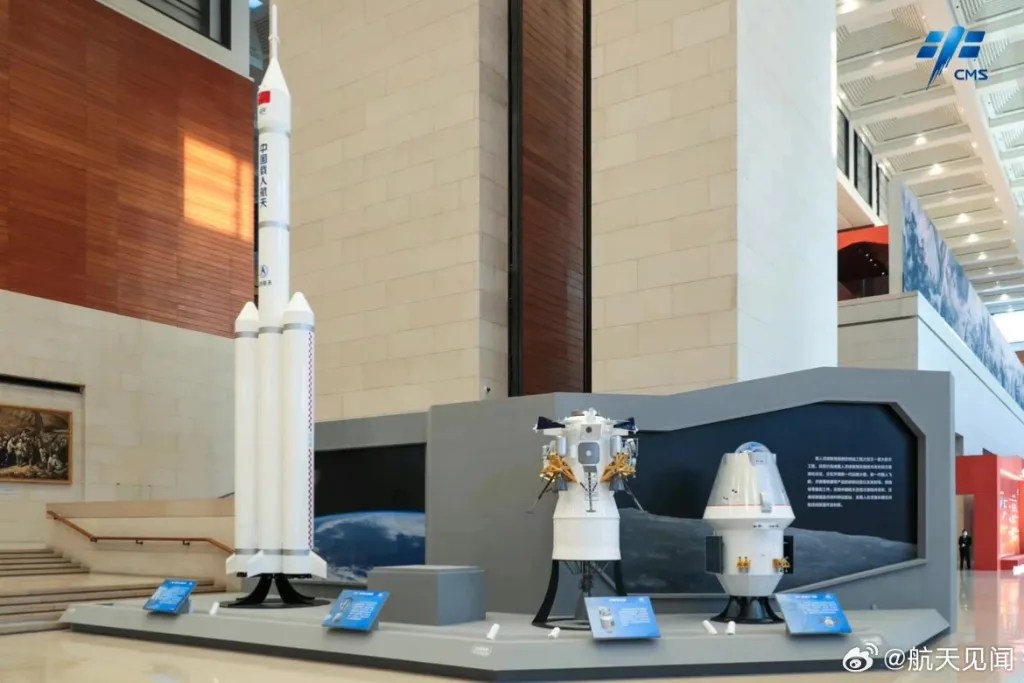
#CNSA #ChinaNationalSpaceAdministration #国家航天局 |#WenchangSpacecraftLaunchCenter #文昌航天發射場 #BRI #July2024 | Hainan Commercial Space Launch Center, #长征十二号 #ChangZheng12 #LongMarch12 Yao 1  will become China’s most powerful single-core rocket for low-orbit transport…

2024 is another year of progress for China, People’s Republic of China China’s space industry, with about 100 orbital launches planned for the whole year. At the same time, many rocket models will have their first flights this year, and the national team’s “Long March” series of rockets will also have their first flights, including the “Long March 6C” (already launched), “Long March 12” and “Long March 8A”. The “Long March 12” is the most special one among them, and it will be the first carrier rocket with a diameter of 3.8 meters among the “Long March” rockets.

China’s most powerful single-core rocket for low-orbit transport…

The Long March 12 (LM-12/CZ-12) is a new generation of carrier rocket developed by the Eighth Academy of China Aerospace Science and Technology Corporation. It is a medium-sized cryogenic liquid carrier rocket with a two-stage tandem configuration. The first and second stages are all powered by liquid oxygen-kerosene engines. The rocket was originally the Eighth Academy’s bid for a new generation of manned carrier rockets, and was later renamed XLV20. The original 5CBC configuration (5 cores in parallel for the takeoff stage) was changed to a single core stage configuration.

The first stage of the Long March 12 has four main engines

The first stage of the Long March 12 is equipped with four YF-100K liquid oxygen/kerosene engines, using an oxygen-rich staged combustion cycle, using pump-back swing, supporting bidirectional swing of ±8 degrees, and a thrust adjustment range of 65%~105%. The sea level thrust of a single engine is about 128 tons (1250 kN), and the sea level specific impulse is 301.84 seconds. The second stage is equipped with two YF-115 liquid oxygen/kerosene engines, using an oxygen-rich staged combustion cycle, supporting bidirectional swing of ±4 degrees, a thrust adjustment range of 80%~100%, a vacuum thrust of about 18 tons (180 kN), and a vacuum specific impulse of about 342 seconds.

“Long March 12” joint archery practice (Photo source: Weibo 
@曹梦-Aerospace ​​​

The Long March 12 rocket is 59 meters high, with a first and second stage diameter of 3.8 meters. It can be equipped with optional fairings with diameters of 4.2 meters and 5.2 meters. It has a takeoff mass of 433 tons and a maximum takeoff thrust of about 510 tons (5,000 kilonewtons). The rocket has a carrying capacity of no less than 10 tons in a low-Earth orbit (LEO) at an altitude of 300 kilometers and a carrying capacity of no less than 6 tons in a sun-synchronous orbit (SSO) at an altitude of 700 kilometers.

The Long March XII rocket is the first 3.8-meter-diameter model of the Long March rocket. It will also become China’s single-core-stage carrier rocket with the largest takeoff mass and the strongest low-orbit carrying capacity in service.

The first flight of the YF-100K engine!

On April 28, 2024, the YF-100K liquid oxygen-kerosene engine developed by the Sixth Academy of China Aerospace Science and Technology Corporation completed a four-engine parallel ignition test. The total thrust of the engine exceeded 500 tons. This was the first large-thrust liquid oxygen-kerosene engine four-engine parallel ignition test, and the four-engine parallel scheme was fully verified.

YF-100K test run picture

The YF-100K was born with the proposal of China’s manned lunar landing plan and the need to demonstrate the new generation of manned carrier rockets. It is based on the improvement and optimization of the YF-100. This engine is the main power of China’s new generation of manned carrier rocket “Long March 10”. It adopts pump back swing. Compared with the YF-100 in use, it has the advantages of small mass eccentricity, small swing envelope, and easy layout of swing components.

The maiden flight of the Long March 12 rocket is also the maiden flight of the YF-100K engine, which will test its performance in actual launches and accumulate flight samples for the main power of the Long March 10 takeoff stage. At the same time, the YF-100K will pave the way for the improvement and upgrading of the new generation of carrier rockets currently in service, such as the Long March 5, whose four boosters are equipped with a total of 8 YF-100 engines. By replacing them with the YF-100K engines with better performance, the rocket will further release its already powerful carrying capacity.

Joint archery training of Long March XII

China’s Hainan commercial space launch site launches first rocket

It is expected that in August 2024, the Long March 12 (Yao-1) carrier rocket will carry out its maiden flight at the No. 2 station of the Hainan Commercial Space Launch Center in China, and China’s new generation of carrier rockets will welcome a new member. At the same time, this is also the first rocket launch of the Hainan Commercial Space Launch Center, which means that China’s first commercial space launch center has officially been put into use.

In addition to launching from Hainan Commercial Aircraft Corporation, the Long March 12 can also be transported by rail to a land launch site to carry out launch missions, which will help the rocket quickly form a batch launch capability, support launches into sun-synchronous orbits and low-Earth orbits, and be used for low-orbit satellite constellation launch missions such as StarNet.

Images and visuals are from their Respectives CMS China Manned SpaceCNSA-China National Space Administration

#MadeInChina #中國製造| #February2024 | International #CASC #ChinaAerospaceScienceAndTechnologyCorporation #Jielong3 #SmartDragon3 Yao 3 #CarrierRocket Launched Nine Satellites …..Marine sea Launch from #Yangjiang #GuangdongProvince #China #PeoplesRepublicOfChina

At 1106 Hours Hong Kong SAR- Beijing Time on An early morning of 6th December 2023 , China- People’s Republic of China- CNSA –China National Space Administration   CASC China Aerospace Science and Technology Corporation  Successfully launched  the New Next Generation ChinaRocket Co. LTD  Smart Dragon –  Jielong three Carrier Rocket Yao 3  carrier rocket  at the in the waters near Yangjiang, Guangdong Province, the Smart Dragon Carrier rocket successfully launched from a sea borne mobile launch platform….. 

Successfully launch the DRO-L satellite and Zhixing 2 A total of 9 satellites were launched: A satellite, Dongfang Huiyan Gaofen 01 satellite, Weihai No. 1 satellite 01~02, Xingdai-18~20 satellite and NEXSAT-1 satellite. The satellites successfully entered the scheduled orbit and the launch mission was a complete success. .

This launch mission is a Jielong-3 rocket, launched at sea, and included in the annual small series “Jielong Soaring to the Sky” series. The Jielong rocket soars on the sea, and the outer ring design adopts the outline of the red mountain and jade dragon. The Hongshan Jade Dragon looks like a “C” shape from a distance and enjoys the reputation of “China’s No. 1 Dragon”. The dragon is the most representative totem of the Chinese nation. The Jielong rocket has turned the imagination of the sky in traditional culture into an important national weapon for questioning the sky, embodying the cultural heritage of exploring nature and space, and implying the pursuit of technological innovation. Never ending. The wave element on the background of the badge symbolizes that every step in the aerospace industry is full of hard work and wisdom. The Jielong 3 rocket development team rides the wind and waves to realize its dream. The entire year-round combination plan will continue the outer ring design concept of “Dragon Totem”, integrating dragon totems from different dynasties and different regions over five thousand years of China. When traditional culture meets modern technology, it will show unique aerospace technology aesthetics.

Images and visuals are from their respectives

#MadeInChina #中國製造 #ExPace | #December2023|#酒泉衛星發射中心#JiuquanSatelliteLaunchCenter #CASIC Rocket Technology Company #Expace #PrivateChineseSpaceCompany #Wuhan #CarrierRocketCompany #CarrierRocket #Kuaizhou 1A #KX1A Launches successfully to deploy of the a #Tianmu1 #meteorological constellation 11-14 #satellites #Satellite … on a #Christmas Morning.

During today on 25th December 2023  at 0900 Hong Kong SAR- Beijing Time  launching from one of many complexes酒泉衛星發射中心 Jiuquan Satellite Launch Center in Dongfeng Aerospace City – inner Mongolia –China – People’s Republic of China on中國製造 Expace Technology Corporation, , the Kuaizhou No. 1A solid carrier rocket ignited and lifted off at the Jiuquan Satellite Launch Center four Tianmu-1 meteorological constellation 11-14 satellites The satellite successfully entered the predetermined orbit, and the launch mission was a complete success. The satellite is mainly used to carry out experiments such as space environment detection….

中國製造 Expace Technology Corporation, , the Kuaizhou No. 1A solid carrier rocket

Successfully launched the four Tianmu-1 meteorological constellation 11-14 satellites from the Jiuquan Satellite Launch Center using the Kuaizhou-1A carrier rocket. This launch is the 215th space launch in the world in 2023, the 63rd for China, the 9th this month, and the 5th for the Kuaizhou-1A carrier rocket,,,,,,

Tianmu-1 meteorological constellation were launched into space. The satellites successfully entered the scheduled orbit, and the launch mission was a complete success. The satellite is mainly used to provide commercial weather data services is also mainly used to obtain information on global atmospheric environment elements. After the constellation is completed, it can realize three-dimensional and integrated business detection of the global all-weather ocean, atmosphere, and ionosphere.

Images and visuals are from a their respectives..

#CNSA #ChinaNationalSpaceAdministration #国家航天局 |#BRI #November2023| #酒泉卫星发射中心 #JiuquanSatelliteLaunchCenter – #ChangZheng2F #LongMarch2F Yao 19 #Shenzhou19 is expected to Launch #October24 Proceeding from #Shenzhou18..

Currently 2023 CNSA- China National Space Administration Recently, at the No. 211 Factory of the First Academy of China Aerospace Science and Technology Corporation, the “Long March 2F” Yao-19 carrier rocket has entered the final assembly state, and the development and production of this rocket has entered the final stage. 

According to the plan, the “ChangZheng-Long March 2F Yao 19 rocket will be used to launch the “Shenzhou 19” manned spacecraft, which is expected to be launched around October 2024. According to China’s manned launch mission “one for one, one for each, rolling backup” arrangement, before the “Shenzhou 18″ launch mission is carried out, the ” ChangZheng-Long March 2F ” Yao 19 rocket and the “Shenzhou 19” spacecraft will enter emergency rescue status .

It is expected that in April 2024, the “Shenzhou 18″ spacecraft will be launched by the ” ChangZheng-Long March 2F ” Yao 18 rocket. Before that, the backup ship “Shenzhou 19″ spacecraft and the ” ChangZheng-Long March 2F ” Yao 19 rocket The rocket will arrive at the Jiuquan Satellite Launch Center several months before launch. At present, the launch site process of “one for one and one for one” for the ” ChangZheng-Long March 2F ” rocket has been compressed to 35 days, and will be further compressed to 30 days.

” ChangZheng-Long March 2F ” is a medium-sized two-stage semi-normal temperature liquid launch vehicle developed by the First Academy of China Aerospace Science and Technology Corporation. It consists of a core first stage, a core second stage, and four boosters bundled around the core first stage. The main power of the arrow is dinitrogen tetroxide/uniform dimethylhydrazine propellant. The rocket currently in use is the ” ChangZheng-Long March 2F ” improved version (CZ-2F/G), with a total length of about 58.34 meters, a core diameter of 3.35 meters, a booster diameter of 2.25 meters, a take-off mass of about 497 tons, and a perigee of 200 Kilometers, an apogee of 350 kilometers, and a Low Earth Orbit (LEO) with an inclination of 42 degrees has a carrying capacity of not less than 8.8 tons.

As of the “Shenzhou 17″ launch mission, the “ChangZheng-Long March 2F ” rocket has carried out 21 launch missions, including 17 “Shenzhou” spacecraft launches, 2 “Tiangong” series space laboratory launches, and 2 reusable test spaceflight missions. The launcher has a 100% success rate. Currently, the ” ChangZheng-Long March 2F ” is currently China, People’s Republic of China only manned rocket currently in service, and it is also one of the world’s 3-type manned rockets currently in service that has performed manned launches…..

Visuals are from their respectives also from CNSA- China National Space Administration

#CNSA #ChinaNationalSpaceAdministration #国家航天局 | #BRI #July2023 |#CASC #ChinaAerospaceScienceAndTechnologyCorporation – #长征十号 #MannedCarrierRocket #CarrierRocketFreighter  #3DPrinting #CarrierRocketEngine Testing the #ChangZheng10 #LongMarch10 engine at Thrust of 130 Tons Successfully …..

长征十号 At 22nd  23rd July  2023 Hong Kong SAR- Beijing time , China- People’s Republic of China- CNSA –China National Space Administration   Successfully Carrier Rocket  engine tested for the New Next Generation Chang Zheng – Long March 10 Manned Lunar mission landing Carrier rocket freighter The main engine of China’s manned lunar landing rocket Long March 10 completed another ignition test run yesterday, which verified all the requirements of the rocket mission for the engine, and provided strong support for the solidification of the engine’s technical status, the establishment of product technology baselines, and the improvement of reliability.


The engine used in this test run uses advanced liquid oxygen kerosene as fuel, which is improved and iterated from the high-thrust liquid oxygen kerosene engine used by the new generation of launch vehicles such as the active Long March 5, with a thrust of 130 tons. (The Sixth Academy of Aerospace Science and Technology Group)

Created with GIMP

The reporter learned from China Aerospace Science and Technology Group Co., Ltd. on July 23 that the main engine of my country’s manned moon landing rocket was tested in the Fengzhou Test Area of ​​the Sixth Academy of Aerospace Science and Technology Corporation, and achieved continuous success. This test run verified the engine flight mission profile, and provided strong support for the solidification of the engine technical state, the establishment of the product technical baseline, and the improvement of reliability.

The engine is the power source of the rocket, and its development process is very complicated. Test run is an important link in the engine development process, and there are dozens of types. In layman’s terms, engine test run is the process of igniting the engine and verifying the rationality of its design scheme and process reliability. This is an indispensable and important part of the development and delivery of a type 1 engine. It will run through all stages before and after engine development. Each stage of test run has different meanings, and the ignition time varies from a few seconds to hundreds of seconds.

It is reported that the engine used in this test run uses advanced liquid oxygen kerosene as fuel, which is improved and iterated from the high-thrust liquid oxygen kerosene engine used by the new generation of launch vehicles such as the Long March 5. The thrust reaches 130 tons. The R&D team of the Sixth Academy of Aerospace Science and Technology Group adheres to the concept of digital design, and has successively overcome key technical problems such as engine start-up and shutdown sequence, engine wide-range continuously variable thrust, and engine long life and high reliability.

In addition, the continuous success of the test run has fully verified the reliability of a number of new carrying process technologies. The engine production of this test run adopts the concept of intelligent manufacturing, and actively applies new materials, new processes, and new technologies. The inner wall of the thrust chamber of the core component adopts a new protective coating, key assemblies adopt automatic welding technology, and a large number of components adopt 3D printing technology.

During the preparation of the engine test run, the participants in the research and test conducted tests and verifications on each subsystem of the test through comprehensive means such as digital modelling, simulation calculation, and system debugging. The successful test run shows that the test area has greatly improved the multi-station parallel test run capability and test efficiency by optimizing the workflow.

Images and visuals are from their Respectives CMS China Manned SpaceCNSA-China National Space Administration  the Sixth Academy of Aerospace Science and Technology Group