Currently at the moment中國製造 Expace Technology Corporation- a CASIC -China aerospace science and industry corporationhas been very busy in building a New Carrier Rocket Factory in Wuhan National Aerospace Industrial Base in which the base will be in operations in May 2020 Kuaizhou Rocket Industrial Park that forms the manufacturing of twenty plus more Kuaizhou Rockets also its other sister larger carrier rockets in process of The assembly test capability of 20 solid launch vehicles……in which is now in operation……
快舟一号On a Clear blue Skies Day on Jiuquan Satellite launch Centre, Inner Mongolia, China, People’s Republic of China… 中國製造 Expace Technology Corporation.Kuaizhou-1A YAO 21 successfully launched Tianmu-1 meteorological constellation 07-10 satellites At 11:20 Hong Kong SAR- Beijing time today, the Kuaizhou-1A solid carrier rocket was ignited and blasted off at the Jiuquan Satellite Launch Center, with “one Carrier Rocket and four satellite” The Tianmu-1 meteorological constellation 07-10 satellite were sent into the predetermined orbit by means of the method, and the launch mission was a complete success. Tianmu-1 Meteorological Constellation 07-10 is a remote sensing detection satellite developed by a system company affiliated to CASIC, which is mainly used to obtain information on global atmospheric environment elements. After completion, it can realize the three-dimensional and integrated global all-weather ocean, atmosphere, and ionosphere probing.
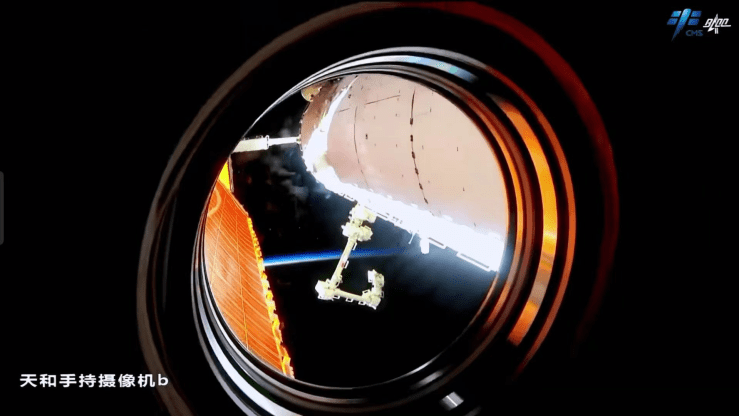
On the 30th May 2023 clear 0931 Hours Morning Hong Kong SAR- Beijing time , the Belt and Road InitiativeCNSA –China National Space Administration from Jiuquan Satellite Launch Center – Inner Mongolia –China – People’s Republic of China deployment of the Chang Zheng – The Chang Zheng – Long March 2F Yao 16 –Shenzhou 16 carrier rocket.. On which Takionauts Jing Haipeng, Zhu Yangzhu, and Gui Haichao took to the predetermined orbit. The first manned flight mission in the application and development stage was a complete success. The three astronauts will stay in the space station and “join up” with the crew of Shenzhou 15 to carry out on-orbit handover “face-to-face” meeting in which brings the total crew of six with a handover ceremony from Shenzhou 15 towards 16..
Takionaut Jing Haipeng has carried out four manned missions including “Shenzhen 7”, “Shenzhen 9”, “Shenzhen 11” and “Shenzhen 16”. long Takionaut. The “Shenzhen VII” spacecraft ignited and took off at 21:10 on September 25, 2008, and landed at 17:37 on September 28. The flight time of the astronauts Zhai Zhigang, Liu Boming and Jing Haipeng was 2 days, 20 hours and 27 minutes. From 18:37 on June 16, 2012 to 10:05 on June 29, astronauts Jing Haipeng, Liu Wang, and Liu Yang carried out the “Shenzhen Nine” mission in 12 days, 15 hours and 28 minutes. From 07:30, October 17, 2016 to 13:59, November 18, 2016, Takionauts Jing Haipeng and Chen Dong partnered to carry out the “God 11” mission, with a flight time of 32 days, 6 hours and 29 minutes. Before the “God 16” mission, the total flight time of Jing Haipeng’s first three missions was 47 days, 18 hours and 24 minutes.
As of 16:07 on July 16, 2023, Jing Haipeng’s total flight time will reach 95 days and 1 hour, surpassing Liu Boming and ranking 11th among Chinese Takionauts. Liu Boming has carried out two missions including “Shenzhen 7” and “Shenzhen 12”. The total flight time was 95 days and 35 minutes.
During the period when the “Shenzhen XVI” crew was in orbit, large-scale space science experiments were carried out on a rolling basis, and the work of space application systems such as the out-of-cabin installation of the space radiation biology exposure experiment device in the “Mengtian” experimental cabin has been completed as planned. At the same time, the “Shenzhen XVI” crew is preparing for the first out of the cabin, which will be the first out of the third batch of astronauts, who will perform it? What extravehicular work will be done?
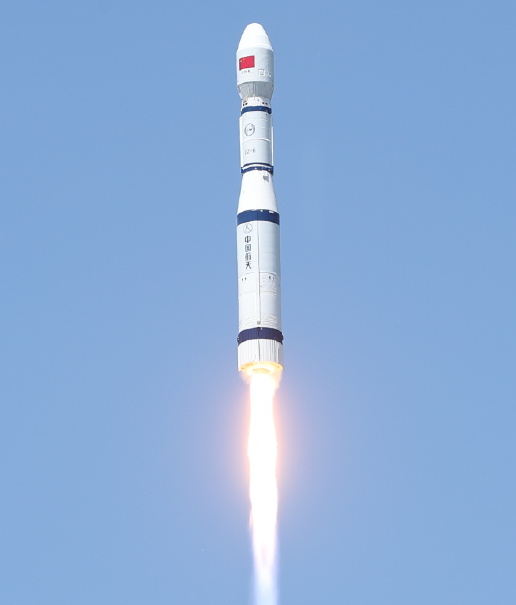
长征六号On the 13th July 2023 it is the first Auction of China, People’s Republic of China’s First Carpooling on the CNSA –China National Space Administration Chang Zheng – Long March 6 Carrier Rocket and international Icon Launch Vehicle Piggbacking Opportunities also auction activity.. “carpooling” rocket auction will start at 3:00 pm on July 13. The rocket participating in this auction is the Long March 6 developed by the CASC – China Academy of Space Technology- Eighth Academy of Aerospace Science and Technology Group C carrier rocket is expected to be launched by the end of this year of 2023, and the starting price is 80,000 yuan per kilogram.
Long March 6 carrier rocket (English: Long March 6, abbreviation: CZ-6) is a new generation of non-toxic and non-polluting small liquid carrier rocket developed by the Shanghai Academy of Aerospace Technology of the People’s Republic of China ( the Eighth Research Institute of China Aerospace Science and Technology Corporation ) .
The Chang Zheng Long March 6C 43 meters tall three-stage rocket with a carrying capacity of 500 kilograms in a sun-synchronous orbit at an altitude of 700 kilometers . The rocket has the advantages of low cost, high reliability, strong adaptability, and good safety. Many new technologies are applied for the first time in China, and the development is very difficult . The Long March-6 launch vehicle was officially approved by the state in the year 2009,
Design Principle’s
LOW COST- Cost reduction is an important condition for improving the competitiveness of launch vehicles in the domestic and foreign satellite launch markets. The key to the development of small launch vehicles is to reduce costs. On the one hand, make full use of the basic technology of the new generation of launch vehicles to reduce the cost of development. During the design process, the idea of low-cost design should always be implemented, and the system configuration should be simplified as much as possible while ensuring reliability; launch operations should be simplified to reduce launch costs. Using kerosene/liquid oxygen engine, the light fuel cost saves millions of yuan compared with before.
High reliability is the lifeblood of a rocket. Follow the reliability design principle of “simple is reliable”, and strive for simplicity in stand-alone or system design; through strict quality assurance system and quality management system, control product design and production quality. The design reliability is 95%. After further optimization, the reliability of the first flight has been increased to 98%, which is 1% higher than that of the most secure Long March 2 F-type.
Adaptable- To meet the diverse needs of users, it can not only adapt to the launch of small satellites in various orbits, but also launch double or multiple satellites; it can adapt to new launch sites or launch at existing launch sites. During its maiden flight, the Long March-6 completed 20 satellites in one rocket, setting a new record for Chinese satellite launches.
Short cycle -The technology of the basic type of new-generation carrier rocket is fully applied, the development cycle is short, the launch method is simplified, the launch cycle is shortened, and the requirements for rapid launch are met. The launch preparation time for the first flight only takes one week
On the 9th July 2023 clear 1900 Hours Hong Kong SAR- Beijing time , the Belt and Road InitiativeCNSA –China National Space Administration launching from Jiuquan Satellite Launch Center – Inner Mongolia –China – People’s Republic of China deployed launched the Chang Zheng – The Chang Zheng – Long March 2C YZ-1S carrier rocket.. This launch is the 478st launch of the Long March series of launch vehicles. successfully launch the satellite Internet technology test satellite into space, and the satellite entered the schedule smoothly Orbit, the launch mission was a complete success.
【The number of launches of Chang Zheng- Long March 2C Carrier Rockets this year will hit a new high】During this mission, the rocket realized the interconnection between the Beijing remote test network system and the remote auxiliary test and launch system of Jiuquan Satellite Launch Center for the first time, and it can be launched in the Beijing remote measurement and control hall Remote auxiliary support for the final assembly, testing, and launch of rockets at the launch site, reducing the time and cost of personnel traveling to and from the launch site, and improving launch efficiency.
At 19:00 on July 9, 2023, Beijing time, our country used the Long March 2C/Yuanzheng 1S launch vehicle at station 94 of the Jiuquan Satellite Launch Center , the satellite Internet technology test satellite was successfully launched into space, and the satellite successfully entered the predetermined low-earth orbit, and the launch mission was a complete success. The satellite Internet technology test double star launched this time was developed by the General Department of Communication and Navigation Satellite of the Fifth Academy of Aerospace Science and Technology…
The upper stage of Yuanzheng-1S for this mission: 1) Adopt a new curved grid transition section, which reduces the weight by 35%, improves the rocket’s carrying capacity, reduces the section installation interface, and optimizes the final assembly operation process.
2) The measurement system adopts the space-ground-based integrated measurement and control mode for the first time, which can freely switch the space-based and ground-based measurement and control time according to the mission requirements, and has the ability to measure and control the whole process without blind spots, which greatly improves the task adaptability.
This mission is the fifth space launch of the Chang Zheng- Long March 2C Carrier Rockets in 2023. In the second half of the year, the Chang Zheng- Long March 2C Carrier Rockets continued to maintain a high-intensity launch situation. In 2023, the Chang Zheng- Long March 2C Carrier Rockets launches will hit a new high.
The Chang Zheng- Long March 2C/Yuanzheng 1S successfully launched China Star Network’s first test star mission badge This badge is one of the small series of space mission badges “upper level”. The outline of this series of badges is unified with the fairing The shape of this badge accurately corresponds to the shape of the fairing assembled by the Changer C rocket.
The background of the badge is selected from Jiuquan Western Han Dynasty Monument, also known as Quanhu Park, which is the only well-preserved Chinese-style garden in the Hexi Corridor This launch mission is: The 1st launch of China Aerospace in July 2023 (all successful) The 5th launch of Long March 2C in 2023 (all successful) The 12th launch of the First Aerospace Academy in 2023 (all successful) ) The 20th launch of Aerospace Science and Technology in 2023 (all successful) The 26th launch of China Aerospace in 2023 (all successful) The 101st global space launch in 2023 (95 successful) The 198th launch of Jiuquan Satellite Launch Center (183 successes) The 5th flight of the upper stage of Yuanzheng-1S (all successes) The 70th launch of the Long March 2C carrier rocket (69 successes) The first hospital grasped the 290th launch of the Long March rocket (276 Success) The 478th launch of the Long March series of launch vehicles (461 successes) The 148th consecutive successful launch of the Long March series of launch vehicles 🔺The 532nd launch of China’s launch vehicles (499 successes)
On the 30th May 2023 clear 0931 Hours Morning Hong Kong SAR- Beijing time , the Belt and Road InitiativeCNSA –China National Space Administration from Jiuquan Satellite Launch Center – Inner Mongolia –China – People’s Republic of China deployment of the Chang Zheng – The Chang Zheng – Long March 2F Yao 16 –Shenzhou 16 carrier rocket.. On which Takionauts Jing Haipeng, Zhu Yangzhu, and Gui Haichao took to the predetermined orbit. The first manned flight mission in the application and development stage was a complete success. The three astronauts will stay in the space station and “join up” with the crew of Shenzhou 15 to carry out on-orbit handover “face-to-face” meeting in which brings the total crew of six with a handover ceremony from Shenzhou 15 towards 16..
On the 5th July 2023 CNSA China National Space Administration – Tiangong – China Space Station Shenzhou 16 Crew Sends Blessings to 35th International Space University Summer Class On the morning of July 5 local time evening of the conference on Six Hour Morning Beijing time , the 35th Summer Class of International Space University opened in San Jose, Brazil. The crew of Shenzhou 16 Takionauts Jing Haipeng, Zhu Yangzhu and Gui Haichao specially recorded a video on the China Space Station to send blessings for the smooth holding of the summer…..