According to the China Manned Space Engineering Office, at 16:46 on September 11, 2023, Beijing time, the Tianzhou-5 cargo spacecraft, which has completed all scheduled tasks, successfully re-entered the atmosphere. Evacuate the space station assembly and transition to independent flight. It will re-enter the atmosphere in a controlled manner on September 12 as planned. Most of the components of the cargo spacecraft will be ablated and destroyed during the re-entry process, and a small amount of debris will fall into the South Pacific for a predetermined safety. sea area.
The Tianzhou-5 cargo spacecraft was launched into orbit at the Wenchang Space Launch Site on November 12, 2022, carrying consumables, propellants, and application materials for the three Shenzhou-15 astronauts to stay in orbit for six months (test ) experimental equipment and other materials, carrying a number of space application projects such as the “Macau Student Science Satellite No. 1” cube satellite, space hydrogen and oxygen fuel cells, and space high-energy particle detection payloads. During its in-orbit flight, the Tianzhou-5 cargo spacecraft evacuated the space station assembly on May 5, 2023. After flying independently for 33 days, it rendezvous and docked with the space station assembly again and continued to carry out relevant space technology experiments.
[ On 6th June 2023, The CNSA –China National Space Administration Takionaut Crew of the Shenzhou 16 0310 Hours Hong Kong SAR-Beijing Time, ] Tianzhou-5 cargo spacecraft completed rendezvous and docking with the space station assembly again 天舟五号According to the China Manned Space Engineering Office, the space station assembly has been evacuated in the early stage and has been flying independently in orbit for 33 days The Tianzhou-5 cargo spacecraft completed rendezvous and docking with the space station assembly at 3:10 on June 6, 2023, Beijing time. At present, the space station complex is in good condition, and various tasks will be carried out as planned.
On the 0214 early morning 7th September 2023 Thursday Hours Hong- Kong SAR – Beijing time CNSA –China National Space Administration , China, People’s Republic of China. Successfully launched the Yonggan 33 Remote Sensing satellite with the Chang Zheng- Long March 4C Jiuquan Satellite Launch Center, Inner Mongolia, China, People’s Republic of China, and then successfully sent the Remote Sensing No. 33 03 satellite into the predetermined orbit, and the launch mission was completed successfully.
The Jiuquan Satellite Launch Center to successfully launch the Yoagan 33 – 03 satellites . The satellite successfully entered the predetermined orbit, and the launch mission was a complete success. The satellite is mainly used in scientific experiments, land and resources census, agricultural production estimation, disaster prevention and mitigation and other fields….
The satellite is mainly used in scientific experiments, land and resources census, agricultural production estimation, disaster prevention and mitigation and other fields. This mission is the 486th flight of the Long March series of launch vehicles.
星河动力空间科技有限公司 Galactic Energy- Galaxy Power (Beijing) Space Technology Co., Ltd. Located in Block D, Aviation Technology Plaza, E-Town, and Beijing – Beijing – China – People’s Republic of China ….Galaxy Aerospace is the first private aerospace company in China to achieve successful continuous launches, the first to send commercial networked satellites into a 500km sun-synchronous orbit, and the first to master the ability to launch multiple satellites with one carrier rocket.
Chinese private commercial rocket company’s first sea launch! 谷神星一号海远一 carrier rocket plans to implement a sea launch at the Eastern Aerospace Port at around 17:30 on September 5th 2023!
The Galaxy Power Ceres-1 rocket is scheduled to carry the 21st to 24th satellites of the Apokolips constellation (including the 21st to 24th satellite with one Carrier rocket) in Haiyang, Shandong (Yantai) at around 17:30 on September 5 (evening). Four satellites, including the 21st satellite named “Hefei Gaoxin No. 1” and the 22nd satellite named “China Minquan Shuangyong”, will carry out sea launch missions.
It is expected that at about 17:40 on September 5, 2023, the “Ceres-1” sea-launched Yao 1 carrier rocket carrying “Hefei High-tech-1” and other satellites will be launched from the offshore Shandong Oriental Space Port to execute the “Ceres-1” mission. No. 1 rocket’s first sea launch.
launch of Ceres-1 (Haiyaoyi) launched 16 more technological innovations based on the previous 8 rockets successfully launched from land, and achieved 4 Six major breakthroughs: “World’s first” and two “domestic firsts”: 🔷The first domestic private rocket launch at sea 🔷The first domestic commercial aerospace launch into an 800km inclined orbit 🔷The world’s first launch from a land-sea universal mobile platform without support 🔷The world’s first solid rocket unguided at sea Thermal launch 🔷The world’s first rocket adopts a maritime vertical self-alignment and online misalignment angle correction high-precision navigation solution 🔷The world’s first solid rocket adopts a non-pyrotechnic locking release mechanism.
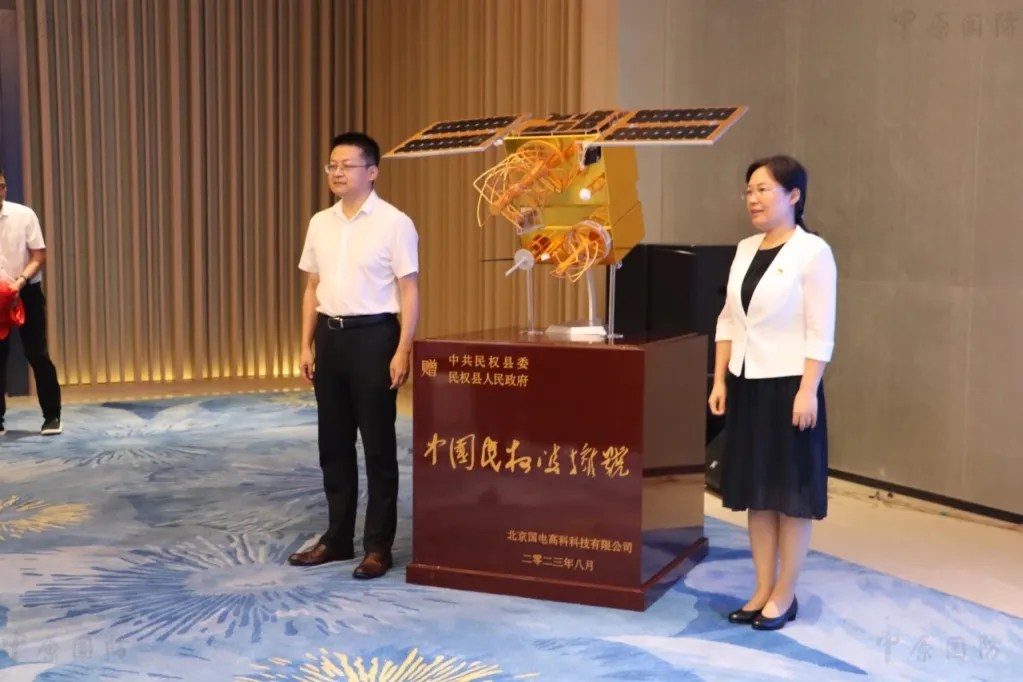
This time Ceres 1 (Haiyao 1) entered an 800km inclined orbit, which is the farthest record set by a domestic private rocket. The 21st to 24th stars of the Apokolips constellation successfully carried it into orbit. Apocalypse Constellation 21 to 24 satellites are low-orbit data acquisition satellites developed by Beijing Guodian Hi-Tech Co., Ltd. and are part of the Apocalypse Constellation. The Apocalypse constellation is designed to be networked with 38 satellites, which can provide global data collection services and effectively solve the problem of IoT network access at sea, in the air and in remote areas that are not covered by ground networks. The ground segment of the system includes satellite management center, service operation center, earth station, gateway station, ground network,
“Hefei High-tech No. 1” is the first special launch satellite in the second phase of construction among the 38 satellites planned by the Apocalypse Constellation. It is also the first satellite launched by Beijing Guodian High-tech Co., Ltd. after the industrial landing in Hefei High-tech Zone.
This mission is codenamed “The Little Mermaid”. “Ceres No. 1” will become China’s first sea-launched private commercial carrier rocket, and it will also become China’s third sea-launched carrier rocket. Prior to this, “Long March 11” and “Jielong 3” had achieved consecutive successes, verifying the feasibility, stability, and reliability of sea launches.
After “Ceres 1”, various types of rockets will be launched from the sea at the Oriental Spaceport. In December 2023, Eastern Space Company’s “Gravity 1” all-solid rocket will make its first flight here; in the first half of 2024, Rocket Company’s “Darwin 2” liquid rocket will also be launched here. In addition, sea-launched rockets such as China Aerospace Corporation’s “Lijian-1” will also be launched at the Oriental Space Port.
Compared with land-based launches, sea-based launches have two major advantages: the launch platform can be maneuvered and deployed and the launch range is wide. Specifically, on the one hand, sea launch can maneuver the launch platform to low latitudes close to the equator, which can maximize the use of the earth’s rotation speed and enhance rocket capacity; on the other hand, sea launch has a wider area Since the wreckage landing area is planned on the sea, it can avoid densely populated areas such as cities, which is convenient and safe.
The sea launch will be an important step for “Ceres-1” and its development company Xinghe Power Aerospace. It will expand the launch site resources for its rapid response and high-density launch delivery, and also provide convenience for various types of launches. At the same time, the sea launch of “Ceres No. 1” will also be an important step for China’s civil and commercial aerospace. The mission was a complete success!
On the 30th May 2023 clear 0931 Hours Morning Hong Kong SAR- Beijing time , the Belt and Road InitiativeCNSA –China National Space Administration from Jiuquan Satellite Launch Center – Inner Mongolia –China – People’s Republic of China deployment of the Chang Zheng – The Chang Zheng – Long March 2F Yao 16 –Shenzhou 16 carrier rocket.. On which Takionauts Jing Haipeng, Zhu Yangzhu, and Gui Haichao took to the predetermined orbit. The first manned flight mission in the application and development stage was a complete success. The three astronauts will stay in the space station and “join up” with the crew of Shenzhou 15 to carry out on-orbit handover “face-to-face” meeting in which brings the total crew of six with a handover ceremony from Shenzhou 15 towards 16..
On the 1st September 2023 it is the first semester of Beginning of the School Calendar in which ….开学第一课#Shenzhou 16 Takionaut Crew Sends “Three Gifts” for the Beginning of School.. At the beginning of the new semester, the Shenzhou 16 Takionaut Crew brought “three gifts” to elementary and middle school students across the country: A self-motivated, curious and original heart. I hope that the students will start the new semester with their blessings and step into the ocean of knowledge with confidence! Towards primary and secondary school students across the country: A motivated spirit, a curiosity and an original intention. I hope that the students will start the new semester with their blessings and march towards the ocean of knowledge with determination!
On the 31st August 2023 in CNSA _China National Space Administration -China – People’s Republic of China 1536 hours Hong Kong –Beijing Time China- People’s Republic of China launch the Chang Zheng – Long march 2D Carrier Rocket launching from station form Xichang Satellite Launch Center Sichuan Province…..
On the 31st August 2023 in CNSA _China National Space Administration -China – People’s Republic of China 1536 hours Hong Kong –Beijing Time China- People’s Republic of China launch the Chang Zheng – Long march 2D Carrier Rocket launching from station form Xichang Satellite Launch Center Sichuan Province…..
The satellite then entered the predetermined orbit, and the launch mission was a complete success. Remote Sensing Satellite No. 39 was developed by the Fifth Academy and the Eighth Academy of China Aviation Academy. The Long March 2D carrier rocket is developed by the Eighth Academy of China Aviation Academy.
The Long March 2D launch vehicle is a normal-temperature liquid two-stage launch vehicle developed by the Eighth Academy of China Aerospace Science and Technology Corporation. It has the ability to launch single and multiple satellites with different orbital requirements. The corresponding carrying capacity for a 700-kilometer sun-synchronous orbit is 1.3 tons. The Remote Sensing No. 39 satellite launched this time was developed by the Fifth Academy and the Eighth Academy of China Aerospace Science and Technology Corporation Co., Ltd.! This launch is the 79th launch of the Long March-2D carrier rocket, the 193rd launch of the Long March series of launch vehicles developed by the Eighth Institute of Technology, and the 485th launch of the Long March series of launch vehicles.