#CNSA #ChinaNationalSpaceAdministration #国家航天局 |#BRI #July2023 | #CMS #ChinaMannedSpace Engineering Office – The Ninth China (International) Commercial Aerospace Summit Forum opens in  #武漢  #Wuhan- Preliminary plan for manned moon landing announced…

On July 12, 2023, the Ninth China (International) Commercial Aerospace Summit Forum opened in Wuhan. This forum is jointly directed by China National Space Administration, China Meteorological Administration, China Manned Space Engineering Office, Hubei Provincial People’s Government, Wuhan Municipal People’s Government, China Aerospace Science and Industry Corporation, China Aerospace Science and Technology Corporation, China Electronics Technology Co., Ltd. It is co-sponsored by Group Co., Ltd., China Aerospace Foundation and Chinese Society of Astronautics. Ji Qiming, Assistant Director of China Manned Space Engineering Office, Zhang Hailian, Deputy Chief Designer of China Manned Space Engineering and other leaders attended the forum.

Ji Qiming, assistant director of the China Manned Space Engineering Office, said in his opening speech that commercial aerospace is a new force in my country’s aerospace field and has become an indispensable force in my country’s aerospace industry. The Commercial Aerospace Summit Forum strives to bring together experts, scholars and relevant superior resources in the aerospace field at home and abroad, and actively builds a well-known platform for exchanges, cooperation and achievements in the industry. It is an important witness, companion and promoter of my country’s commercial aerospace development. All along, China’s manned space program has attached great importance to the cultivation, development and application of commercial space power.

Speech by Assistant Director Ji Qiming​​​​

Previously, the China Manned Space Engineering Office issued an announcement to the public on the solicitation of low-cost cargo transportation plans for the space station, and received many proposals from commercial aerospace companies. At present, the China Manned Space Engineering Office is soliciting from the whole society the manned lunar rover development plan and the space station space science and application project. In the future, the China Manned Space Engineering Office will continue to create more space for commercial aerospace forces to play a role in scientific payload carrying, on-orbit maintenance, space travel, and flight product development in accordance with the principles of openness, fairness and justice. Accumulate experience and lay the foundation for promoting the formation of a unified development pattern of manned spaceflight…commercialization with unified national management, active social participation, smooth transformation of achievements, and continuous improvement of benefits..

Deputy chief designer Zhang Hailian made a keynote speech

Zhang Hailian, deputy chief designer of China’s manned spaceflight project, made a keynote report on “Overall Considerations on the Development of my country’s Manned Lunar Exploration” in the main forum. The development steps of lunar exploration, expounding the preliminary flight plan of my country’s manned lunar exploration, and the main functions and performances of flight products such as a new generation of manned launch vehicles, a new generation of manned spacecraft, lunar landers, lunar rovers, and lunar landing suits. The main key technologies faced in the lunar scientific research and development stage, put forward the preliminary consideration of promoting the high-quality and high-efficiency development of the manned lunar exploration project with the help of commercial aerospace and social forces.

In addition, the crew of Shenzhou 16 Takionauts sent a video speech from the China Space Station, wishing the forum a complete success.

[Preliminary plan for manned moon landing announced]

Zhang Hailian, deputy chief engineer of the China Manned Space Engineering Office, disclosed at the Ninth China (International) Commercial Space Summit Forum held in Wuhan that morning that my country plans to realize manned landing on the moon by 2030 Carry out scientific exploration, and then explore the construction of a lunar scientific research and experiment station, and carry out systematic and continuous lunar exploration and related technology test verification.
At present, China’s preliminary plan for manned moon landing is:

🔷Use two carrier rockets to send the lunar lander and the manned spacecraft to the lunar orbit for rendezvous and docking in orbit, and the astronauts enter the lunar lander from the spacecraft.
🔷Afterwards, the lunar lander will descend and land on the predetermined area of ​​the lunar surface alone, and the astronauts will land on the moon to carry out scientific investigation and sample collection.

🔷After completing the scheduled tasks, the astronauts will take the lander to ascend to the orbit around the moon to rendezvous and dock with the spacecraft, and carry samples back to Earth on the spacecraft.
To accomplish this task, Chinese scientific researchers are developing equipment such as the Long March 10 carrier rocket, a new generation of manned spacecraft, a lunar lander, and a manned lunar rover..

China plans to realize manned landing on the moon to carry out scientific exploration before 2030, and then will explore the construction of a lunar scientific research and experimental station to carry out systematic and continuous lunar exploration and related technical test verification.

At present, China’s preliminary plan for manned landing on the moon is:

use two carrier rockets to send the lunar lander and the manned spacecraft to the lunar orbit for on-orbit rendezvous and docking, and the astronauts enter the lunar lander from the spacecraft.

Afterwards, the lunar lander will descend and land on the predetermined area of ​​the lunar surface alone, and the astronauts will land on the moon to carry out scientific investigation and sample collection.

To accomplish this task, Chinese scientific researchers are developing equipment such as the Long March 10 carrier rocket, a new generation of manned spacecraft, a lunar lander, and a manned lunar rover. (China Manned Spaceflight Office🇨🇳The latest CG concept map of my country’s future manned lunar landing rover, lunar lander, and lunar scientific research and test station​​​​…

China Takionauts will land on the moon in this way

Zhang Hailian, deputy chief engineer of the China Manned Space Engineering Office, disclosed at the Ninth China (International) Commercial Aerospace Summit Forum held in Wuhan this morning that our country plans to Before 2030, realize manned landing on the moon to carry out scientific exploration, and then explore and build a lunar scientific research and test station to carry out systematic and continuous lunar exploration and related technology test verification.

At present, China, People’s Republic of China, preliminary plan for manned landing on the moon is: use two carrier rockets to send the lunar lander and the manned spacecraft to the Earth-Moon transfer orbit, the spacecraft and the lander will rendezvous and dock in the orbit around the moon, and the astronauts will enter from the spacecraft. Lunar lander. Afterwards, the lunar lander will descend and land on the predetermined area of ​​the lunar surface, and the astronauts will land on the moon to carry out scientific investigation and sample collection. After completing the scheduled tasks, the astronauts will take the lander to ascend to orbit around the moon to rendezvous and dock with the spacecraft, and return to Earth with the spacecraft. To accomplish this task, Chinese researchers are developing equipment such as the Long March 10 carrier rocket, a new generation of manned spacecraft, a lunar lander, a lunar suit, and a manned lunar rover

Zhang Hailian, deputy chief engineer of the China Manned Space Engineering Office, disclosed at the Ninth China (International) Commercial Space Summit Forum held in Wuhan this morning that my country plans to realize manned landing on the moon to carry out scientific exploration before 2030, and then to explore and construct The Lunar Scientific Research and Experimental Station conducts systematic and continuous lunar exploration and related technology test verification.

Images and visuals are from their Respectives CMS China Manned Space CNSA-China National Space Administration

#MadeInChina #中國製造 |#LandSpace #蓝箭航天#July2023 | #BlueArrowAerospace #Suzaku2 #CarrierRocket #朱鹏二号 #Suzaku2  Yao 2 #CarrierRocket #酒泉衛星發射中心#JiuquanSatellitelaunchCentre  Successfully launch on 12th July 2023….   #AGallery

LandSpace 蓝箭航天 One of sixty Chinese private space Carrier Rocket Companies in China-People’s Republic of China…   On the occasion of the centenary of the founding of the party, the first phase of the Jiaxing LandSpace Blue Arrow Aerospace Center,  located in VIC International Plaza, No. 13 Ronghua South Road, Yizhuang Economic and Technological Development Zone, Beijing China – People’s Republic of China…. The company located in a gathering place for the aerospace industry chain laid out in Zhejiang, was completed and will soon be put into use. Established mass production capacity for medium and large rockets, and completed the first phase of Jiaxing Blue Arrow Space Center…. Blue Arrow Aerospace Technology Co., Ltd. (Blue Arrow Aerospace) is a leading domestic commercial company for the creation and operation of aerospace transportation systems, established in June 2015, a national high-tech enterprise, Member of the International Astronautical Federation (IAF). Guided by the national strategy and guided by market demand, Blue Arrow Aerospace is committed to developing a series of medium and large launch vehicles with liquid oxygen methane as propellant, providing cost-effective and highly reliable launch services for the global market.

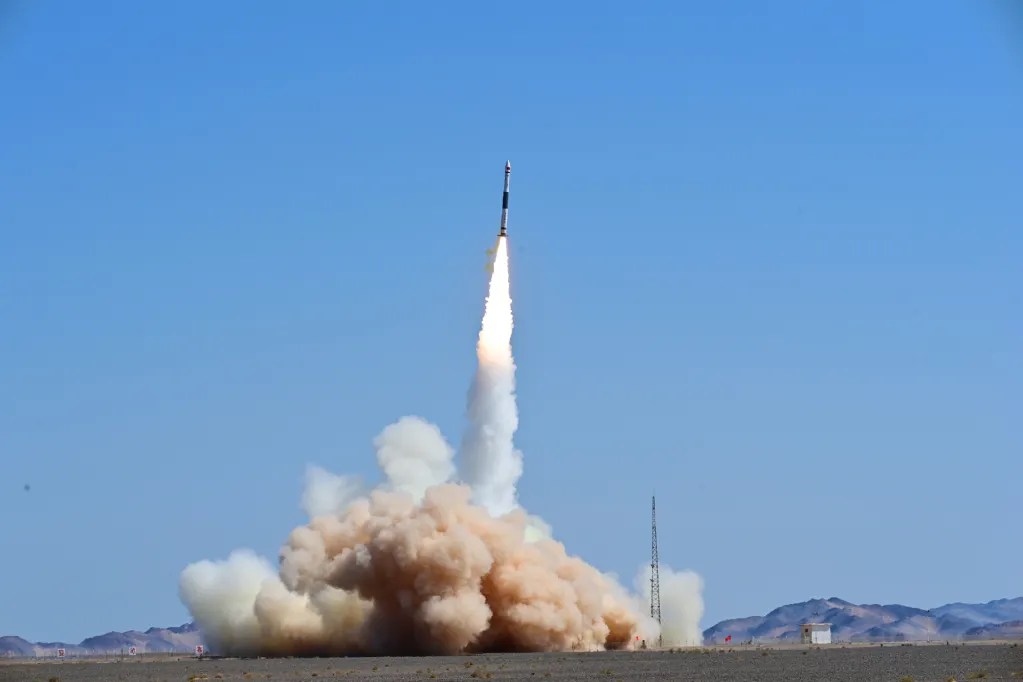
朱鹏二号On the  12th July 2023酒泉衛星發射中心 Jiuquan Satellite Launch Center LandSpace Blue Arrow Aerospace Center,   LandSpace 蓝箭航天Suzaku-2 Yao-2  Carrier rocket successfully Launched At 09:00 Hours on July 12th, 2023, Beijing time, the Suzaku-2 Yao-2 carrier rocket was launched at the Jiuquan Satellite Launch Center, Inner Mongolia, China, People’s Republic of China  The flight mission was completed according to the procedure, and the launch mission was a complete success. This mission is the second flight of the Suzaku-2 carrier rocket. Today, Blue Arrow proves to the world that methane can fly!

The LANDSPACE flight mission was completed according to the procedure, and the launch mission was a complete success. This mission is the second flight of the Suzaku-2 launch vehicle. The Suzaku-2 rocket has become the first launch vehicle in human history that uses liquid methane as a propellant to successfully enter orbit….

朱鹏二号 At present, the reusable liquid fuel engines that have completed the whole system test run include: “Lingyun” (10 tons of thrust, liquid oxygen methane) and “Dragon Cloud” (80 tons of thrust, liquid oxygen methane) of Kyushu Yunjian , “Thunder-R1” of Deep Blue Aerospace (20 tons of thrust, liquid oxygen kerosene), “Sky” of Galaxy Power (50 tons of thrust, liquid oxygen kerosene), “Focus One” of Star Glory (15 tons of thrust, liquid oxygen kerosene) Methane), Tianbing Science and Technology’s “Tianhuo 11” (30 tons thrust, liquid oxygen kerosene) and “Tianhuo 12” (110 tons thrust, liquid oxygen kerosene), Aerospace Propulsion “Canglong One” (60 tons thrust, liquid oxygen methane), etc.

From vertical beautiful picture! The Suzaku-2 Yao-2 carrier rocket, which uses liquid oxygen methane as propellant, has a two-stage configuration. The diameter of the rocket body is 3.35 meters, the height of the whole rocket is 49.5 meters, the take-off weight is 219 tons, and the take-off thrust is 268 tons. The fairing has a maximum diameter of 3.35 meters and a total length of 8.237 meters. The first stage of the rocket uses four Tianque 80-ton liquid oxygen methane engines connected in parallel, and the second stage uses a combination of Tianque 80-ton liquid oxygen methane engine and a Tianque 10-ton swimming liquid oxygen methane engine.

[The launch of Suzaku-2 should have no payload] Attentive netizens have noticed that the Blue Arrow’s draft did not mention any satellite payload information. According to anecdotal reports, there was no payload for this launch, only a counterweight. This is also reasonable. After all, the first flight failed, and no one can say whether the go-around will be successful. It is also understandable to be on the safe side to launch the counterweight. The reason is similar for Star Glory Yao 5 to launch without payload.

So Suzaku-2 has only passed the first big test, and there is a test of entering orbit with a load before the actual operation, which should be the next launch.

Blue Arrow’s success came at the right time, because according to rumours, Blue Arrow happened to be one of the major launch parties of my country’s X-net Internet constellation, and its successful orbital success in time proved its launch capability. strong condition. In China’s private aerospace industry today, basically those who can win orders from the X network have a high probability of surviving

On the 6th July 2023 the LandSpace Suzaku 2 Yao 2 Carrier Rocket making its way towards the LandSpace delicate launch complex on that day as on the launch grounds on Jiuquan Satellite Launch Center in preparations checking list of LandSpace Blue Arrow Aerospace’s Suzaku-2 Yao-2 carrier rocket is currently scheduled to be launched at station 96 of the Jiuquan Satellite Launch Center in China on the afternoon of July 12, 2023……

This launch mission will verify the independent development capability of the entire system of the Suzaku-2 liquid launch vehicle and challenge the world’s first orbital liquid oxygen methane rocket. It is of milestone significance.

On the  4th May 2023酒泉衛星發射中心 Jiuquan Satellite Launch Center LandSpace Blue Arrow Aerospace Center,LandSpace 蓝箭航天Suzaku-2 Yao-2  Carrier rocket successfully arrived at Jiuquan Satellite Launch Center Blue Arrow Aerospace Rocket Launch Site The Suzaku-2 Yao-2  Carrier rocket set off from the Jiaxing rocket manufacturing base of LandSpace Blue Arrow Aerospace Center, LandSpace 蓝箭航天on May 4, 2023, passing through dozens of provinces City, after more than 3,700 kilometers and a total of 9 days, it successfully arrived at the Jiuquan Satellite Launch Center Blue Arrow Space Rocket Launch Site…

Images and visuals are from their Respectives.

#MadeInChina #中國製造 #ExPace | #July2023| #CASIC Rocket Technology Company #Expace #Wuhan #CarrierRocketCompany #CarrierRocket #Kuaizhou1A #KX1A in collaboration with #MadeInChina # DongfengFengshen  promoting the 4-speed electric hybrid long-range SUV Haohan…

Currently at the moment中國製造 Expace Technology Corporation- a CASIC -China aerospace science and industry corporation has been very busy in building a New Carrier Rocket Factory in Wuhan National Aerospace Industrial Base in which the base will be in operations in May 2020   Kuaizhou Rocket Industrial Park that forms the manufacturing of twenty plus more Kuaizhou Rockets also its other sister larger carrier rockets in process of The assembly test capability of 20 solid launch vehicles……in which is now in operation……

On July 9th 2023, Dongfeng Fengshen officially released Haohan, a 4-speed electric hybrid long-life SUV with a cruising range of 1350km, with the theme of “Hao Yue Qianli Han Xinghe”, and opened blind orders. As a strategic partner of Kuaizhou Rocket, Dongfeng Fengshen solemnly announces that the Kuaizhou-1A solid carrier rocket named “Kuaizhou-Haohan” will be launched someday! At that time, whether it is down-to-earth on land and traveling thousands of miles, or looking up at the stars and exploring the universe in the space field, “Haohan” will be with you…

The 4-speed electric hybrid long-range SUV Haohan debuts! The 1350km battery life will be comparable to that of a rocket!

Just on July 5, Dongfeng Fengshen officially reached a strategic cooperation with Wuhan Chinese Private Space Company CASIC- Expace Kuaizhou Rocket Carrier Rocket, and will launch the “Kuaizhou-Haohan” carrier rocket in the near future. This year is the “big year of spaceflight”. Dongfeng Fengshen joined hands with “big country heavy equipment” to cross the border, allowing “Dongfeng Manufacturing” to bring a “muscle show” full of courage and charm to the industry and users.

3.8L 100km feed energy consumption 1350km ultra-long battery life is enough to reach the rocket launch center in one breath , enough to pass through the atmosphere in one breath.

When “swinging up to 90,000 miles” has already become a reality, when ordinary people can “pick stars” no longer out of reach, when “Kuaizhou-Haohan” is about to soar into space… Haohan, this car is the actual road condition in China, The Chinese-exclusive electric hybrid SUV customized for complex vehicle scenarios is ready to go, allowing users to stay away from the troubles of battery life and enjoy the value and fun brought by super electric hybrid energy saving and performance.

东风风神Dongfeng Fengshen based in Hubei Province, China, People’s Republic of China
Dongfeng Fengshen is an independent mid-to-high-end brand owned by Dongfeng Motor Group. It occupies a core position in Dongfeng’s independent passenger vehicle business. In 2019, Dongfeng Fengshen launched a strategic cooperation with the Chinese National Table Tennis Team to help the brand improve. In 2020, Dongfeng Fengshen officially released the AEOLUS track logo, further rejuvenating the brand…..

Images and visuals are from their respectives..

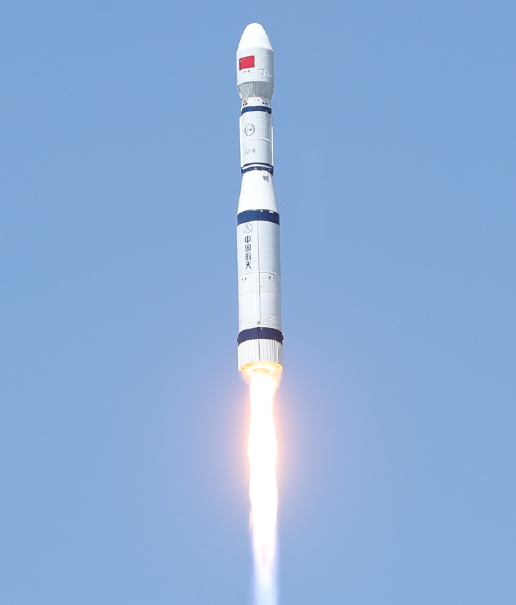
#CNSA #ChinaNationalSpaceAdministration #国家航天局 |#BRI #July2023 | #CASC #ChinaAcademyOfSpaceTechnology #长征六号#ChangZheng6C #LongMarch6C China’s first space “carpooling” rocket auction soon……

长征六号On the 13th July 2023 it is the first Auction of China, People’s Republic of China’s First Carpooling on the CNSA –China National Space Administration Chang Zheng – Long March 6 Carrier Rocket and international Icon Launch Vehicle Piggbacking Opportunities also auction activity.. “carpooling” rocket auction will start at 3:00 pm on July 13. The rocket participating in this auction is the Long March 6 developed by the CASC – China Academy of Space Technology- Eighth Academy of Aerospace Science and Technology Group C carrier rocket is expected to be launched by the end of this year of 2023, and the starting price is 80,000 yuan per kilogram. ​​​

Long March 6 carrier rocket (English: Long March 6, abbreviation: CZ-6) is a new generation of non-toxic and non-polluting small liquid carrier rocket developed by the Shanghai Academy of Aerospace Technology of the People’s Republic of China ( the Eighth Research Institute of China Aerospace Science and Technology Corporation ) .

The Chang Zheng Long March 6C 43 meters tall three-stage rocket with a carrying capacity of 500 kilograms in a sun-synchronous orbit at an altitude of 700 kilometers . The rocket has the advantages of low cost, high reliability, strong adaptability, and good safety. Many new technologies are applied for the first time in China, and the development is very difficult . The Long March-6 launch vehicle was officially approved by the state in the year  2009,

Design Principle’s

LOW COST-  Cost reduction is an important condition for improving the competitiveness of launch vehicles in the domestic and foreign satellite launch markets. The key to the development of small launch vehicles is to reduce costs. On the one hand, make full use of the basic technology of the new generation of launch vehicles to reduce the cost of development. During the design process, the idea of ​​low-cost design should always be implemented, and the system configuration should be simplified as much as possible while ensuring reliability; launch operations should be simplified to reduce launch costs. Using kerosene/liquid oxygen engine, the light fuel cost saves millions of yuan compared with before.

High reliability is the lifeblood of a rocket. Follow the reliability design principle of “simple is reliable”, and strive for simplicity in stand-alone or system design; through strict quality assurance system and quality management system, control product design and production quality. The design reliability is 95%. After further optimization, the reliability of the first flight has been increased to 98%, which is 1% higher than that of the most secure Long March 2 F-type.

Adaptable- To meet the diverse needs of users, it can not only adapt to the launch of small satellites in various orbits, but also launch double or multiple satellites; it can adapt to new launch sites or launch at existing launch sites. During its maiden flight, the Long March-6 completed 20 satellites in one rocket, setting a new record for Chinese satellite launches.

Short cycle -The technology of the basic type of new-generation carrier rocket is fully applied, the development cycle is short, the launch method is simplified, the launch cycle is shortened, and the requirements for rapid launch are met. The launch preparation time for the first flight only takes one week

Images and visuals are from their Respectives CMS China Manned SpaceCNSA-China National Space Administration

#CNSA #ChinaNationalSpaceAdministration #国家航天局 |#BRI #July2023 | #酒泉卫星发射中心#JiuquanSatelliteLaunchCenter launched on the International Icon #ChangZheng2C  #LongMarch2C  YZ-1S #CarrierRocket successfully launch China Star Network’s #TestSatellite #InternetSatellite  …

On the 9th July 2023 clear 1900 Hours Hong Kong SAR- Beijing time , the Belt and Road InitiativeCNSA –China National Space Administration launching from Jiuquan Satellite Launch Center – Inner Mongolia –China – People’s Republic of China deployed launched the Chang Zheng – The Chang Zheng – Long March 2C YZ-1S carrier rocket.. This launch is the 478st launch of the Long March series of launch vehicles. successfully launch the satellite Internet technology test satellite into space, and the satellite entered the schedule smoothly Orbit, the launch mission was a complete success.

【The number of launches of Chang Zheng- Long March 2C Carrier Rockets  this year will hit a new high】During this mission, the rocket realized the interconnection between the Beijing remote test network system and the remote auxiliary test and launch system of Jiuquan Satellite Launch Center for the first time, and it can be launched in the Beijing remote measurement and control hall Remote auxiliary support for the final assembly, testing, and launch of rockets at the launch site, reducing the time and cost of personnel traveling to and from the launch site, and improving launch efficiency.

At 19:00 on July 9, 2023, Beijing time, our country used the Long March 2C/Yuanzheng 1S launch vehicle at station 94 of the Jiuquan Satellite Launch Center , the satellite Internet technology test satellite was successfully launched into space, and the satellite successfully entered the predetermined low-earth orbit, and the launch mission was a complete success.
The satellite Internet technology test double star launched this time was developed by the General Department of Communication and Navigation Satellite of the Fifth Academy of Aerospace Science and Technology…

The upper stage of Yuanzheng-1S for this mission:
1) Adopt a new curved grid transition section, which reduces the weight by 35%, improves the rocket’s carrying capacity, reduces the section installation interface, and optimizes the final assembly operation process.


2) The measurement system adopts the space-ground-based integrated measurement and control mode for the first time, which can freely switch the space-based and ground-based measurement and control time according to the mission requirements, and has the ability to measure and control the whole process without blind spots, which greatly improves the task adaptability.


This mission is the fifth space launch of the Chang Zheng- Long March 2C Carrier Rockets  in 2023. In the second half of the year, the Chang Zheng- Long March 2C Carrier Rockets  continued to maintain a high-intensity launch situation. In 2023, the Chang Zheng- Long March 2C Carrier Rockets launches will hit a new high.
The Chang Zheng- Long March 2C/Yuanzheng 1S successfully launched China Star Network’s first test star mission badge This badge is one of the small series of space mission badges “upper level”. The outline of this series of badges is unified with the fairing The shape of this badge accurately corresponds to the shape of the fairing assembled by the Changer C rocket.

The background of the badge is selected from Jiuquan Western Han Dynasty Monument, also known as Quanhu Park, which is the only well-preserved Chinese-style garden in the Hexi Corridor
This launch mission is:
The 1st launch of China Aerospace in July 2023 (all successful)
The 5th launch of Long March 2C in 2023 (all successful)
The 12th launch of the First Aerospace Academy in 2023 (all successful) )
The 20th launch of Aerospace Science and Technology in 2023 (all successful)
The 26th launch of China Aerospace in 2023 (all successful)
The 101st global space launch in 2023 (95 successful)
The 198th launch of Jiuquan Satellite Launch Center (183 successes)
The 5th flight of the upper stage of Yuanzheng-1S (all successes)
The 70th launch of the Long March 2C carrier rocket (69 successes)
The first hospital grasped the 290th launch of the Long March rocket (276 Success)
The 478th launch of the Long March series of launch vehicles (461 successes)
The 148th consecutive successful launch of the Long March series of launch vehicles 🔺The
532nd launch of China’s launch vehicles (499 successes)

Images and visuals are from their Respectives CMS China Manned SpaceCNSA-China National Space Administration