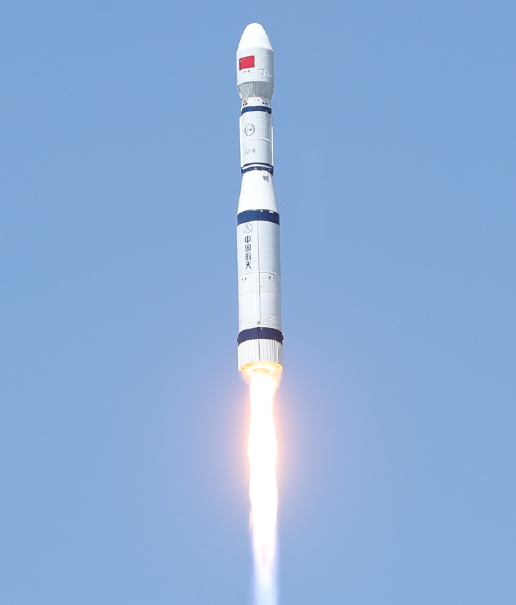
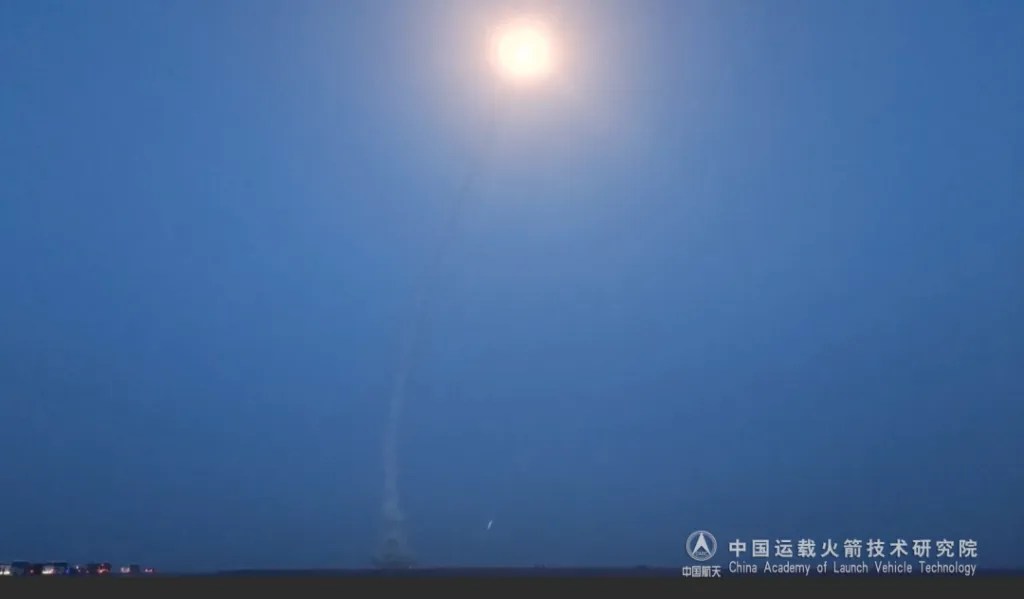
#CNSA #ChinaNationalSpaceAdministration #国家航天局 |#BRI #July2023 | #酒泉卫星发射中心#JiuquanSatelliteLaunchCenter launched on the International Icon #ChangZheng2C  #LongMarch2C  YZ-1S #CarrierRocket successfully launch China Star Network’s #TestSatellite #InternetSatellite  …

On the 9th July 2023 clear 1900 Hours Hong Kong SAR- Beijing time , the Belt and Road InitiativeCNSA –China National Space Administration launching from Jiuquan Satellite Launch Center – Inner Mongolia –China – People’s Republic of China deployed launched the Chang Zheng – The Chang Zheng – Long March 2C YZ-1S carrier rocket.. This launch is the 478st launch of the Long March series of launch vehicles. successfully launch the satellite Internet technology test satellite into space, and the satellite entered the schedule smoothly Orbit, the launch mission was a complete success.

【The number of launches of Chang Zheng- Long March 2C Carrier Rockets  this year will hit a new high】During this mission, the rocket realized the interconnection between the Beijing remote test network system and the remote auxiliary test and launch system of Jiuquan Satellite Launch Center for the first time, and it can be launched in the Beijing remote measurement and control hall Remote auxiliary support for the final assembly, testing, and launch of rockets at the launch site, reducing the time and cost of personnel traveling to and from the launch site, and improving launch efficiency.

At 19:00 on July 9, 2023, Beijing time, our country used the Long March 2C/Yuanzheng 1S launch vehicle at station 94 of the Jiuquan Satellite Launch Center , the satellite Internet technology test satellite was successfully launched into space, and the satellite successfully entered the predetermined low-earth orbit, and the launch mission was a complete success.
The satellite Internet technology test double star launched this time was developed by the General Department of Communication and Navigation Satellite of the Fifth Academy of Aerospace Science and Technology…

The upper stage of Yuanzheng-1S for this mission:
1) Adopt a new curved grid transition section, which reduces the weight by 35%, improves the rocket’s carrying capacity, reduces the section installation interface, and optimizes the final assembly operation process.


2) The measurement system adopts the space-ground-based integrated measurement and control mode for the first time, which can freely switch the space-based and ground-based measurement and control time according to the mission requirements, and has the ability to measure and control the whole process without blind spots, which greatly improves the task adaptability.


This mission is the fifth space launch of the Chang Zheng- Long March 2C Carrier Rockets  in 2023. In the second half of the year, the Chang Zheng- Long March 2C Carrier Rockets  continued to maintain a high-intensity launch situation. In 2023, the Chang Zheng- Long March 2C Carrier Rockets launches will hit a new high.

The Chang Zheng- Long March 2C/Yuanzheng 1S successfully launched China Star Network’s first test star mission badge This badge is one of the small series of space mission badges “upper level”. The outline of this series of badges is unified with the fairing The shape of this badge accurately corresponds to the shape of the fairing assembled by the Changer C rocket.

The background of the badge is selected from Jiuquan Western Han Dynasty Monument, also known as Quanhu Park, which is the only well-preserved Chinese-style garden in the Hexi Corridor
This launch mission is:
The 1st launch of China Aerospace in July 2023 (all successful)
The 5th launch of Long March 2C in 2023 (all successful)
The 12th launch of the First Aerospace Academy in 2023 (all successful) )
The 20th launch of Aerospace Science and Technology in 2023 (all successful)
The 26th launch of China Aerospace in 2023 (all successful)
The 101st global space launch in 2023 (95 successful)
The 198th launch of Jiuquan Satellite Launch Center (183 successes)
The 5th flight of the upper stage of Yuanzheng-1S (all successes)
The 70th launch of the Long March 2C carrier rocket (69 successes)
The first hospital grasped the 290th launch of the Long March rocket (276 Success)
The 478th launch of the Long March series of launch vehicles (461 successes)
The 148th consecutive successful launch of the Long March series of launch vehicles 🔺The
532nd launch of China’s launch vehicles (499 successes)

Images and visuals are from their Respectives CMS China Manned SpaceCNSA-China National Space Administration

#CNSA #ChinaNationalSpaceAdministration #国家航天局 | #BRI #June2023|#太原卫星发射中心  #TaiyuanSatelliteLaunchCenter  – International Iconic #ChangZheng6 #LongMarch6  yao 12 #CarrierRocket in launched to deploy #TestSatellite #Shiyan Number 25  Satellite  into orbit carry out new earth observation technology experiments #AGallery ..

At 1118 Hours Hong Kong SAR- Beijing Time  20th June 2023 , China- People’s Republic of China- CNSA –China National Space Administration   Successfully launched  the New Next Generation Long March – Chang Zheng 6 Y12 carrier rocket at the Taiyuan Satellite Launch Center Shanxi Province..  the Long March 6 carrier rocket carrying the test 25th satellite ignited and took off at the Taiyuan Satellite Launch Center, and then successfully put the satellite into the predetermined orbit, and the launch was a complete success.

The Long March-6 launch vehicle is a low-temperature liquid three-stage launch vehicle developed by the General Manager of the Eighth Academy of China Aerospace Science and Technology Corporation. Its sun-synchronous circular orbit has a carrying capacity of up to 1.0 tons (orbital height 700 kilometers). In this mission, the rocket test team carried out work in three aspects: optimizing the process, improving reliability and enhancing mission adaptability in response to satellite requirements, to improve the quality and efficiency of rocket launches. The test satellite No. 25 was developed by Aerospace Dongfanghong Satellite Co., Ltd. of the Fifth Academy of Aerospace Science and Technology Group, and is mainly used to carry out new-type earth observation technology experiments. This launch is the 11th launch of the Long March-6 carrier rocket and the 477th launch of the Long March series of carrier rockets

Long March 6 Yao 12 arrow adopts a new inverted cone-shaped frame-type satellite support…… The Long March 6 launch vehicle for this mission was developed by the Eighth Academy of China Aerospace Science and Technology Corporation, and it adopts the Sanping test launch mode A new generation of liquid oxygen kerosene launch vehicle. In this mission, the rocket test team carried out work in three aspects: optimizing the process, improving reliability and enhancing mission adaptability in response to satellite requirements, to improve the quality and efficiency of rocket launches.


Following the launch of the mission, the model team sorted out a total of 36 improvement items, covering operational reliability and test coverage, which further improved the robustness and reliability of the rocket.

“The satellites launched this time are highly compatible with our Long March 6 rocket,” said Yu Yansheng, the overall chief designer of the Eight, Chang Zheng –Long March 6 test team. From the perspective of load weight, there are several types of rockets on the market that can perform this mission, but after an in-depth analysis of the satellite’s shape design and mission requirements, only the fairing envelope and carrying capacity of the Long March 6 are most suitable for the mission.

In view of the overall configuration of the mission satellite with a large aspect ratio, an inverted cone-shaped frame-type satellite support was designed for the model, and it is equipped with a 2.9-meter-diameter satellite fairing to adapt to the layout and interface of the satellite in the fairing. Requirements, provide effective “lifting + support” for satellites. In addition, the foam spraying technology is used on the outside of the satellite fairing to realize the insulation measures of the fairing without operation at the launch site and before launch.

At the same time, in terms of the separation method of the satellite, Chang Zheng –Long March 6 Y12 adopted a point-type connection and separation device composed of four components for the first time, which has the characteristics of light weight and intensive functions of Improved separation reliability.

In view of the fact that there are many satellite operation items after the rocket is transferred to the launch area, the design and operation personnel of the two sides of the model organization, the Star and Rocket, carried out special exchanges to confirm the timing, process, tools, precautions, etc. of the operation one by one; at the same time, arrange Specialized operation drills optimize the operation process to ensure that the time is controllable, safe and smooth in actual operation.

The Taiyuan Satellite Launch Center in June coincided with the season with more thunderstorms, and the model carried out re-identification, re-analysis, and re-confirmation of summer launch risks at the launch site. According to the characteristics of the Long March 6 carrier rocket’s “three-level” test launch mode and unsupported launch, a special review of rain and lightning protection was carried out, including the effectiveness of rain and lightning protection measures, the actual implementation of various measures, and the dismantling and rain protection before launch. Timing, etc., form a tabular inspection and confirmation document to ensure that the rocket meets the pre-launch operation and launch requirements during the thunderstorm season.

Images and visuals are from their Respectives CMS China Manned SpaceCNSA-China National Space Administration

#MadeInChina #中國製造 #中國 | #北京 #Beijing #天兵科技 #TianbingTechnology #SpacePioneer #Apirl2023 |successfully launching #TianLongTwo Yao One #CarrierRocket launch of #RemoteSensing One Cute #Jinta #LoveSpaceScience #Satellite …. . #JiuquanSatelliteLaunchCenter #Update #BehindTheScenes

Founded in 2015 located in Beijing ….天兵科技 – 北京天兵科技有限公司Tianbing Technology is an Aerospace propulsion system supplier and spacecraft provider One of Sixty Plus Chinese carrier Rocket companies in China, People’s Republic of China ……. Tianbing Technology is an advanced aerospace propulsion system supplier and aerospace vehicle provider. Tianbing Technology independently develops the next-generation ambient temperature green HCP liquid propellant and minimalist aerospace propulsion system. As an upgraded product of traditional chemical propulsion system, it can meet cost-effective aerospace. Advance system supporting needs. The next-generation green HCP aerospace propulsion system, first tested by Tianbing Technology, can be used in the small-vehicle main power and launch vehicle upper-level propulsion system.

At 16:48 Hong Kong SAR- Beijing time on April 2, the Space Pioneer- Tianlong-2 Yaoyi Yao One carrier rocket successfully made its maiden flight at the Jiuquan Satellite Launch Center inner Mongolia in China, People’s Republic of China , and successfully sent the love space science satellite into the predetermined orbit , the launch mission was a complete success. The main purpose of this first flight test is to verify the correctness of the overall plan of the launch vehicle and the coordination among various systems, and to obtain the flight environment parameters of the whole rocket. The Love Space Science satellite carried on board is mainly used to carry out technical verification such as remote sensing imaging experiments. This mission is the first flight of the Tianlong-2 carrier rocket…

Space Pioneer Tianlong-2 carrier rocket is about to fly for the first time at the Jiuquan Satellite Launch Center…..The Tianlong-2 liquid oxygen kerosene carrier rocket was developed by Beijing Tianbing Technology Co., Ltd. The rocket is a three-stage configuration with a total length of 32.8 meters, a take-off mass of 150 tons, a take-off thrust of 190 tons, and a low-earth orbit capacity of 2 tons. The capacity of the sun-synchronous orbit per Kilometer is 1.5 tons.
Will it become the first liquid rocket to enter orbit by a Chinese private company? expect!

Tianlong-2 on the ground of Jiuquan Field is ready to go! The rocket has completed the filling of kerosene and liquid oxygen earlier,

Tianlong-2 carrier rocket is a medium-sized carrier rocket developed by Tianbing Technology for three years. The rocket is a three-stage liquid rocket, using liquid oxygen and coal-based aerospace kerosene propellants. The rocket has a diameter of 3.35 meters, a length of 32.8 meters, and a take-off mass of 153. tons, the take-off thrust is 193 tons, the sun-synchronous orbit carrying capacity at 500 km altitude is 1.5 tons, the LEO carrying capacity is 2 tons, and it can reach 4 tons after improvement. The rocket launched this time was named “Zhangjiagang”.

The first flight of the Tianlong-2 launch vehicle was successful, creating seven new records in international and domestic spaceflight:

1. The first liquid launch vehicle in the world’s private spaceflight successfully entered orbit for the first time;
2. The world’s first flight using coal-based aerospace kerosene 3.
China’s first liquid launch vehicle that does not rely on a launch station;
4. China’s first launch vehicle that uses 3D printed high-pressure afterburning engines;
5. China’s first launch vehicle that uses 3-engine parallel engine technology;
6 .China’s first launch vehicle that adopts an all-aluminum alloy surface tension tank attitude-orbit control system;
7.China’s first launch vehicle that realizes the reuse of rocket body structure.

Tianlong-2 is the world’s first liquid launch vehicle that uses coal-based aerospace kerosene as fuel for flight. The successful flight of Tianlong-2 is the follow-up delivery of coal-based aerospace kerosene for the flight use of new-generation launch vehicles such as my country’s Long March 5 and Long March 7. It has laid a solid foundation for reducing launch costs and achieving reuse.

Tianbing Technology Tianlong 2 Yaoyi rocket highway horizontal transfer and the vertical screen of the field! ! This “three flats and one vertical” test launch mode is similar to the Long March 6 rocket, and it is the same as the Long March 6 with first-level and second-level kerosene….

An orange cube payload was placed on the top of the Tianlong-2 Yaoyi rocket. Its appearance is almost the same as the satellite on the TL-2 first flight mission logo, and it should be the “main star”.
But all the press releases have the same calibre. They all say that only the “Love Space Science” 4U cube star (placed in the cube star separator) is carried, and no other loads are mentioned. Therefore, it is speculated that the probability of this orange cube is Counterweight.

“Jinta” (“Love Space Science”) is a remote sensing satellite developed by Hunan Hangsheng Satellite Technology Co., Ltd. The cube star is about 40 centimetres high and weighs about 8 kilograms. It is mainly used to verify the key points of the spacecraft. Technology, and at the same time cooperate with popular science education to show the charm of spaceflight. The star is equipped with a star camera, which can provide a large amount of cosmic image materials for the science education of Chinese teenagers and send them back to the ground in real time. In addition, it will conduct the first space test of the feasibility of radio charging in the country.
It is understood that the Tianlong-2 carrier rocket that undertakes the delivery mission has arrived at the Jiuquan Satellite Launch Center, and will complete the flight test mission by the end of March, transporting two remote sensing satellites into a sun-synchronous orbit at an altitude of 500 kilometers, which will open up China’s commercial aerospace liquid delivery A new era of rocketry…

[Tianlong-2 first flight mission Jiuquan large screen parameters]
Mission code: 01SH-02
Departure time: 2023-04-02 16:48:16.459
Program turn: T+12s
Maximum dynamic pressure: (theoretical value T+66.6s)
one Secondary separation: T+155.499s (150.590s)
Fairing separation: T+190.649s (185.510s)
Secondary and tertiary separation: T+449.402s (439.386s)
Star-arrow separation: T+971.546s (991.268s)
Satellite Orbital inclination: 97.404º
Satellite orbital perigee altitude: 499.607km
Satellite orbital apogee altitude: 501.581km

Images and visuals are from their respectives also天兵科技 – 北京天兵科技有限公司Tianbing Technology- Space Pioneer..

#CNSA #ChinaNationalSpaceAdministration #国家航天局 |#BRI #March2023 |  #JiuquanSatelliteLaunchCenter launched on the International Icon #ChangZheng11  #LongMarch11  #CarrierRocket successfully launch #TestSatellite  #Satellites….

On the 15th  March 2023 clear 1941 Hours Hong Kong SAR- Beijing time , the Belt and Road Initiative CNSA –China National Space Administration  launching from Jiuquan Satellite Launch Center – Inner Mongolia –China – People’s Republic of China deployed launched the Chang Zheng – Long March 11 carrier rocket ….  The Chang Zheng – Long March 11 carrier rocket..

This is the first flight of the Chang Zheng Long March 11 Carrier rocket, known as the “fast and sharp arrow”, in 2023. It is also the 16 consecutive successful launches of this type of rocket since its first flight.

Chang Zheng -Long March 11 carrier rocket at the Jiuquan Satellite Launch Center to successfully launch the test satellite 19 into space, and the satellite successfully entered the predetermined orbit, the launch mission was a complete success. The satellite is mainly used in the fields of national land census, urban planning and disaster prevention and mitigation. This mission is the 467th flight of the Long March series of launch vehicles. ​​​….​

Images and visuals are from their Respectives CMS China Manned SpaceCNSA-China National Space Administration

#CNSA #ChinaNationalSpaceAdministration #国家航天局 |#BRI  #December2022 |#西昌衛星發射中心 #XichangSatelliteLaunchCenter – Successfully launching the advance iconic #ChangZheng3B  #LongMarch3B  #CarrierRocket deploying advance #TestSatellite Number 10 02  #ExperimentalSatellite #Environmental #Satellite  ….

On the 29th December 2022  in  CNSA _China National Space Administration -China – People’s Republic of China At 1243 hours Hong Kong –Beijing Time China- People’s Republic of China launch the Chang Zheng – Long march 3B Carrier Rocket launching from station form Xichang Satellite Launch Center Sichuan Province…..Deploying the Environmental Satellite Test Satellite Number 10 02 Satellite ..

Launching form Xichang Satellite launches center launch complex number two station, launching the Chang Zheng- Long March 3B Carrier Rocket ignited and blasted off at the Xichang Satellite Launch Center Shanxi Province, China People’s Republic of China. .. The Experimental test-10 02 satellite launched this time is mainly used for on-orbit verification tests of new technologies such as space environment monitoring. The rockets and satellites used in this launch were all developed by China Airlines. This is the 458th launch of the Long March series of launch vehicles. So far, the aerospace science and technology group’s 2022 space mission has come to a successful..

Images and visuals are from their Respectives…