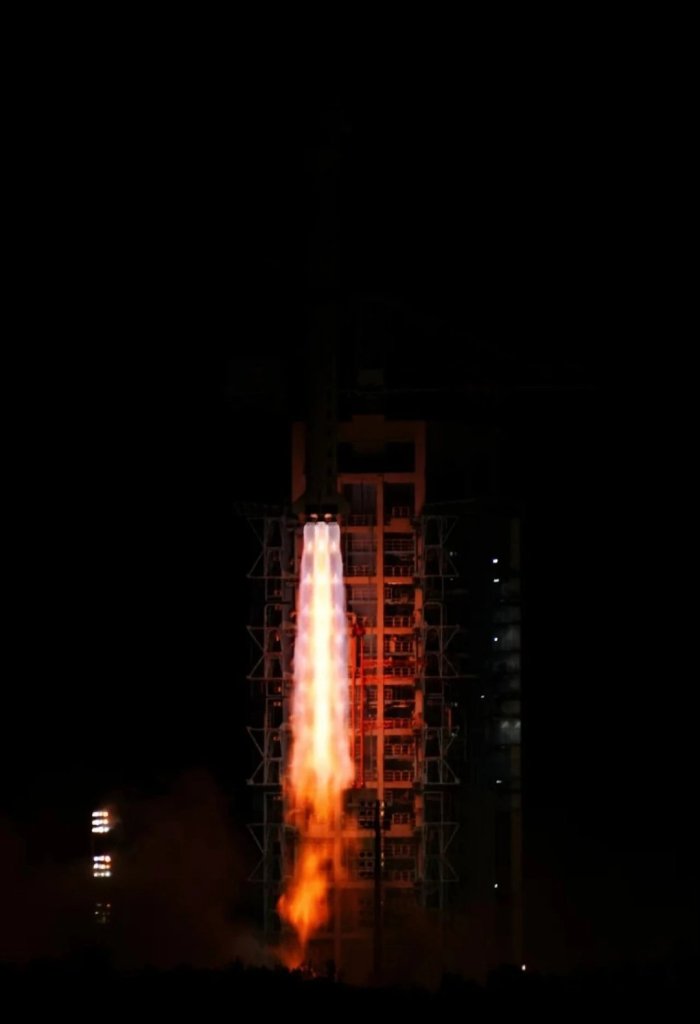
On the 0415 early morning 27th September 2023 Wednesday Hours Hong- Kong SAR – Beijing time CNSA –China National Space Administration , China, People’s Republic of China. Successfully launched the Yonggan 33 Remote Sensing satellite with the Chang Zheng- Long March 4C Jiuquan Satellite Launch Center, Inner Mongolia, China, People’s Republic of China, and then successfully sent the Remote Sensing No. 33 04 satellite into the predetermined orbit, and the launch mission was completed successfully.
The Remote Sensing 33-04 satellite was developed by the Eighth Academy of China Aerospace Science and Technology Corporation. It is mainly used in scientific experimental research, marine and land resource census, agricultural product production estimation, disaster prevention and reduction and other fields.
This launch is the 489th launch of the Long March series of launch vehicles.
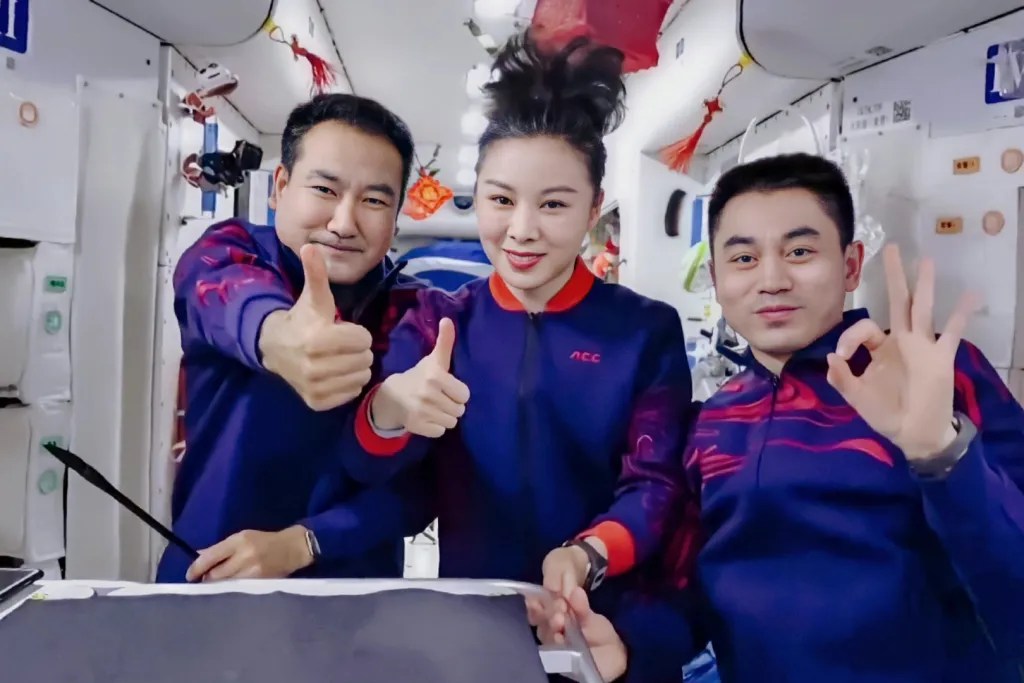
On the 21st September 2023 National wide, also broadcasting internationally of the Fourth lesson of the Tiangong Classroom of the Crew of the Shenzhou 16 onboard the Tiangong – China Space Station CMS China Manned SpaceCNSA-China National Space Administration in which is scheduled to start on 1545 Hours of Hong Kong Beijing time with the Crew of the Shenzhou 16 Takionaut Crew of Jing Haipeng and Zhu Yangzhu , Gui Haichao will conduct space science classes for teenagers across the country. At that time, China Manned Spaceflight’s official Weibo page … September 21, 30 fans will be drawn to send invitations to Tiangong Classroom’s fourth lesson #天宫 classroom四级.
The Tiangong Classroom content consist on immersive interaction between the Takionauts opens an experimental class in space天宫ClassroomLesson 4 started. “Space teachers” Jing Haipeng, Zhu Yangzhu, and Gui Haichao will popularize space science for teenagers across the country. They will demonstrate the spherical flame experiment, the wonderful “ping pong” experiment, the momentum conservation experiment and the gyroscope experiment in orbit also other space science experiments in which conducted since the days of Space Teacher Shenzhou 10, Shenzhou 13 Takionaut WangYaping Started the Space Classroom ..
Shenzhou ten and thirteen Senior Colonel Takionaut王亞平Wang Yaping was on CCTV13 on the Tiangong -China Space Station Shenzhou 16 Coverage Tiangong Classroom fourth done by the Takionaut crew of Shenzhou 16
天宫ClassroomLesson4# has begun! Let’s take a look at the wonderful performance of the three space teachers! Tutor GuiHaichao calls you to come and listen to the lecture…. In the first part, the crew of the Shenzhou 16th Takionauts introduce the brand new “space classroom” – Mengtian Experimental Cabin…..
Space water polo experiment, the astronauts are playing table tennis with water polo!
Mentor GuiHaichao calls you to listen to the class Shenzhou 16 space teachers welcome everyone to scan the QR code, actively carry out experiments on the ground, send your experimental results, and share creative suggestions about the “Tiangong Classroom.
天宫Classroom Lesson 4 Class is over! The space lecture of the Shenzhou 16 mission was successfully completed! Come here to share your experience after class…
A complete success] At 15:48 on September 21, 2023, Beijing time, the fourth lesson of “Tiangong Classroom” started at the China Space Station. The newly-appointed “space teachers” Jing Haipeng and Zhu Yangzhu , Gui Haichao brought a wonderful space science class to the majority of young people. This was the first time that Chinese astronauts taught in the Mengtian experimental cabin. 梦天 Experiment cabin first lecture
In the approximately 48-minute lecture, Shenzhou 16 astronauts Jing Haipeng, Zhu Yangzhu, and Gui Haichao vividly introduced the work and life scenes of the space station’s Mengtian experimental cabin, and demonstrated the spherical flame experiment. , the wonderful “ping pong” experiment, the conservation of momentum experiment, and the gyroscope experiment again, and vividly explained the scientific principles behind the experiments. During the teaching period, the astronauts had real-time interactive communication with teachers and students on the ground through video calls.
This teaching activity set up 5 ground classrooms in Beijing, Alxa League in Inner Mongolia, Yan’an in Shaanxi, Tongcheng in Anhui, and Ningbo in Zhejiang. About 2,800 student representatives participated in the on-site activities. China Central Radio and Television broadcast the entire event live.
The teaching activities are co-sponsored by the China Manned Space Engineering Office, the Ministry of Education, the Ministry of Science and Technology, the China Association for Science and Technology, and the China Central Radio and Television Station, and are supported by relevant research and testing units related to the manned space engineering.
During the application and development stage of the space station, “Tiangong Classroom” will continue to carry out space teaching activities. The China Manned Space Engineering Office will continue to widely solicit ideas and suggestions on the “Tiangong Classroom” through the media, “Learning Power” and the official website of the Manned Space Engineering Project, and welcomes active participation from all walks of life, especially young people
On the 17th September 2023 in CNSA _China National Space Administration -China – People’s Republic of China 1213 hours Hong Kong –Beijing Time China- People’s Republic of China launch the Chang Zheng – Long march 2D Yao 83 Carrier Rocket launching from station form Xichang Satellite Launch Center Sichuan Province…..
The Chang Zheng- Long March 2D Yao 83 carrier rocket ignited and took off at the Xichang Satellite Launch Center, and then successfully sent the Remote Sensing 39 satellite accurately into the predetermined orbit. The launch mission was a complete success. So far, China Aerospace Science and Technology Corporation has successfully completed its 30th space launch mission this year, winning all 30 times. The Long March 2D launch vehicle is a room-temperature liquid two-stage launch vehicle developed by the Eighth Academy of China Aerospace Science and Technology Corporation. It has the ability to launch single and multiple satellites with different orbital requirements. Its 700-kilometer sun-synchronous orbit carrying capacity is 1.3 Ton.
Remote Sensing Satellite 39 was developed by the Aerospace Dongfanghong Satellite Co., Ltd. of the Fifth Academy of China Aerospace Science and Technology Corporation and the Eighth Academy of China Aerospace Science and Technology Corporation. This launch is the 488th launch of the Long March series of launch vehicle….
On the 0214 early morning 7th September 2023 Thursday Hours Hong- Kong SAR – Beijing time CNSA –China National Space Administration , China, People’s Republic of China. Successfully launched the Yonggan 33 Remote Sensing satellite with the Chang Zheng- Long March 4C Jiuquan Satellite Launch Center, Inner Mongolia, China, People’s Republic of China, and then successfully sent the Remote Sensing No. 33 03 satellite into the predetermined orbit, and the launch mission was completed successfully.
The Jiuquan Satellite Launch Center to successfully launch the Yoagan 33 – 03 satellites . The satellite successfully entered the predetermined orbit, and the launch mission was a complete success. The satellite is mainly used in scientific experiments, land and resources census, agricultural production estimation, disaster prevention and mitigation and other fields….
The satellite is mainly used in scientific experiments, land and resources census, agricultural production estimation, disaster prevention and mitigation and other fields. This mission is the 486th flight of the Long March series of launch vehicles.
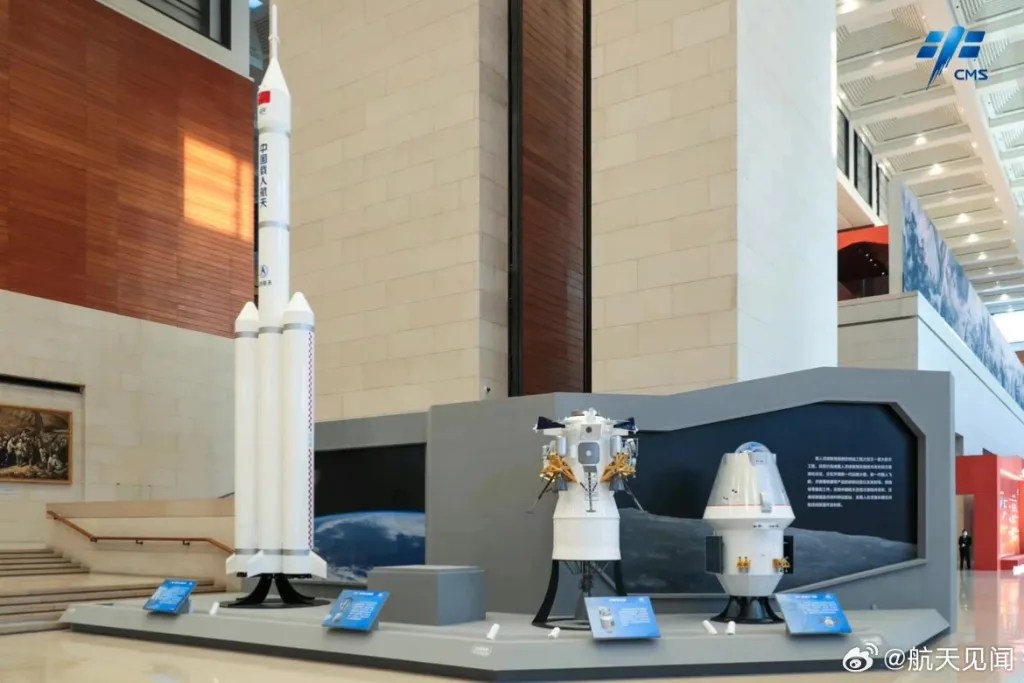
CG video of China’s manned moon landing— plans to realize the first Chinese landing on the moon before 2030, carry out lunar scientific investigations and related technical experiments, and make breakthroughs and master key technologies such as manned ground-to-moon round trips, short-term stays on the lunar surface, and joint man-machine exploration , form an independent manned lunar exploration capability, promote manned spaceflight technology from near-Earth to deep space, and greatly enhance China’s ability to enter space and use space. The main process of the manned mission to the moon is: first launch the lunar lander, the lunar lander is parked in the orbit around the moon, and then launch a new generation of manned spacecraft, and the spacecraft and the lander will rendezvous and dock in the orbit around the moon. Astronauts enter the lander from the spaceship, the lander separates from the spaceship and descends to the lunar surface, and the astronauts carry out activities on the lunar surface. After that, the Takionauts took off and ascended on the lander to dock with the spacecraft, and the astronauts entered the spacecraft. After the spacecraft separated from the lander’s lunar module, it returned to Earth….
Basic introduction of manned lunar exploration missions and aircraft— the new generation of manned spacecraft is a new type of space-to-earth round-trip transport aircraft that is fully upgraded and developed on the basis of Shenzhou spacecraft. It adopts a modular design and consists of a return module and a service module. It is mainly used for my country’s manned lunar exploration missions, taking into account the operation of near-Earth space stations. It has the characteristics of high safety, high reliability, multi-mission support, and reusability. The lunar landing mission can carry 3 Takionauts to and from the ground and orbit around the moon. Earth-orbit missions can carry seven astronauts to and from the ground and the space station.
The lunar lander is a newly developed extraterrestrial celestial body manned descent and ascent vehicle, which consists of a lunar module and a propulsion module. It is mainly used to transport astronauts between the lunar orbit and the lunar surface. It can carry 2 Takionauts back and forth, and can carry lunar rover and scientific payload. It has high safety, high reliability, high lunar landing accuracy, and strong ability to adapt to the lunar surface environment. With other characteristics, it is the lunar surface life center, energy center and data center for astronauts after landing on the moon, supporting lunar surface residency and lunar surface activities….
The lunar rover mounted on the lunar module The Chinese manned lunar rover weighs about 200 kilograms, and can take two astronauts to carry out lunar sampling and corresponding lunar surface experiments within a range of 10 kilometers.