#MadeInChina #中國製造 |#深蓝航天#DeepBlueLimitedCompany #June2023| Deep Blue Aerospace Xingyun-1  #ReusableCarrierRocket Thunder-R1  Reusable Carrier Rocket engine eco system  Development Progress The All New Test benchmark  power base was a complete success

深蓝航天  Deep Blue Limited – Deep Blue Aerospace One of sixty Chinese private space Carrier Rocket Companies in China-People’s Republic of China…  As many of sixty plus Private Rocket Deep Blue Aerospace Co., Ltd. was established in 2017. The company is mainly a high-tech aerospace enterprise that focuses on the direction of liquid recovery and reusable launch vehicles and provides users with commercial launch services. Deep Blue Aerospace Co., Ltd. is headquartered in Nantong City, Jiangsu Province. At the same time, the company has rocket general and liquid engine R&D centers in Yizhuang, Beijing and Xi’an, Shaanxi, respectively, and a rocket power system test base in Tongchuan, Shaanxi…..

In June 2023, the reusable engine “Thunder-R1” independently developed by Deepblue Aerospace achieved a complete success in the test run of the vertical test bench newly put into use by Deepblue Aerospace. The same “Thunder-R1” engine used in this round of tests has been tested several times for the whole machine and system, as well as dozens of start-up tests and ignition tests under different working conditions, which once again highlights the superiority of the “Thunder-R1” engine’s reusability performance and stability.

The current round of “Thunder-R1” engine and subsequent series of tests will accumulate a large amount of data for the power system test run, and will also be the first high-altitude vertical recovery flight test of the first sub-stage of the “Xingyun-1” rocket, and the first stage of orbit + recovery. Fly on a solid foundation. In the follow-up, the test station will continue to carry out the normalized test run assessment of the engine to ensure the smooth implementation of the vertical recovery test of the first sub-stage of the “Xingyun-1” rocket.

 Deep Blue Aerospace’s new power test base has been put into use , and the advantages of the new test stand are prominent. “Thunder-R1” engine test live highlights. The performance of the assembly and other components has been improved, and a series of important optimization improvements have been made in the layout of the final assembly, creating a more solid power foundation for the vertical recovery and reuse of the rocket. During the test run, the engine was ignited, started, and shut down according to the predetermined procedures. The test process was in good condition, the measurement parameters were complete and accurate, and all indicators met the design requirements.
The whole machine test run is an important means to assess the coordination of the various components of the engine and to obtain the working parameters of the engine in simulated real working conditions. This round of complete machine test run is the test bench test run of the new test bench of Shenlan Aerospace’s new power test base. Combining the completed components and semi-system test bench test run, the success of the test bench test marks the first vertical test bench of Deep Blue Aerospace. It has the ability to test the whole process of rocket engine development, which is an important milestone in the construction of the power test base.

The new power test base is put into use, and the advantages of the new test stand are highlighted

The engine products in this round of tests have fully inherited the scheme of multiple starts, ignition and shutdown, and have improved the performance of turbo pumps, combustion devices and other components. Repeated use creates a more solid power base. During the test run, the engine was ignited, started, and shut down according to the predetermined procedures. The test process was in good condition, the measurement parameters were complete and accurate, and all indicators met the design requirements.

Live highlights of deep blue aerospace “Thunder-R1” engine test run from April to June 2023

​The test run of the whole machine is an important means to assess the coordination of the various components of the engine and to obtain the working parameters of the engine in simulated real working conditions. This round of complete machine test run is the test bench test run of the new test bench of Shenlan Aerospace’s new power test base. Combining the completed components and semi-system test bench test run, the success of the test bench test marks the first vertical test bench of Deep Blue Aerospace. It has the ability to test the whole process of rocket engine development, which is an important milestone in the construction of the power test base.

The new version of the engine is tested and the new flight is ready to race against time

” Thunder-R1″ reusable engine is the first open-cycle liquid oxygen kerosene pintle engine in China, with a thrust adjustment capability of 30%~110%, following the principle of “redundant power system, industrialized low-cost manufacturing”, The “9+1” mode is adopted, that is, the first sub-stage of the rocket is connected with 9 basic engines in parallel, and the second sub-stage is equipped with a vacuum type engine, so as to send the payload of the rocket into the predetermined orbit and realize the vertical recovery of the first sub-stage.

In terms of general assembly layout, the new version of the “Thunder-R1” engine adopts the “pump back swing” method, which greatly reduces the engine swing moment in terms of swing angle and flexibility, significantly reduces the envelope size, and makes the layout more compact. The main components including combustion devices, turbo pumps, valves, etc. are all independently developed. The key components of the engine, such as thrust chambers, gas generators, turbo pumps, and large-diameter conduits, are manufactured using 3D printing additive manufacturing technology, which greatly reduces the number of engine components and effectively controls the influence of human factors in the production process, shortening the production process. the production cycle.

​Through the bold use of new processes and adoption of new technologies, Deep Blue Aerospace has established a mass rapid production capacity of liquid rocket engines based on its own characteristics, and has achieved rapid iteration through continuous testing to feed back design and optimization improvements. It is the goal of Deep Blue Aerospace to establish a high-reliability, low-cost, and reusable liquid oxygen kerosene engine design, manufacturing, and testing of the entire process, which can effectively support the high-frequency, low-cost large-scale commercialization of launch vehicles. .

Next, Deep Blue Aerospace will carry out a series of tests such as the three-time ignition of the “Thunder-R1” engine, working condition deviation, and reliability verification, as well as a high-altitude vertical recovery flight test of the first sub-stage of the “Xingyun-1” rocket.

Images and visuals are from their Respectives.

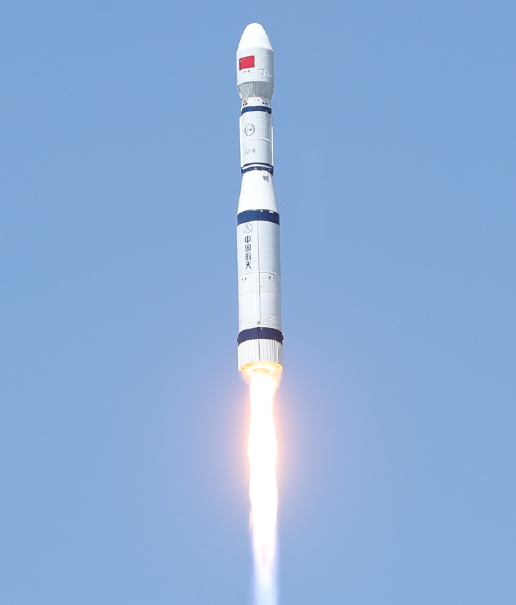
#CNSA #ChinaNationalSpaceAdministration #国家航天局 | #BRI #June2023|#太原卫星发射中心  #TaiyuanSatelliteLaunchCenter  – International Iconic #ChangZheng6 #LongMarch6  yao 12 #CarrierRocket in launched to deploy #TestSatellite #Shiyan Number 25  Satellite  into orbit carry out new earth observation technology experiments #AGallery ..

At 1118 Hours Hong Kong SAR- Beijing Time  20th June 2023 , China- People’s Republic of China- CNSA –China National Space Administration   Successfully launched  the New Next Generation Long March – Chang Zheng 6 Y12 carrier rocket at the Taiyuan Satellite Launch Center Shanxi Province..  the Long March 6 carrier rocket carrying the test 25th satellite ignited and took off at the Taiyuan Satellite Launch Center, and then successfully put the satellite into the predetermined orbit, and the launch was a complete success.

The Long March-6 launch vehicle is a low-temperature liquid three-stage launch vehicle developed by the General Manager of the Eighth Academy of China Aerospace Science and Technology Corporation. Its sun-synchronous circular orbit has a carrying capacity of up to 1.0 tons (orbital height 700 kilometers). In this mission, the rocket test team carried out work in three aspects: optimizing the process, improving reliability and enhancing mission adaptability in response to satellite requirements, to improve the quality and efficiency of rocket launches. The test satellite No. 25 was developed by Aerospace Dongfanghong Satellite Co., Ltd. of the Fifth Academy of Aerospace Science and Technology Group, and is mainly used to carry out new-type earth observation technology experiments. This launch is the 11th launch of the Long March-6 carrier rocket and the 477th launch of the Long March series of carrier rockets

Long March 6 Yao 12 arrow adopts a new inverted cone-shaped frame-type satellite support…… The Long March 6 launch vehicle for this mission was developed by the Eighth Academy of China Aerospace Science and Technology Corporation, and it adopts the Sanping test launch mode A new generation of liquid oxygen kerosene launch vehicle. In this mission, the rocket test team carried out work in three aspects: optimizing the process, improving reliability and enhancing mission adaptability in response to satellite requirements, to improve the quality and efficiency of rocket launches.


Following the launch of the mission, the model team sorted out a total of 36 improvement items, covering operational reliability and test coverage, which further improved the robustness and reliability of the rocket.

“The satellites launched this time are highly compatible with our Long March 6 rocket,” said Yu Yansheng, the overall chief designer of the Eight, Chang Zheng –Long March 6 test team. From the perspective of load weight, there are several types of rockets on the market that can perform this mission, but after an in-depth analysis of the satellite’s shape design and mission requirements, only the fairing envelope and carrying capacity of the Long March 6 are most suitable for the mission.

In view of the overall configuration of the mission satellite with a large aspect ratio, an inverted cone-shaped frame-type satellite support was designed for the model, and it is equipped with a 2.9-meter-diameter satellite fairing to adapt to the layout and interface of the satellite in the fairing. Requirements, provide effective “lifting + support” for satellites. In addition, the foam spraying technology is used on the outside of the satellite fairing to realize the insulation measures of the fairing without operation at the launch site and before launch.

At the same time, in terms of the separation method of the satellite, Chang Zheng –Long March 6 Y12 adopted a point-type connection and separation device composed of four components for the first time, which has the characteristics of light weight and intensive functions of Improved separation reliability.

In view of the fact that there are many satellite operation items after the rocket is transferred to the launch area, the design and operation personnel of the two sides of the model organization, the Star and Rocket, carried out special exchanges to confirm the timing, process, tools, precautions, etc. of the operation one by one; at the same time, arrange Specialized operation drills optimize the operation process to ensure that the time is controllable, safe and smooth in actual operation.

The Taiyuan Satellite Launch Center in June coincided with the season with more thunderstorms, and the model carried out re-identification, re-analysis, and re-confirmation of summer launch risks at the launch site. According to the characteristics of the Long March 6 carrier rocket’s “three-level” test launch mode and unsupported launch, a special review of rain and lightning protection was carried out, including the effectiveness of rain and lightning protection measures, the actual implementation of various measures, and the dismantling and rain protection before launch. Timing, etc., form a tabular inspection and confirmation document to ensure that the rocket meets the pre-launch operation and launch requirements during the thunderstorm season.

Images and visuals are from their Respectives CMS China Manned SpaceCNSA-China National Space Administration

#CNSA #ChinaNationalSpaceAdministration #国家航天局 |#WenchangSpacecraftLaunchCenter #文昌航天發射場 #June2023 |海南商业航天发射场3号 Hainan Commercial Space Launch Site’s No. 3 launch station started construction for #CASC #ChinaAerospaceScienceAndTechnologyCorporation  #Jielong3 SmartDragon3  #CarrierRocket also it’s variants …..

On the 10th  May 2023 Hour Hong- Kong SAR – Beijing time CNSA –China National Space Administration   On 13th June 2023 Hainan Commercial Space Launch Site’s No. 3 launch station started construction the ground-breaking ceremony for the launching station of Hainan Commercial Development Project No. 3 (solid rocket) was held at the Hainan Commercial Space Launch Site in Wenchang City, and the project construction was fully launched.

The station is located in the southwest corner of the launch area and consists of a launch pad, four lightning protection towers and a pre-equipment room. It will be mainly used for launching small solid launch vehicles in the future.

The construction content of the LCC3 project includes the power center, small solid rocket launch station, equipment room, test work room and other auxiliary rooms, and the outdoor project of the launch area. The building is a reinforced concrete frame structure, a reinforced concrete shear wall structure, and a steel pipe tower. The structure has a second-grade fire resistance rating and a seismic fortification intensity of 7 degrees ….

The construction period is 180 days! Speed ​​up construction, the groundbreaking ceremony for the No. 3 (solid rocket) launch station of the Hainan Commercial Space Launch Site project was held at the Hainan Commercial Space Launch Site in Wenchang City, and the project construction was fully launched. The construction content includes the power center, test work room, waste water treatment facility room, small solid rocket launch station equipment room, etc. The planned construction period is 180 days.

Hainan Commercial Development will also build No. 3 and No. 4 launch complex stations in the future, and Jielong No. 3 is expected to achieve commercial launch in Qiong next year….. On the morning of April 12, the First Academy of Aerospace Sciences went to Hainan Commercial Space Launch Site for investigation and investigation, and communicated with The entrepreneurial team of Hainan Commercial Development Co., Ltd. communicated at the headquarters and jointly sought a cooperation space for the commercial launch of Jielong series solid launch vehicles in Hainan.


The development team of the Jielong series of launch vehicles introduced the test and launch process of solid launch vehicles and the technical requirements for the launch site. The solid launch vehicle has the advantages of low total launch cost, high launch frequency, and short compliance period. It can provide high-quality and cheap launch services for the Chinese commercial satellite market. Its 700-kilometer sun-synchronous orbit carrying capacity can cover 200kg to 1.5t. The development of a large-tonnage solid launch vehicle with greater carrying capacity and better economy will be demonstrated.

According to Jin Xin, commander-in-chief of the first aerospace institute, and Ouyang Song, deputy chief engineer of the model, there are currently two main launch modes for solid rockets, the “two flat and one vertical” test launch mode and the “three flat and one vertical” test launch mode. The field’s technical workshop, launch area, and hoisting capacity all have specific requirements. In addition, solid rockets have the characteristics of large diameter and high weight. Shipping by sea is the most economical and reliable mode of transportation. Shipping from the assembly plant to Wenchang, Hainan will pass through sea areas in different climate zones. The water depth, width and other parameters of the port, as well as the transfer of the vehicle to the Hainan Commercial Space Launch Site after the rocket lands at the port, there are still many problems that need to be considered and resolved along the way.

At present, Hainan Commercial Development Co., Ltd. is building the No. 1 launch station of the “three vertical test launch mode” and the No. 2 launch station of the “Sanping Test Launch Mode”. In the future, the No. 3 and No. 4 launch stations will be built to maximize Improve launch capabilities, reduce launch costs and launch service fees, and help friends who are interested in commercial aerospace to achieve a win-win situation on the Hainan Commercial Development Platform….

Images and visuals are from their respectives

#MadeInChina #中國製造| #中科宇航 #ZhongkeAerospace #ChinaAcademyOfScience #CASSPace #June2023 | the Greater Bay Area Science Forum- the 2023 Zhongguancun Forum

Beijing Zhongke Aerospace Exploration Technology Co., Ltd. is the first domestic aerospace enterprise with mixed ownership, and it is also the target enterprise that Oriental Aerospace Port focuses on introducing. Relying on the scientific research strength and resource advantages of the Institute of Mechanics of the Chinese Academy of Sciences and the Aerospace Flight Technology Center of the Chinese Academy of Sciences, China Aerospace Science and Technology has been committed to the research and development and integration of space technology and aerospace vehicles as a platform for the transformation of major national scientific research projects, as well as the transformation and provision of technological achievements. Aerospace launch service. The Lijian-1 rocket project also adds a brand-new name card to the Oriental Space Port, which will surely promote the construction of the Oriental Space Port to take a solid step forward.

From May 25th to 30th, the 2023 Zhongguancun Forum the 25th China Beijing International Science and Technology Industry Expo (hereinafter referred to as the “Science Expo”) was successfully held in the Exhibition Center of Zhongguancun National Independent Innovation Demonstration Zone in Beijing. Zhongke Aerospace, as the achievement transformation platform of the Chinese Academy of Sciences in the field of aerospace science and technology, was invited to participate in the exhibition, and made a big debut with a number of major powers such as the Arrow series of launch vehicles

On May 24, Bai Chunli, chairman of the Greater Bay Area Science Forum, chairman of the “Belt and Road” International Science Organization Alliance, academician of the Chinese Academy of Sciences, and Feng Wei, vice president of the Guangzhou Branch of the Chinese Academy of Sciences, and their delegation visited the China Science and Technology Aerospace Flight Science and Technology Industrialization Base for investigation and guidance , conducted in-depth exchanges and discussions with Yang Yiqiang, chairman and president of Zhongke Aerospace.
As Academician Bai Chunli said in his speech at the opening ceremony of the 2023 Greater Bay Area Science Forum: “China is moving from a scientific and technological power to a technological power.” Zhongke Aerospace will also be guided by the major strategic needs of my country’s aerospace field and give full play to the new national system and the advantages of mixed ownership, lead the development of aerospace technology with innovation, and contribute to the realization of the dream of a technologically powerful country

On May 22, the 2023 Greater Bay Area Science Forum “Belt and Road” high-quality development sub-forum hosted by the Qinghai-Tibet Plateau Institute of the Chinese Academy of Sciences was held in Nansha, Guangzhou. Yang Yiqiang, director of the Aerospace Science and Technology Center of the Chinese Academy of Sciences and chairman and president of China Aerospace Corporation, was invited to attend as a guest speaker.
In the future, Zhongke Aerospace will serve the “Belt and Road” initiative, combine the needs of national strategic scientific and technological strength construction and the regional coordinated development strategy, and look forward to setting sail from the Greater Bay Area, heading to the South China Sea, covering the Indian Ocean and the Mediterranean coast, and going to sea for one-time final assembly , Multiple launches, construction of the home port of the Southern Aerospace Port aimed at the space service of the Belt and Road, to meet the launch needs of near seas and far seas…

Images and visuals are from their respectives

CNSA #ChinaNationalSpaceAdministration #國家航天局 |#BRI  #June2023 | #火星 # 天問 #天问一号#TianwenOne #MarsMission #Tianwen1 probe  #祝融号stunning First Mars Global Remote Sensing and Regional Patrol Exploration Mission photography #December2021 #AGallery Briefly


天问一号飞運騎遊達达3亿CNSA – China National Space Administration – ESA – European Space agency Belt and road initiative mars mission…first Mars exploration mission, Tianwen- Martian Probe One As of September 15, 2022, the Tianwen-1 orbiter has been in orbit for more than 780 days, and the rover has travelled a total of 1,921 meters, completed the established scientific exploration tasks, and obtained 1,480 GB of original scientific exploration data. The scientific research team has obtained rich scientific results through the research on the first-hand scientific data obtained independently by my country. Through a comprehensive study of typical landforms such as concave cones, barrier craters, and trenches distributed in the landing area, the important connection between the formation of the above-mentioned landforms and water activities has been revealed.

Currently as to date of the Zhurong Mars Rover is currently at sleep safe mode due to the Martian Sandstorms….. the location of Zhurong taken by the Tianwen-1 orbiter after it hibernated in Zhurong last year. The rut marks left by Zhurong after traveling 1921 meters are clearly visible….. The local dust on Mars captured by the Tianwen-1 orbiter is very layered. This photo was taken by the medium-resolution camera of the Tianwen-1 orbiter on January 6, 2022, and Zhurong went into a dormant state more than three months after this time point. 

On the week of 6th June 2023 there have been new images release of the CNSA –CLEP Mars The Lunar and Planetary Data Publishing System released a new batch of Tianwen-1 data today, including a large number of Martian surface photos taken by the obiter’s medium-resolution camera! The total number is estimated to be hundreds to thousands!  But here are some stunning incredible randomly selected a few pictures is beautiful in which has been process during the Month of December 2021 at the time when before the Martian Sandstorm!

Some of the images taken by the Zhurong rover in December 2021 come from the latest data released by the China Planetary Exploration Engineering Ground Application System

中国planet detection…. First Mars Global Remote Sensing and Regional Patrol Exploration Mission


The second batch of publicly released data is the Korolev crater (Korolev). This picture is made by mosaicing 8 orbiter medium resolution camera (MoRIC) images obtained by searching in an area with (72.77N, 164.58E) as the center and a search radius of 300 km. It was taken at detection periods 656 and 677 and 698, using OpenCV, SKImage, Lr for processing. [CAS/GRAS, CNSA/PEC; export production…..


Northeast of the Utopia Plain, west of Mie (Mie), the pirate who landed here in 1976 The impact craters in the area around the No. 2 lander are mostly named after the launch sites, measurement and control stations and other aerospace facilities in various countries in the 1970s. Among them, Xuancheng Meteor Crater (Hsūanch’eng) is named after Xuancheng City, Anhui Province. my country’s early suborbital sounding rocket launch site – Guangde Rocket Launch Site (603 Base) is located in Shijie Town, Guangde City, Xuancheng City. This is the main site for the T-7 series of sounding rockets to conduct meteorological, biological, and new technology flight tests in the 1960s. It is also the place where the brave flying pathfinding dogs “Little Leopard” and “Shanshan” set off in July 1966.


(Figure 5 shows the first flight of the T-7A rocket, and Figure 6 shows the puppy carrying out the vibration test before the flight.) 3 MoRIC images were mosaiced, taken on December 3, 2021-detection cycle 641, and processed using OpenCV, SKImage, Lr and Ps. [CAS/GRAS, CNSA/PEC; export production:

Images and visuals are from their respectives also CNSA China National Space AdministrationCLEP China Lunar Exploration Program.